
Credits and licences
- #1 — vueltaalhuerto illustration
- #2 — vueltaalhuerto illustration
- #3 — vueltaalhuerto illustration
- #4 — vueltaalhuerto illustration
- #5 — vueltaalhuerto illustration
- #6 — vueltaalhuerto illustration
- #7 — vueltaalhuerto illustration
- #8 — vueltaalhuerto illustration
- #9 — vueltaalhuerto illustration
- #10 — vueltaalhuerto illustration
- #11 — vueltaalhuerto illustration
- #12 — vueltaalhuerto illustration
Purple Top Milan turnip
Purple Top Milan turnip is sown directly outdoors from March to April and from August to September. It is harvested from May to June and from October to November (about 60 days to the first harvest). Grow it in full sun, 15 cm apart, with moderate watering. Dates are for a mild temperate climate in the northern hemisphere; the calendar below adjusts them to your zone.
What else to sow in March, April, August and September
Purple Milan turnip, a quick root crop in cool weather. It needs loose soil and even watering. Sowing at the end of summer stops it turning woody.
Family and origin: Cabbage family (Brassicaceae) · native to Northern Italy (Milan) · More plants from Temperate Europe
01In your area
How will it do in your garden?
Year calendar
| Task | J | F | M | A | M | J | J | A | S | O | N | D |
|---|---|---|---|---|---|---|---|---|---|---|---|---|
| Direct sowingMar–Apr, Aug–Sep | no | no | yes | yes | no | no | no | yes | yes | no | no | no |
| HarvestMay–Jun, Oct–Nov | no | no | no | no | yes | yes | no | no | no | yes | yes | no |
Its life cycle at a glance
Swipe and tap a stage to see its details.
02Step by step
From seed to harvest, stage by stage
What the plant needs at each point in its life, from the seed to the harvest and on to the next seed. The figures are only a guide: your climate, your soil and the variety will shift them.
Approximate months for a temperate Spanish climate. Choose your zone in the calendar to adjust them.
Stage 1 · Year 1Direct sowing and germinationDirect sowing and germination: Mar–Apr, Aug–SepGerminates in 3–10 daysThe turnip is a cool-season brassica sown directly in the garden, in early spring or, better still, at the end of summer to harvest in autumn. Its small round seed comes up in a few days if the soil does not dry out.
The turnip is a cool-season brassica sown directly in the garden, in early spring or, better still, at the end of summer to harvest in autumn. Its small round seed comes up in a few days if the soil does not dry out.
With the soil at 18-25 °C it comes up in three to five days; in the cold it takes longer.
Temperature
min. 5°Cideal 18°C–25°Cmax. 35°CIt germinates well even in the heat, but seedlings that come up in high summer struggle; at the end of August it is best to sow in the evening and water often.
Moisture and watering
Keep the drill moist with gentle watering, without uncovering the seed, until the seedlings come up.
How often: Daily in hot weather; every two days if the weather is cool.
Light · Not important
Light makes no difference to germination; as soon as it comes up it needs direct sun so it does not stretch.
Container · Straight into the ground
Sow thinly in drills 0.5-1 cm deep, 25-30 cm apart. In a trough you need at least 20 cm of soil.
Potting mix or soil
pH 6–7.5
It prefers loose, moisture-retentive, stone-free soil rich in well-rotted organic matter. In very acid soils clubroot appears more readily.
Nutrients
Mainly needs: no fertiliser
It needs no fertiliser to germinate; well-rotted compost worked in before sowing is enough.
Protection
- Cover the sowing with fine mesh or horticultural fleece if flea beetle is present in your area.
Common problems
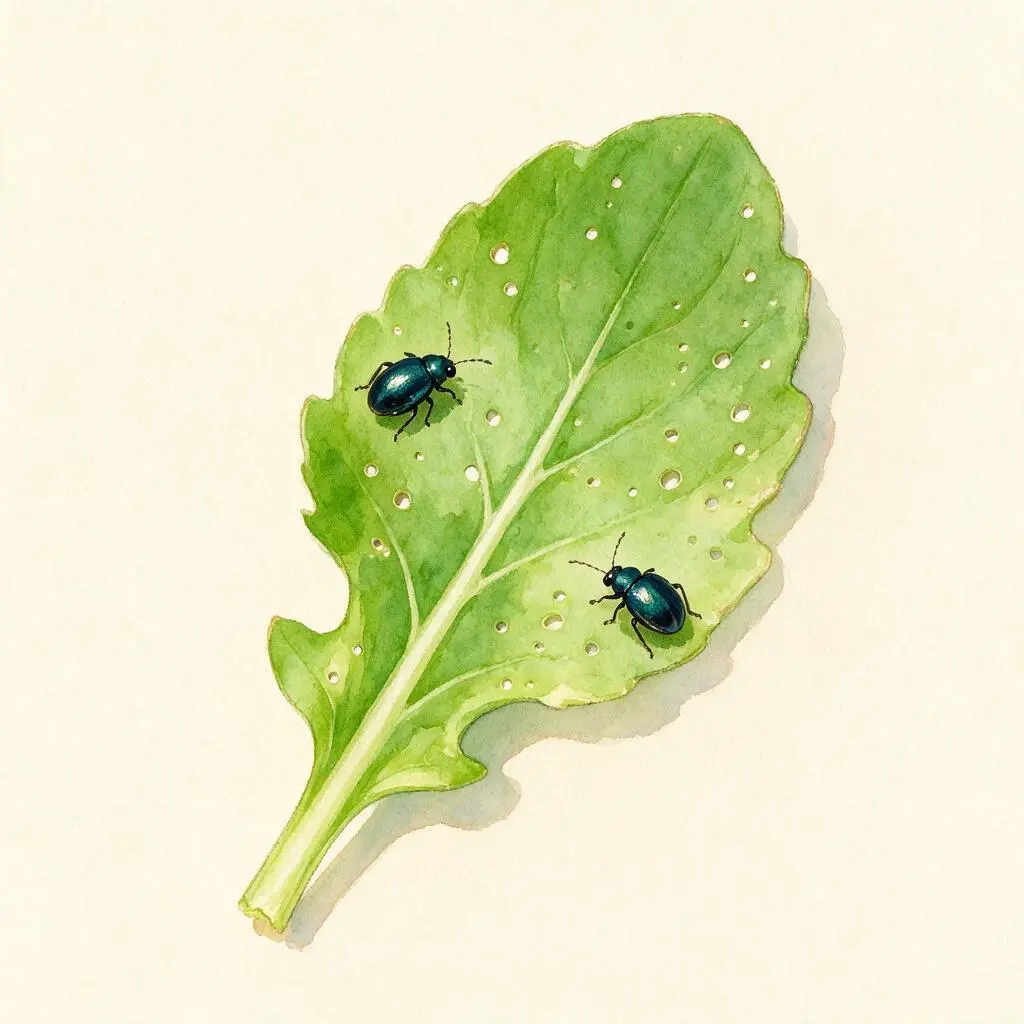
- Flea beetle. Small jumping beetles that riddle the seed leaves with holes; in dry weather they can ruin the sowing.
Warning signs
The seedlings come up with their seed leaves full of tiny holes.
Likely cause: Flea beetle, especially in warm, dry weather.
What to do: Water often, because moisture holds it back, and cover the next sowing with fine mesh.
Reference photos
When it moves on to the next stageMove on to thinning when the two heart-shaped seed leaves have appeared and the first true leaves, slightly rough, are showing.
Stage 2 · Year 1ThinningThinning: Mar–Apr, Aug–SepLasts about 7–15 daysTurnips, like other root crops, are not transplanted but thinned out. Giving each plant its own space is what allows the root to swell round and smooth; crowded turnips only produce leaves.
Turnips, like other root crops, are not transplanted but thinned out. Giving each plant its own space is what allows the root to swell round and smooth; crowded turnips only produce leaves.
Thin out 10 to 15 days after the seedlings emerge, in one or two goes.
Temperature
min. -2°Cideal 12°C–22°Cmax. 28°CHeat and drought at this stage encourage bolting.
Moisture and watering
Water a little before thinning so the seedlings come out easily, and again afterwards to settle the soil.
How often: Every two or three days if it does not rain.
How much: As a rough guide, 3 to 5 L per square metre each time.
Light · Full sun
At least 5 h of light
Full sun, or light partial shade for spring sowings.
Container · Straight into the ground
Leave 10 to 15 cm between plants and 25 to 30 cm between rows, depending on the size of the variety.
Potting mix or soil
Firm the soil a little around the seedlings that remain and weed around them.
Nutrients
Mainly needs: no fertiliser
It needs no fertiliser at this stage.
Jobs for this stage
- Pull up or snip off the surplus seedlings at soil level; the most tender ones can be eaten as turnip greens in salads or stir-fried.
- Hand-weed so weeds do not compete with the seedlings.
Common problems
- Flea beetle. It is still the main danger while the plant has few leaves.
- Slugs and snails. They gnaw the tender leaves at night, especially in late-summer sowings after the first rains.
Warning signs
The plants produce lots of leaves but the neck of the root does not swell.
Likely cause: They are too close together or short of sun.
What to do: Thin out to the final spacing without being afraid to remove plants.
Reference photos
When it moves on to the next stageMove on to the growing stage when the plants are at their final spacing and have three or four true leaves.
Stage 3 · Year 1Growth and root swellingGrowth and root swelling: Apr–Jun, Sep–NovLasts about 30–60 daysAfter thinning, the turnip forms a rosette of leaves and swells its root at the top, which shows above the soil with its purple or white shoulder. It grows fast in cool weather with regular watering; in heat or drought it becomes woody and hot.
After thinning, the turnip forms a rosette of leaves and swells its root at the top, which shows above the soil with its purple or white shoulder. It grows fast in cool weather with regular watering; in heat or drought it becomes woody and hot.
Four weeks to two months after thinning, depending on the variety and the time of year.
Temperature
min. -4°Cideal 10°C–20°Cmax. 28°CAt 10-20 °C it forms tender, sweet roots. It withstands light frosts, but a long spell of cold while the plant is young, or the heat of early summer, can make it bolt prematurely.
Moisture and watering
Water regularly without waterlogging, so the soil stays moist. Lack of water toughens the root and makes it hotter, and heavy watering after dry days splits it.
How often: Every three or four days in autumn; every two days in hot weather.
How much: As a rough guide, 4 to 6 L per square metre each time.
Light · Full sun
5–10 h of light
Full sun in autumn; in spring, some shade during the middle of the day delays bolting.
Potting mix or soil
Keep the soil crumbly and mulched with a thin layer of straw to hold moisture.
Nutrients
Mainly needs: potassium (K)
It is undemanding: the compost worked in before sowing is usually enough. Too much nitrogen gives lots of leaf and soft roots, and attracts aphids.
How often: Only if the leaves turn pale, a light top-dressing halfway through the cycle.
What with: well-rotted compost, worm castings
Protection
- Keep the insect-proof mesh on during the warm months to hold back flea beetle, cabbage root fly and cabbage white butterflies.
Jobs for this stage
- Pick a few tender leaves as turnip greens, taking no more than two or three per plant if it is the root you are after.
- Weed carefully so as not to damage the roots, which show at the surface.
- Check the undersides of the leaves every week and pick off eggs and caterpillars by hand.
Common problems
- Flea beetle. It riddles the leaves with holes and slows growth, especially in spring sowings.
- Cabbage root fly. Its white larvae tunnel into the root, which rots and becomes covered in brown patches.
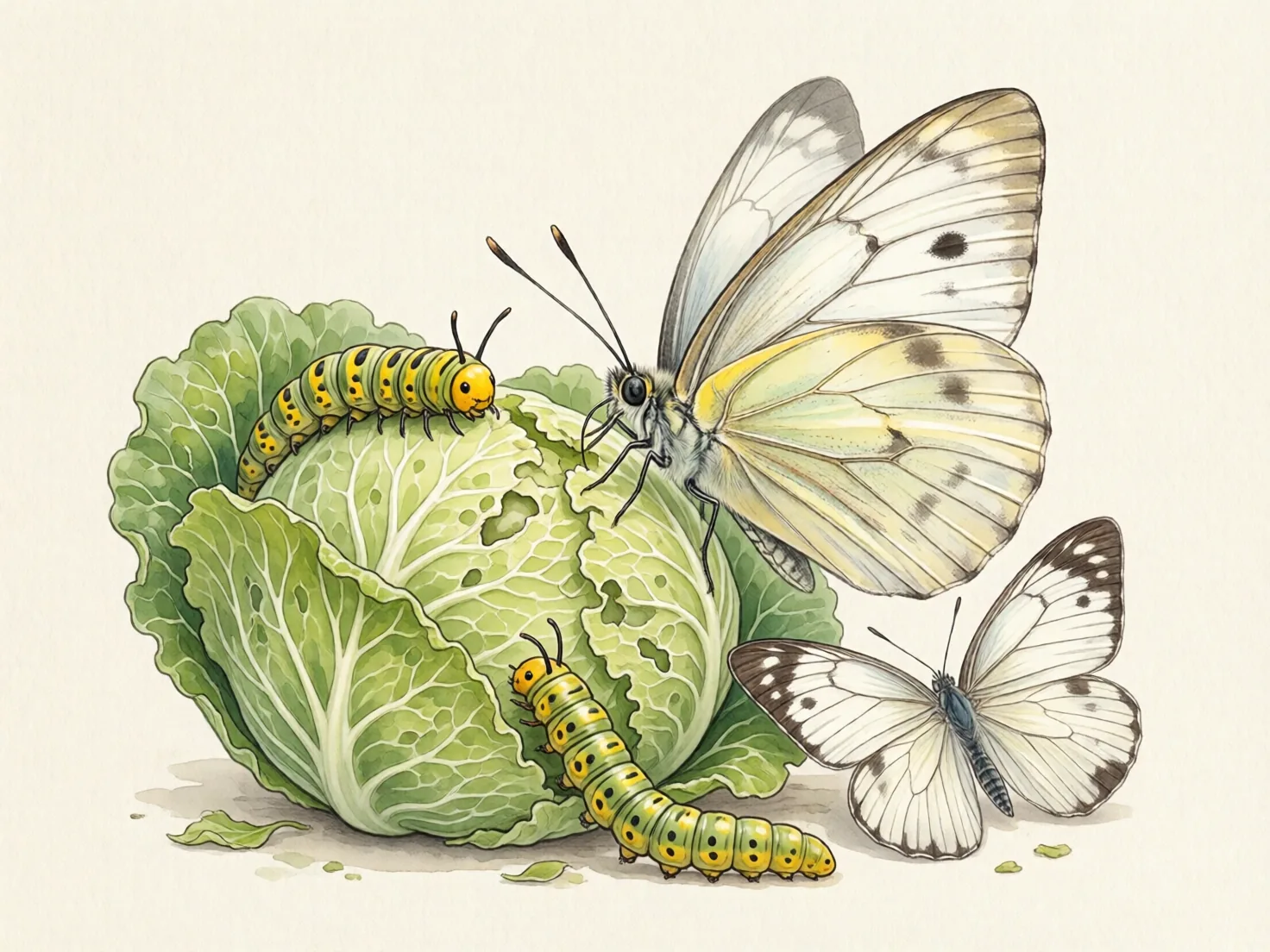
- Cabbage white caterpillars. Large holes in the leaves, especially in late-summer sowings.
- Diamondback moth. Small green caterpillars that graze the undersides of the leaves in warm weather.
- Mealy cabbage aphid. Greyish, powdery colonies on the undersides of the leaves in mild autumns.
- Alternaria leaf spot. Brown spots with concentric rings on the older leaves in damp weather.
Warning signs
The root comes out woody, hot or split.
Likely cause: Lack of water, heat or harvesting too late.
What to do: Water regularly, sow at the end of summer and lift the turnips before they grow bigger than a tennis ball.
The plant wilts in the sun even though the soil is moist.
Likely cause: Clubroot or cabbage root fly larvae in the root.
What to do: Pull up the plant with its root and do not compost it; rotate brassicas to another bed for several years.
Reference photos
When it moves on to the next stageIt is ready when the root reaches somewhere between the size of a golf ball and a tennis ball, smooth and firm.
Stage 4 · Year 1HarvestHarvest: May–Jun, Oct–NovLasts about 10–45 daysTurnips are harvested by root size, not by the colour of the shoulder, which turns purple very early. Spring-sown turnips are best lifted promptly, before the heat; autumn ones stand in the ground for several weeks if there are no hard frosts.
Turnips are harvested by root size, not by the colour of the shoulder, which turns purple very early. Spring-sown turnips are best lifted promptly, before the heat; autumn ones stand in the ground for several weeks if there are no hard frosts.
Spring sowings are at their best for only a few weeks; autumn ones last longer.
For this varietyThe Purple Top Milan turnip profile gives about 60 days to the first harvest; treat it as a rough guide.
Temperature
min. -4°Cideal 5°C–18°Cmax. 25°CLight autumn frosts improve the flavour; in hard frosts, lift them or mulch.
Moisture and watering
Keep watering regularly until the end so they do not split.
How often: Every three or four days in autumn, depending on rainfall.
Light · Full sun
At least 5 h of light
Full sun.
Nutrients
Mainly needs: no fertiliser
No more feeding is needed at harvest time.
Protection
- In areas with hard frosts, cover the row with straw or lift the turnips and store them before it freezes.
Jobs for this stage
- Lift the largest first, or every other one, so the rest have room to finish swelling.
- Make use of the tender leaves of the turnips you lift.
Harvesting
When it is ready: Harvest when the root is smooth and round and somewhere between the size of a golf ball, for eating raw or in salads, and a tennis ball, for cooking. It usually gets there six to ten weeks after sowing. If it grows much bigger, it becomes woody and bitter.
How to pick: Loosen the soil next to the root if it is hard and pull it up by the base of the leaves. For storing, cut off the leaves leaving a small piece of stalk 1-2 cm long.
Time of day: Lift them in the morning, when the root is cool and firm.
Yield: As a rough guide, 2 to 4 kg per square metre, depending on the variety and the time of year.
How to store: With the leaves removed and unwashed, they keep for one to two weeks in the fridge in a bag. To keep them for several weeks, place them in a box of slightly damp sand or coir in a cool, frost-free place.
Common problems
- Cabbage root fly. Roots that spend a long time in the ground in autumn are the most heavily attacked.
- Slugs and snails. They gnaw the exposed part of the root during the autumn rains.
Warning signs
The root is much bigger than a tennis ball, rough and cracked.
Likely cause: It has gone past its best.
What to do: Use it only if the flesh is tender when cut, and harvest the next batch earlier.
Reference photos
When it moves on to the next stageThe cycle ends when you lift the last ones or when those that remain start to send up a flower stalk.
Stage 5 · Year 1End of the cycleEnd of the cycle: Jun–Jul, Nov–DecLasts about 1–14 daysWhen it is finished, the turnip leaves the soil loose, but its debris can harbour brassica pests and diseases. It is best to clear the bed thoroughly and rotate to a crop from another family.
When it is finished, the turnip leaves the soil loose, but its debris can harbour brassica pests and diseases. It is best to clear the bed thoroughly and rotate to a crop from another family.
Jobs for this stage
- Lift any remaining roots and put the healthy leaves on the compost heap; roots with tunnels or lumps go out of the garden.
- Afterwards, sow a crop from another family, such as broad beans, peas, lettuces or tomatoes.
- Do not sow turnips, radishes or cabbages in the same place again for three or four years.
Common problems
- Clubroot. Its spores live for many years in the soil; a long rotation and a pH close to neutral are the best defence.
Warning signs
The roots of lifted turnips have misshapen lumps.
Likely cause: Clubroot.
What to do: Do not compost those roots and keep that bed free of brassicas for several years.
Second year: these stages are only needed if you want to save your own seed. Leave a few healthy plants in the ground after harvesting and they will overwinter and flower.
Stage 6 · Year 2 · only for seedSeeds and propagationSeeds and propagation: May–JunLasts about 40–60 daysThe turnip is a biennial: in its first year it forms the root you eat, and it flowers the following spring, after the cold of winter. In the second year, if you want seed, leave a few healthy plants in the ground: their tender flowering shoots, before they open, are turnip tops, and if they are left to flower they form thin pods full of seed, which ripens in late spring or early summer.
The turnip is a biennial: in its first year it forms the root you eat, and it flowers the following spring, after the cold of winter. In the second year, if you want seed, leave a few healthy plants in the ground: their tender flowering shoots, before they open, are turnip tops, and if they are left to flower they form thin pods full of seed, which ripens in late spring or early summer.
From the first open flowers until the pods are brown and dry takes six to eight weeks.
Saving seed
When the seed is ripe: Leave a few healthy, typical plants from the autumn sowings in the ground, or lift them, choose the best roots and replant them at the end of winter. In spring they send up a stalk of yellow flowers, and the seed is ripe when the pods turn from green to brown and rattle when shaken, around May or June in a temperate climate.
How to extract it: Cut the branches when most of the pods are brown, before they split and shed the seed, and finish drying them on a sheet. Then rub or beat them inside a sack, sieve and blow away the chaff.
Drying: Spread the seed in a thin layer in an airy, shady place for one or two weeks.
Storage: Store it in a paper envelope inside a tightly closed jar, labelled with the variety and year, in a cool, dry, dark place.
The seed stays viable for about 4–5 years.
F1 hybrids: Some commercial turnips are F1 hybrids, whose seeds do not produce plants identical to the parent. Only save seed from heritage or open-pollinated varieties.
Cross-pollination: Turnips are insect-pollinated and need pollen from other plants, so you must let at least six of the same variety flower. They cross easily with other plants of their species in flower, such as other turnips, turnip greens and turnip tops, Chinese cabbage, pak choi or mizuna, and also with wild rape; to keep them pure you have to separate them by several hundred metres from all of these.
Reference photos
Sources and review
Reviewed on 4 November 2026. Approximate figures, written from these sources and the data in this profile.
- Royal Horticultural Society: Turnips, grow your own
- University of Illinois Extension: Turnip
- Utah State University Extension: Turnips (growing guide)
- Oregon State University Extension: soil temperature and vegetable seed germination
- Seed Savers Exchange: How to grow and save turnip seeds
- Ministerio de Agricultura, Pesca y Alimentación (MAPA, Spanish Ministry of Agriculture, Fisheries and Food): Guía de gestión integrada de plagas de las brásicas (integrated pest management guide for brassicas)
- Vuelta al Huerto catalogue data (germination, calendar and Visual harvest guide)
03Planting
Where and how to plant it
Sow the seed 1 cm deep; leave 15 cm between plants and 25 cm between rows.
15 cm between plants · 25 cm between rows
Seed at a depth of 1 cm.
- In a square-foot bed
- 4 plants per square30 × 30 cm squares
- Direct sowing
- Mar–Apr, Aug–Sep
- Germination
- ~5 days
- TipSow in small groups directly where they are to grow: the roots do not take well to transplanting.
- Common mistakeNot thinning the seedlings: without space, the roots come out small and misshapen.
04Care
Care through the year
Sun and aspectFull sun · 8 h of sun · South or south-west, with nothing casting shade at midday
- Too little sun
- Ideal range
- Plenty of sun
South or south-west, with nothing casting shade at midday
Strong sun: Loves full midday sun and high temperatures.
WateringMoist but never waterlogged · summer: every 2-3 days
- Summerevery 2-3 days2 L per plant/week
- Spring / Autumnevery 4-5 days1 L per plant/week
- Winterevery 2-3 weeks0.3 L per plant/week
Moist but never waterlogged: Water before the surface is completely dry. Never puddles. Mulch: straw or dry plant material cuts watering by 30-50 %.
When to water? Push your finger 3 cm into the soil next to the base of the plant:
- Damp: soil sticks to your finger. Do not water today. The moisture is fine.
- Cool but clean, no mud. Water early tomorrow if it stays like this, or this evening.
- Dry and dusty. Water now, and deeply. This is not where it likes to be.
- TipWater regularly without waterlogging: water stress toughens the root and makes it hotter.
Soil and feedingLoose, deep, stone-free soil
Loose, deep, stone-free soil.
High: constant moisture deforms the root.
This plant prefers a pH between 6.0 and 7.0 (slightly acidic to neutral).
- TipLoose, stone-free soil, moist and rich in organic matter.
- TipLoose, crumbly, stone-free soil lets the root swell straight.
- Common mistakeToo much nitrogen: plenty of leaf and very little root.
05Harvest
Harvesting and storing
Harvest in May–Jun, Oct–Nov; the first, about 60 days after sowing.
06Uses and health
What it is used for, and with what care
- Properties
- Low in calories, rich in vitamin C and fibre.
- Uses
- Cooked in stews or grated raw.
For guidance only; this is not medical treatment and does not replace advice from a doctor or vet.
07Companions and related plants
What to plant it with
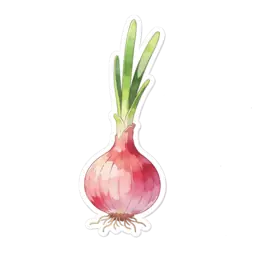
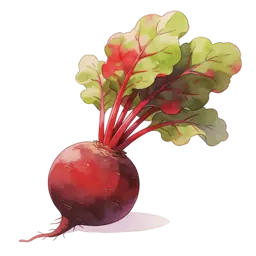
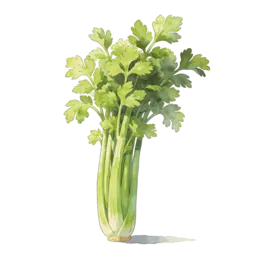

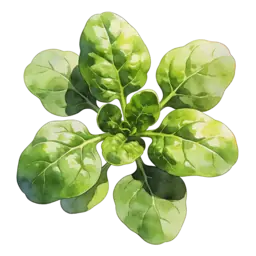
Group it in the same bedPlants with the same watering or the same sun
They are not essential companions, but you will not have to water or position them differently.
Same watering · Moderate watering
08Pests and diseases
Critters and ailments to keep an eye on
The most common ones on this plant. Tap one to see how to recognise it and what to do.
No known toxicity to people or pets
Not toxic to people or pets.