
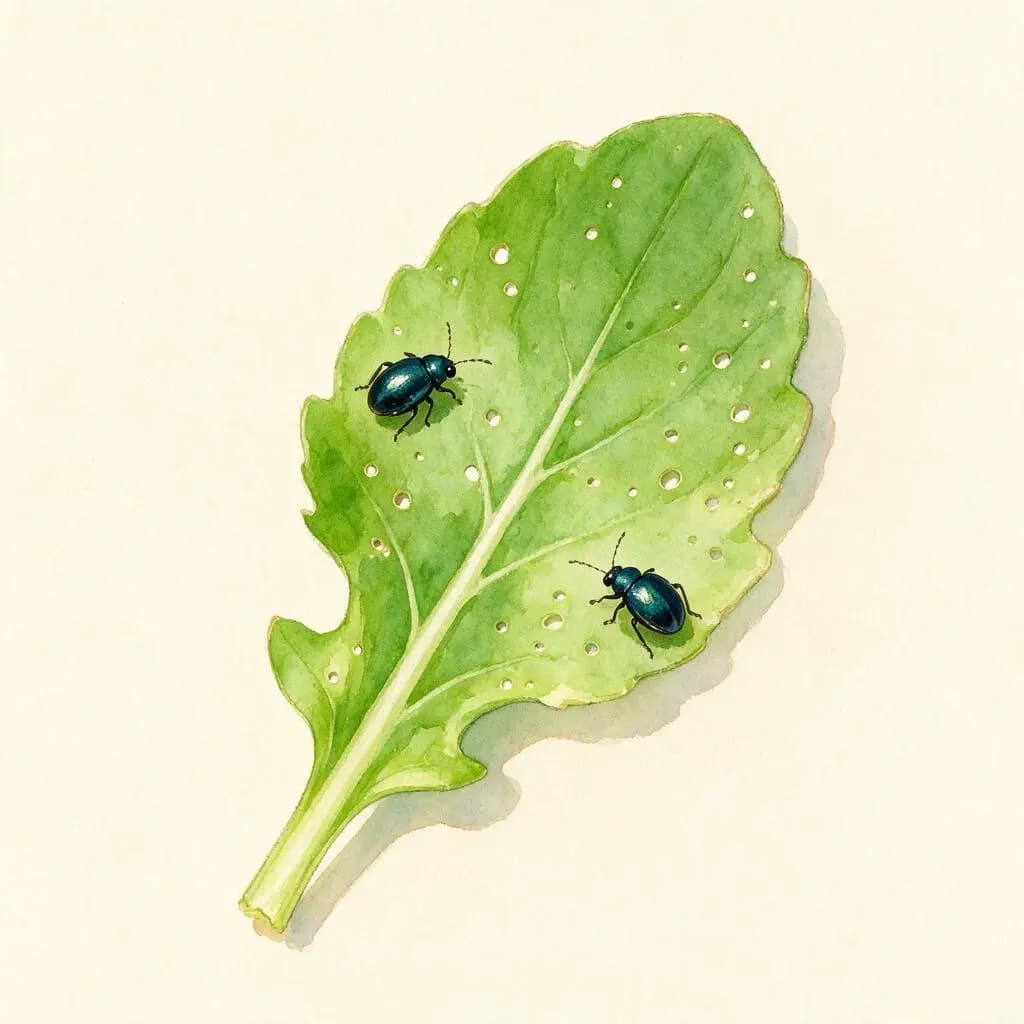
Flea beetles
Also known as: flea beetles, flea beetle, brassica flea beetle, cabbage flea beetle, Phyllotreta
Small shiny beetles (2 to 4 mm) that jump like fleas when touched. They riddle young leaves with lots of small round holes. The first step is to protect young crops with fine mesh and keep the soil moist.
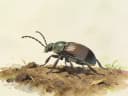
Its best ally
Ground beetle
A natural predator that helps to keep this pest under control. Tap to see how to attract it.

How to recognise it at every stage
Shares your gardenIt likes your radishes, rocket, cabbages and young aubergines.
Life cycle: Complete metamorphosis: egg in the soil, larva feeding on rootlets, pupa in the soil and a tiny jumping beetle. One or two generations a year; adults overwinter in leaf litter and come out with the spring warmth.
Tap a stage to see it full size. The photos are AI reference images checked against real photographs; stages without a reliable photo are shown as text only.
Life-stage calendar
| Jan | Feb | Mar | Apr | May | Jun | Jul | Aug | Sep | Oct | Nov | Dec | |
|---|---|---|---|---|---|---|---|---|---|---|---|---|
| Eggs | ||||||||||||
| Larva | ||||||||||||
| Pupa | ||||||||||||
| Tiny jumping beetle |
Approximate months for mainland Spain; in cold areas they start later and in warm areas they last longer. Garden creatures this month
No reliable photo yet
1Keep an eye on itEggs
· 0.3 mmNot visible: yellowish, in the soil next to the plant.
- Where to find it
- In the soil at the foot of brassicas.
- When: Apr–Jun
- What to do
- Nothing to do at this stage.
- 2Keep an eye on it
Larva
· 3-5 mmWhitish and slim, with a dark head.
- Where to find it
- In the soil, feeding on rootlets (some species mine leaves).
- When: May–Jul
- What to do
- It rarely does noticeable damage.
- 3Keep an eye on it
Pupa
White, in a small soil cell.
- Where to find it
- In the soil.
- When: Jun–Jul
- What to do
- Not visible.
- 4Protect your plants
Tiny jumping beetle
· 2-3 mmA minute metallic blue-black beetle, or one with two yellow stripes, that jumps like a flea when you come near.
- Where to find it
- On seedling leaves, which end up full of small round holes ('shot holes').
- When: Mar–Sep
- What to do
- Water often (they hate humidity), cover sowings with mesh or fleece and sow a few radishes as a trap crop.
- Often confused with
- Slug and snail holes. They are irregular, large and leave slime; flea beetle holes are round, small and very numerous. See profile
Often confused with
- Slug and snail holes. They are irregular, large and leave slime; flea beetle holes are round, small and very numerous. See profile
How to recognise it (symptoms)
- Leaves with lots of small holes (2-3 mm), as if peppered with shot
- Tiny beetles that jump when you shake the plant
- Radish or rocket seedlings ruined within a few days
- Heavier attacks in hot, dry weather
Crops affected
 Radish'Cherry Belle' is a round and very fast radish: it is harvested in three or four weeks.
 RocketFast-growing rocket with a peppery flavour.
 TurnipPurple Milan turnip, a quick root crop in cool weather.
 AubergineAn aubergine with glossy black fruit, for warm climates.
 CabbageSavoy cabbage, with blistered, crinkled leaves, which grows sweeter with the cold; it does best in autumn…
 PotatoThe 'Kennebec' potato is versatile in the kitchen, with pale skin.
 SpinachLeaf spinach, quick-growing in cool weather; in heat and long days it bolts straight away.
What favours it
- Dry, dusty soil
- Heat and irregular watering, which stress the plant
- Dry debris and weeds, where the adults overwinter
Prevention
- Water regularly at the base: moist soil and vigorous plants cope better
- An organic mulch to retain moisture
- Fine insect-proof mesh from germination until the plant has 4-5 true leaves
- Sow radishes and rocket in autumn, when there are fewer flea beetles
Organic treatment
Always start here: these remedies are kind to the garden, the soil and pollinators.
- First: cover sowings of radish, rocket and turnip with fine mesh from the day you sow and keep the soil moist
- Spray kaolin (a white clay, as a registered product) on the leaves to make it harder for them to settle
- Yellow sticky traps at leaf height to monitor adult numbers
- Put up with small holes on plants that are already well grown: they usually have little effect on a brassica harvest
Don't confuse it with…
With thrips damage (silvery rasping, not holes) or damage from larger insects (much bigger holes).
In-depth guide — brassica flea beetles
The adults make holes in the leaves and the larvae live in the soil, feeding on fine roots. The most important thing is to protect seedlings during their first few weeks.
Symptoms
- Small holes in the leaves, especially on seedlings.
- Tiny beetles that jump when you move the leaf.
- On potatoes and aubergines, small holes that rarely affect the harvest if the plant is vigorous.
Mesh from sowing
This is the most effective measure. Cover the sowing with fine mesh and leave it in place until the plants have several true leaves and can better withstand the damage.
Watering and mulch
Moist soil and vigorous seedlings tolerate an attack better. Water little and often while the seeds are germinating.
Organic treatments
- Kaolin sprayed on the leaves, using a registered product.
- Potassium soap (10-20 g per litre) or a registered neem product (at the rate on its label) at dusk: limited effect, because the adults jump away.
- Clear nearby weeds and crucifer debris.
Use plant protection products responsibly, even organic ones. Always read and follow the label, the doses and the harvest interval, and never treat plants in flower or while bees are flying, in order to protect pollinators. If in doubt, put prevention and organic methods first.

In the plant catalogue you'll see what to plant, how and when: a well-tended plant resists pests much better.