
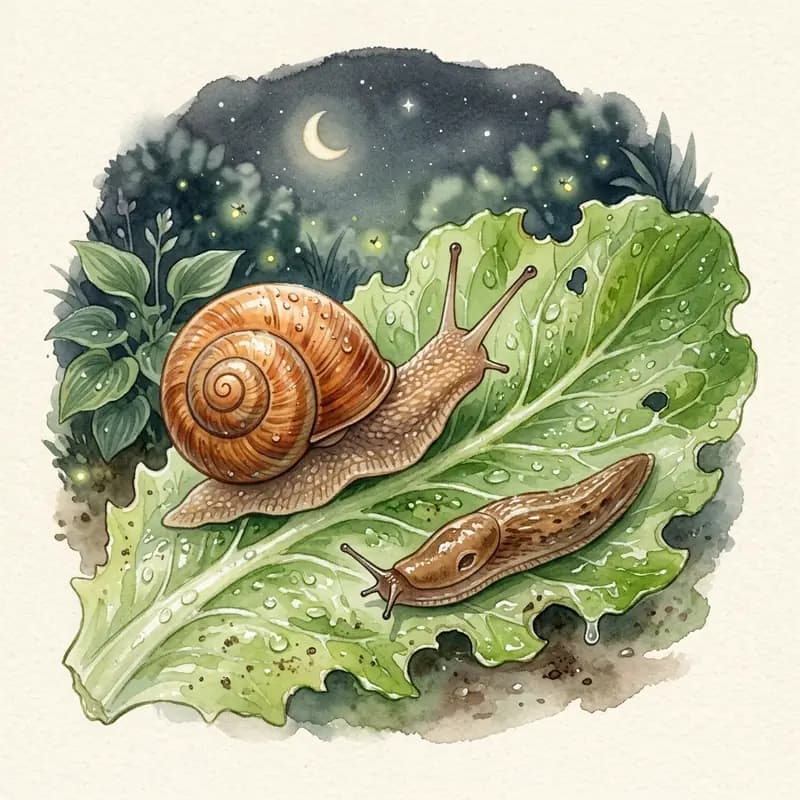
Slugs and snails
Also known as: slugs and snails, slugs, snails, garden slugs, garden snails, molluscs
Night-feeding molluscs that devour tender leaves and seedlings, especially in damp weather. They leave an unmistakable shiny slime trail. The first step is to pick them off by hand after dark, remove their hiding places and protect seedlings.
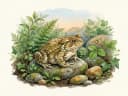
Its best ally
Toad
A natural predator that helps to keep this pest under control. Tap to see how to attract it.

How to recognise it at every stage
Shares your gardenThey like your lettuces and seedlings, especially at night and after rain.
Life cycle: No metamorphosis: a miniature snail or slug hatches from the egg and slowly grows. They are hermaphrodites. Snails take one or two years to become adults and live several years; the grey field slug usually has two generations a year.
Tap a stage to see it full size. The photos are AI reference images checked against real photographs; stages without a reliable photo are shown as text only.
Life-stage calendar
| Jan | Feb | Mar | Apr | May | Jun | Jul | Aug | Sep | Oct | Nov | Dec | |
|---|---|---|---|---|---|---|---|---|---|---|---|---|
| Eggs | ||||||||||||
| Young | ||||||||||||
| Adult snail | ||||||||||||
| Adult slug | ||||||||||||
| Daytime hiding places |
Approximate months for mainland Spain; in cold areas they start later and in warm areas they last longer. Garden creatures this month
- 1Keep an eye on it
Eggs
· 3-5 mmPearly white balls (snails) or translucent ones (slugs), in little heaps of 20 to 100.
- Where to find it
- In damp soil under stones, pots, boards and mulch.
- When: Feb–May, Sep–Nov
- What to do
- If you find them while digging, leave them in the open: blackbirds, robins and beetles will deal with them.
- Often confused with
- Snail eggs versus fertiliser granules or gel beads. Eggs are soft, squash easily and lie in a group in a damp hollow; fertiliser is hard and scattered.
- 2Protect your plants
Young
· 2-10 mmTiny snails with thin translucent shells, or almost transparent baby slugs.
- Where to find it
- Near where the eggs were laid and on tender seedlings.
- When: Mar–Jun, Sep–Nov
- What to do
- Protect seedlings with bottle collars or rings of sawdust and ash while they are small.
- 3Protect your plants
Adult snail
· 3-4 cmBrown spiral shell with bands; grey body and two pairs of tentacles. It leaves a shiny slime trail.
- Where to find it
- At night and after rain, on tender leaves. In heat or cold it seals itself into its shell.
- When: Feb–Jun, Sep–Nov
- What to do
- Collect them at night with a torch and move them well away from the garden, to a verge or rough ground. Attract toads, hedgehogs and ground beetles.
- 4Protect your plants
Adult slug
· 2-15 cmNo shell; grey, beige, brown or orange, with a 'saddle' at the front and plenty of slime.
- Where to find it
- Under boards, stones and damp leaves by day; feeding at night.
- When: Feb–Jun, Sep–Dec
- What to do
- Lay damp boards or tiles as trap shelters, check them in the morning and take whatever you find away from the beds.
- Often confused with
- Shelled slug (Testacella). It carries a tiny shell on its tail and lives underground eating earthworms and other slugs. It is an ally: leave it.
Nests, egg clutches and shelters
- Protect your plants
Daytime hiding places
Shiny dried slime trails and groups of snails stuck to one another.
- Where to find it
- Under boards, stones, pots, ivy-covered walls and bed edges.
- When: all year
- What to do
- Keep those hiding places away from seedbeds, or use them on purpose as traps to collect them.
Often confused with
- Shelled slug (Testacella). It carries a tiny shell on its tail and lives underground eating earthworms and other slugs. It is an ally: leave it.
- Snail eggs versus fertiliser granules or gel beads. Eggs are soft, squash easily and lie in a group in a damp hollow; fertiliser is hard and scattered.
How to recognise it (symptoms)
- Irregular holes in tender leaves, starting at the edges
- Shiny, silvery slime trails on leaves and soil
- Seedlings and newly planted transplants eaten completely
- Damage that appears overnight or after rain, when they are most active
Crops affected


What favours it
- Damp conditions, rain and heavy watering
- Mulches and damp hiding places (planks, pots, stones)
- Watering late in the evening, which leaves the surface wet overnight, when they come out
Prevention
- Water in the morning, so that the soil is drier by nightfall
- Remove planks, stones and damp debris near the plants: that is where they hide during the day
- On pots and planters you can try a 4-6 cm band of bare copper as a barrier, although results are inconsistent (in one trial it did not reduce damage)
- Encourage hedgehogs, toads and birds, which feed on slugs, and give them shelter and water
Organic treatment
Always start here: these remedies are kind to the garden, the soil and pollinators.
- First: go out with a torch after dark or after rain and pick off any you see by hand, dropping them into a bucket of soapy water. This is when they are most active and it is the most effective method
- Beer traps sunk level with the soil surface, with 3-4 cm of liquid, one every 1-2 m² of the affected area. Renew the liquid every 2-3 days. Place them some distance from the plants, because they draw more slugs to the spot
- A very fine layer of diatomaceous earth around the plants acts as a barrier while it stays dry; renew it when it gets wet. It is not much use on damp soil
- Ferric phosphate (a registered organic bait): they eat it and stop feeding. It is much less toxic to pets than metaldehyde; use it sparingly and follow the label
Chemical treatment (with caution)
Avoid metaldehyde, because of its toxicity to pets and wildlife. If you need a bait, use a ferric phosphate one, following the label.
Don't confuse it with…
With caterpillars, because of the bite marks, but the shiny slime always gives slugs and snails away.
In-depth guide — the complete toolkit
A seed tray devoured in a single night is their signature. Combining prevention, traps, natural allies and protection for the most vulnerable crops greatly reduces the population over time.
When they strike
- Very humid days after rain.
- At night and at dawn, because they avoid sun and heat.
- Spring and autumn are their peak seasons.
- In dry summers they hide under stones or in cracks.
Remove hiding places
- Stones, tiles or planks near the garden are their daytime shelter.
- Old plant debris is best put on the compost heap, away from the bed.
- Tall weeds create shade and damp.
Barriers
- Copper: a 4-6 cm band of bare copper around pots, planters or table legs. It may help on containers, but results are inconsistent; in the ground it gets covered with soil and loses effectiveness.
- Diatomaceous earth: a very fine, dry layer; it must be renewed when it gets wet.
- Crushed eggshells: they do not work; slugs cross them without any trouble.
- Ash, coffee grounds or sawdust: results are inconsistent and they stop working when damp, so do not rely on them as your only defence.
Beer trap
Sink a glass or a deep dish with its rim level with the soil and pour in 3-4 cm of beer. Put one trap every 1-2 m² of the affected area and renew the liquid every 2-3 days. Avoid containers with lids that would stop a hedgehog or a frog that falls in from getting out.
They attract slugs from the surrounding area, so do not place them right next to the plants you want to protect.
Plank and grapefruit traps
- Rest an old plank or a tile on two stones on damp ground: during the day they shelter underneath. Lift it every morning, collect any you find and dispose of them (or give them to the hens).
- Half a grapefruit or orange skin placed upside down near the bed also works as a shelter. Collect them in the morning.
Natural allies
- Toads and frogs, which hunt slugs at night.
- Hedgehogs, which eat slugs, grubs and beetles.
- Hens and ducks (especially Indian Runners) are an excellent anti-snail system if you have the space.
- Ground beetles (carabids), which eat snail eggs in the soil.
Strategy for each vulnerable crop
- Strawberry: mulch with dry straw and lift the fruit off the soil; place traps some distance away.
- Seed trays and seedlings: protect the trays with copper and check every morning for 1-2 weeks.
- Lettuce and salad leaves: beer traps placed well away and night-time collecting; if the problem is serious, fine mesh or copper on planters.
- Cabbages and other brassicas: hand-picking at night.
Hand-picking at night
After rain, go out with a torch between 21:00 and 23:00. They are easy to spot clinging to leaves, walls and beds. Collect them in a bucket of soapy water.
A few quarter-hour outings a week greatly reduce the population within a month.
Integrated strategy (garden with a serious problem)
- Weeks 1-2: night-time collecting and beer traps.
- Weeks 3-4: physical barriers around the most vulnerable crops.
- Always: water in the morning and remove hiding places.
- In the long term: encourage toads and hedgehogs with a small pond and sheltered corners.
Use plant protection products responsibly, even organic ones. Always read and follow the label, the doses and the harvest interval, and never treat plants in flower or while bees are flying, in order to protect pollinators. If in doubt, put prevention and organic methods first.

In the plant catalogue you'll see what to plant, how and when: a well-tended plant resists pests much better.