
Temperature and humidity
Mushrooms live within specific ranges. The oyster tolerates almost anything, enoki wants cold, reishi wants warmth. Each profile gives you its optimum window.
Mushrooms and fungi
Growing quality mushrooms in your kitchen is much easier than it looks. And so is heading into the woods with a field guide under your arm. Here you have both sides: home growing step by step and the star wild species with precautions.

Mushrooms live within specific ranges. The oyster tolerates almost anything, enoki wants cold, reishi wants warmth. Each profile gives you its optimum window.
An oyster or button mushroom kit costs under €10 and gives up to 500 g in 3 weeks. Once you get the hang of it, you move on to producing your own mycelium (step-by-step guide).
The number one enemy of mushroom growing is green mould (Trichoderma). Clean hands, tools and surroundings avoid 90% of failures.
 Very easy
Home growing · Wild edible · Gourmet
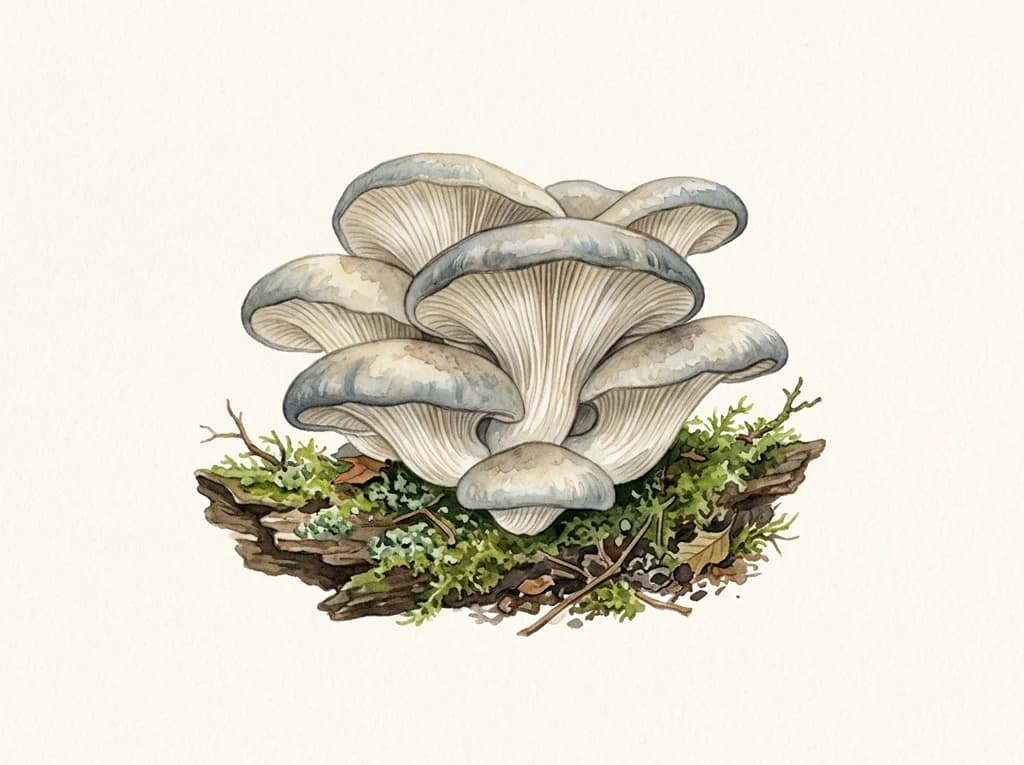
Pleurotus ostreatus
The most rewarding one to start with at home. It grows on straw, coffee grounds or logs and gives big clusters in about 4 weeks.
 Easy
Home growing
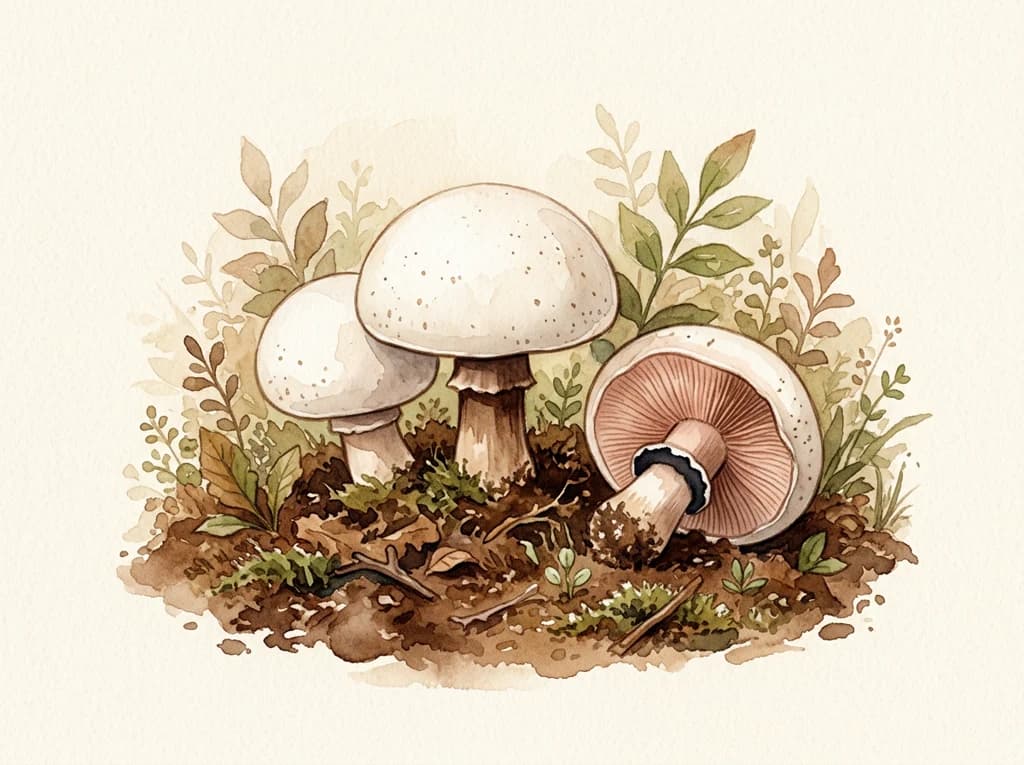
Agaricus bisporus
The supermarket classic. It needs a pasteurised-manure substrate and a casing layer of peat and limestone.
 Easy
Home growing · Gourmet
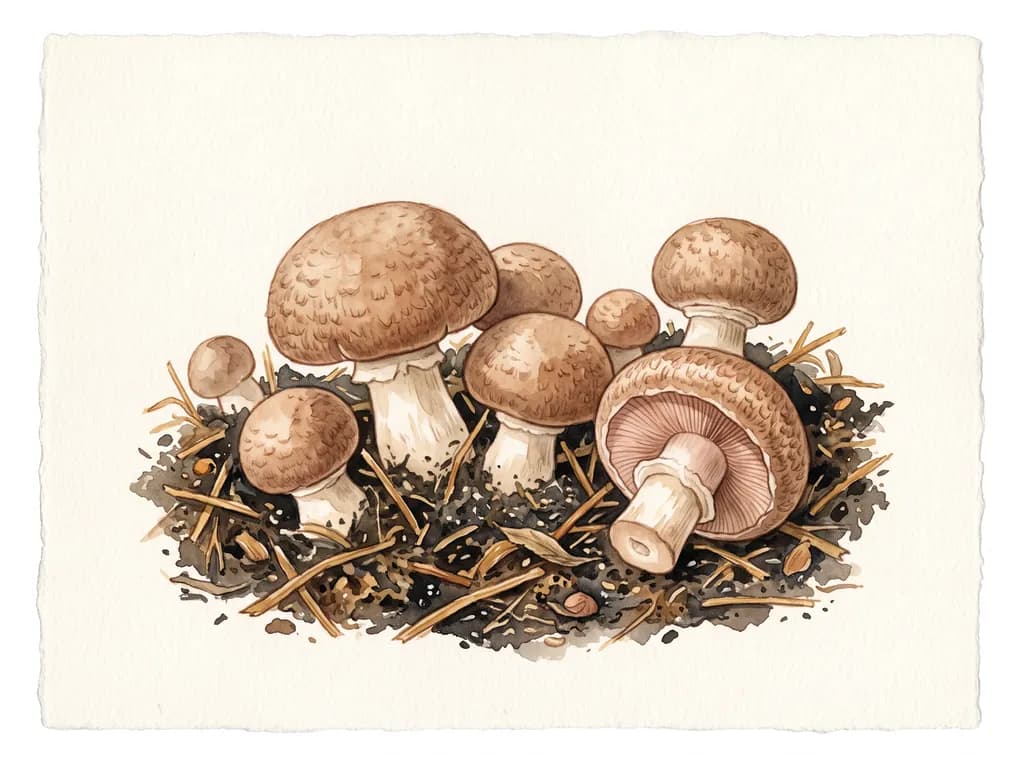
Agaricus bisporus (variedad marrón)
The brown cousin of the white button mushroom: meatier, earthier and firmer. It is grown the same way, on pasteurised-manure compost with a casing layer. Young, it is called cremini; mature and open, portobello.
 Medium
Home growing · Medicinal · Gourmet
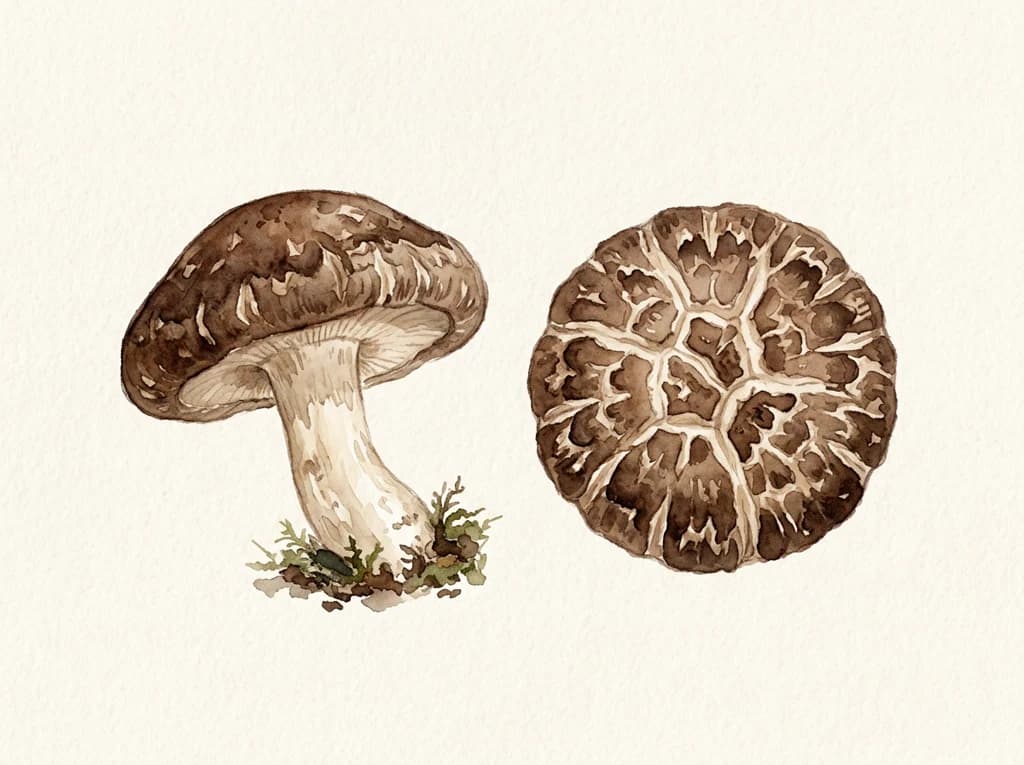
Lentinula edodes
Intense umami flavour, highly valued in East Asian cooking and traditional medicine. It is grown on plugs inoculated into logs or on sawdust blocks.
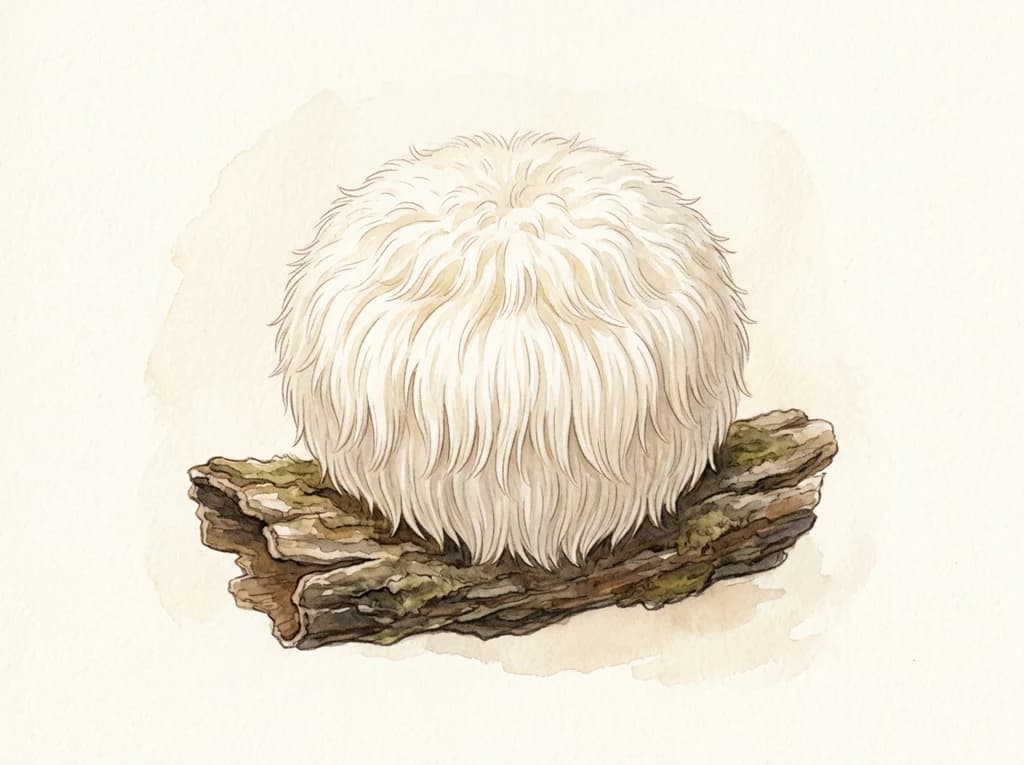 Medium
Home growing · Medicinal · Gourmet
Hericium erinaceus
A delicate flavour reminiscent of seafood and a reputation in traditional Asian medicine; its supposed effects on the nervous system are still being researched.
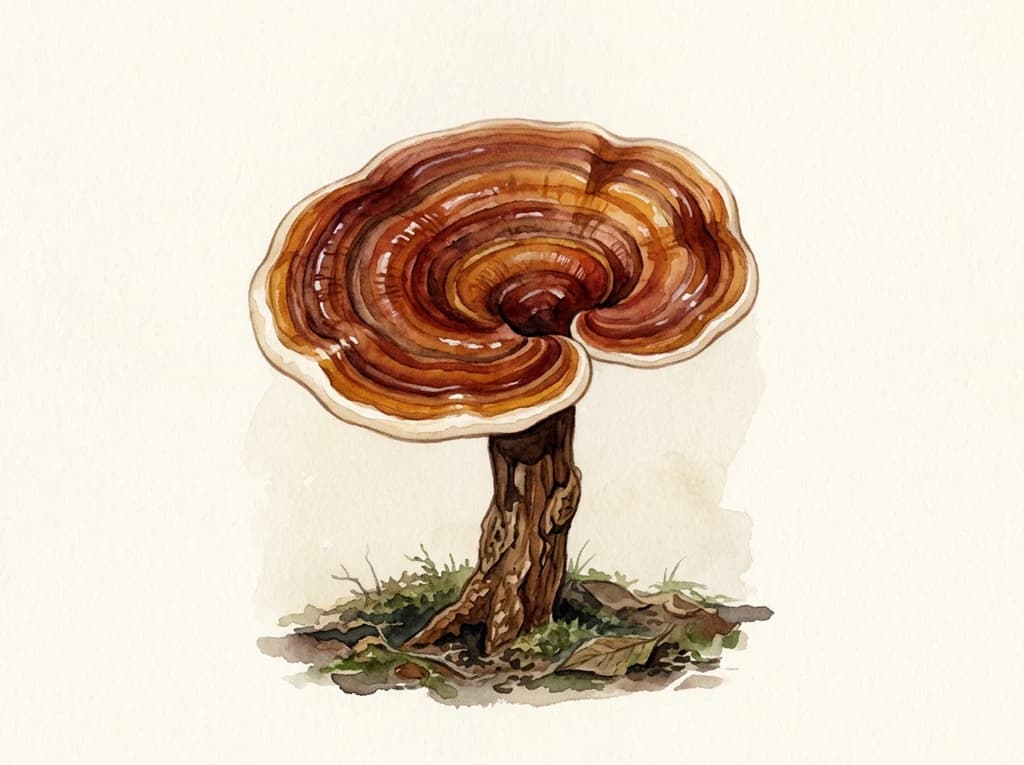 Advanced
Home growing · Medicinal
Ganoderma lucidum
It is not eaten, it is taken as an infusion or extract. One of the most studied medicinal mushrooms in the world.
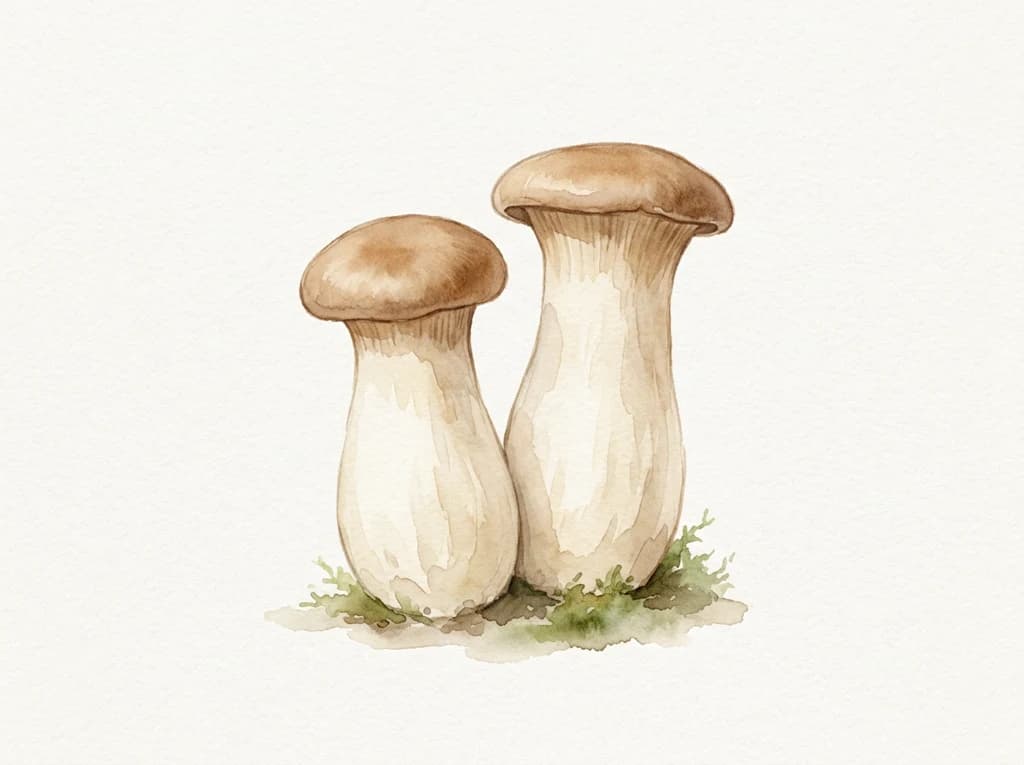 Easy
Home growing · Wild edible · Gourmet
Pleurotus eryngii
The meaty cousin of the oyster mushroom. Its thick, firm stem resembles a scallop once cooked. It is grown on straw or sawdust.
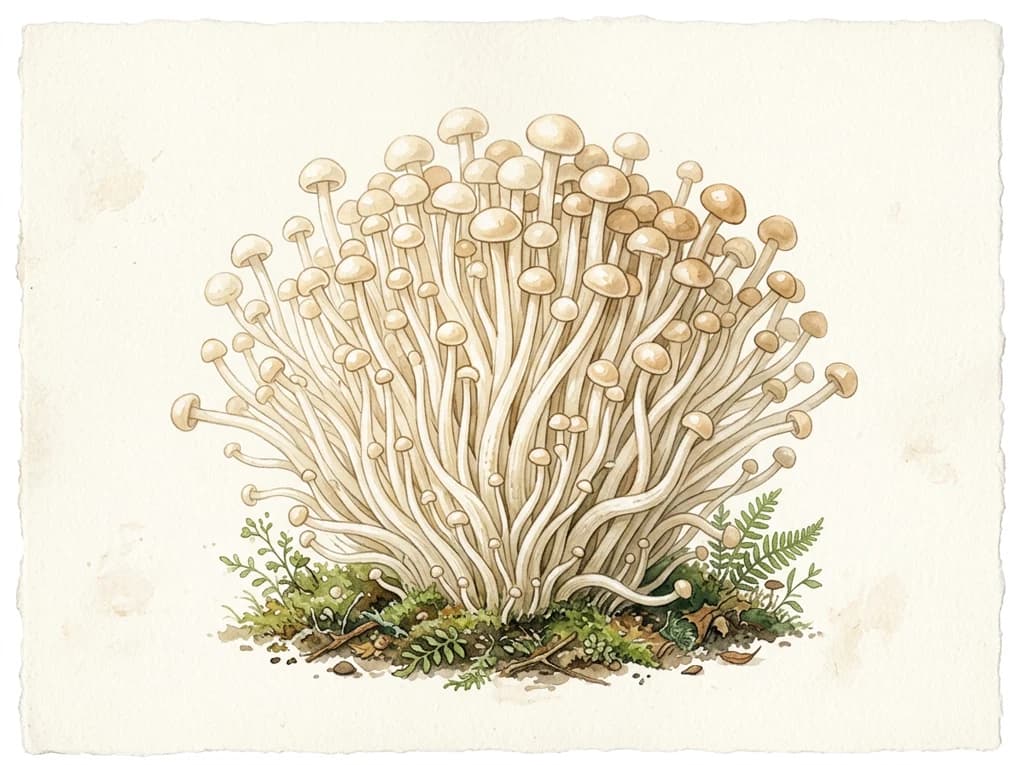 Medium
Home growing · Gourmet
Flammulina velutipes
Clusters of small white caps on long, thin stems. It needs cold to fruit.
 Advanced
Home growing · Medicinal
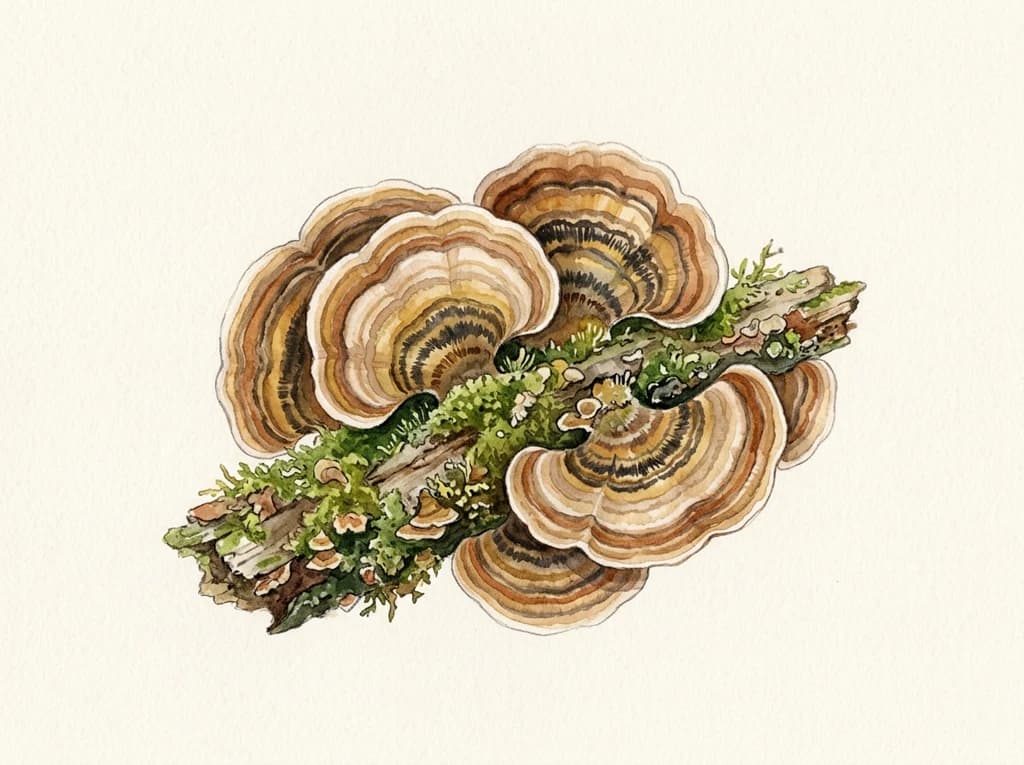
Trametes versicolor
A medicinal mushroom common on fallen logs. It is not eaten; it is prepared as a decoction or extract.
 Easy
Home growing · Wild edible · Gourmet
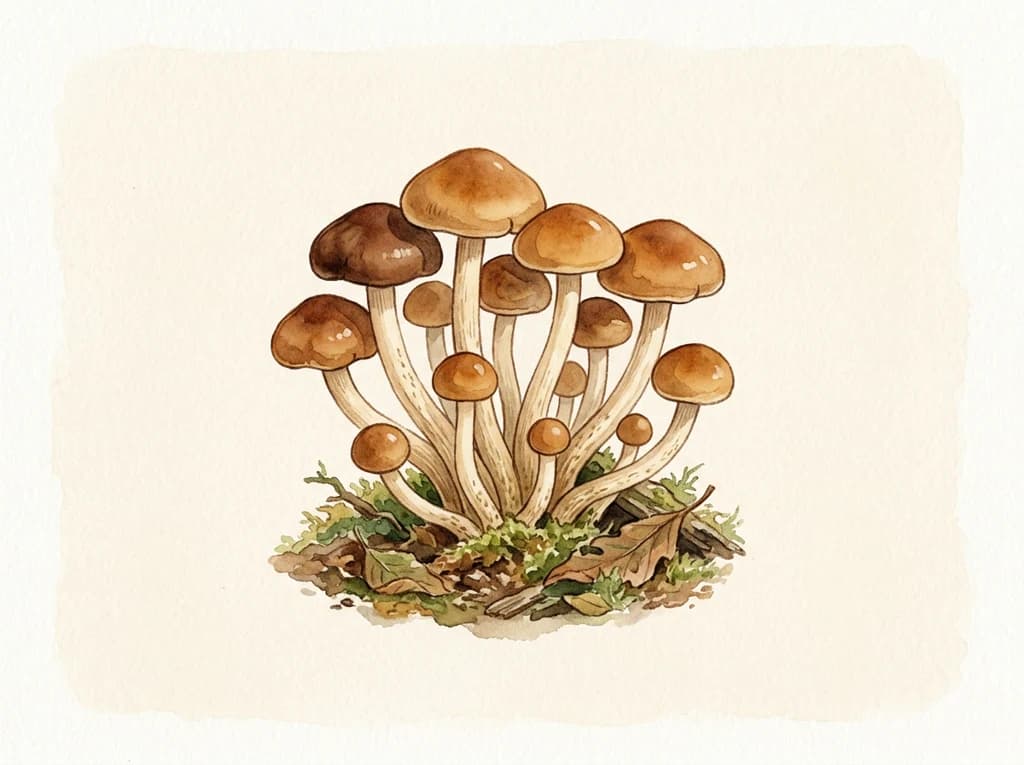
Agrocybe aegerita
Much appreciated in Italy. Dense honey-brown clusters, with a nutty flavour.
 Easy
Home growing · Gourmet
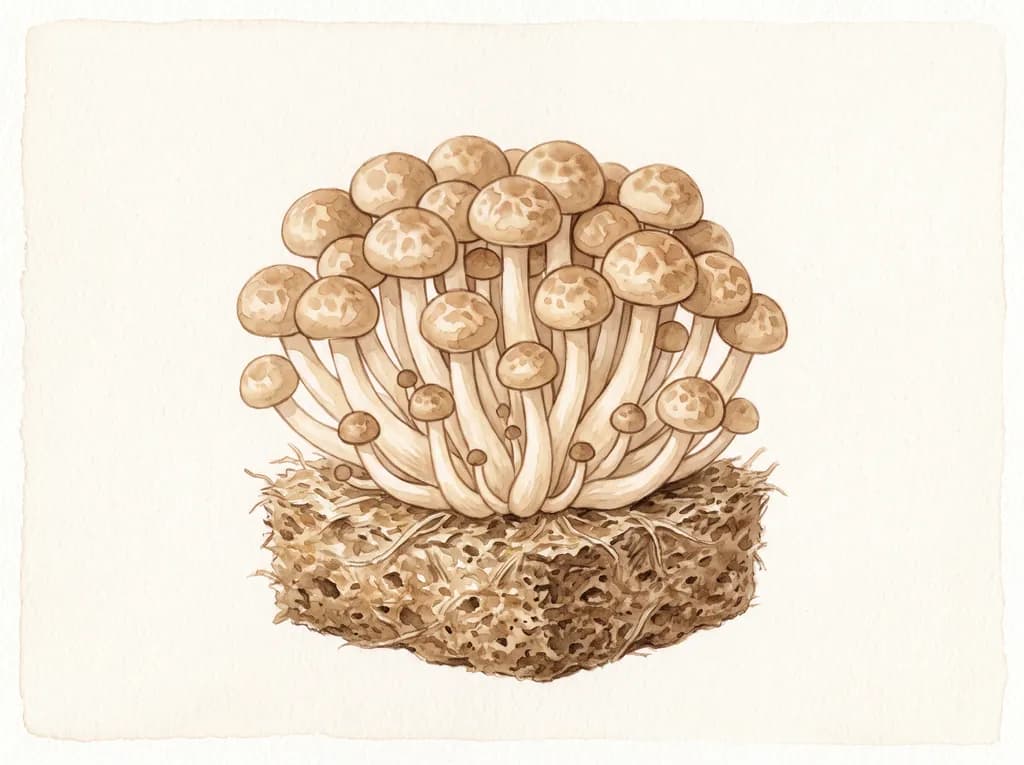
Hypsizygus tectorum (también llamada H. marmoreus)
Clusters of small mushrooms with long stems and a marbled brown or white cap. Easy with a kit; from scratch it needs supplemented sawdust and patience. Always cooked: it is bitter raw.
 Advanced
Wild edible · Gourmet
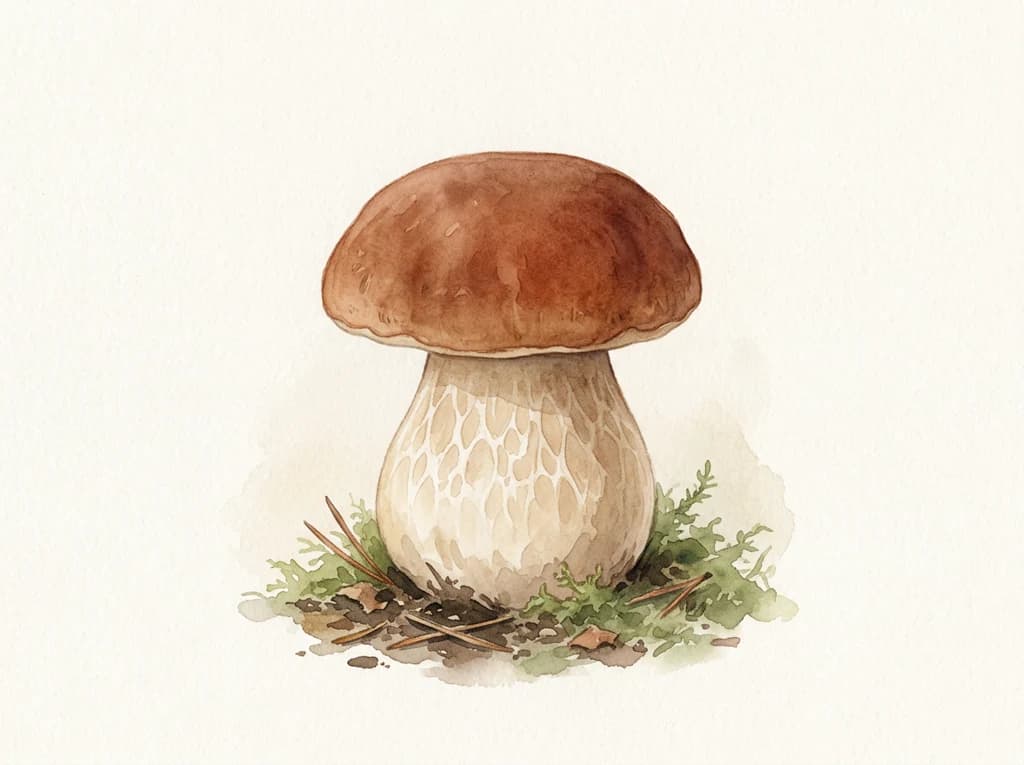
Boletus edulis
The king of the forest. It lives in association with the roots of pines, chestnuts, beeches or oaks: it is not grown at home, it is looked for in the woods.
 Advanced
Wild edible · Gourmet
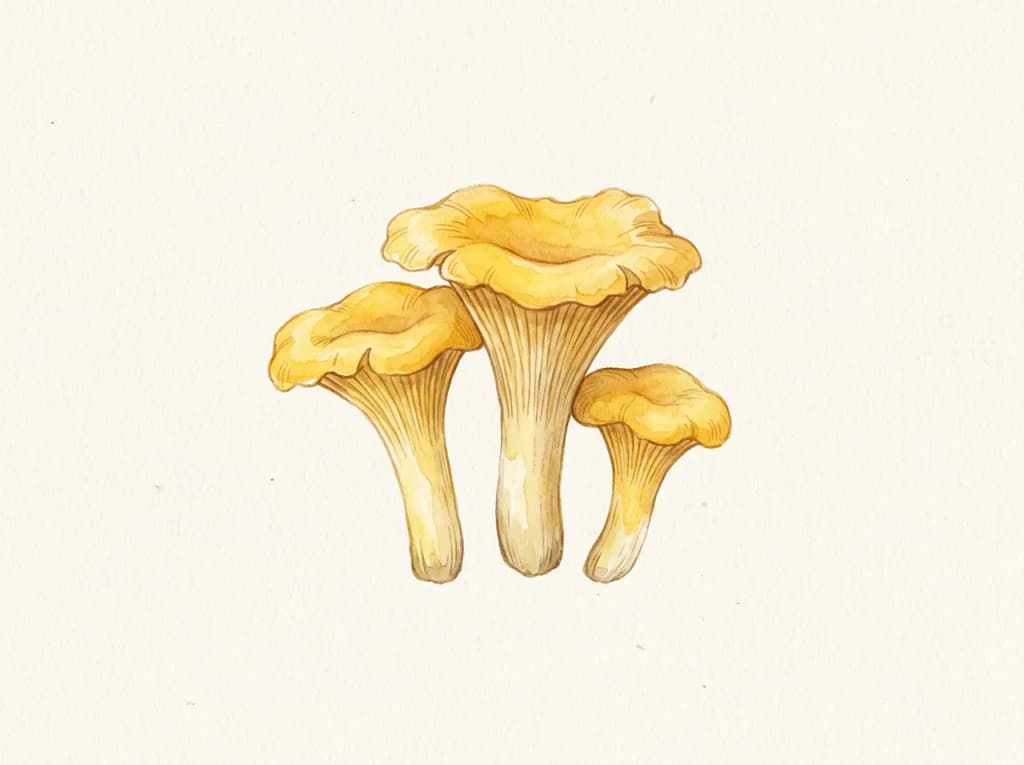
Cantharellus cibarius
Bright yellow, trumpet-shaped and with an apricot aroma. It lives in association with tree roots: it is not grown at home like the oyster mushroom.
 Advanced
Wild edible
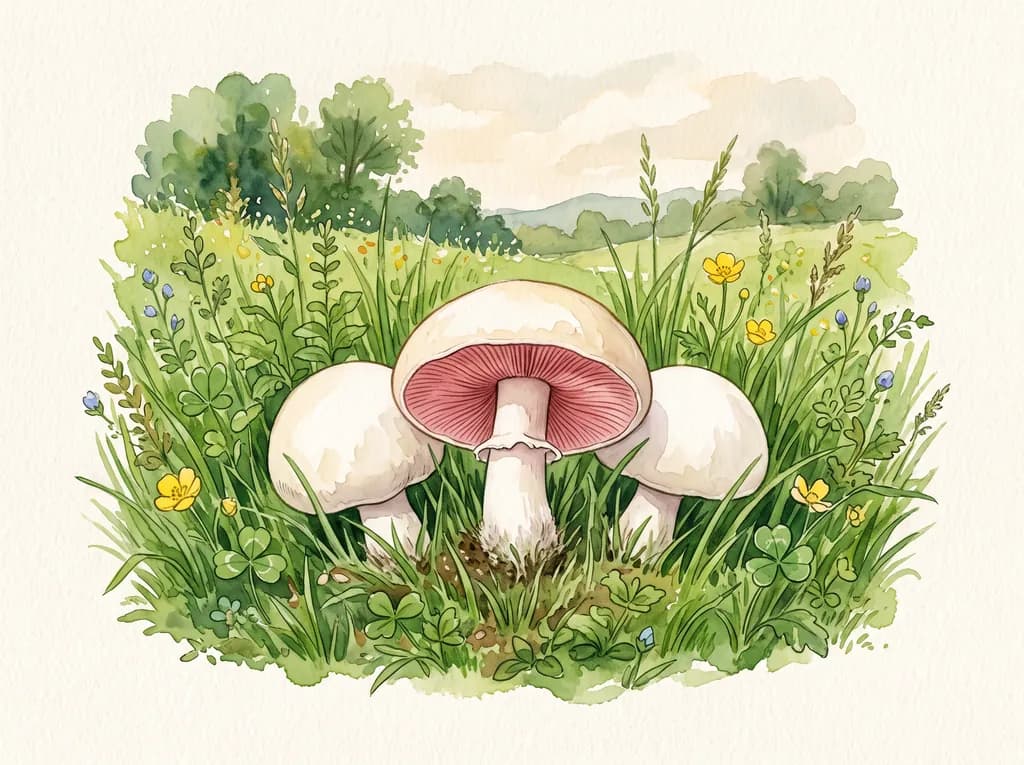
Agaricus campestris
The meadow mushroom: white cap, pink gills that turn dark brown and no volva. It is not grown at home and has deadly look-alikes: only for people who know how to tell it apart.
 Advanced
Wild edible · Gourmet
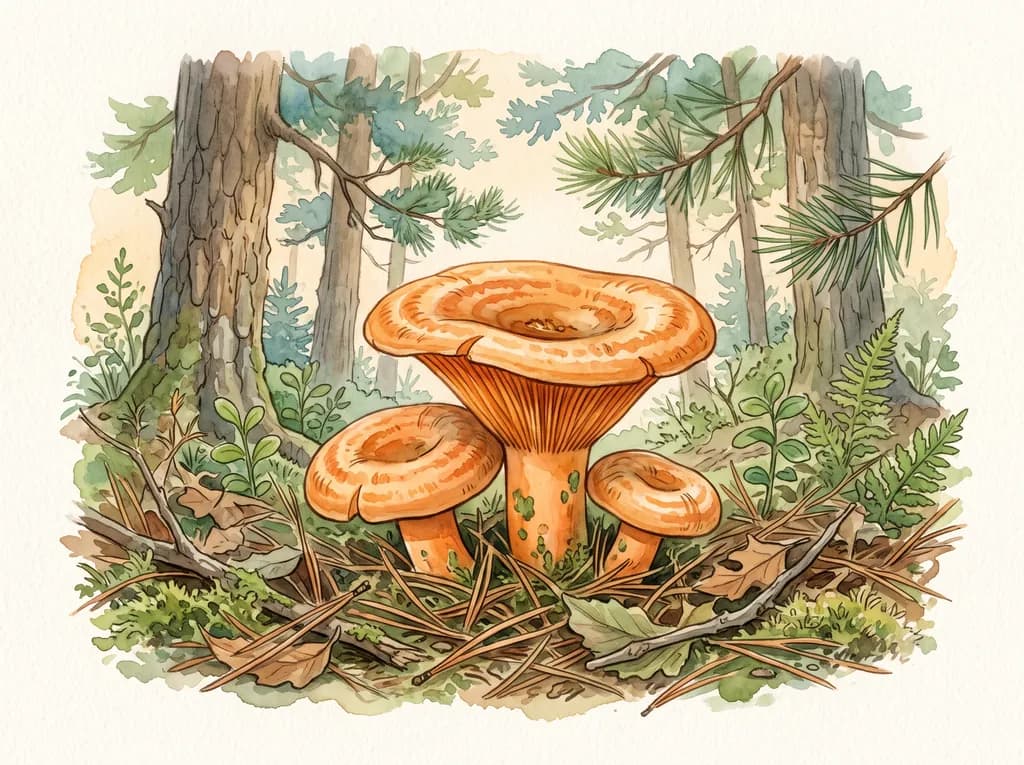
Lactarius deliciosus y especies afines
Orange cap with rings, orange milk when cut and green stains. It lives attached to the roots of pines: it is not grown at home from mycelium, it is looked for in the pine wood in autumn.
 Advanced
Wild edible · Gourmet
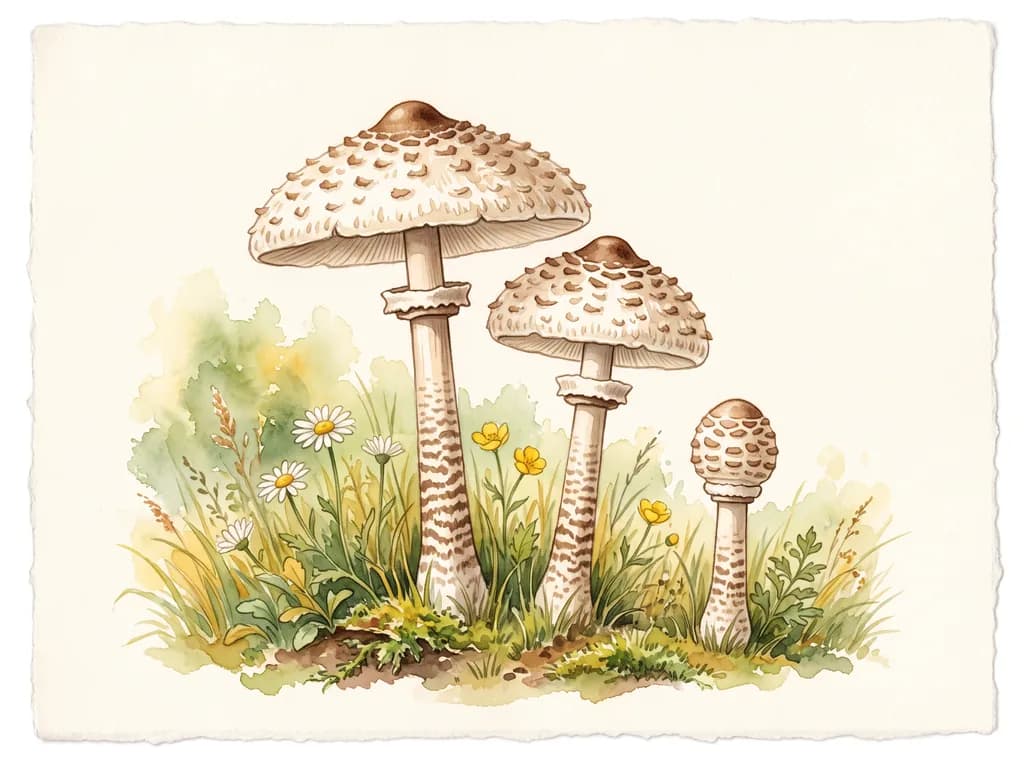
Macrolepiota procera
A big mushroom with a tall stem and a cap like an umbrella with brown scales. Only the cap is eaten, always cooked. It has toxic and deadly look-alikes: it is not grown and not for beginners.
Mycelium: the part that grows unseen in the substrate (the equivalent of roots). Substrate: the material it grows on (straw, sawdust, coffee). Fruiting: when the mushrooms appear (the edible part). Pins: the initial little balls before they grow. Colonisation: the initial stage in which the mycelium invades the whole substrate.
See the full glossary