
Wild edible · Gourmet
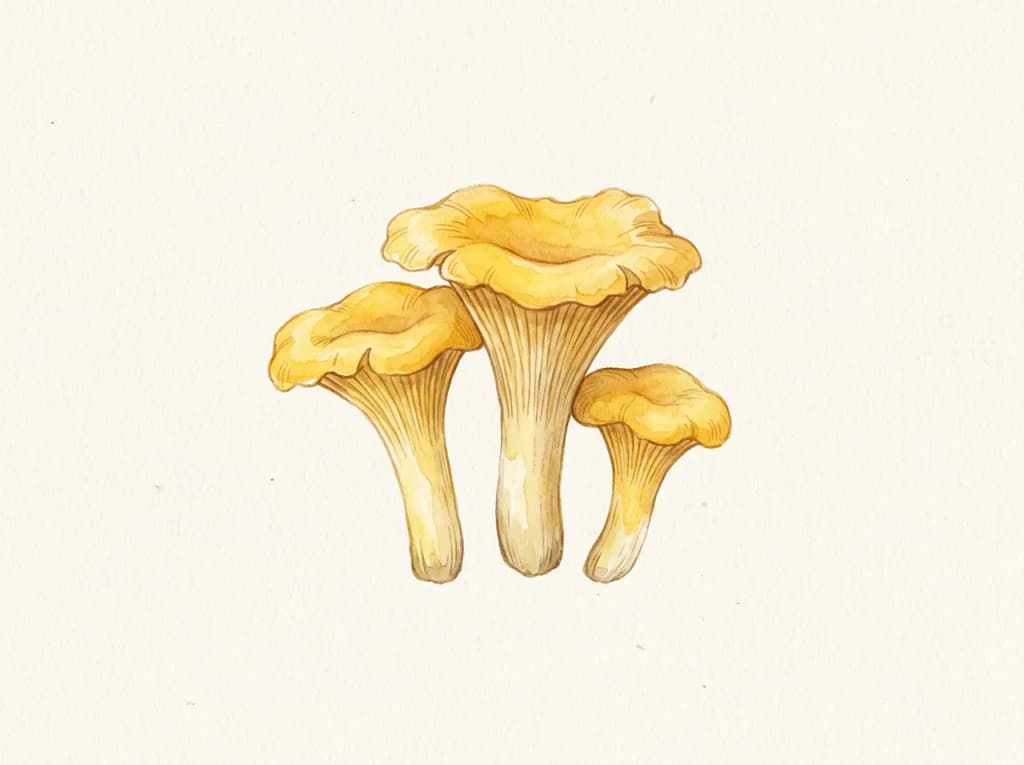
Chanterelle
Cantharellus cibarius
Also called: golden chanterelle, girolle, rossinyol
Common in coniferous and broadleaf woods. It lives attached to tree roots, so it is not grown on substrate. It is usually recognised by its egg-yolk yellow colour, its folds (not true gills) and its apricot smell. Even so, always have an expert confirm it: there are dangerous look-alikes and none of these features is enough on its own.
Responsible foraging
Materials
- Basket and knife
- Mushroom guide and, better, an experienced mycologist
Where and how to look for it
- 1It comes up from summer to autumn, after rain.
- 2It is looked for in mossy areas of temperate woods.
- 3Cut it with a knife close to the ground and clean the stem on the spot.
Do not confuse it with
Hygrophoropsis aurantiaca (false chanterelle, not recommended) and Omphalotus olearius (toxic; it grows on stumps and roots, in clusters, and its gills can glow faintly in the dark). Most serious of all is confusing it with orange webcaps such as Cortinarius orellanus, deadly because they damage the kidneys days after being eaten. Never eat a mushroom unless an expert has identified it.
In the kitchen
Fruity and mild, with a slightly peppery touch. Delicious in the pan; always eat it cooked.
Quick ideas
- Sautéed with garlic and plenty of parsley.
- Scrambled with eggs.
- Creamy sauce for pasta or steak.
How to keep it
- Frozen after cooking or blanching.
- In vinegar or oil only with a reliable preserving recipe: without the right acidity and sterilisation there is a risk of botulism.
Precautions
- Collect only if an expert has confirmed the species. The false chanterelle is not recommended and Omphalotus is toxic.
How to get its mycelium

This is a mycorrhizal mushroom: it lives attached to the roots of a tree and cannot be grown from mycelium in a jar, a bag or a log. Chanterelles are not grown from mycelium at home. Beware of "chanterelle kits": they do not work.
- Companion tree
- Pine, fir, beech or oak depending on the chanterelle species.
- Timescale
- Years, with unreliable results.
What you do in practice
- There are trials of plants mycorrhized with Cantharellus in nurseries, but production is irregular and there is no reliable commercial cultivation.
- If you want to encourage it, protect the woodland where it already lives: do not compact the soil, do not remove the leaf litter or the moss, and avoid fertilisers.
Step-by-step instructions for each method, with diagrams and safety warnings: guide to getting and multiplying mycelium. Only grow species that you have identified with certainty and do not pick from the wild to clone.

More mushrooms to discover
Explore the full catalogue with button mushrooms, gourmet (chanterelle, porcini), medicinal (reishi, turkey tail) and ones you can grow from your kitchen.
See all the mushrooms