vuelta al huerto

7 guides

Raising feed for your animals

Protein and fresh greens for your chickens, ducks, quail and fish, raised at home with boxes, buckets and trays. Each guide gives the materials, the measurements, the step by step, the timings, the most common problems and how much it produces.

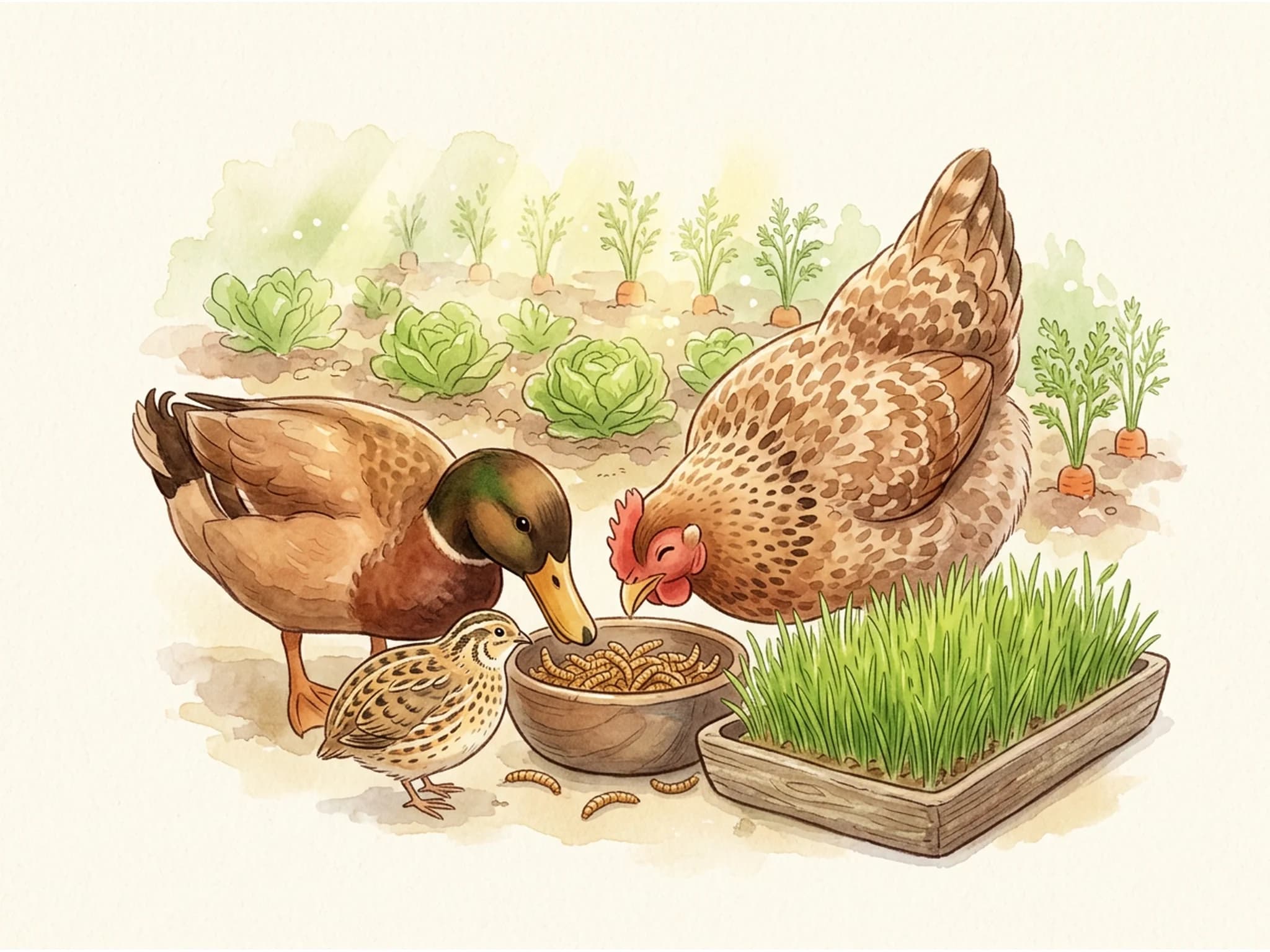
Watercolour of a hen, a duck and a quail eating mealworms and sprouted fodder in the garden

Which food suits each animal and how much to give

Indicative amounts for a healthy adult animal. Supplements (insects, worms, duckweed, fodder) do not replace a complete feed: all together, they should not exceed 10–20% of the ration. If in doubt, ask your vet.

Chickens

Omnivores: insects are a protein treat. The base is always a complete feed; everything else, at most 10% of the ration.

FoodHow muchNote
Mealworms5–10 g per hen per day (40–80 larvae)
Black soldier fly larvaeUp to 10 g per hen per dayOnly if they were reared on a plant substrate.
Red worms5–10 g, 2–3 times a week
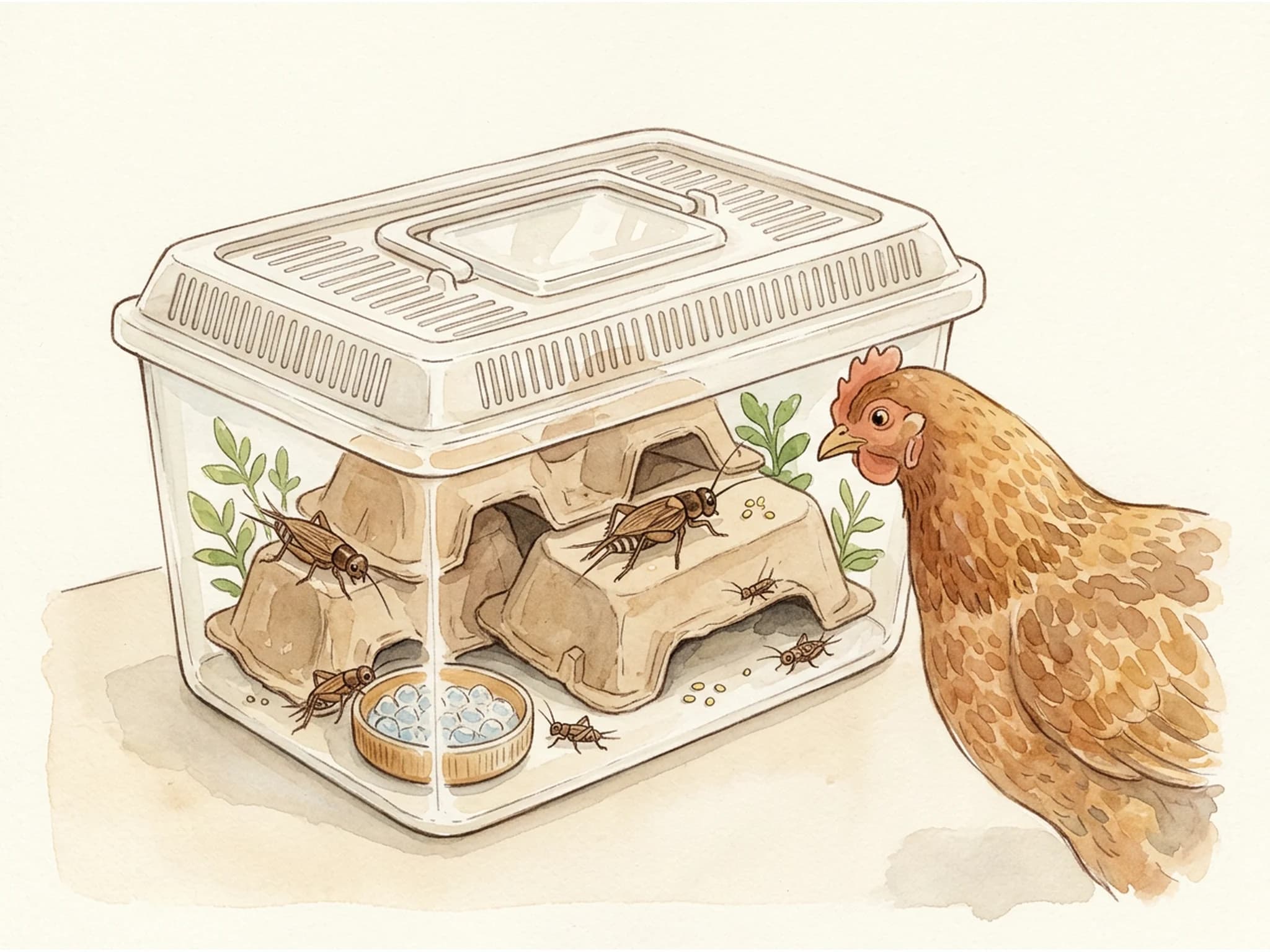
Crickets3–5 g per hen per day
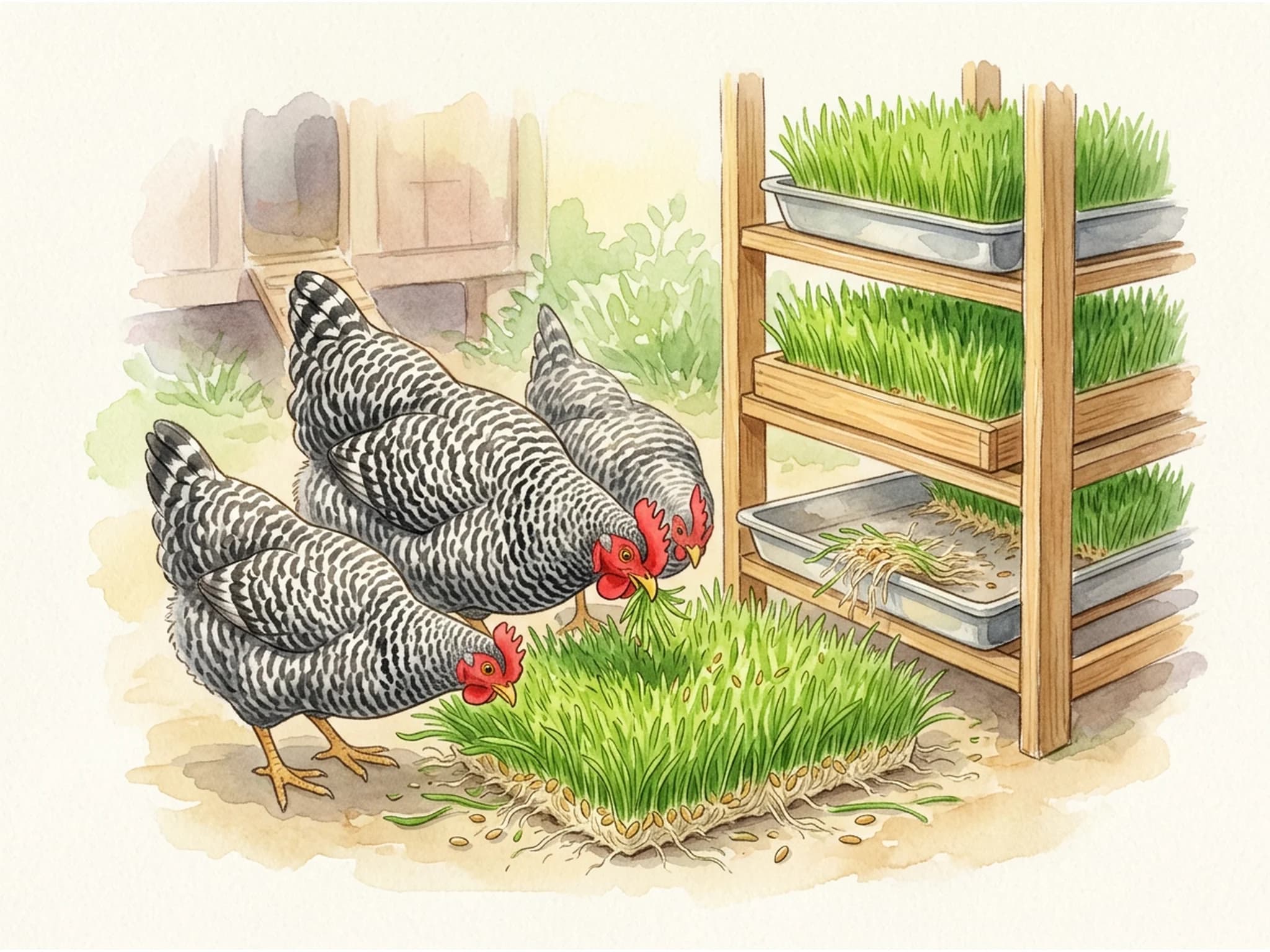
Sprouted fodder30–50 g per hen per day
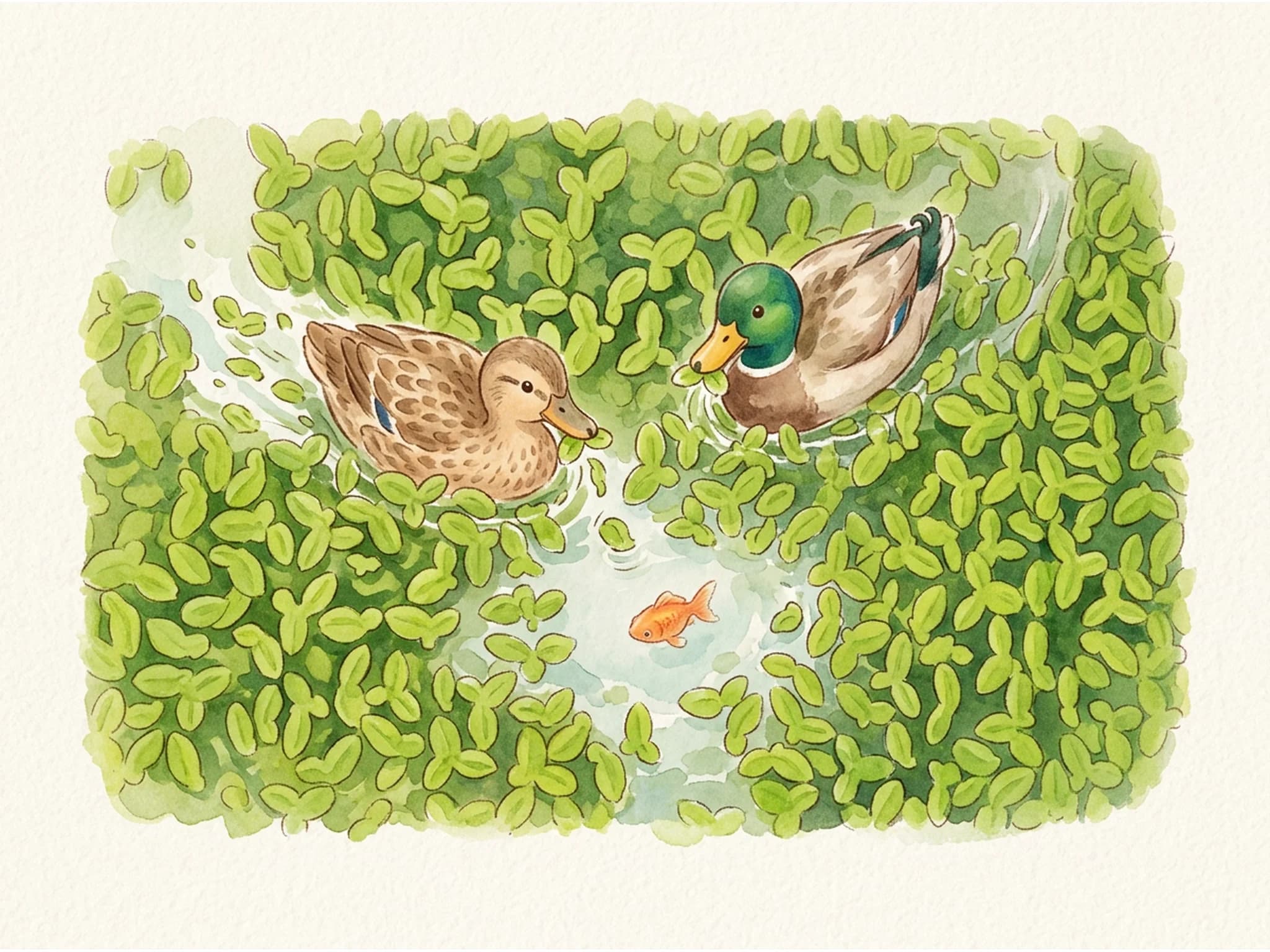
Duckweed30–50 g drained per hen per day
  • No: Daphnia (it does not provide enough).
  • No: Insects or worms reared on kitchen scraps, meat or fish: if you eat their eggs, rear them only on plant matter.

Ducks

They love floating plants and creatures in the water: tip them onto the water so they dive for them.

FoodHow muchNote
DuckweedAs much as they want, up to 10–20% of the fresh ration
Mealworms5–10 g per duck per day
Black soldier fly larvaeUp to 10 g per duck per day
Red worms5–10 g, 2–3 times a week
Crickets3–5 g per duck per day
Sprouted fodder50–80 g per duck per day
  • No: Azolla: it is invasive; use duckweed.

Quail

Small birds on a specific high-protein feed: insects are an occasional, small extra.

FoodHow muchNote
Small mealworms1–2 g per quail per day (larvae under 10 mm)
Black soldier fly larvae1–3 g per quail per day
Small crickets1–2 g per quail per day
Sprouted fodder5–10 g per quail per day
Duckweed5–10 g drained per quail per day
  • No: Large larvae and crickets (they choke).
  • No: Too many insects: an unbalanced feed reduces laying.

Rabbits

Strict herbivores: rabbits do NOT eat insects or worms. Their staple is hay as much as they want, vegetables and a little feed.

FoodHow muchNote
Sprouted fodder (only a little)10–20 g, 2–3 times a weekIt is rich in starch: too much causes diarrhoea.
  • No: Mealworms, fly larvae, worms and crickets: they cannot digest animal protein and may fall ill.
  • No: Duckweed and azolla: there is no reliable data, better to avoid them.

Pond fish

Ornamental fish in your pond (crucian carp, koi, goldfish).

FoodHow muchNote
Daphnia5–10 g, 2–3 times a week (what they eat in 2–3 min)
DuckweedAs much as they want, without covering more than 30% of the surface
Chopped red worms1–2 times a week, a few
Small mealworms and cricketsA few small larvae, 1–2 times a week
  • No: Overfeeding: the surplus fouls the water.

Hedgehogs

Protected wildlife. The best thing is not to feed them and to offer them shelter, water and a garden with insects of their own.

FoodHow muchNote
Clean water in a shallow dishAlways availableThe only thing conservation guides recommend.
  • No: Mealworms, dried or live, and peanuts: they have a lot of phosphorus and little calcium and cause calcium loss (Hedgehog Street).
  • No: Milk and bread: they cause diarrhoea.

Want to build the structure? See the builds, the compost and worm compost, chickens, the other animals and My coop.