
vuelta al huerto
Back to DIY builds
BiodiversityEasy

Mini pond for amphibians and pollinators

Also known as: mini pond, wildlife pond, garden pond, small garden pond, DIY pond, frog pond, container pond

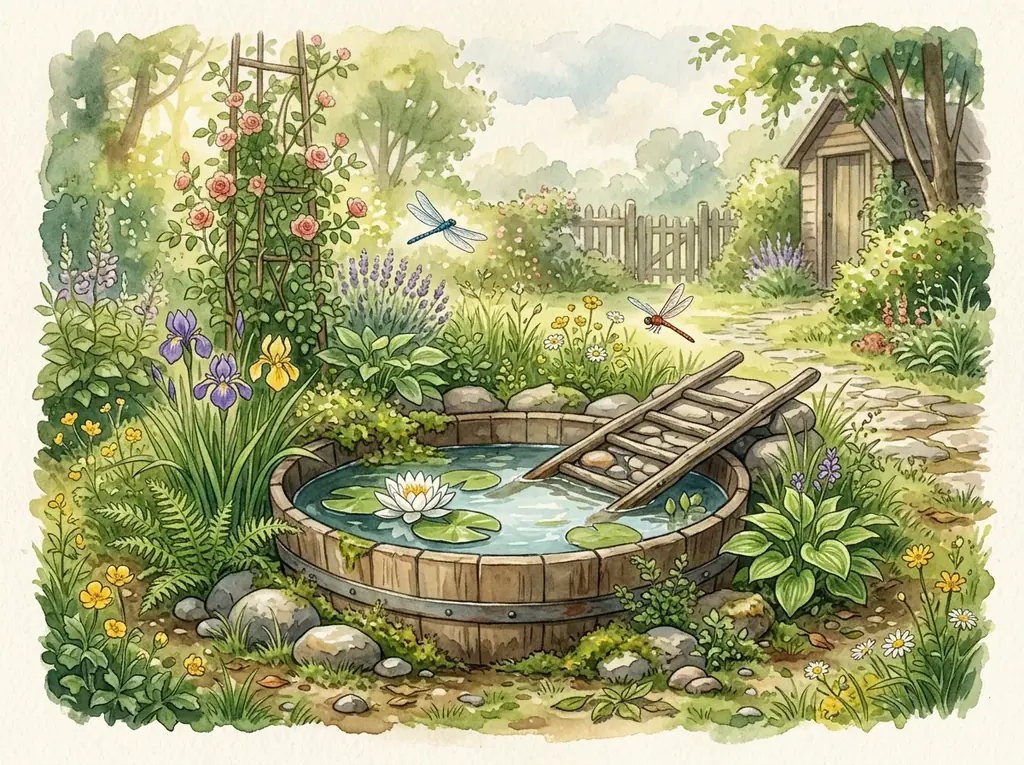
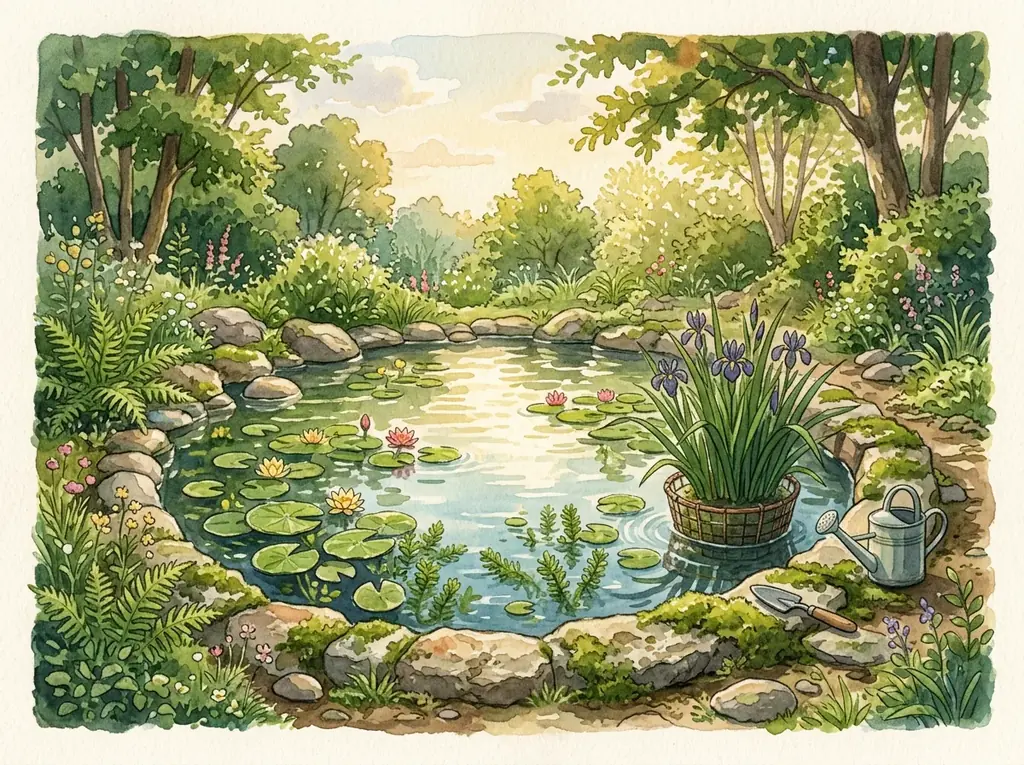
A mini pond of 150 to 300 L (about 39.6–79.3 US gal) with a buried tub, a solar pump and local plants. It attracts dragonflies and other helpful insects, and provides water for pollinators without any need to add fish.

Time
2–3 h
Cost
25–50 €
Steps
4
Mini pond for amphibians and pollinators

What is it for?

  • Amphibians eat plenty of slugs and mosquitoes.
  • Dragonfly larvae eat mosquito larvae in the water.
  • It is a watering point for bees and wasps.

Materials

  • 1 polyethylene tub of 200 L (about 52.8 US gal) or a preformed pond of 150 L (about 39.6 US gal)
  • Geotextile and 5 cm (2 in) of sand to put under the tub
  • 5 W solar pump with a diffuser
  • 3 aquatic plants from a nursery (dwarf water lily, a native oxygenating plant such as hornwort, Ceratophyllum demersum, and a rush)
  • 10 kg (22 lb) of washed gravel and some stones (for the margin and an exit ramp)

Tools

  • Spade
  • Spirit level
  • Scissors

Plan with measurements

Tub of 150-200 litres sunk with its rim flush with the ground, in a hole 20 cm wider and on 5 cm of sand; sloping shore with stones as an exit ramp, solar pump diffuser 10 cm from the surface, potted water lily and a rush at the edge.

Mini pond: dimensioned sectionTub of 150-200 litres sunk with its rim flush with the ground, in a hole 20 cm wider and on 5 cm of sand; sloping shore with stones as an exit ramp, solar pump diffuser 10 cm from the surface, potted water lily and a rush at the edge.Section of the sunken pond10105 cm10 cm5 W solar panelin full sunRush at the edgeshadedSolar pump with diffuser10 cm from the surfaceSloping shore ofstones and gravel: rampso that animals can climb outDwarf water lily in a potwith gravel, not looseTub of 150-200 Lwith the rim flush with the groundHole 20 cm widerand 5 cm of levelled sandThe “10” dimensions are centimetres of clearance on each side of the hole.

Step by step

Step 1: Dig the hole and settle the tub on sand
1

Dig the hole and settle the tub on sand

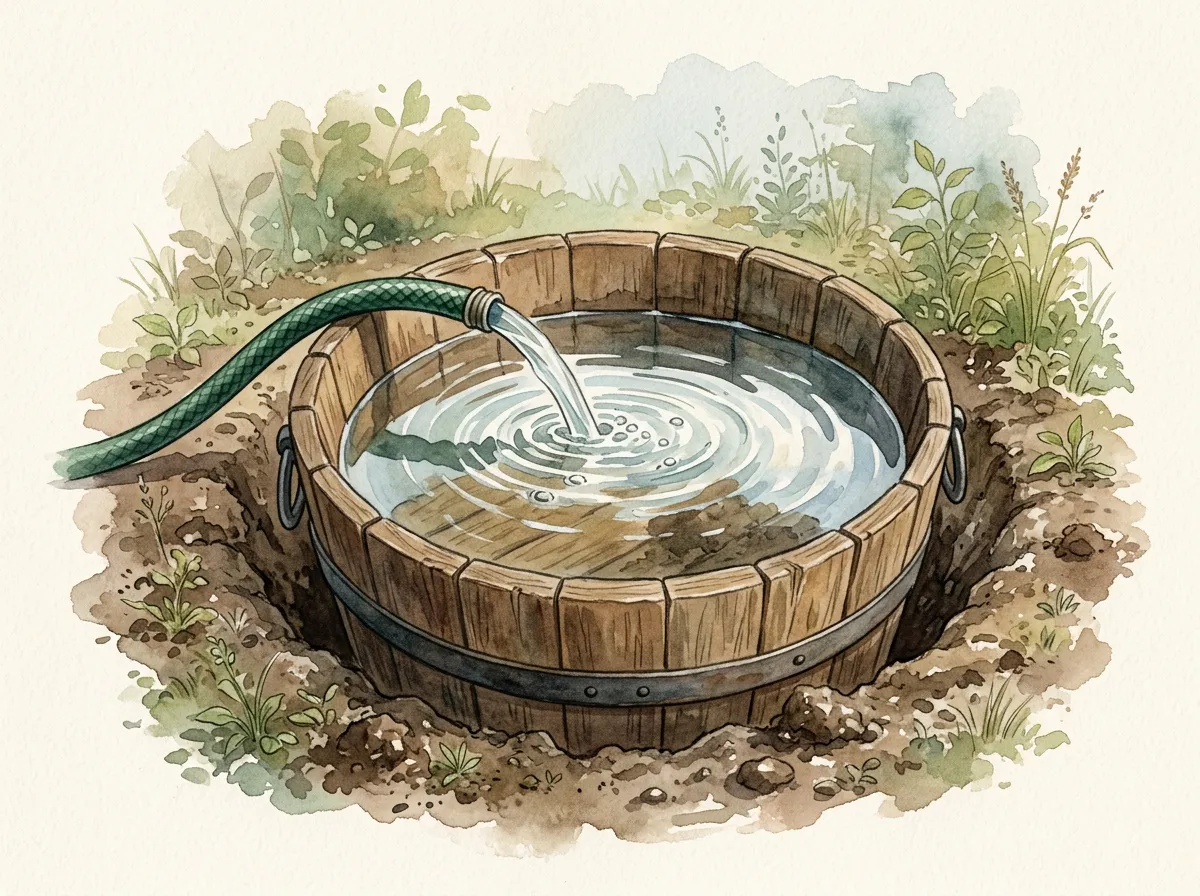
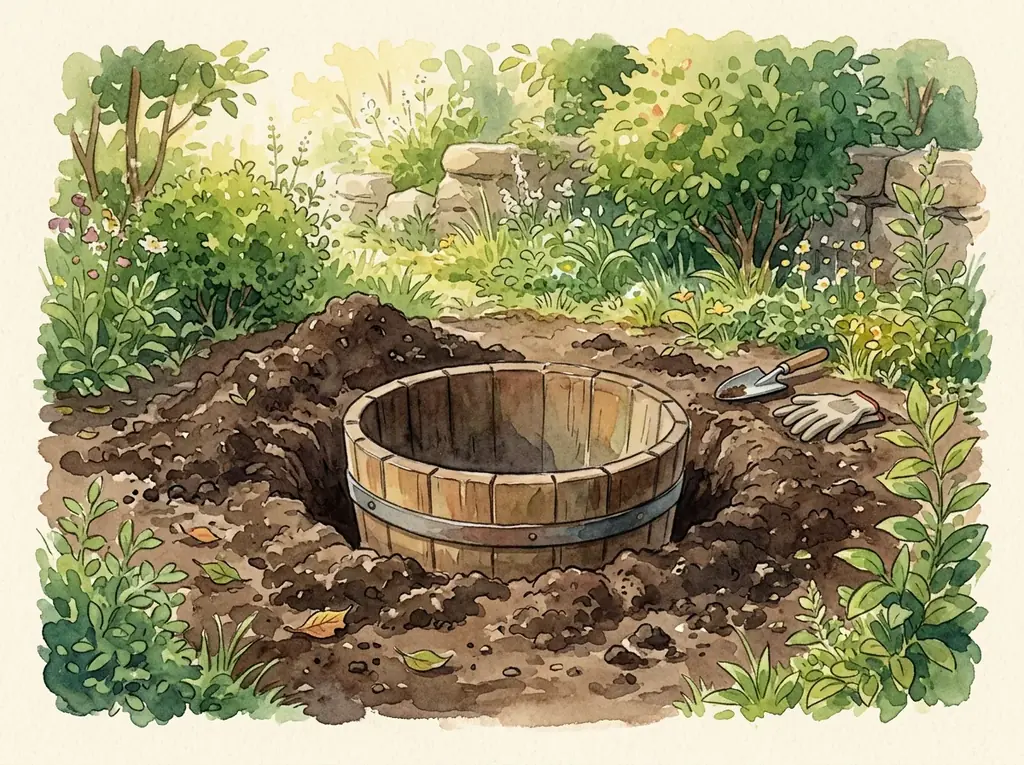
Dig a hole about 20 cm (7.9 in) wider than the tub and deep enough that its rim sits level with the ground. Spread 5 cm (2 in) of levelled sand, set the tub in place and check with the spirit level that it is horizontal. Make a sloping shore with stones and gravel, so that frogs, hedgehogs and other animals can climb out if they fall in.
Step 2: Install the solar pump
2

Install the solar pump

Place the solar panel in full sun and the diffuser about 10 cm (3.9 in) below the surface, to oxygenate the water. Fix the cable to the edge or bury it about 5 cm (2 in). Since it doesn't use mains electricity, there is no risk of electric shock, but remember that any body of water is a danger to small children: don't leave them alone nearby.

Step 3: Plant the aquatics and dress the margin
3

Plant the aquatics and dress the margin

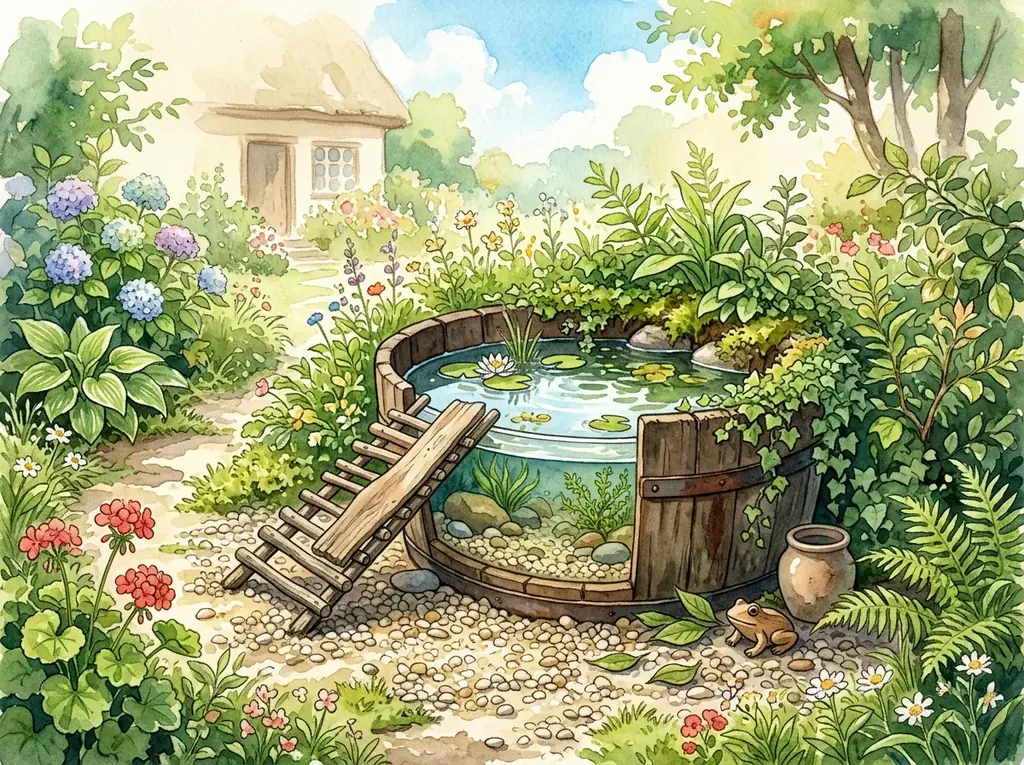
Put the water lily in a pot with gravel, not loose on the bottom, so it doesn't cloud the water. The oxygenating plant can go in loose. Don't use Elodea or water hyacinth: they are on the Spanish Catalogue of Invasive Alien Species and keeping and selling them is prohibited. A rush at the shaded edge gives shelter. The gravel at the margin stops mud splashing.

Step 4: Fill with water and let it settle
4

Fill with water and let it settle

If you can, fill it with rainwater; if you use tap water, leave it to stand for 48 h so the chlorine dissipates. Wait 2 weeks before judging whether it is clear: the algae of the first weeks are normal and the plants will end up competing with them. Remove fallen leaves. Don't introduce amphibians or spawn from elsewhere; they will arrive on their own.

Tips for this build

  • Direct sun all day fills the pond with algae; with about 6 h of sun there is usually a good balance.
  • Avoid fish in less than 300 L (about 79.3 US gal) without a filter: in summer the water warms up and oxygen runs short, and they also eat the larvae of amphibians and insects.
  • Never use soap or plant-protection products near the pond: they are toxic to beneficial insects.
  • In winter, take the pump out if it freezes; hardy plants cope under a thin layer of ice.

Keep reading

More builds in this category

See all DIY builds