
 Step by step
1
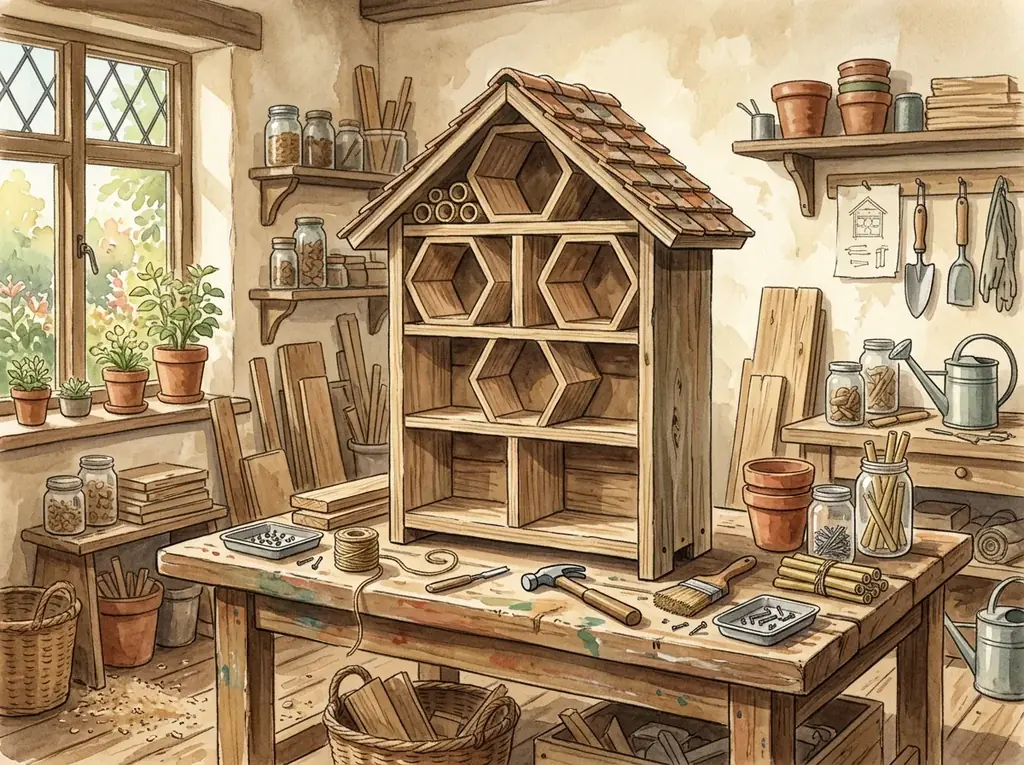
Build the compartmented frame square and check the diagonals
Make a 60×60×15 cm (5.9 in) box divided into 6-9 cubbyholes with battens. Add a sloping roof with a waterproof sheet or old tiles so the rain runs off. Closed back.
 BiodiversityMedium
Also known as: bug hotel, insect hotel, insect house, bee hotel, DIY bug hotel, solitary bee hotel, wildlife stack
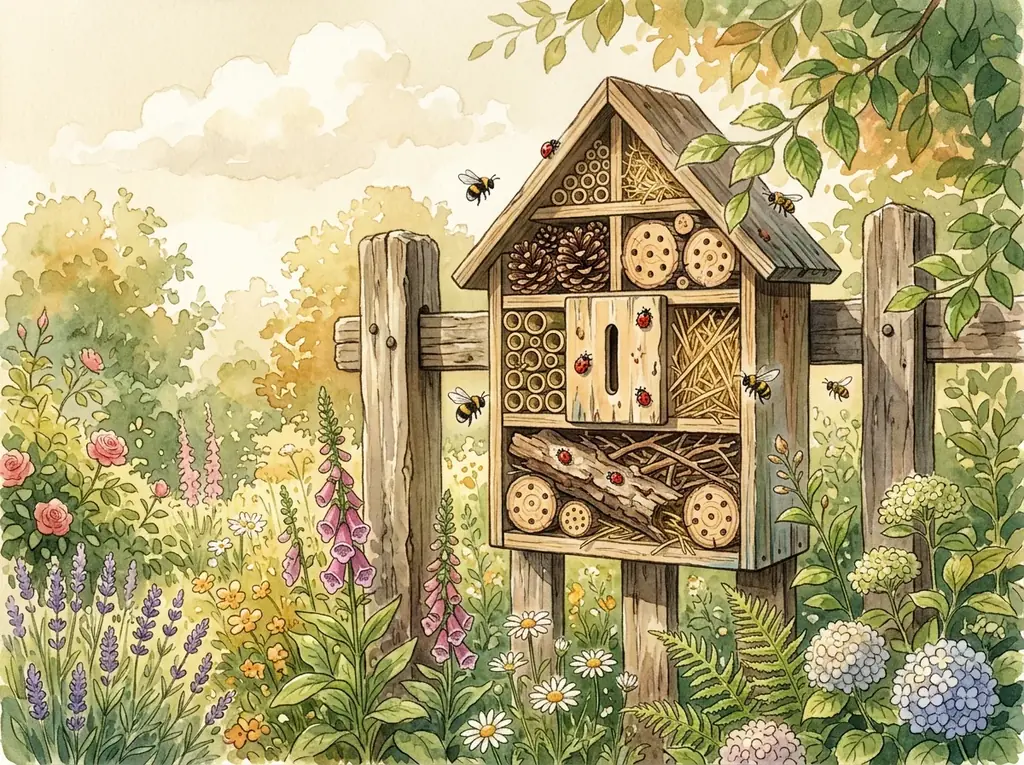
A structure of compartments filled with different materials (canes, pine cones, hollow bricks, drilled wood, bark) that attracts solitary bees, ladybirds, earwigs, hoverflies and other helpful allies of the garden.
Read this before buying anything
Anything that touches your food or your animals should NOT be treated with polyurethane varnishes, solvent-based enamels or stains with fungicidal or insecticidal biocides. The soil leaches these products and they end up in your tomatoes or in the hens' feed. Use boiled linseed oil, beeswax + oil, or a water-based stain labelled “for garden use” or EN 71-3.
Safe materials
How to treat timber, insulate from the soil and what to avoid, without poisons. See the terms in the glossary.
Box of 60 × 60 × 15 cm with 6-9 compartments, a small roof and a closed back: canes of 12-15 cm, logs with holes of 4-10 mm and 10-12 cm deep, pine cones, straw, hollow brick and bark. Hang it at 1-1.5 m facing south or south-east.
Make a 60×60×15 cm (5.9 in) box divided into 6-9 cubbyholes with battens. Add a sloping roof with a waterproof sheet or old tiles so the rain runs off. Closed back.
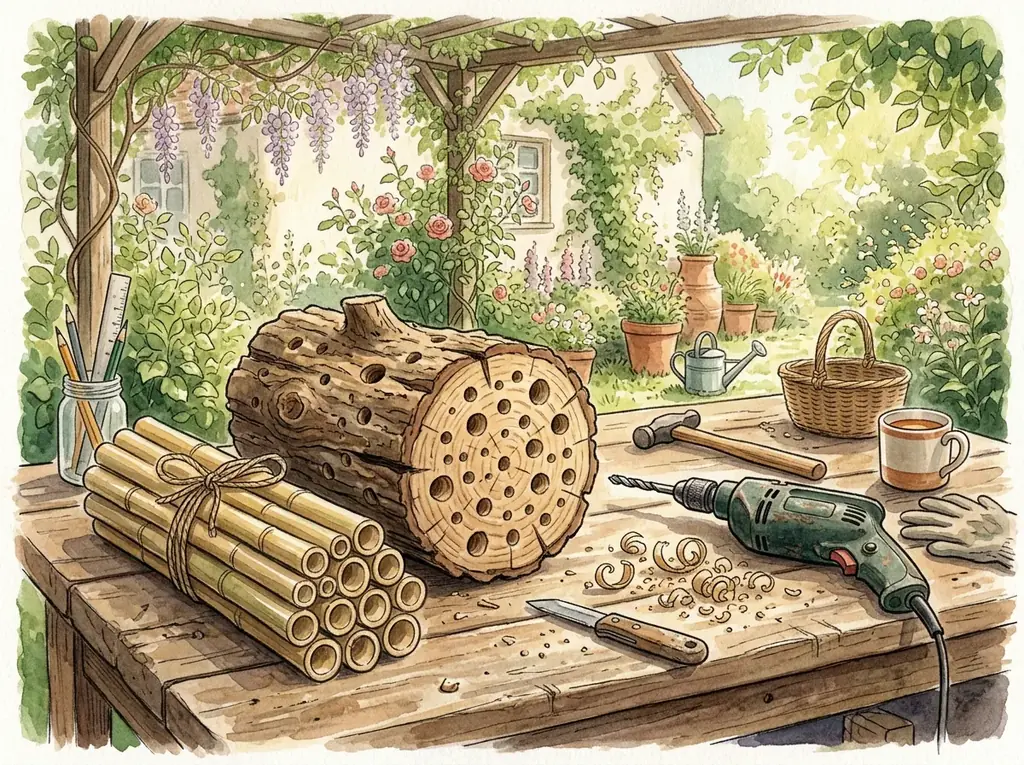
Cut the bamboo canes to the depth of the compartment (12-15 cm, 4.7–5.9 in). Drill the dry hardwood logs with bits of different diameters (4-10 mm, 0.16–0.39 in), into the side face and not the end of the log, so they don't split. Make holes 10-12 cm (3.9–4.7 in) deep without going right through the wood: the end must stay closed. With less than 10 cm (3.9 in), mostly males are born.
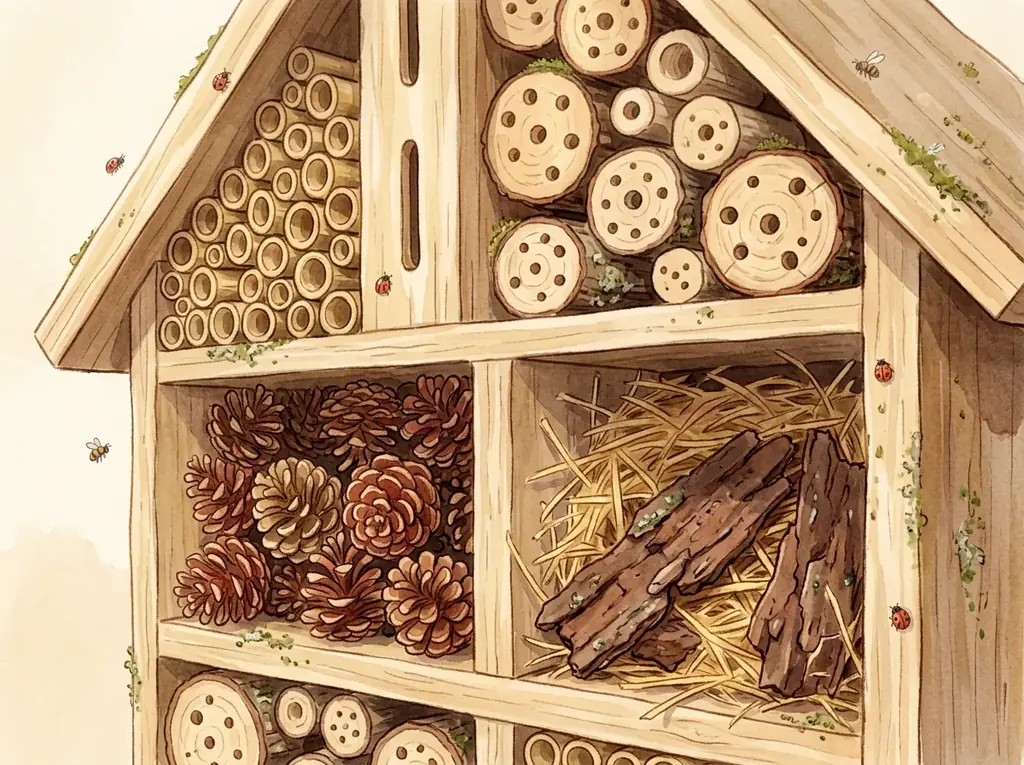
Dedicate one compartment to each material: canes for solitary bees, drilled logs for solitary bees and wasps, pine cones for ladybirds, straw and leaves for earwigs and lacewings, bark for ground beetles and hollow bricks for more bees. Pack the filling firmly so nothing falls out.
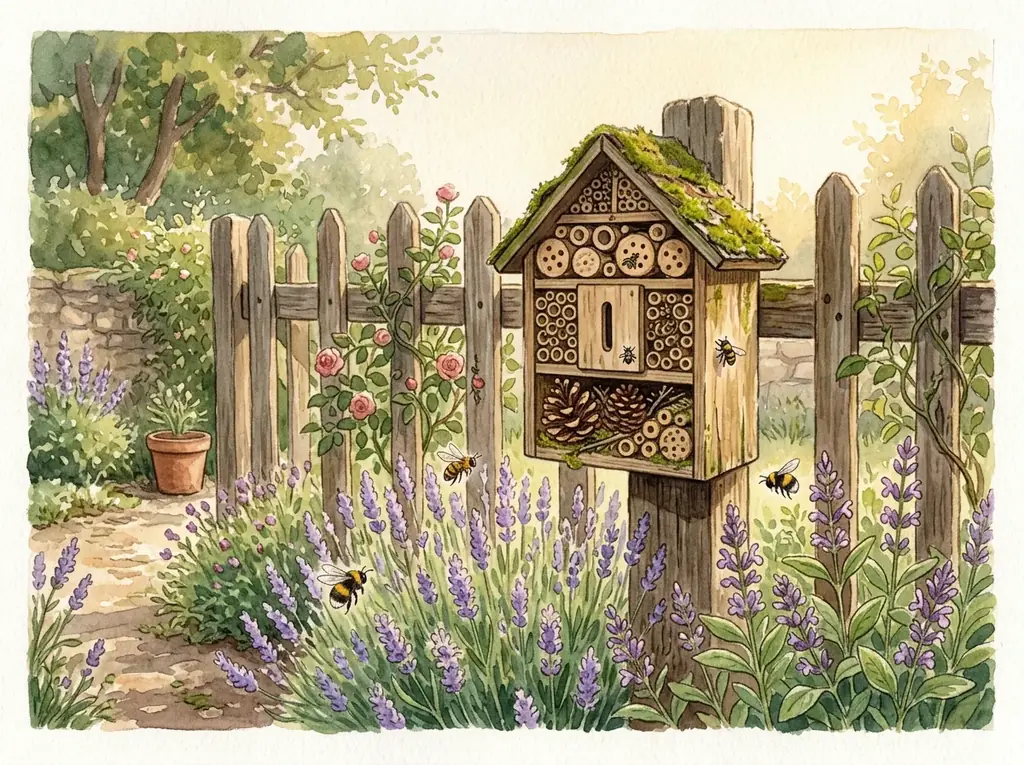
Hang or fix it at 1-1.5 m (3.3–4.9 ft) height, facing south or south-east (morning sun), sheltered from strong winds and side-on rain. Place it close to nectar-rich plants such as lavender, sage, thyme or oregano. The first residents may take a season to arrive.
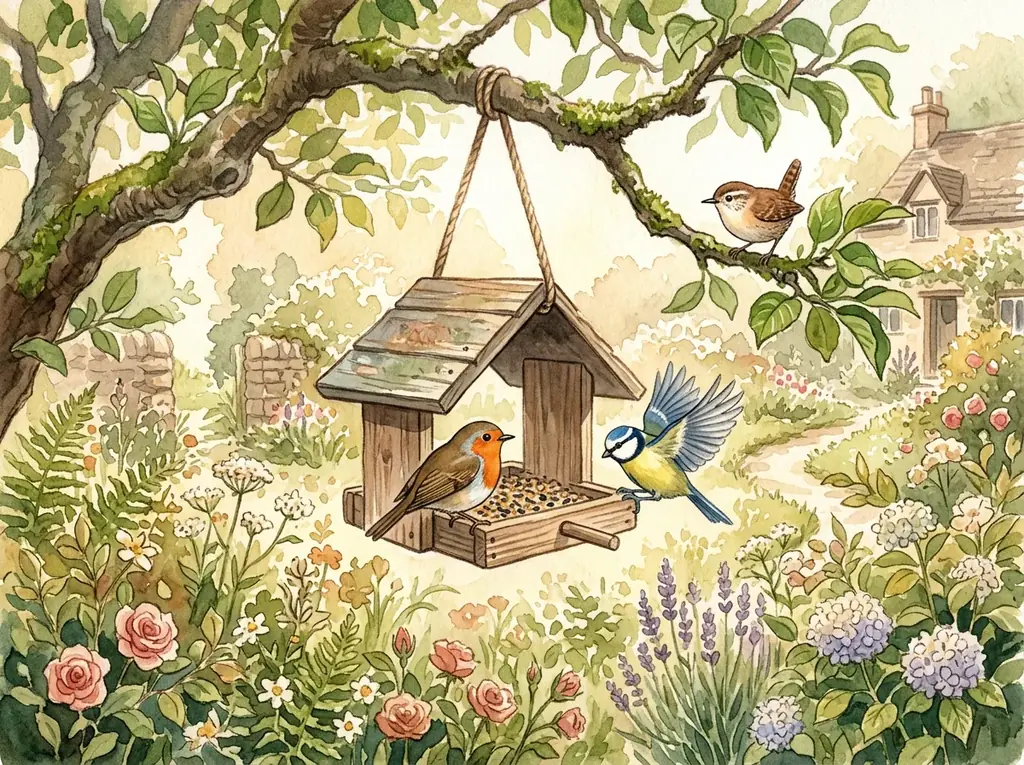
A wooden feeder with a 25×15 cm (5.9 in) base, a gabled roof, a mesh floor and a perch bar. It holds about 1.5 L (about 1.6 quarts) of seed. It hangs at about 1.5 m (4.9 ft) high, from a branch or a wall hook.
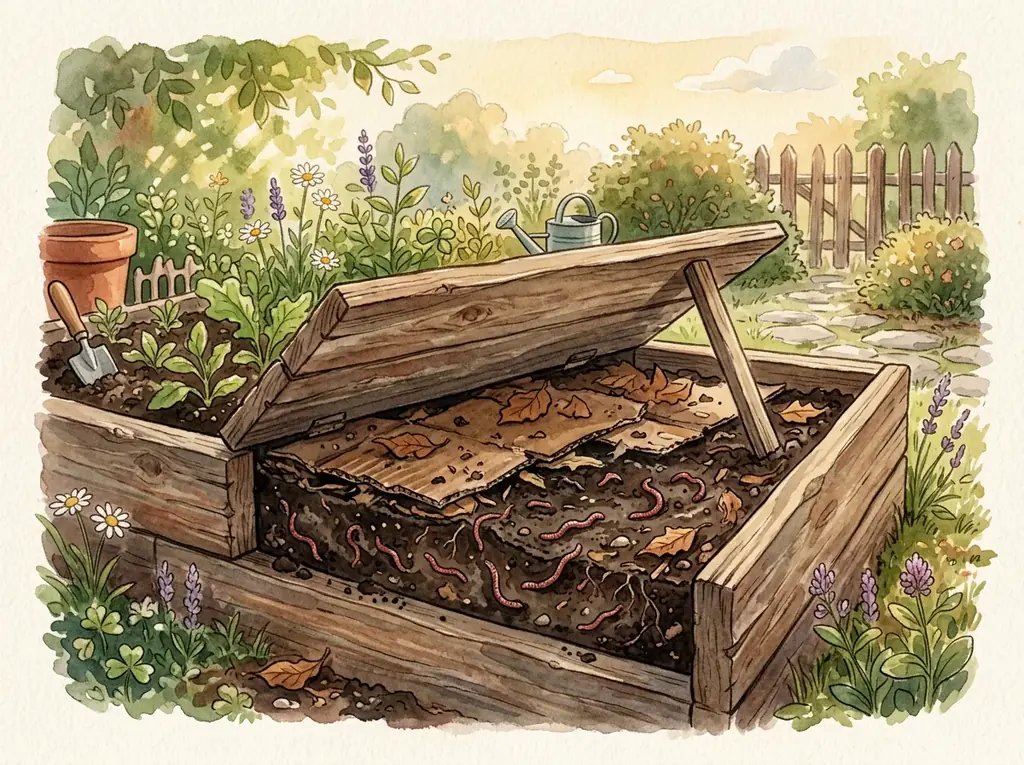
A buried shelter of 40×30×25 cm (9.8 in), with a wooden lid and a bed of leaves, where earthworms settle in and from where they spread out into the bed. It improves soil aeration and leaves a little humus close at hand.
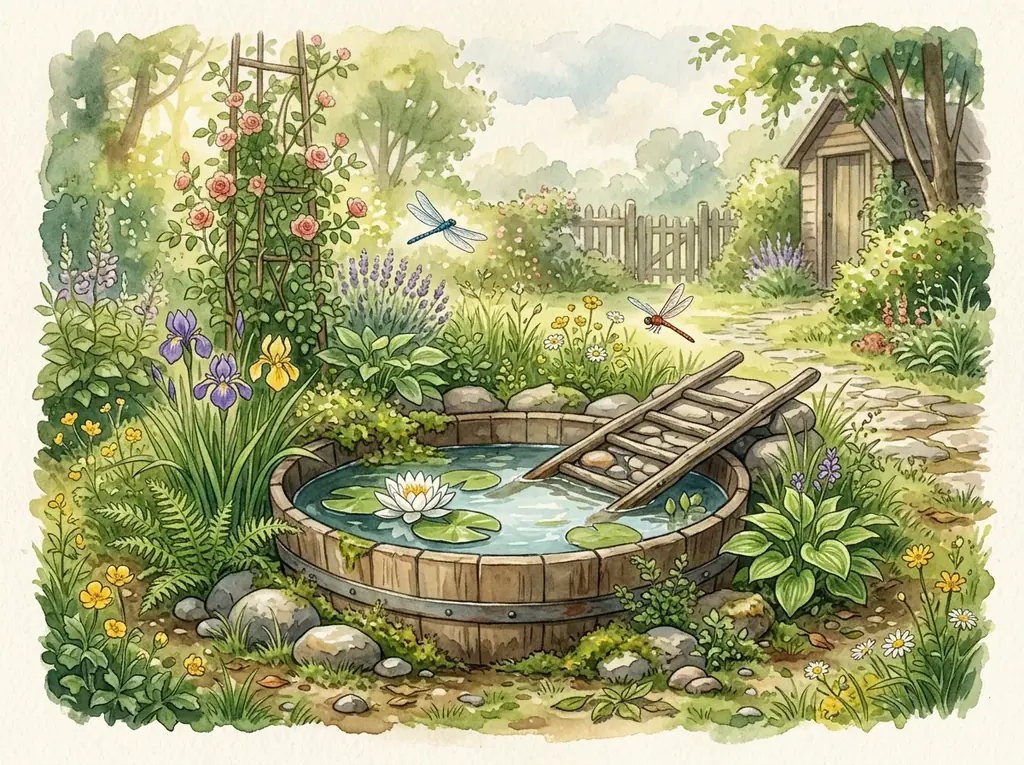
A mini pond of 150 to 300 L (about 39.6–79.3 US gal) with a buried tub, a solar pump and local plants. It attracts dragonflies and other helpful insects, and provides water for pollinators without any need to add fish.