
vuelta al huerto
Back to DIY builds
BiodiversityEasy

Bird feeder and bird drinker

Also known as: bird feeder, bird table, wooden bird feeder, DIY bird feeder, bird drinker, bird bath, garden bird feeding station

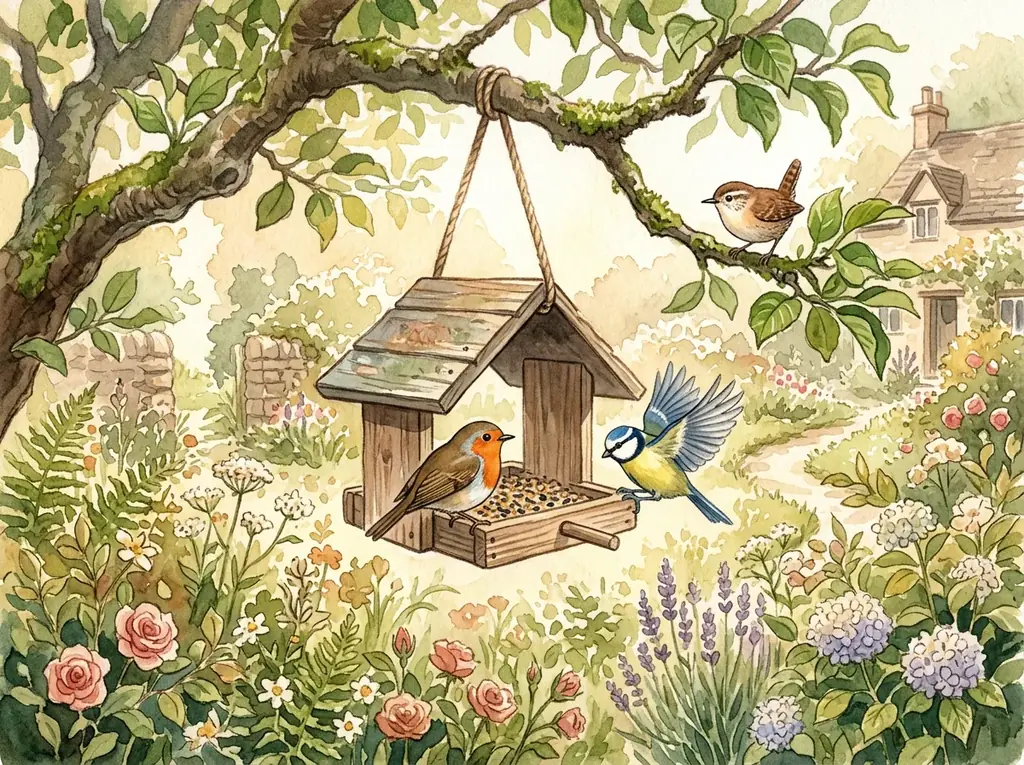
A wooden feeder with a 25×15 cm (5.9 in) base, a gabled roof, a mesh floor and a perch bar. It holds about 1.5 L (about 1.6 quarts) of seed. It hangs at about 1.5 m (4.9 ft) high, from a branch or a wall hook.

Time
45 min
Cost
5–12 €
Steps
4
Bird feeder and bird drinker

What is it for?

  • Insect-eating birds (blue tit, great tit) devour caterpillars and aphids.
  • Brings life and birdsong to the vegetable garden and the garden.
  • In cold snaps, extra food can help small birds.

Read this before buying anything

The materials in this project will be in contact with the soil or with animals. Always choose food-safe / for garden use materials and avoid unbranded industrial plastics, cheap black PVC or coatings with biocides.

Safe materials

Keep your garden free of poisons

How to treat timber, insulate from the soil and what to avoid, without poisons. See the terms in the glossary.

Metal and fixings

  • Use stainless (A2/A4) or hot-dip galvanised fixings. Cheap zinc-plated screws rust within a year outdoors and stain the timber.
  • Galvanised mesh: file off the burrs and fold over the edges. If animals will be near it, choose green plastic-coated mesh with a galvanised core.
  • Tying wire: use stainless or plastic-coated wire. Never bare copper wire touching the soil (too much copper is toxic to the soil).

Materials

  • Exterior plywood 10 mm (0.39 in): 1×25×15 cm (5.9 in) (base) + 2 sides 15 cm (5.9 in) wide topped with a peak (12 cm, 4.7 in at the edges and 20 cm, 7.9 in in the centre) + 2×25×12 cm (4.7 in) (front/back)
  • Gabled roof: 2 pieces of 28×18 cm (7.1 in), at 45°
  • 1 round bar Ø 10 mm (0.39 in) × 31 cm (12.2 in) (perch)
  • Galvanised mesh 5 mm (0.2 in): piece of 20×15 cm (5.9 in) (ventilated floor)
  • Stainless steel screws of 3×25 mm (0.98 in) (about 20) and exterior glue
  • 2 m (6.6 ft) of coated wire or a short chain

Tools

  • Jigsaw
  • Drill with 10 mm (0.39 in) bit
  • 120-grit sandpaper
  • Screwdriver

Plan with measurements

Box with a base of 25 × 15 cm, with front and back 12 cm high, sides rising to a peak of 20 cm and a pitched roof; window of 18 × 8 cm at 3 cm from the base and a perch bar of 31 cm in front.

Bird feeder: dimensioned planBox with a base of 25 × 15 cm, with front and back 12 cm high, sides rising to a peak of 20 cm and a pitched roof; window of 18 × 8 cm at 3 cm from the base and a perch bar of 31 cm in front.Front view25 cm12 cm8 cm3 cmGabled roof (45°):2 pieces of 28 × 18 cm,about 5 cm overhangWindow 18 × 8 cm,3 cm from the baseBar Ø 10 mm × 31 cm,sticks out 2 cm each sideBase 25 × 15 cmwith mesh on the bottomFrom the side15 cm20 cmThe front sits 3 cm further in: thebar sits in front of the window.

Step by step

Step 1: Cut to size and assemble the box
1

Cut to size and assemble the box

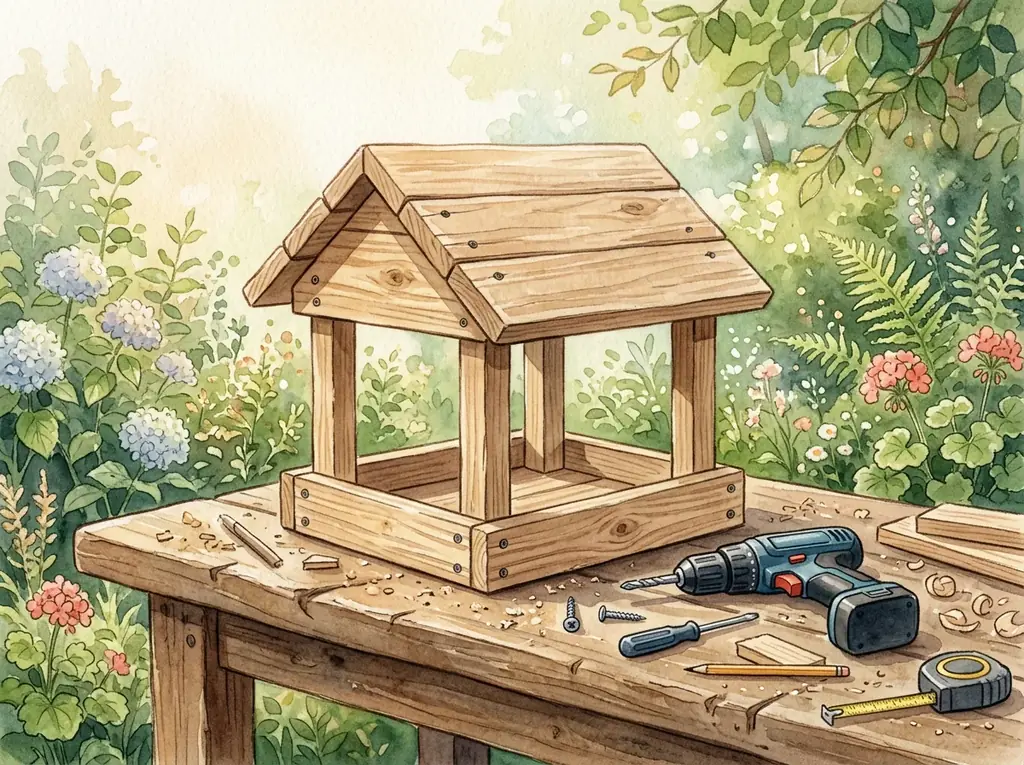
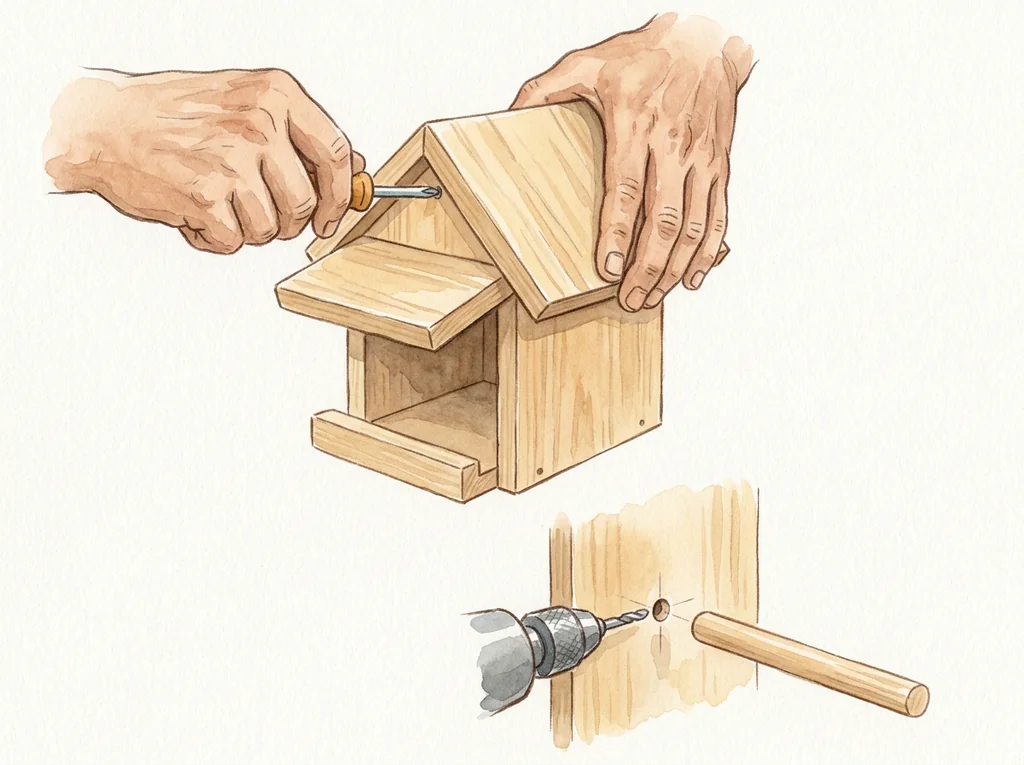
Screw the back and the two sides to the 25×15 cm (5.9 in) base, and then the front, 3 cm (1.2 in) in from the front edge: that leaves room for the perch bar. The front and back are 12 cm (4.7 in) high; the sides, topped with a peak up to 20 cm (7.9 in), support the roof. Sand the edges so they don't splinter.
Step 2: Cut the front window and fit the floor mesh
2

Cut the front window and fit the floor mesh

In the front panel cut out an 18×8 cm (3.1 in) window 3 cm (1.2 in) from the base, through which the seeds will come out. Staple the mesh to the inside floor, so that damp and mould don't build up. If the floor is wood, also make 4 holes of 3 mm (0.12 in) in case rain gets in.

Step 3: Fit the roof and the perch bar
3

Fit the roof and the perch bar

Screw the two pieces of the gabled roof onto the peaks of the sides, with about 5 cm (2 in) of overhang at the front to protect the window. Drill a 10 mm (0.39 in) hole in each side, 1.5 cm (0.6 in) from the front edge and 3 cm (1.2 in) above the base, and insert the 31 cm (12.2 in) bar as a perch: it sits in front of the window and sticks out 2 cm (0.8 in) on each side.

Step 4: Protect the wood and hang the feeder
4

Protect the wood and hang the feeder

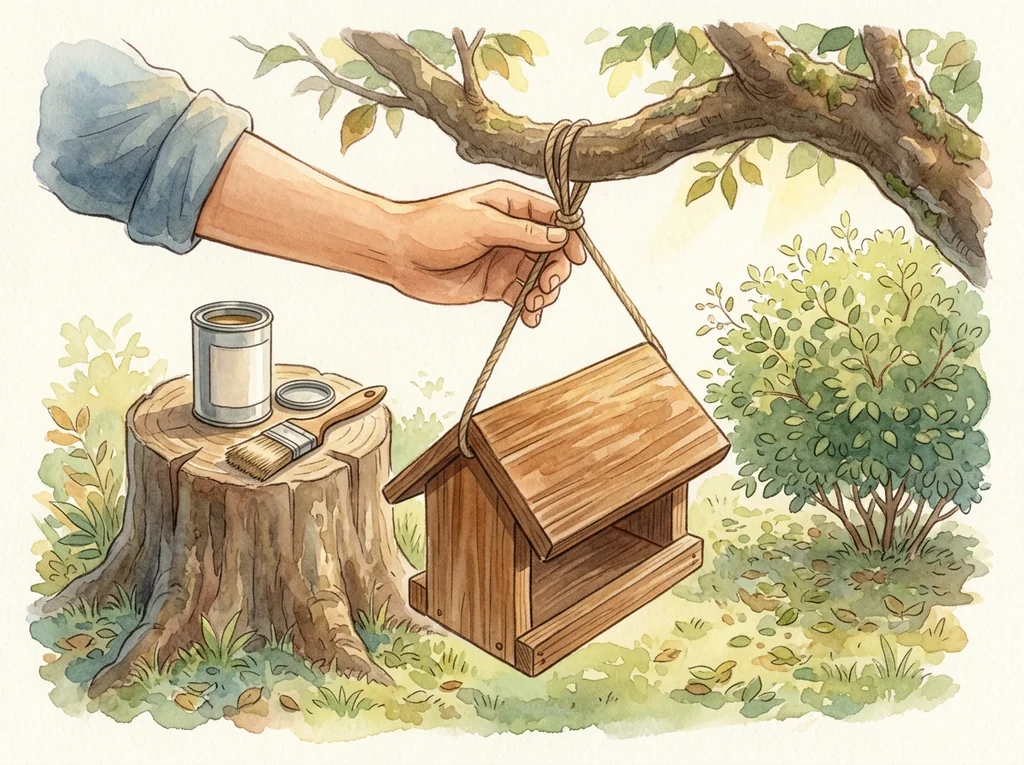
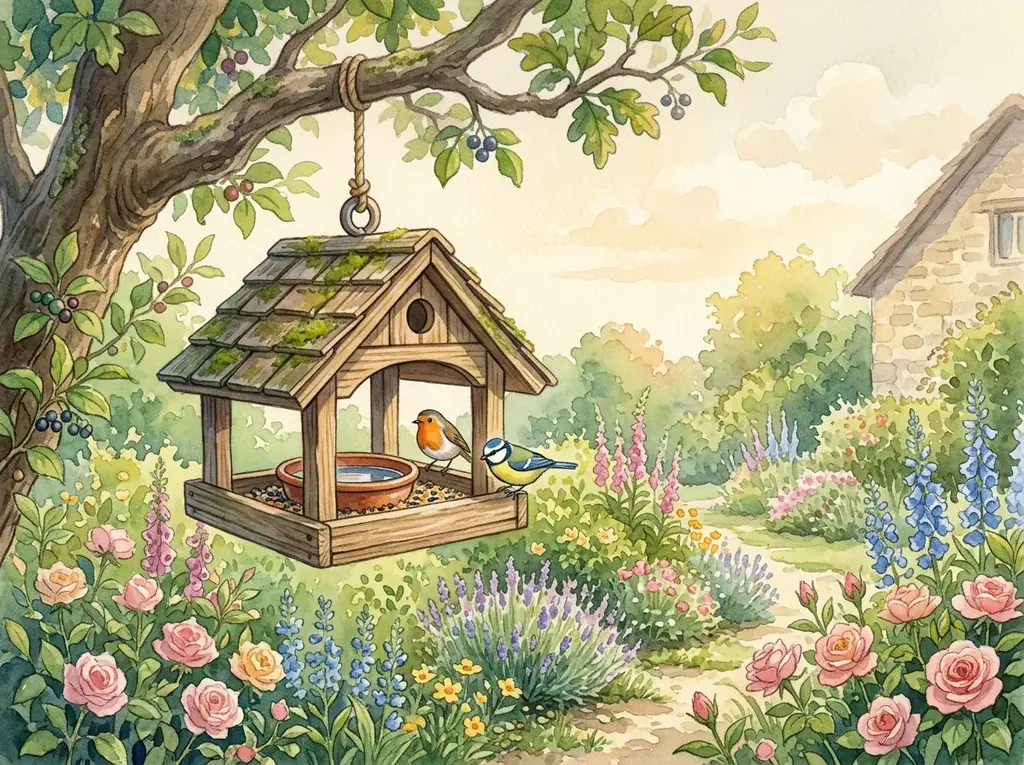
Apply one coat of pure linseed oil; don't use varnish, because birds peck at the wood and may swallow residues. Hang the feeder at 1.5 m (4.9 ft) at least, away from cats and about 2 m (6.6 ft) from a hedge or shrub, never right next to a window, to avoid collisions. Fill it with a seed mix (unsalted sunflower, millet, canary seed) and refill it every 3-4 days in winter.

Tips for this build

  • Clean it every 2 weeks with hot water and mild soap and rinse well: diseases spread in dirty feeders.
  • Don't give them salt, salted nuts or bread, because they are bad for them.
  • If there are squirrels, use a smooth dome or an anti-theft pulley.
  • Place it about 2 m (6.6 ft) from dense scrub, so the birds have a nearby refuge if a cat or a bird of prey appears.

Variations

  • With a plastic bottle on one side, the seeds fall by gravity and you need to refill less often.
  • A feeder with suction cups to stick on a balcony window.
  • A hollowed-out log hung up: it costs nothing, although it lasts less long.

More builds in this category

See all DIY builds