
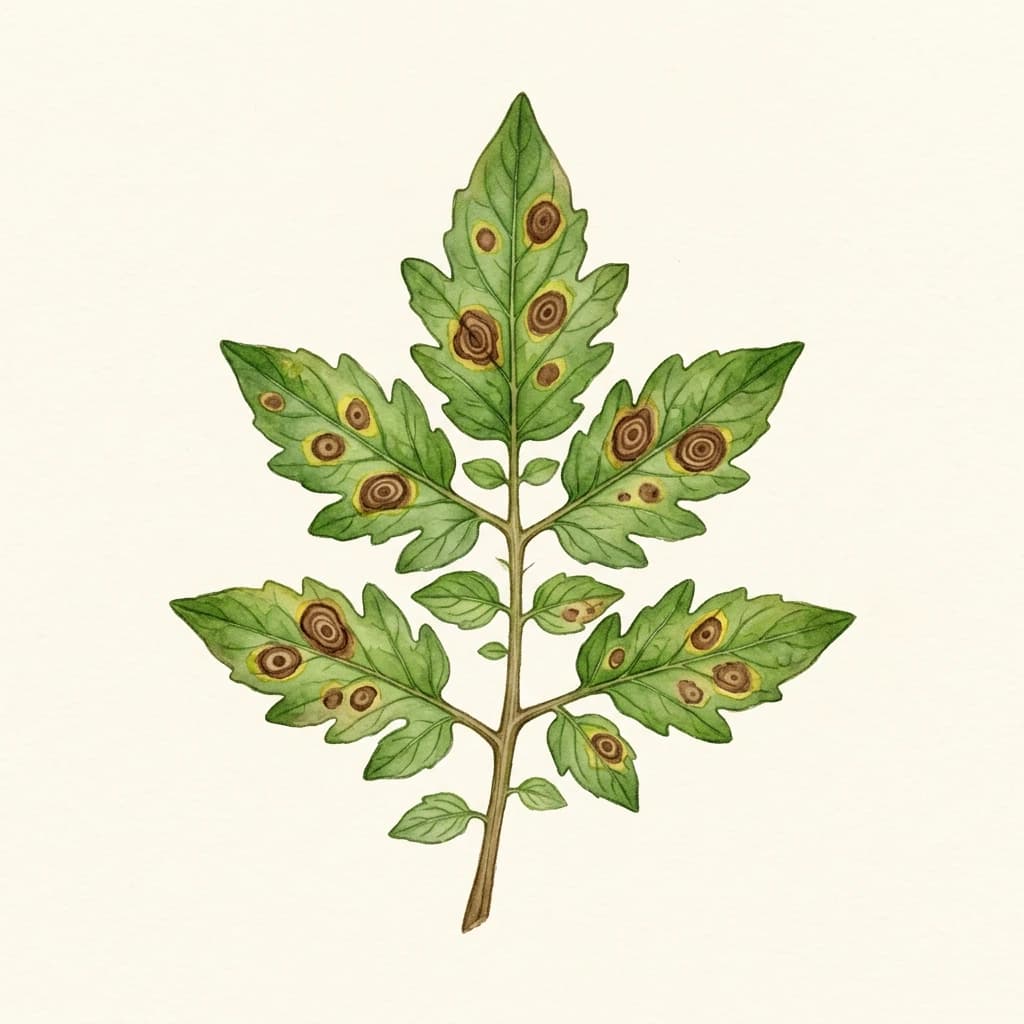
Early blight (Alternaria)
Also known as: early blight, Alternaria, Alternaria leaf spot, target spot, Alternaria solani
A fungus that causes dark spots with concentric rings (like a target) on leaves, stems and fruit. It is common on tomatoes and potatoes in hot, humid weather. The first step is to remove the spotted lower leaves and water without wetting the foliage.

How to recognise it (symptoms)
- Brown spots with concentric rings, looking like a target
- A yellow halo around the spots
- The spots start on the old leaves at the bottom of the plant
- Sunken, dark lesions on the fruit, next to the stalk
Crops affected
 TomatoMarmande tomato, flattened and ribbed, a good size for salads.
 PotatoThe 'Kennebec' potato is versatile in the kitchen, with pale skin.
 CarrotThe Nantes carrot, cylindrical and sweet.
 Cabbages and other brassicasSavoy cabbage, with blistered, crinkled leaves, which grows sweeter with the cold; it does best in autumn…
 AubergineAn aubergine with glossy black fruit, for warm climates.
What favours it
- Heat combined with humidity: dew and sprinkler irrigation
- Stressed or poorly fed plants, which defend themselves less well
- Infected crop debris in the soil, which releases spores into the next cycle
Prevention
- Rotate crops and remove diseased debris
- Use drip irrigation or water at the base, without wetting the foliage
- Stake and space plants so that the leaves dry quickly
- Keep the plant well fed and unstressed: a strong plant tolerates an attack better
Organic treatment
Always start here: these remedies are kind to the garden, the soil and pollinators.
- First: remove spotted lower leaves as soon as they appear, put them in the rubbish bin and mulch the soil so that watering does not splash spores onto the leaves
- Copper or Bordeaux mixture as a preventive and in moderation (maximum 3-4 applications per season), respecting the safety interval
- Horsetail decoction diluted 1:5, once a week, as a tonic
Chemical treatment (with caution)
There are specific fungicides, registered for each crop. Combine them with preventive measures and respect the safety interval.
Don't confuse it with…
With downy mildew. Early blight makes dry spots with target-like rings; downy mildew produces a grey fuzz on the underside of the leaf.
In-depth guide — early blight (Alternaria)
The Alternaria fungus needs wet leaves and heat. On Mediterranean tomatoes and potatoes, prevention through good practice pays off more than a late cure.
Avoiding a damp microclimate
- Drip irrigation; avoid spraying water over the leaves in summer.
- Stake the plants and remove the lower leaves that touch the soil.
- Leave enough space between plants for air to circulate.
Removing diseased leaves
Remove spotted leaves as soon as they appear and take them out of the garden, putting them in the rubbish bin. Do not add them to the compost heap if the infection was severe.
Strengthening the plant
- Well-rotted compost at transplanting, and no excess nitrogen in summer.
- A mulch to stop soil splashing up when you water.
- A three-year rotation for Solanaceae.
Organic preventive treatments
- Copper, at the permitted rates, before damp spells and respecting the safety interval.
- Horsetail decoction diluted 1:5 as a weekly tonic.
- Bicarbonate of soda (5 g per litre with 5 ml of oil) on dry leaves, with no more than 3-4 applications; its effect against Alternaria is limited.
Use plant protection products responsibly, even organic ones. Always read and follow the label, the doses and the harvest interval, and never treat plants in flower or while bees are flying, in order to protect pollinators. If in doubt, put prevention and organic methods first.

In the plant catalogue you'll see what to plant, how and when: a well-tended plant resists pests much better.