In this article (8 sections)
Before buying growing medium, it is worth knowing what you already have. With these home tests, which are indicative, you clear up your doubts spending almost nothing.
Test 1: texture (jar with water)
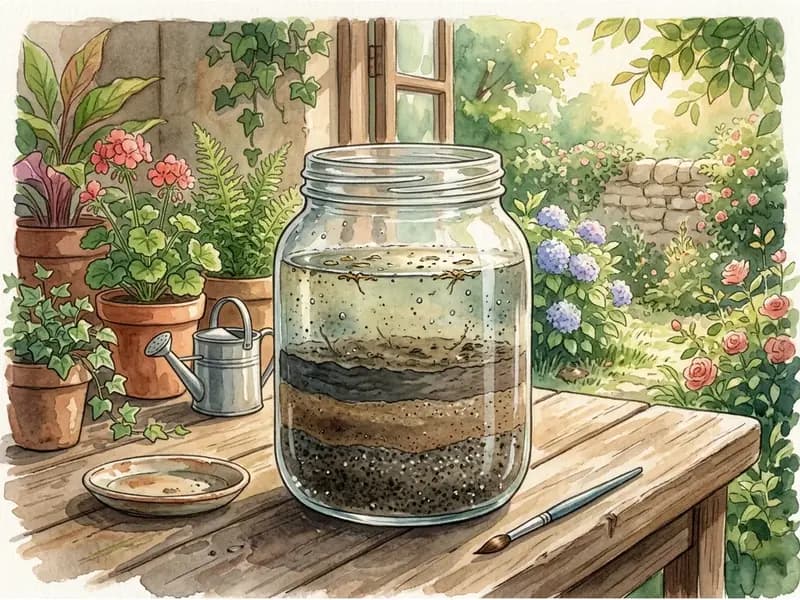
You need a clear glass jar of 500 ml (16.9 fl oz) with a lid, water, washing-up liquid and soil from your garden.
- Fill the jar halfway with soil from your garden, with no large stones or roots. Take it from 10-15 cm (3.9–5.9 in) deep, and preferably from several points of the bed.
- Top up with water to 2 cm (0.8 in) from the rim.
- Add a few drops of washing-up liquid, which help to separate the particles.
- Close and shake hard for 2 minutes.
- Leave it to settle 24-48 hours without touching it. With a marker, mark the level of the sediment after 1 minute, 2 hours and 24-48 hours.
Layers will form:
- Bottom (settles in 1 minute): sand, coarse grain.
- Middle layer (in 1-2 hours): silt, fine grain.
- Top layer (in 24-48 h): clay, very fine grain.
- Floating: organic matter.
Measure the thickness of each layer with a ruler and work out what percentage of the total sediment it represents. The result is approximate, but it is enough to know which type your soil resembles.
Interpretation
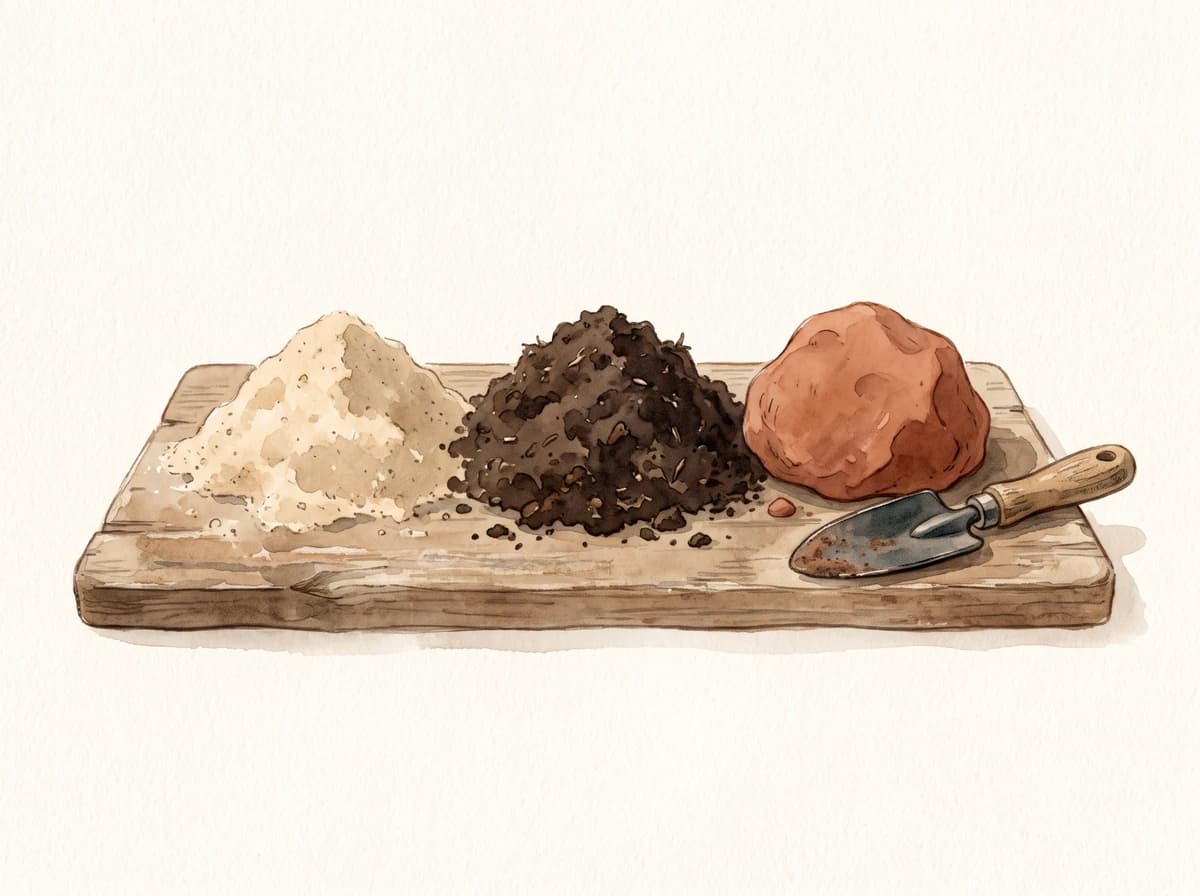
- A lot of sand (more than half): sandy soil. It drains fast and dries out soon. It suits carrot and herbs, and leaf vegetables less. The solution is to add plenty of organic matter.
- 40 % or more clay: clay soil. It holds water and nutrients, but compacts and drains badly. It suits pumpkin and not long roots. The solution is to add compost continuously and not tread on it, especially if it is wet. Do not add sand in small amounts: mixed with clay it can harden like cement.
- Roughly 40 % sand, 40 % silt and 20 % clay: loam soil, the ideal. It suits almost everything.
Test 2: pH with vinegar and bicarbonate of soda
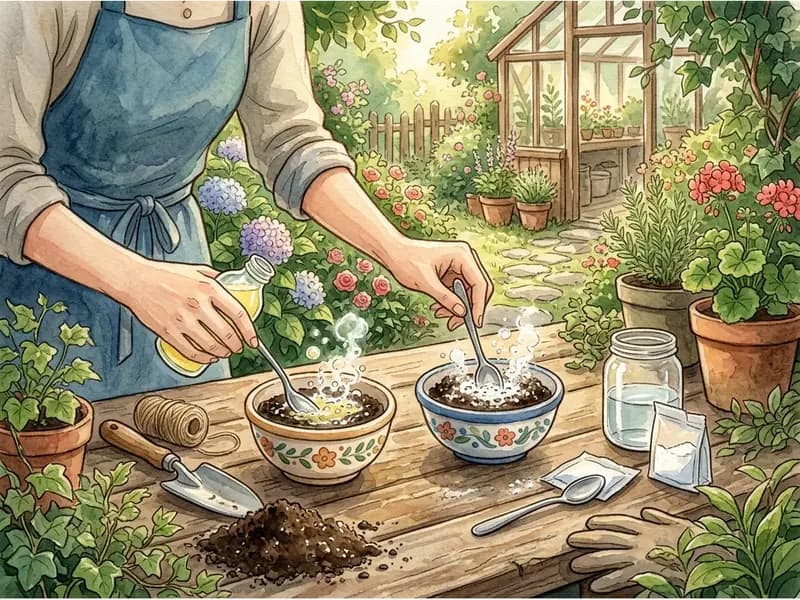
You need two glasses, soil from your garden, white vinegar and bicarbonate of soda. It is a very approximate test: it only tells you whether the soil is at one of the two extremes.
- Glass A: 2 tablespoons of dry soil, no water, and 1 tablespoon of vinegar. Does it fizz? Your soil contains carbonates and is alkaline (pH above 7). In much of Spain that is the norm, because soils are usually chalky.
- Glass B: 2 tablespoons of soil with water until it forms mud and 1 tablespoon of bicarbonate of soda. Does it fizz? Your soil is clearly acid (this reaction is only noticeable with marked acidity).
- If neither fizzes, your soil is not at either extreme: it may be slightly acid, neutral or slightly alkaline, which suits almost everything. To know the specific value, use the next test.
Test 3: indicator paper (finer, €3)
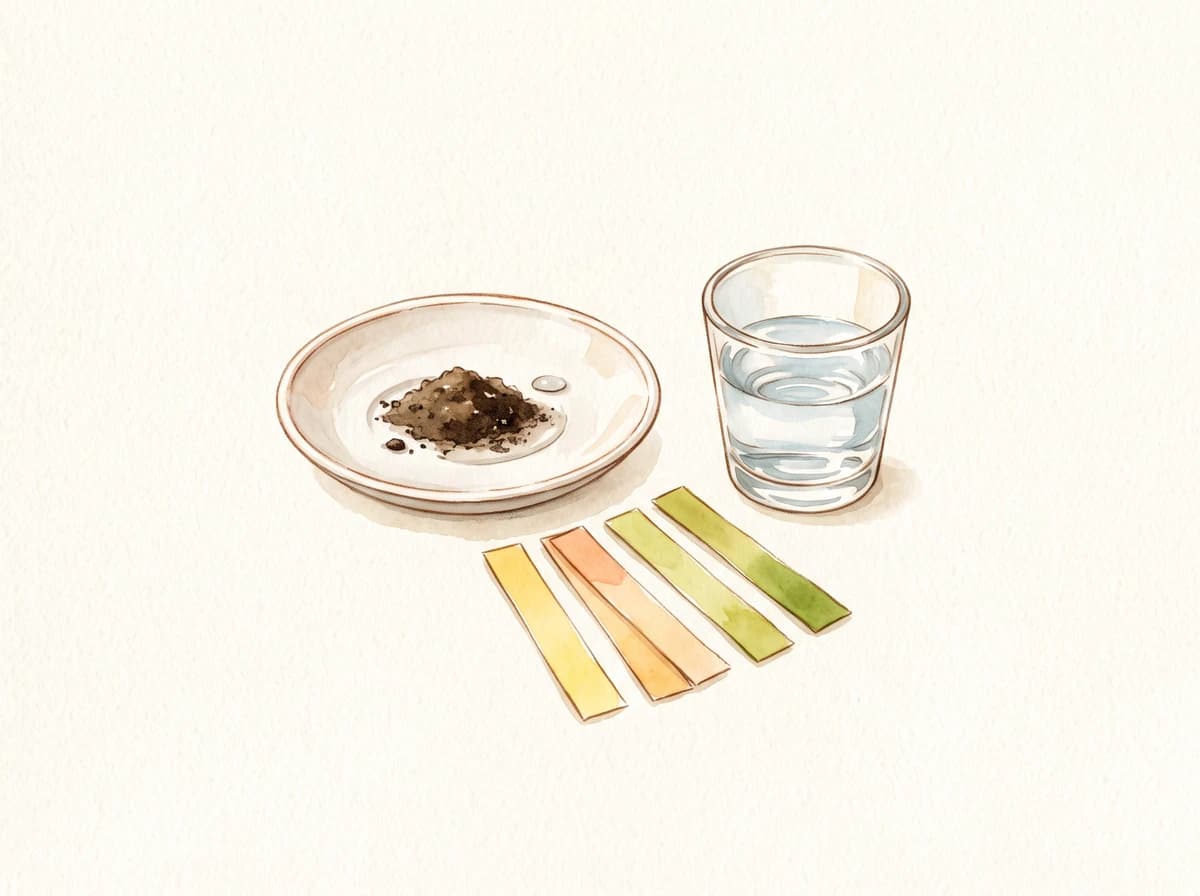
Buy pH indicator paper strips at a pharmacy or in a garden shop. Method:
- Take soil from about 15 cm (5.9 in) deep.
- Mix it with distilled water (do not use tap water, because it alters the result), with one part soil to two of water.
- Leave it to settle at least 15-30 minutes so that the liquid clears.
- Dip the strip in the liquid and compare the colour with the chart.
The result is still approximate. If you need a reliable figure, for example before liming, have a laboratory analysis done.
Ideal ranges by crop
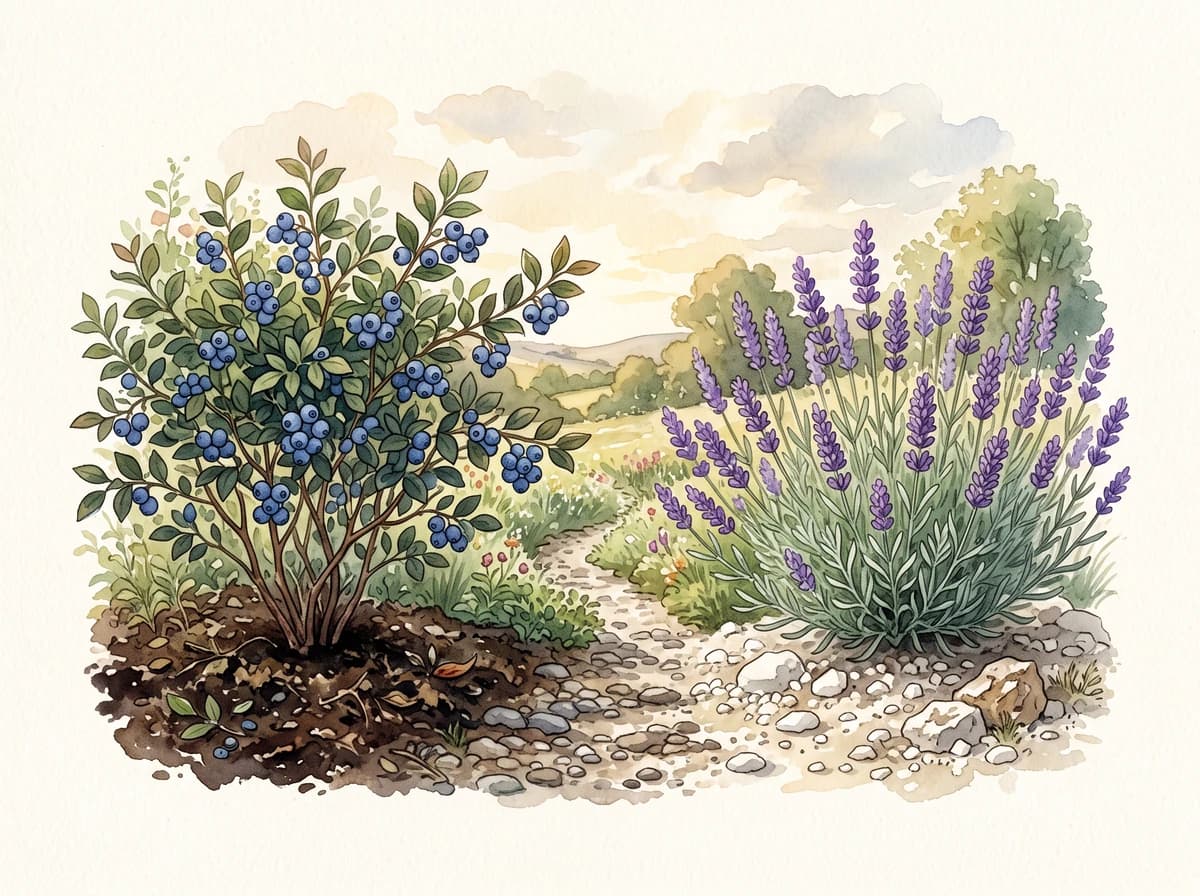
| pH | Crops that prefer it |
|---|---|
| 4.5-5.5 | Blueberry, azalea |
| 5.5-6.5 | Potato, strawberry, tomato, pepper, courgette, bean, most |
| 6.5-7 | Lettuce, cabbages, Mediterranean herbs |
| 7-7.5 | Asparagus, fig, pomegranate, olive, cactus |
Almost everything you grow in the garden lives well between 6 and 7.5. Only if you are clearly outside that range is it time to correct.
How to correct the pH
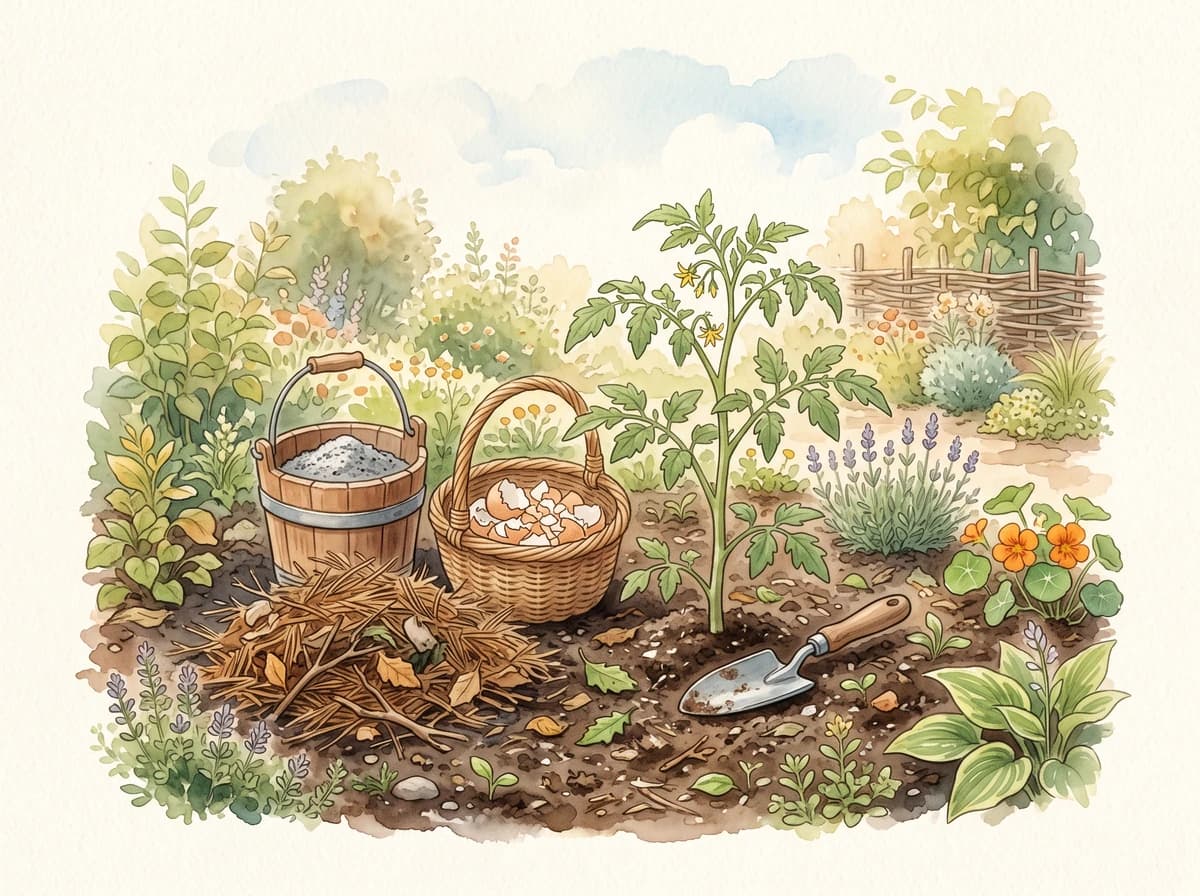
- Acid soil (raising the pH): add agricultural lime (calcium carbonate, never quicklime). An indicative dose is 100-200 g/m², but it depends on how acid the soil is and its texture; best to measure first and measure again after a few months. Untreated wood ash also raises the pH, but use it in moderation and only from time to time. The effect is slow (several months).
- Alkaline soil (lowering the pH): it is hard, because chalky soils resist change. You can add elemental sulphur, which acts slowly, but in a garden on chalky soil it is usually more practical to choose crops that tolerate it and plant the demanding ones in a box with their own growing medium.
- Organic matter: it stabilises the pH towards neutral. Whatever your problem, add compost.
Test 4: soil life
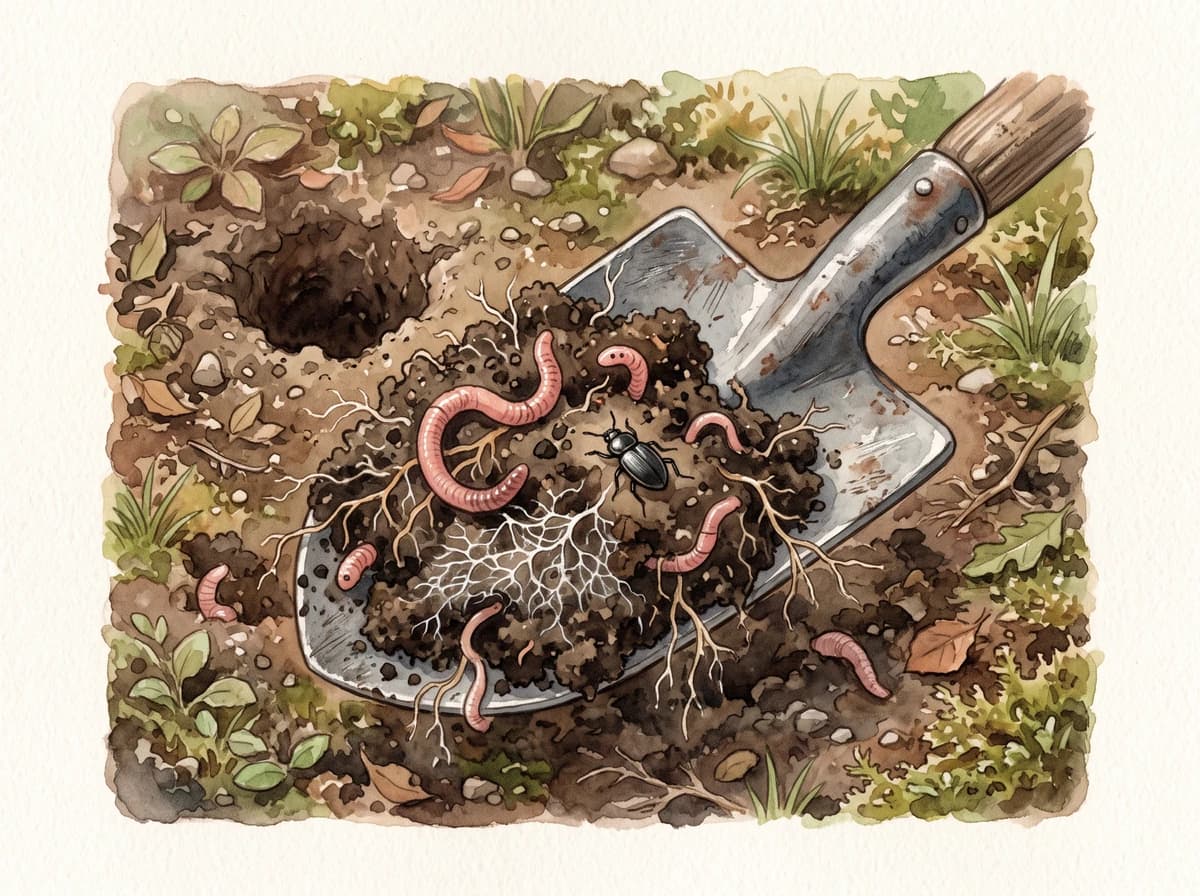
A soil with life is usually a good soil. Do it in spring or autumn, with the soil damp but not waterlogged: in a dry summer or in frost worms hide or go down.
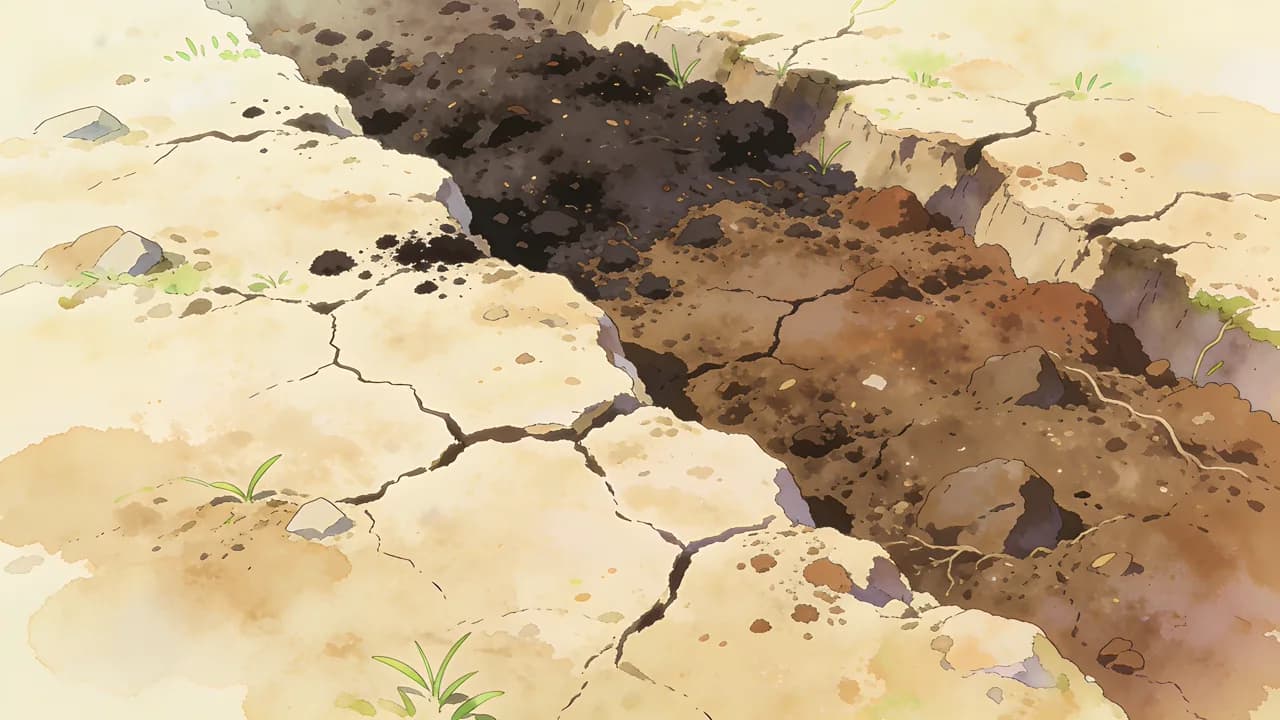
- Dig out a cube of 30×30×30 cm (11.8 in) and crumble the soil onto a tarpaulin or a wheelbarrow.
- Count the worms that appear, as a guide:
- 10 or more: excellent soil.
- 5-10: good soil.
- 1-4: poor soil, needs organic matter.
- None: very poor or very compacted soil. Compost, mulch and patience.
It costs almost €0
And it can save you €60 on “premium” growing medium that you do not need. Before buying anything, start by knowing what you have.

Greens, browns, moisture and troubleshooting.