In this article (5 sections)
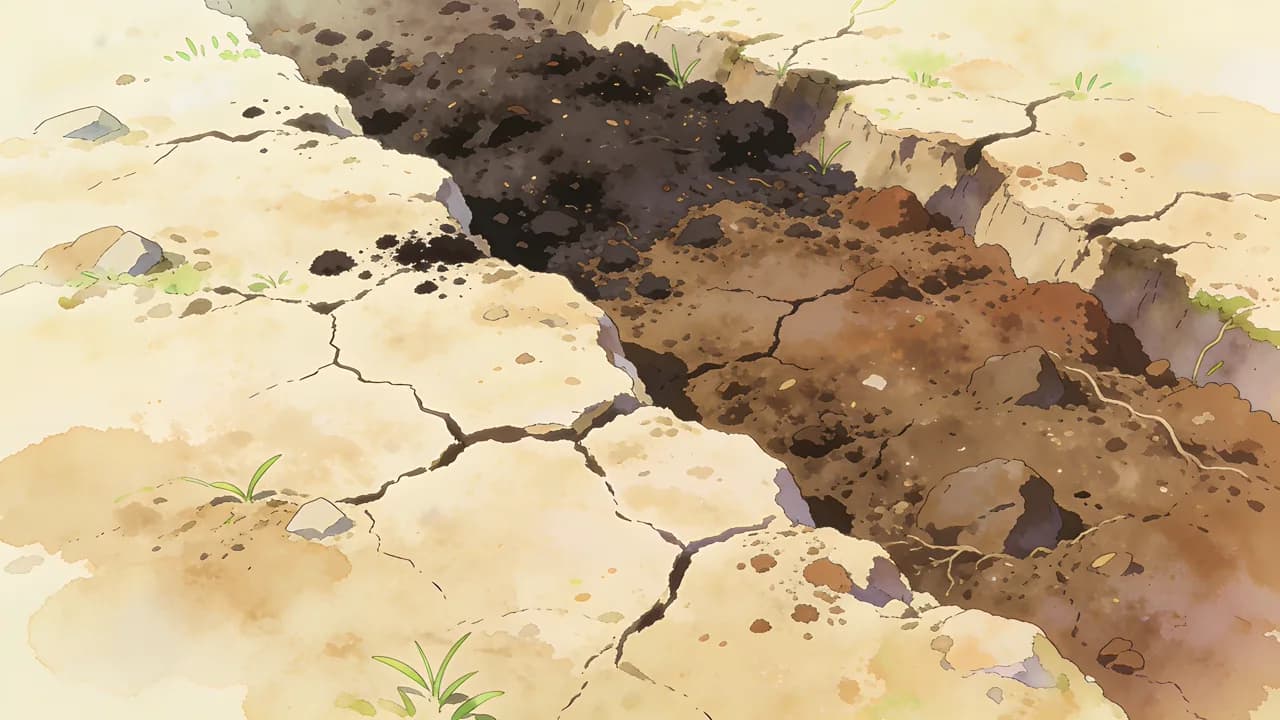
You have improved a patch of ground, added compost and water carefully, and a year later the soil is full of roots you didn't plant. Your crops grow worse than you expected. In most cases the soil isn't bad: what is around it has found a moist, rich spot and has come to make use of it.
This happens with trees, with old hedges and with grasses that spread by root. Improved soil holds water better and concentrates nutrients, and their roots find it before you notice the problem.
First: what is moving in on you

A tree and an invasive grass are dealt with differently. Before choosing a barrier or a bed, identify what kind of competition you have:
- Thick, woody roots that come in from one side. They usually come from a nearby tree or shrub. They follow the water and the fertiliser you put in the garden. As long as the trunk is standing, you won't get rid of them completely; what you can do is close their way in.
- White or pinkish threads that snap when you pull. Typical of couch grass, bindweed, nutsedge or giant reed. Every fragment can produce a new plant, so digging blindly often makes the problem worse.
- Sticks that resprout from a knot underground. Brambles and some shrubs store reserves in the crown. If you cut the visible stick and leave the knot, the plant comes back.
- Dense shade and dry soil under the canopy. Even if you don't see roots in the bed, the tree uses water and blocks light, and the garden can go thirsty even if you water regularly.
If woody roots and thread-like grasses are both present, you will have to act on both fronts, because a buried barrier does not stop the bramble or couch grass that comes in across the surface.
Trees nearby
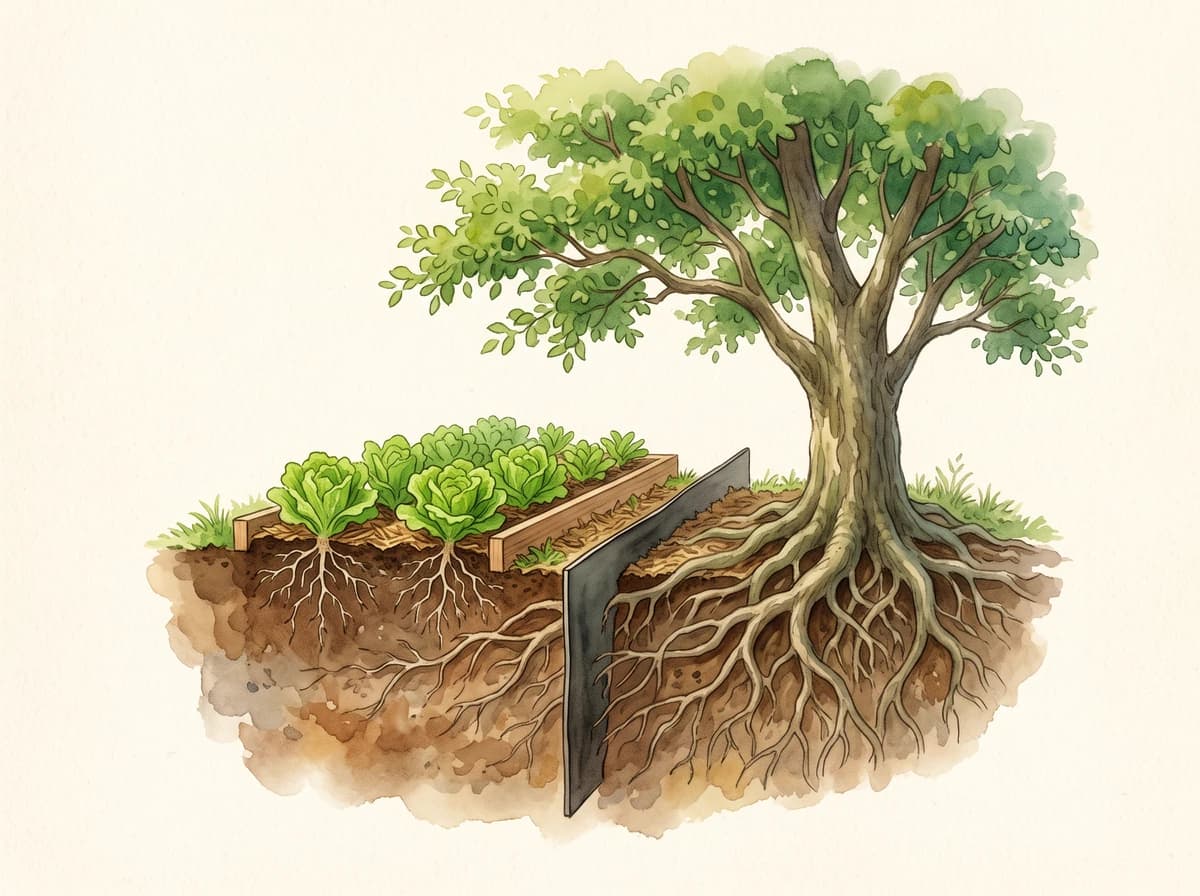
A large tree does three things at once to your garden: it casts shade, it draws a lot of water and it sends roots to wherever it finds moisture and fertiliser.
If you can, move the garden away from the canopy's projection. Roots usually spread beyond the canopy, so the further away, the less competition, although it never disappears entirely. With that distance there is no need to cut the tree down.
Avoid putting compost or fertiliser under the canopy. In that area you are feeding the tree, not your vegetables, and the crop is left at a disadvantage.
When you can't change the site, separate your soil from the surrounding ground. The simplest and safest way is a box with a base. If you prefer to leave it open at the bottom, use a root barrier sheet:
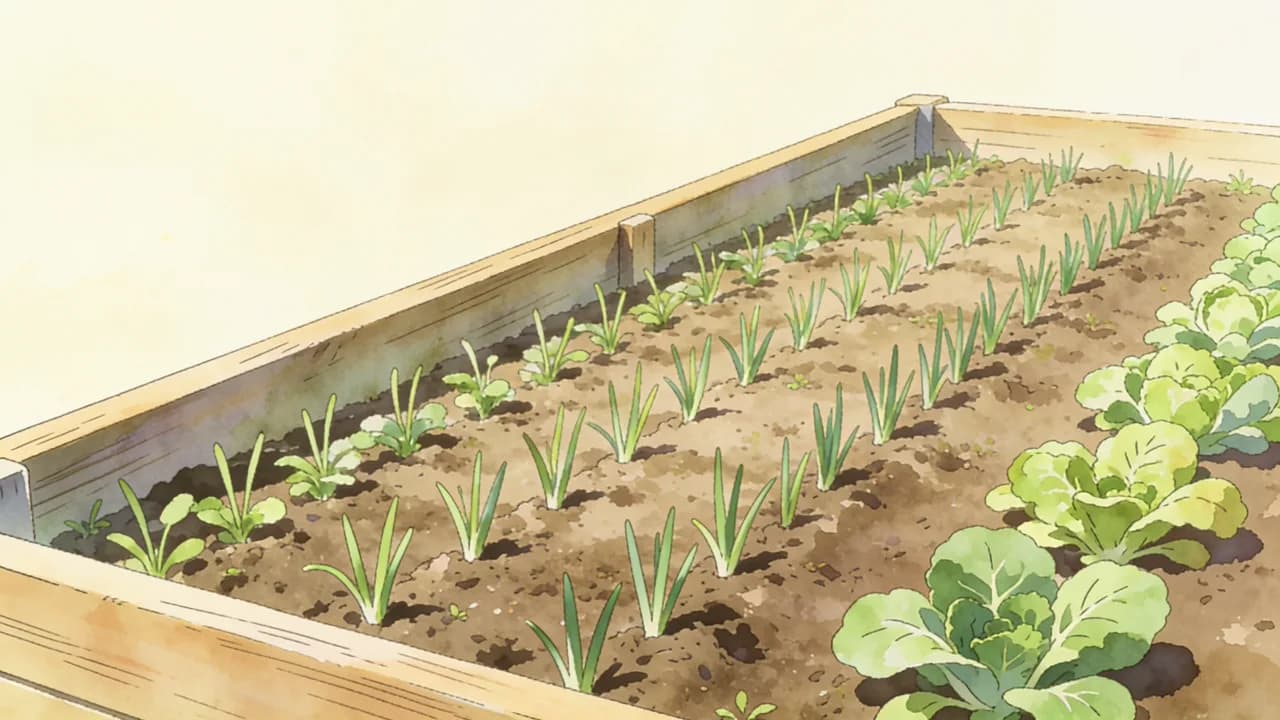
- Recommended option: a box with a base. Build a raised bed at least 30 to 40 cm (11.8–15.7 in) high, not just a mound. Make a base that drains: slats with one-centimetre gaps or a perforated board, with fine metal mesh on top. The water gets out, but thick roots can't get in.
- Alternative if you want earthworms to come up: leave the bed open at the bottom and surround the perimeter with a rigid root barrier sheet one millimetre thick, buried 60 to 80 cm (23.6–31.5 in) deep and rising about 5 cm (2 in) above the ground so roots can't pass over the top.
- Water only inside the box. If you also wet the surrounding ground, you invite your neighbour's roots to cross the border.
Some trees are especially persistent, such as poplar, willow, eucalyptus or fig. But any large specimen next to a well-watered bed will find it sooner or later.
Grasses that spread by root

Weeds that grow from seed can be controlled with a thick mulch and passes of the rake. Those that spread by rhizomes or runners (couch grass, bindweed, nutsedge, giant reed, bramble, escaped mint) call for another strategy.
- Don't chop them up with a hoe or rotavator, because every fragment can become a new plant.
- Cut at ground level every three or four weeks in spring and summer. By forcing it to resprout again and again, the plant gradually uses up the reserve in its root.
- If you find a thick knot (a bramble crown, a clump of giant reed), take it out whole with gloves and dispose of it outside the compost.
- Cover for a year the stretch you want to recover with two or three layers of cardboard and about 10 cm (3.9 in) of straw or dry debris. Without light, most of them resprout much less; giant reed and bramble may need more time or repeat passes.
- Plant afterwards in a box, not directly on that troublesome edge. The grass in the path can stay and you mow it regularly: what matters is that it doesn't get into the bed.
If the soil is already full of foreign roots

It is common in the second year: you improved the soil and the surroundings responded before your crops did. If you just pull out the roots and reuse the same soil, the problem usually repeats. The most effective thing is to rebuild the bed:
- Transplant or lift the plants you want to keep.
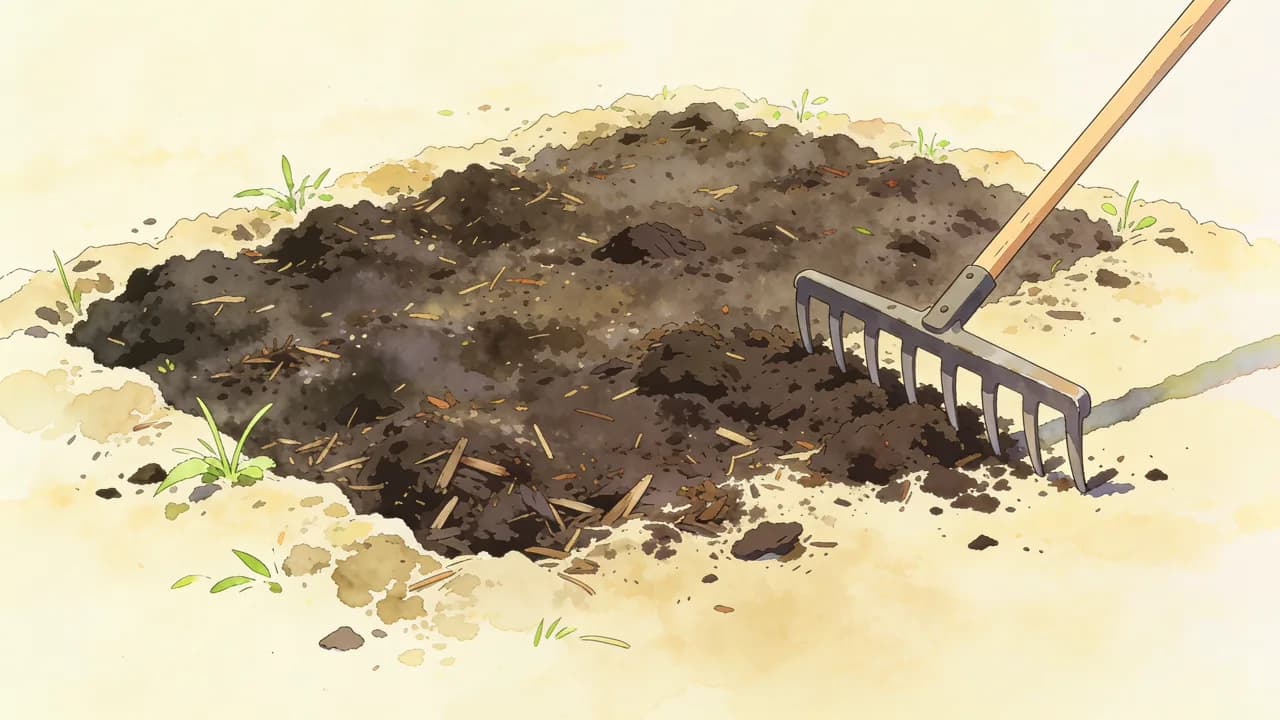
- Empty the bed. That soil is full of living remains: set it aside and sift it through a coarse mesh to remove the roots.
- Cut or remove whatever keeps coming in through the bottom or sides.
- Install the draining base or the sheet before refilling.
- Refill with clean soil or with your own, now sifted.
What isn't needed

It is not usually necessary to cut down the tree, and often it isn't even possible: it may not be yours. The solution is to isolate the crop.
Nor is it a good idea to line the whole ground with plastic, because it becomes waterlogged and harms the life of the soil. A well-built box or a vertical barrier around the perimeter is better.
Lastly, don't treat the grass in the path the same as the grass invading the bed. The path can be mown as normal; the crop needs a clear border.
If the soil itself is poor, clayey or mixed with rubble, the plan to turn bad soil into good soil is still valid inside the box. Outside it, whatever was already established in the garden will keep winning.

Greens, browns, moisture and troubleshooting.