In this article (13 sections)
- What counts as organic matter
- How much organic matter a good soil has
- How much to add per m² per year
- Practical recommendation
- When to apply
- Base addition (autumn)
- Maintenance addition (end of winter)
- Occasional addition (during the crop)
- Forms of organic matter and what they supply
- Do not confuse organic matter with NPK fertiliser
- Signs of too much organic matter
- Strategy per bed and year
- In 5 years
It is repeated a lot that you have to “add organic matter”, but it is almost never explained how much, when or how often. Here are indicative amounts you can apply from the first season.
What counts as organic matter
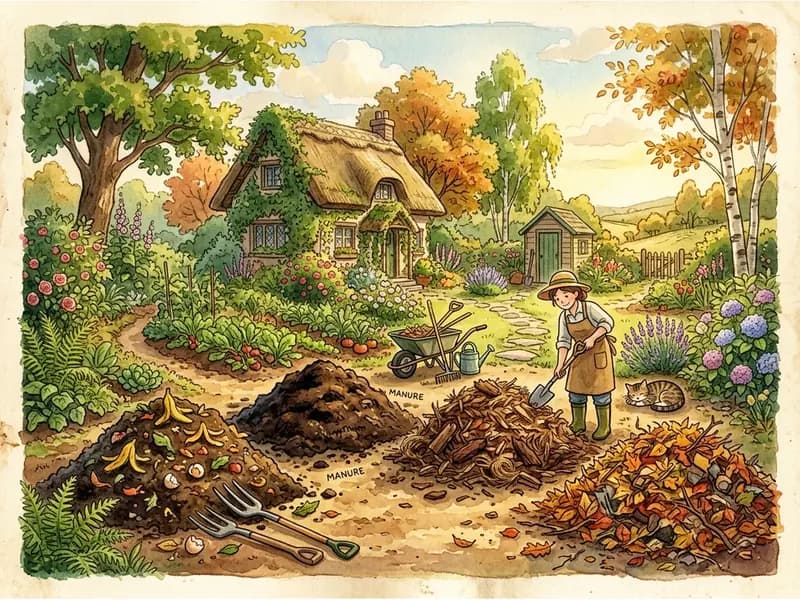
It is everything that was alive and is breaking down or has already broken down:
- Home compost.
- Worm castings.
- Well-rotted manures, never fresh.
- Composted grass clippings.
- Dry leaves.
- Guano and peat.
- Crop remains (roots, stems).
How much organic matter a good soil has
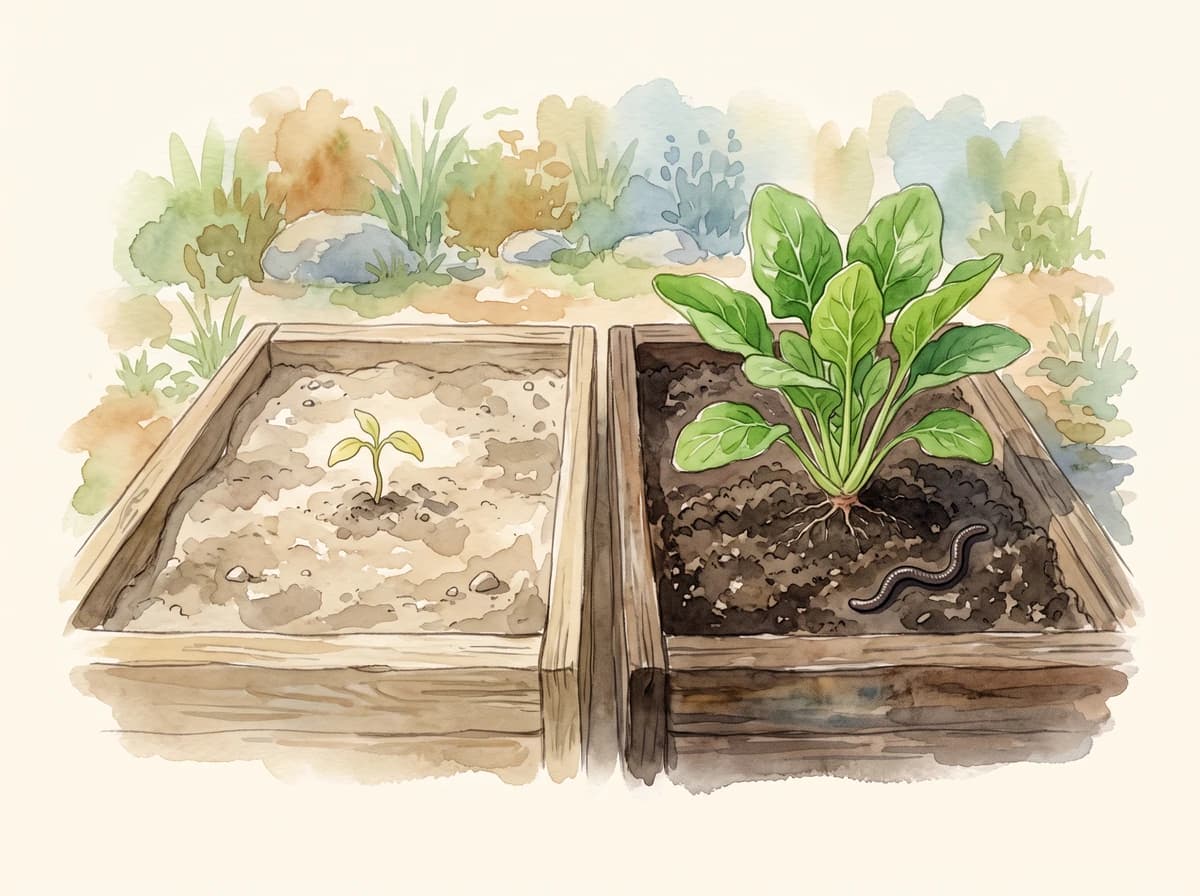
It is measured as a percentage of the weight of the soil. As a reference:
- Less than 1 %: very poor soil. Only hardy herbs survive.
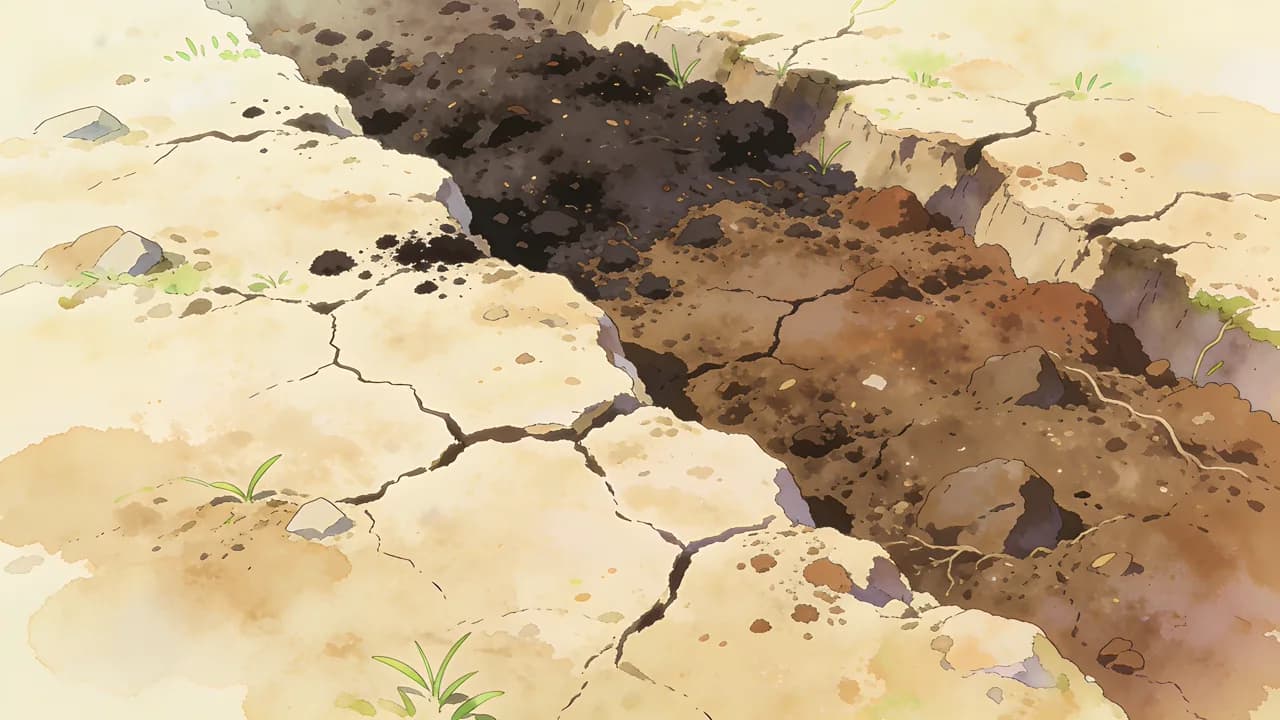
- 1-2 %: poor soil, usual in dry Mediterranean areas.
- 2-3 %: acceptable soil. It starts to be productive.
- 3-5 %: good soil. It is the reasonable goal for a garden.
- 5-8 %: excellent soil, typical of deciduous woodland.
- More than 10 %: peat bogs and some river-plain soils. It is not the norm.
An analysis at an agricultural laboratory gives you the exact figure for your bed. If you do not want to analyse it, assume that a dryland Mediterranean soil is in the low band.
How much to add per m² per year
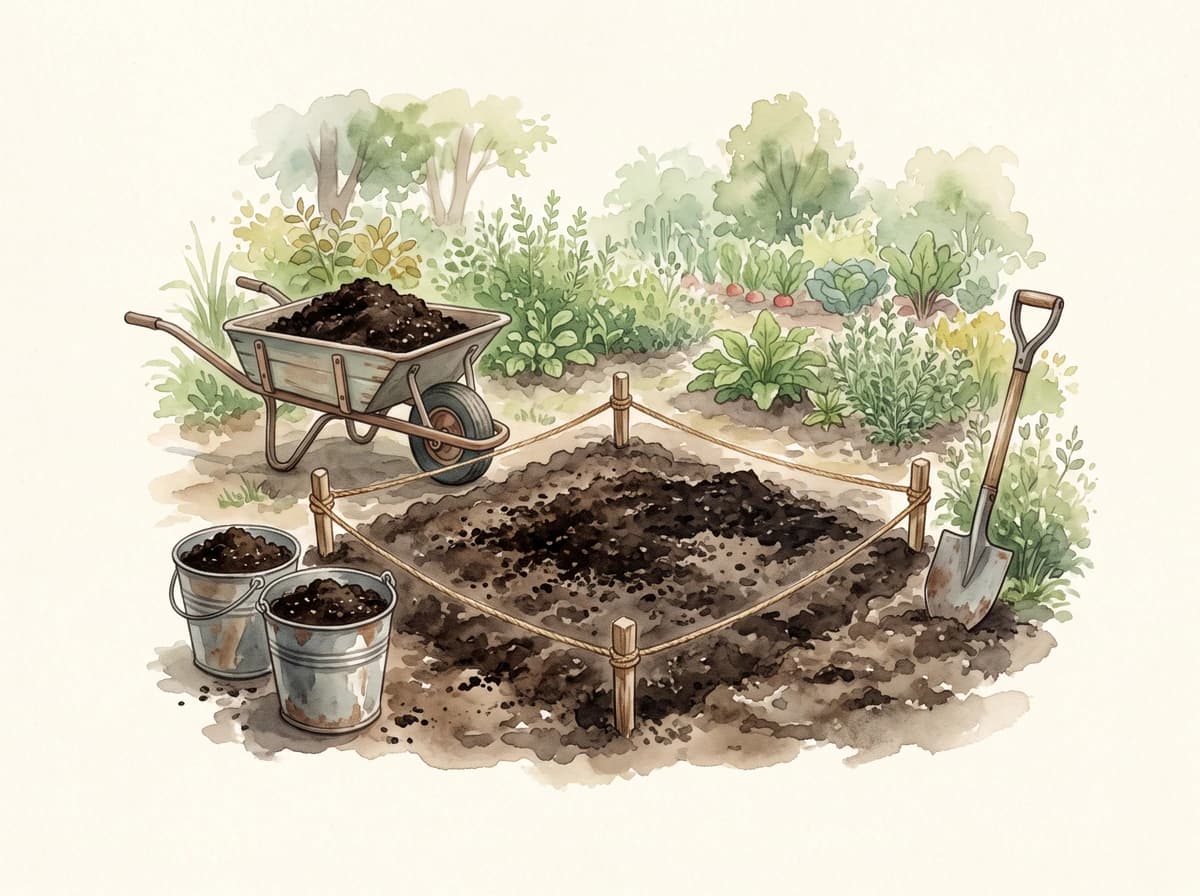
Raising organic matter is slow, because the soil uses it up (mineralises it) at the same time as you add it. As a rough calculation, to raise it by 1 % in the top 30 cm (11.8 in) you need about 40 kg/m² of compost well worked in, that is, several years of additions. With 5 kg/m² a year you rise about a tenth per year: little, but steady.
Putting on a lot more at once does not speed up the process usefully. Going beyond about 5 cm (2 in) of compost layer on the surface only adds an excess of salts and of nitrogen, and can waterlog.
Practical recommendation
- Poor soil you want to recover: 5-10 kg/m² the first year and 3-5 kg/m² in the following ones.
- Good soil in maintenance: 2-3 kg/m² a year.
- Raised beds, where the soil is used up sooner: 3-5 kg/m² with replenishment every year.
When to apply
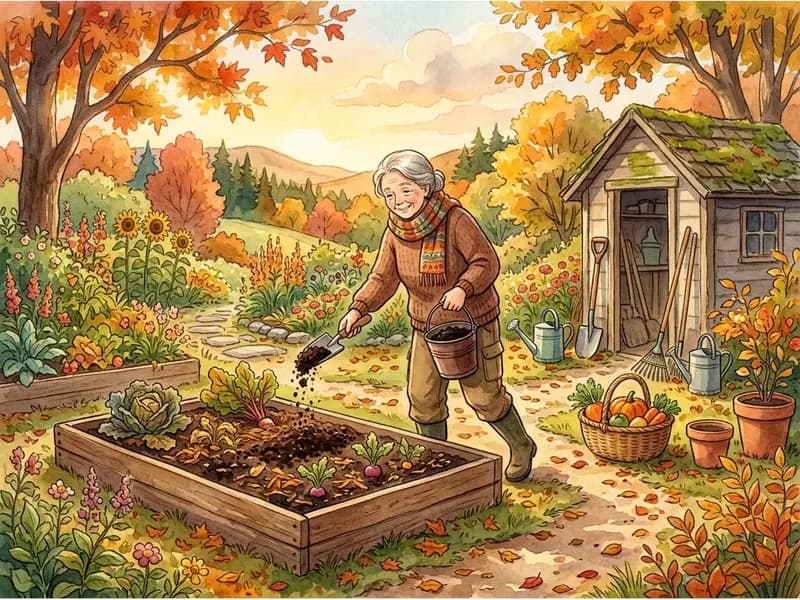
The default guideline is to split the annual addition into two, autumn and end of winter. If you can only do it once, choose autumn.
Base addition (autumn)
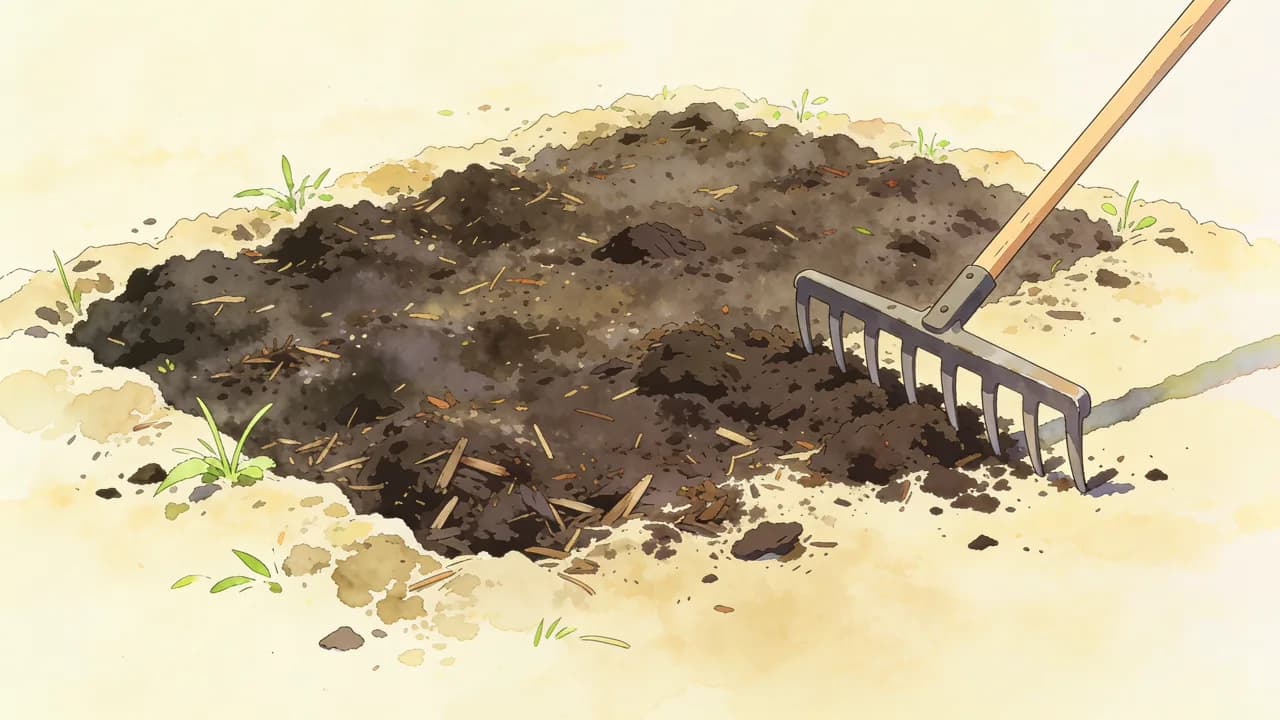
Between October and November apply 60-70 % of the annual addition. Spread it over the surface without burying it: the rains and the soil fauna (worms above all) will work it in during the winter.
Maintenance addition (end of winter)
Between February and March, before sowing, apply the remaining 30-40 %. Mix it in with the hoe only in the top 10 centimetres, so that the nutrients are available when the crops get going.
Occasional addition (during the crop)
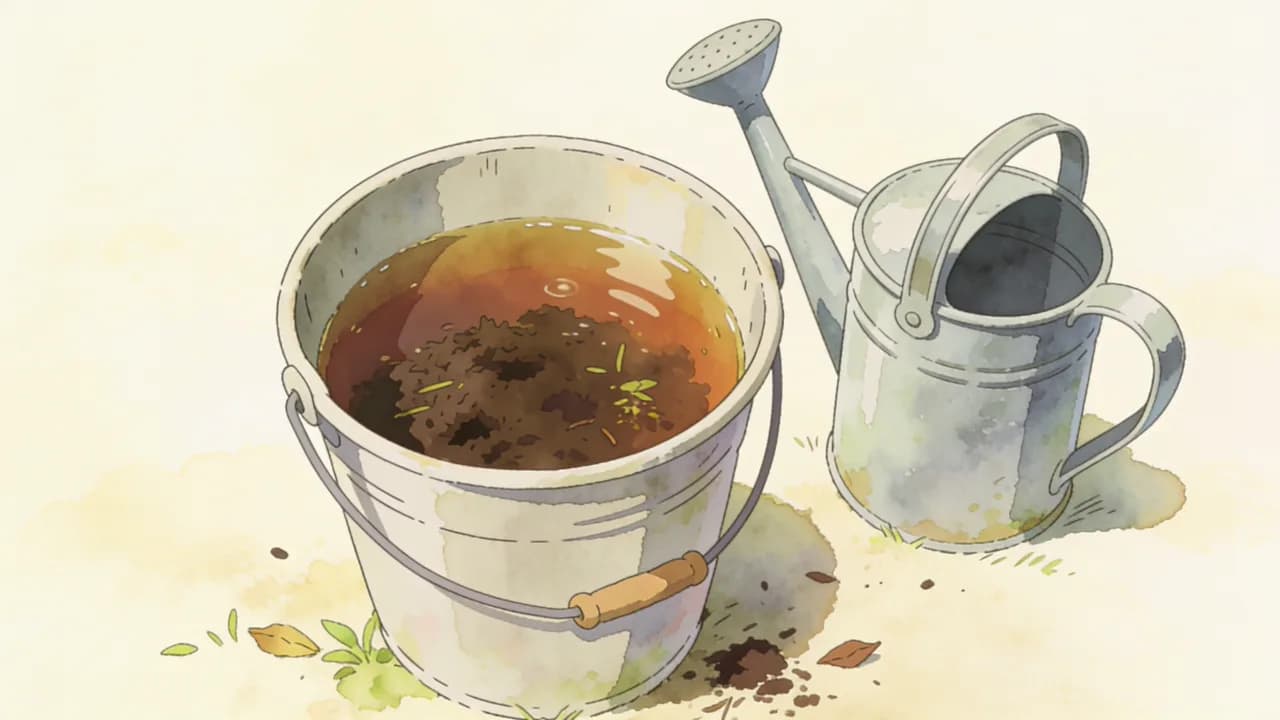
A handful of worm castings at each transplant helps the plant get going. During an active crop you can add a gentle liquid feed, such as compost tea or a plant feed, every 2-3 weeks.
Forms of organic matter and what they supply
| Form | Main supply | Speed | Duration |
|---|---|---|---|
| Home compost | Balanced nutrients + life | Medium | 1-2 years |
| Worm castings | Life + nutrients | High | 6-12 months |
| Well-rotted manure | Concentrated nutrients | Medium | 1-2 years |
| Dry leaves | Carbon + structure | Slow | 2-3 years |
| Straw | Carbon + fluffy soil | Very slow | 2-3 years |
| Cover crop | Nitrogen + decompaction | Medium | 1 year |
| Liquid guano | Quick supply (N-P-K) | Very high | Weeks |
| Peat | Structure + acidity | Very slow | 3-5 years |
Do not confuse organic matter with NPK fertiliser
Organic matter improves the soil: its structure, its capacity to hold water and the life it harbours. The nutrients it supplies are a side effect.
An NPK fertiliser (mineral, or a concentrated guano) supplies nutrients quickly but does not improve the soil. An organic garden relies on organic matter; a conventional one usually combines both things.
Signs of too much organic matter
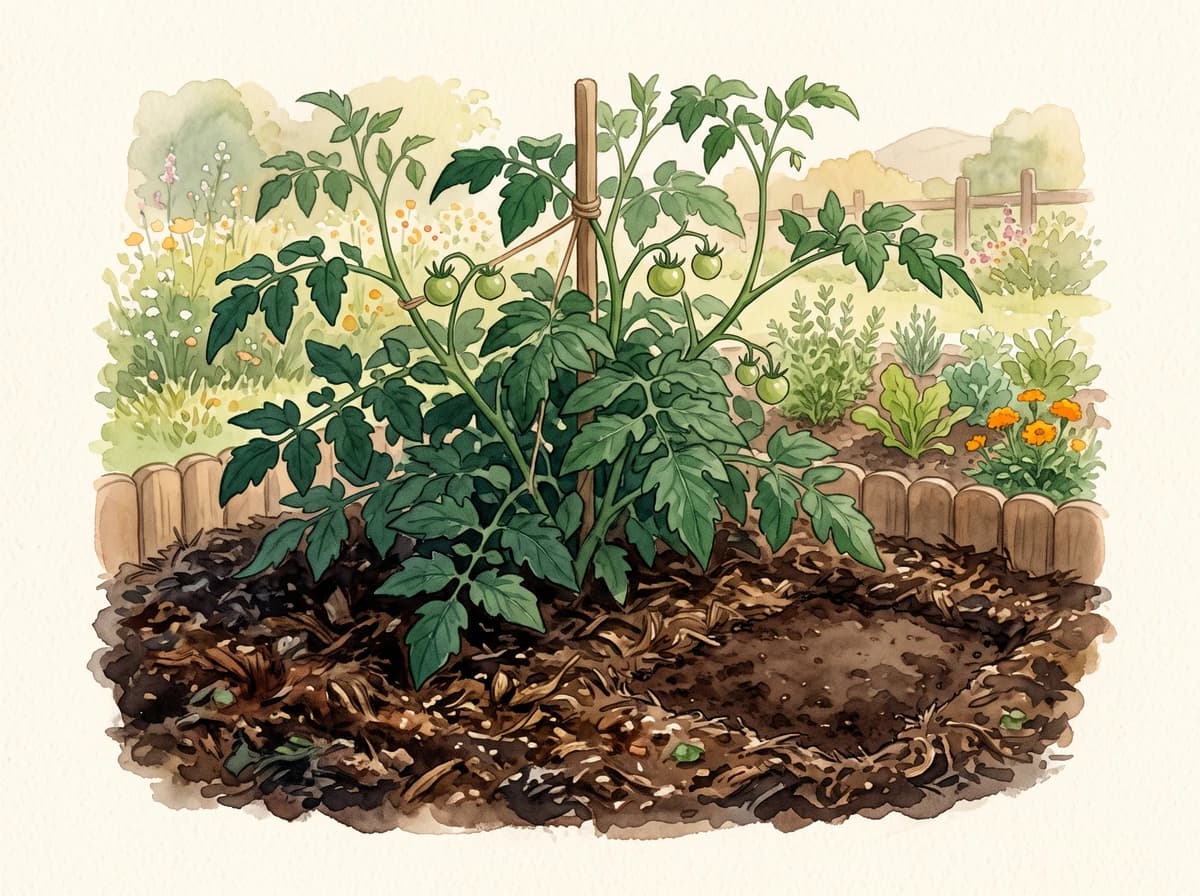
Yes, you can overdo it. The clearest symptoms are these:
- A lot of leaf and little fruit: excess nitrogen.
- Soil that is soft and excessively spongy: too much very fine compost with no fibre.
- Waterlogging: a thick layer of fresh compost acts as a plug.
If it happens to you, stop adding for a season and sow undemanding crops, such as herbs or roots.
Strategy per bed and year
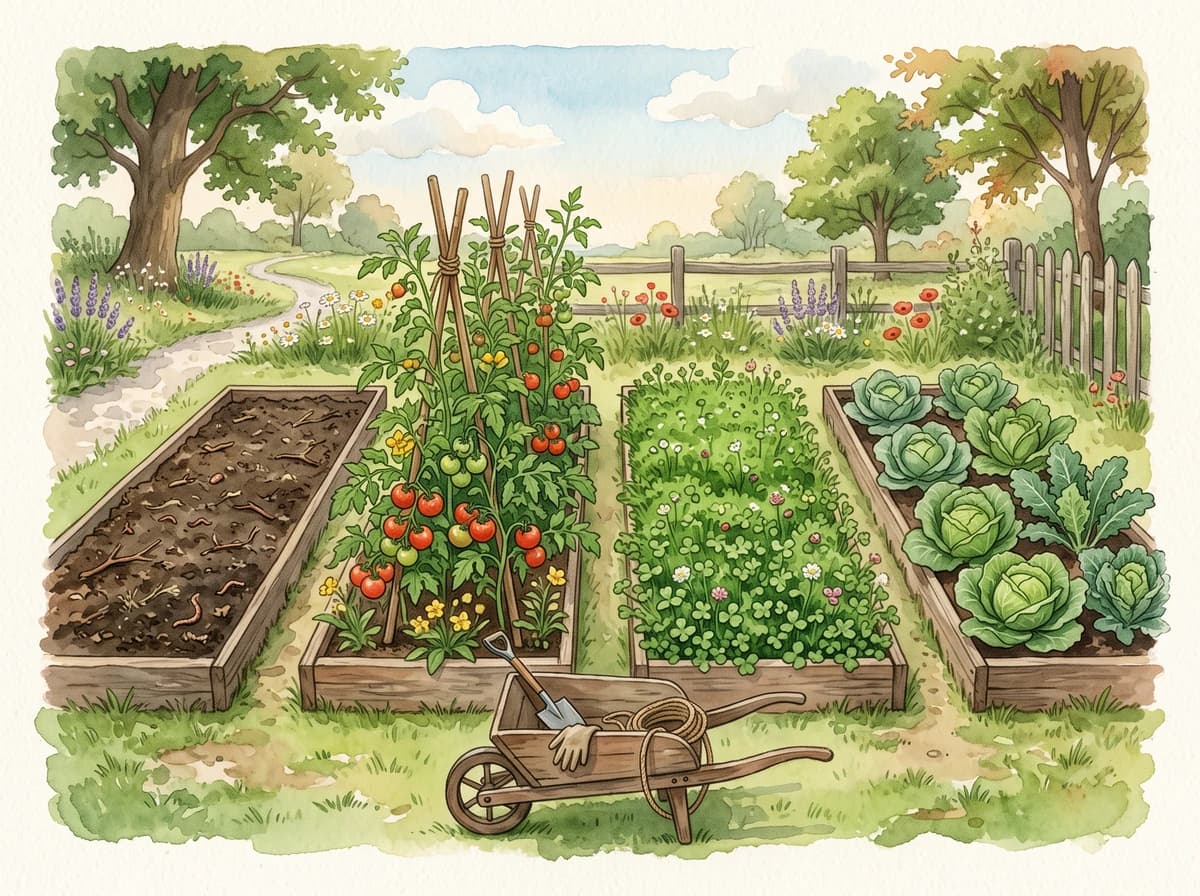
Example for a bed of 3 m² (32 sq ft) with three consecutive crops:
- October: 10 kg (22 lb) of compost spread (about 3.3 kg/m²).
- February: 5 kg (11 lb) more, worked in with the hoe.
- May transplant: a handful of worm castings per plant.
- Watering: gentle liquid feed (compost tea) every 15 days from June.
That is 5 kg/m² in total, a recovery figure, not a maintenance one. If your soil is already good, go down to half.
In 5 years
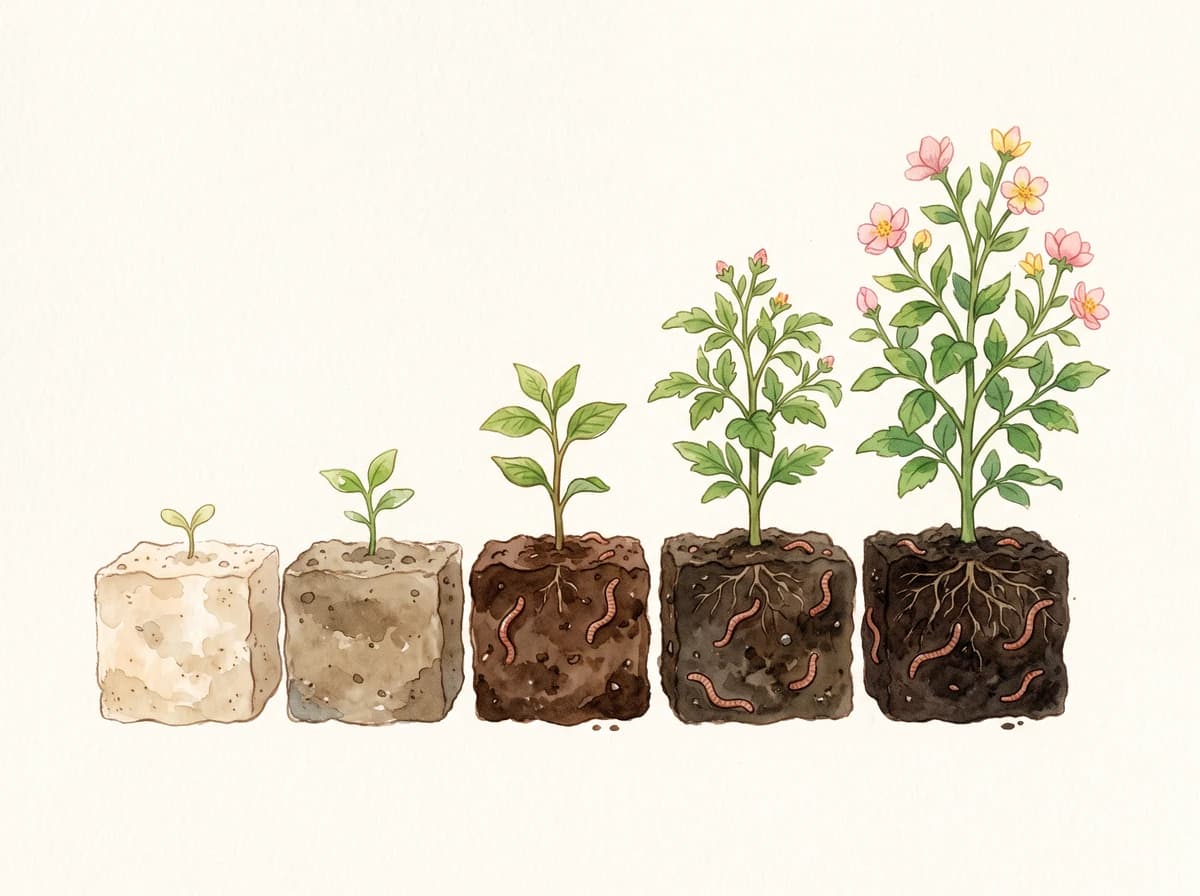
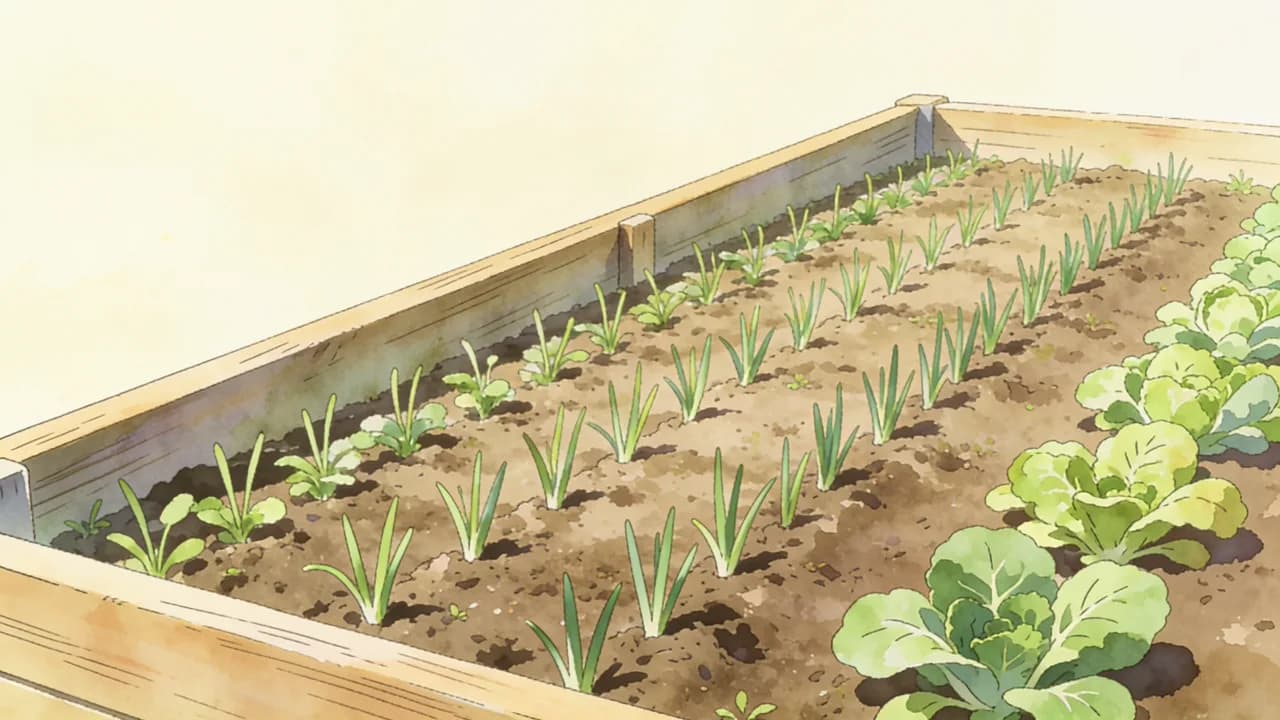
With annual additions of 3-5 kg/m², organic matter rises slowly: do not expect to go from 1.5 % to 4 %, but to gain a few tenths each year. Even so, it shows. The soil holds water better, is easier to work and usually needs less watering.
And all of that comes, to a large extent, from well-composted kitchen and garden scraps.

Greens, browns, moisture and troubleshooting.