
Credits and licences
- #1 — vueltaalhuerto illustration
- #2 — vueltaalhuerto illustration
- #3 — vueltaalhuerto illustration
- #4 — vueltaalhuerto illustration
- #5 — vueltaalhuerto illustration
- #6 — vueltaalhuerto illustration
- #7 — vueltaalhuerto illustration
- #8 — vueltaalhuerto illustration
- #9 — vueltaalhuerto illustration
- #10 — vueltaalhuerto illustration
Black mustard
Black mustard is sown directly outdoors from March to April and from September to October. It is harvested from June to August (about 100 days to the first harvest). Grow it in full sun, 25 cm apart, with moderate watering. Dates are for a mild temperate climate in the northern hemisphere; the calendar below adjusts them to your zone.
What else to sow in March, April, September and October
A tall annual, 1 to 2 m in a vegetable garden, with lobed, rough lower leaves and narrow, entire upper leaves, and small, bright yellow flowers grouped in clusters. The fruits are short pods, about 2 cm long, held close to the stem and full of tiny dark brown, almost black seeds with a very hot flavour; it was the classic seed for Dijon mustard and for Indian cooking, although today brown mustard (Brassica juncea), which is easier to harvest, is used more. It is a very undemanding plant that grows wild on field margins and waste ground. It is sown direct in spring or autumn, and needs sun and moderate watering. The ripe pods split easily and scatter the seed, so it is best cut before it dries out completely. Do not confuse it with white mustard (Sinapis alba), which has yellow seed and is used as a green manure, or with Japanese red mustard, which is a leaf vegetable.
Family and origin: Cabbage family (Brassicaceae) · native to Mediterranean basin and the Near East · More plants from Mediterranean basin
01In your area
How will it do in your garden?
Year calendar
| Task | J | F | M | A | M | J | J | A | S | O | N | D |
|---|---|---|---|---|---|---|---|---|---|---|---|---|
| Direct sowingMar–Apr, Sep–Oct | no | no | yes | yes | no | no | no | no | yes | yes | no | no |
| HarvestJun–Aug | no | no | no | no | no | yes | yes | yes | no | no | no | no |
| FloweringMay–Jul | no | no | no | no | yes | yes | yes | no | no | no | no | no |
Its life cycle at a glance
Swipe and tap a stage to see its details.
02Planting
Where and how to plant it
Sow the seed 1 cm deep; leave 25 cm between plants and 40 cm between rows.
25 cm between plants · 40 cm between rows
Seed at a depth of 1 cm.
- In a square-foot bed
- 1 plant per square30 × 30 cm squares
- Direct sowing
- Mar–Apr, Sep–Oct
- Germination
- ~7 days
- TipIt belongs to the cabbage family (Brassicaceae), so do not plant it just before or after cabbages, radishes or turnips, so as not to build up pests and diseases of the family.
03Care
Care through the year
Sun and aspectFull sun · 8 h of sun · South or south-west, with nothing casting shade at midday
- Too little sun
- Ideal range
- Plenty of sun
South or south-west, with nothing casting shade at midday
Strong sun: Loves full midday sun and high temperatures.
Full sun; in shade it gets leggy and produces fewer pods.
WateringMoist but never waterlogged · summer: every 2-3 days
- Summerevery 2-3 days0.8 L per plant/week
- Spring / Autumnevery 4-5 days0.4 L per plant/week
- Winterevery 2-3 weeks0.1 L per plant/week
Moist but never waterlogged: Water before the surface is completely dry. Never puddles. Mulch: straw or dry plant material cuts watering by 30-50 %.
Moderate, regular watering until flowering; once the pods have set, let it dry out and stop watering.
When to water? Push your finger 3 cm into the soil next to the base of the plant:
- Damp: soil sticks to your finger. Do not water today. The moisture is fine.
- Cool but clean, no mud. Water early tomorrow if it stays like this, or this evening.
- Dry and dusty. Water now, and deeply. This is not where it likes to be.
- TipThe seeds taste hotter when crushed with water.
- Common mistakeOverwatering: most prefer to dry out between waterings.
Soil and feedingpH 6–7.5 · Free-draining, airy mix
Free-draining, airy mix.
40 % topsoil · 30 % coarse sand or perlite · 30 % well-rotted compost (less compost for Mediterranean herbs).
High: almost all prefer being thirsty to being wet.
This plant prefers a pH between 6.0 and 7.5 (slightly acidic to slightly alkaline).
- Mediterranean herbs in very rich, heavily watered soil: they grow a lot but lose their aroma.
- A pot without a drainage hole: the roots rot within weeks.
- TipMany Mediterranean herbs prefer poor soil and little water: more aroma.
Pruning
- TipPinch out the tips often so it branches and does not run to seed so soon.
Common mistakes and tips
- TipIt attracts pollinators and beneficial insects.
- Common mistakeLetting them flower early makes the leaves bitter (in leafy herbs).
04Harvest
Harvesting and storing
Harvest in Jun–Aug; the first, about 100 days after sowing.
- TipTo stop it self-seeding, cut the plants down before the pods open.
05Propagation
Make new plants
It is propagated by seed. Sow direct about 1 cm deep, in rows 40 cm apart, in spring (March and April) or, in mild climates, in early autumn. It comes up in about a week. Thin the seedlings to 20 or 25 cm. To collect seed, cut the branches when the pods at the bottom are already brown, before they open, and finish drying them on a sheet or inside a paper bag. There is no need to transplant.
Seeds: how to germinate them~7 days
06Uses and health
What it is used for, and with what care
WARNING: mustard is an allergen that must be declared on food labels in the EU; people with allergies should avoid the seeds, leaves and products containing mustard. The seeds contain glucosinolates and, when crushed with water, release very pungent isothiocyanates that irritate the mouth, stomach, eyes and skin: do not apply it to the skin and do not use poultices. Eating large amounts raw can cause digestive upset. In dogs, cats and farm animals, large amounts of the plant or seed can cause digestive irritation; do not offer it to them as food.
- Properties
- The seeds are a spice with pungent essential oils that stimulate the appetite; their value is culinary and they are not a substitute for any treatment. No doses or medicinal uses are given.
- Uses
- The seeds, whole or ground, are used as a spice in curries, pickles, vinaigrettes and mustards; they are toasted or fried briefly in oil to mellow the flavour. Crushed with water they develop their heat, which is stopped with vinegar. The young leaves can be eaten cooked, in small amounts. Very mature plants and raw seeds in quantity are very hot.
For guidance only; this is not medical treatment and does not replace advice from a doctor or vet.
07Companions and related plants
What to plant it with
Good companions
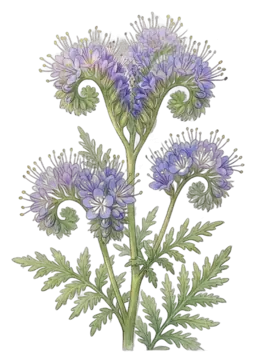
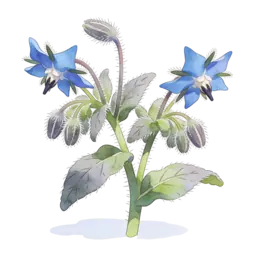
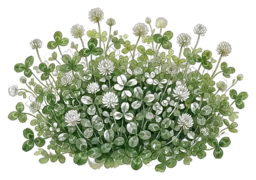
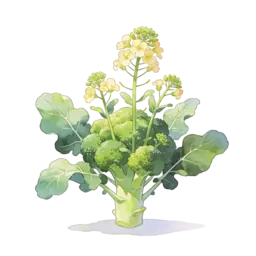
Group it in the same bedPlants with the same watering or the same sun
They are not essential companions, but you will not have to water or position them differently.
Same watering · Moderate watering
Compare with similar varieties
| Variety | Sowing | Harvest | Days | Spacing | Difficulty |
|---|---|---|---|---|---|
| White mustard | Mar–Apr, Aug–Sep | May–Jun, Oct | ~50 | 8 cm | Easy |
| Black mustard | Mar–Apr, Sep–Oct | Jun–Aug | ~100 | 25 cm | Easy |
| Japanese red mustard | Mar–Apr, Sep | May, Oct–Nov | ~40 | 20 cm | Easy |