Credits and licences
- #1 — vueltaalhuerto illustration
- #2 — vueltaalhuerto illustration
- #3 — vueltaalhuerto illustration
- #4 — vueltaalhuerto illustration
- #5 — vueltaalhuerto illustration
- #6 — vueltaalhuerto illustration
- #7 — vueltaalhuerto illustration
- #8 — vueltaalhuerto illustration
- #9 — vueltaalhuerto illustration
- #10 — vueltaalhuerto illustration
- #11 — vueltaalhuerto illustration
- #12 — vueltaalhuerto illustration
Golden courgette
and 2 more names
zucchini, summer squashGolden courgette is sown directly outdoors from April to June. It is harvested from June to September (about 50 days to the first harvest). Grow it in full sun, 70 cm apart, with moderate watering. Dates are for a mild temperate climate in the northern hemisphere; the calendar below adjusts them to your zone.
What else to sow in April, May and June
A courgette with glossy golden-yellow skin, tender and decorative, grown just like the green kind.
Family and origin: Gourd family (Cucurbitaceae) · native to Garden selection · More plants from North America
01In your area
How will it do in your garden?
Year calendar
| Task | J | F | M | A | M | J | J | A | S | O | N | D |
|---|---|---|---|---|---|---|---|---|---|---|---|---|
| Direct sowingApr–Jun | no | no | no | yes | yes | yes | no | no | no | no | no | no |
| HarvestJun–Sep | no | no | no | no | no | yes | yes | yes | yes | no | no | no |
| FloweringMay–Aug | no | no | no | no | yes | yes | yes | yes | no | no | no | no |
Its life cycle at a glance
Swipe and tap a stage to see its details.
02Step by step
From seed to harvest, stage by stage
What the plant needs at each point in its life, from the seed to the harvest and on to the next seed. The figures are only a guide: your climate, your soil and the variety will shift them.
Approximate months for a temperate Spanish climate. Choose your zone in the calendar to adjust them.
Stage 1Seed and germinationSeed and germination: Apr–JunGerminates in 4–10 daysCourgette seed is large, easy to handle and comes up very quickly if it is warm. It can be sown directly in the garden once the soil has warmed up, or started a few weeks early in pots. Two broad, rounded seed leaves appear first, very different from the rough leaves that will follow.
Courgette seed is large, easy to handle and comes up very quickly if it is warm. It can be sown directly in the garden once the soil has warmed up, or started a few weeks early in pots. Two broad, rounded seed leaves appear first, very different from the rough leaves that will follow.
With the soil above 20 °C it comes up in less than a week; in cold soil it is slow and rots easily.
Temperature
min. 16°Cideal 21°C–32°Cmax. 40°CBelow 16 °C the seed germinates poorly and rots easily.
Moisture and watering
Water once at sowing and then only enough to stop the soil drying out completely. Too much water before the seedlings emerge is the most common cause of failure.
How often: Every two or three days, depending on how quickly the surface dries.
Light · Not important
It needs no light to germinate, but as soon as it comes up it must be given full sun or as much light as possible so that it does not become leggy.
Container · Straight into the ground
In the garden, two or three seeds per station, 2-3 cm deep. In pots, one seed per 8-10 cm pot, because it does not like its roots being disturbed. Set it on its edge, with the point facing down.
Potting mix or soil
pH 6–7.5
It prefers loose, warm soil, or a light seed compost if you are starting it early in pots.
Nutrients
Mainly needs: no fertiliser
It needs no fertiliser at this stage: the seed has plenty of reserves for the first few days.
Protection
- If you sow direct and the nights are still cool, cover the stations with a cut-off bottle or horticultural fleece.
- Protect the sowing from birds and mice, which sometimes dig up the seeds.
Common problems
- Damping off. The seedlings keel over at the base in cold, waterlogged soil.
Warning signs
The seeds do not come up and are soft when you dig them up.
Likely cause: They have rotted from cold and too much moisture.
What to do: Sow again when the soil is above 16 °C and water less until they come up.
The seedlings come up very long and floppy.
Likely cause: They are short of light, which is common in those started early indoors.
What to do: Put them out in the sun as soon as the weather allows, or place them next to the brightest window.
Reference photos
When it moves on to the next stageMove on to the next stage when the seed leaves are open and the first true leaf, lobed and slightly rough, is starting to show.
Stage 2Seed tray (optional)Seed tray (optional): Apr–JulLasts about 15–30 daysStarting courgettes early in pots is only worthwhile in areas with a cool spring or to gain a few weeks of harvest. They grow so fast that the young plants must go out into the garden soon, before the roots start circling the pot.
Starting courgettes early in pots is only worthwhile in areas with a cool spring or to gain a few weeks of harvest. They grow so fast that the young plants must go out into the garden soon, before the roots start circling the pot.
Two to four weeks from emergence; longer in the pot weakens it.
Temperature
min. 12°Cideal 18°C–25°Cmax. 30°CNights below 12 °C hold the seedlings back considerably.
Moisture and watering
Water when the top layer feels dry to the touch, soaking the pot and letting the excess drain away.
How often: Every two or three days.
Light · Full sun
8–14 h of light
It needs plenty of light from the start; without it, it becomes leggy and the stem bends.
Container · Pot
0.5–1 L
An individual 8-10 cm pot, or a biodegradable fibre pot, so that it can be planted without disturbing the roots.
Potting mix or soil
A light, free-draining multipurpose compost with a little sieved garden compost.
Nutrients
Mainly needs: no fertiliser
It does not usually need feeding in the seed tray, because it spends little time in the pot.
Jobs for this stage
- Sow a single seed per pot, or keep only the most vigorous if two come up.
- Put the pots outside during the mild hours as soon as the weather allows.
Common problems
- Damping off. It strikes when the potting mix is cold and constantly wet.
- Slugs and snails. They can eat the tender seedlings in a single night if the pots are left outside.
Warning signs
The leaves turn yellow and roots are poking out of the holes in the pot.
Likely cause: The plant has outgrown its pot and is going hungry.
What to do: Transplant it into the garden or a bigger pot as soon as possible.
Reference photos
When it moves on to the next stageIt is ready to be hardened off when it has two or three true leaves and the roots hold the rootball together without having filled it completely.
Stage 3Transplanting or thinningTransplanting or thinning: Apr–JunLasts about 5–10 daysIf you sowed it in a pot, this is the time to move the plant to its final position, with plenty of space around it. If you sowed it direct, it is time to thin out and leave only the strongest seedling at each station.
If you sowed it in a pot, this is the time to move the plant to its final position, with plenty of space around it. If you sowed it direct, it is time to thin out and leave only the strongest seedling at each station.
A few days of hardening off for pot-grown plants, or thinning when the seedlings have two leaves.
Temperature
min. 12°Cideal 18°C–28°Cmax. 34°CPlant out once the risk of frost has passed and nights stay above 12 °C.
Moisture and watering
Water the rootball thoroughly before planting and again straight afterwards. With direct sowing, water before thinning so that the seedlings come out without breaking roots.
How often: For the first few days, daily, or every two days in hot weather.
How much: About 2-3 L per plant at planting.
Light · Full sun
At least 6 h of light
Full sun, with at least six hours of direct sunlight; with less it produces little and suffers more from powdery mildew.
Container · Straight into the ground
40–60 L
In a bed or in open ground, about 70-80 cm between plants and 90 cm between rows, because the leaves take up a lot of room. In a container it needs a large pot of at least 40 L.
Potting mix or soil
pH 6–7.5
It prefers loose, deep soil that is very rich in organic matter. Mix two or three spadefuls of compost or well-rotted manure into the planting hole.
Nutrients
Mainly needs: nitrogen (N), phosphorus (P)
It is a very hungry plant; the compost or well-rotted manure in the hole keeps it going for the first few weeks.
What with: well-rotted compost, well-rotted manure
Protection
- If cold nights are forecast after planting, cover the plants with horticultural fleece.
- Surround young plants with a barrier of ash, or check for snails at night.
Jobs for this stage
- Plant without breaking up the rootball and at the same depth as it was in the pot.
- With direct sowing, leave only the most vigorous seedling at each station and cut the others off at ground level.
- Mulch around the plants with straw once the soil has warmed up.
Common problems
- Slugs and snails. They nibble young plants, especially after rain or watering.
- Cutworms. At night they cut through the seedlings' stems at ground level.
Warning signs
The plant wilts in the sunny hours for the first few days.
Likely cause: It is transplant stress, worse if the roots were damaged.
What to do: Give it light shade for a few days and keep the soil moist.
Reference photos
When it moves on to the next stageIt has taken when, a few days later, it starts producing new leaves again and no longer wilts in full sun.
Stage 4GrowthGrowth: May–JulLasts about 20–35 daysWith warmth and water the courgette grows at an astonishing rate and forms a wide plant with large leaves. This is the stage for watering generously at the base, mulching and watching out for powdery mildew from the first leaves.
With warmth and water the courgette grows at an astonishing rate and forms a wide plant with large leaves. This is the stage for watering generously at the base, mulching and watching out for powdery mildew from the first leaves.
Three to five weeks from sowing or transplanting to the first flowers.
Temperature
min. 12°Cideal 18°C–28°Cmax. 35°CBelow 12 °C it stops growing; above 35 °C the leaves wilt at midday.
Moisture and watering
Water at the base, without wetting the leaves, to hold back powdery mildew. It needs generous, regular watering, because its large leaves lose a lot of water.
How often: Every two or three days in hot weather; twice a week in a mild spring.
How much: As a guide, 3-5 L per plant each time you water, more in containers.
Light · Full sun
6–10 h of light
Full sun and good air flow between plants.
Potting mix or soil
Keep the soil crumbly and well mulched so that it does not lose moisture.
Nutrients
Mainly needs: nitrogen (N)
It needs quite a lot of nitrogen to build up the plant. A dressing of compost around the base or a diluted plant feed is usually enough.
How often: Every three weeks.
What with: compost, diluted nettle feed, worm compost
Protection
- Mulch with straw to keep in moisture and stop mud splashing onto the leaves.
Jobs for this stage
- Remove old or mildewed leaves from the base so that air can circulate.
- Pull out weeds by hand while the plant does not yet cover the ground.
Common problems
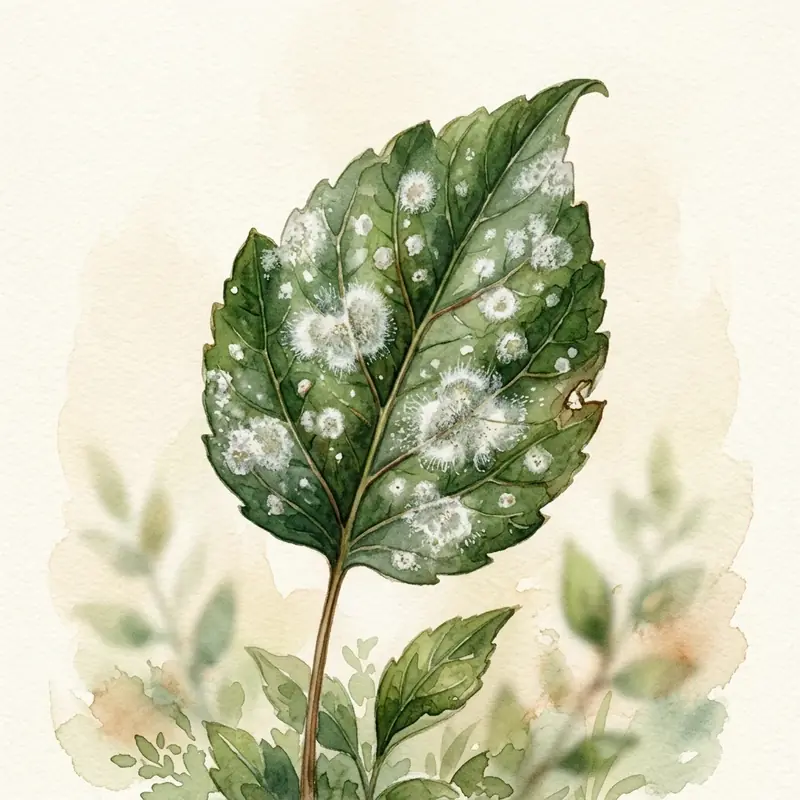
- Powdery mildew. White powder on the upper side of the leaves, which dry up; it appears in warm, humid weather, even without rain.
- Aphids. They settle on the undersides of young leaves, which crinkle, and can spread viruses.
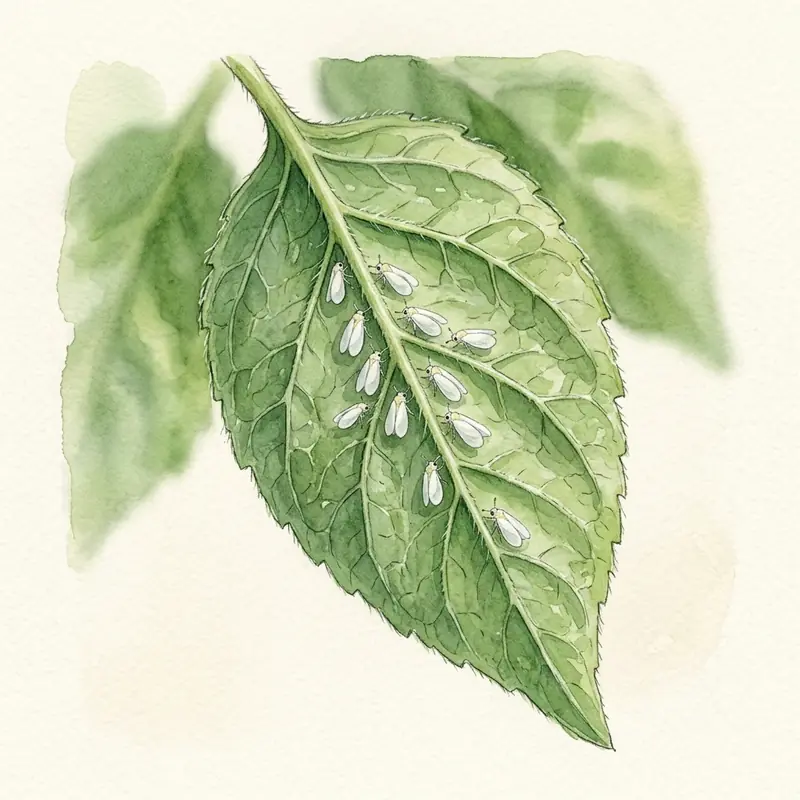
- Whitefly. Clouds of tiny white flies on the undersides of the leaves, especially in a greenhouse or in warm areas.
Warning signs
Patches of white powder appear on the leaves.
Likely cause: It is powdery mildew, very common on courgettes.
What to do: Remove the worst-affected leaves, water only at the base and leave more space between plants.
The leaves come through mottled with yellow and distorted.
Likely cause: It is usually a virus spread by aphids.
What to do: Pull up badly affected plants and control the aphids on the rest.
Reference photos
When it moves on to the next stageMove on to flowering when the first yellow flowers open in the centre of the plant.
Stage 5Flowering and pollinationFlowering and pollination: May–AugLasts about 7–20 daysCourgettes have male flowers, on a long, thin stalk, and female flowers, with a tiny courgette behind them. The first flowers are usually male; bees carry the pollen from one to the other in the morning.
Courgettes have male flowers, on a long, thin stalk, and female flowers, with a tiny courgette behind them. The first flowers are usually male; bees carry the pollen from one to the other in the morning.
The female flowers start to open one or two weeks after the first male ones.
Temperature
min. 15°Cideal 18°C–30°Cmax. 35°CIn cold or extreme heat there are few bees and many female flowers are left unpollinated.
Moisture and watering
Keep moisture levels steady and water at the base, early in the day, so that the flowers are dry when the bees arrive.
How often: Every two or three days in hot weather.
How much: As a guide, 3-5 L per plant each time you water.
Light · Full sun
At least 6 h of light
It still needs full sun, with no other crops casting shade and taking away its light.
Nutrients
Mainly needs: potassium (K)
From flowering onwards it benefits from a little more potassium and less nitrogen so that the fruit sets well.
How often: Every three weeks.
What with: compost, sieved wood ash (in moderation)
Protection
- Sow flowers near the vegetable garden, such as pot marigolds or borage, to attract pollinators.
Jobs for this stage
- If you see few bees, hand-pollinate in the morning by touching the centre of a female flower with a freshly opened male one.
- You can pick some male flowers for the kitchen, always leaving several on the plant.
Common problems
- Powdery mildew. It keeps spreading on the older leaves and reduces cropping if it is not controlled.
- Red spider mite. In hot, dry weather, leaves appear with tiny yellow speckles and fine webbing on the undersides.
Warning signs
Small courgettes go soft and rot from the tip.
Likely cause: The flower was not properly pollinated, because there were not enough bees or male flowers.
What to do: Hand-pollinate in the morning and remove the damaged fruit.
Only male flowers are appearing.
Likely cause: This is normal at first, and also in very hot weather or with too much nitrogen.
What to do: Be patient for a few weeks and do not feed with nitrogen at this stage.
Reference photos
When it moves on to the next stageWhen the female flower closes and the little fruit behind it keeps growing, it has set.
Stage 6Fruiting and harvestFruiting and harvest: Jun–SepLasts about 45–100 daysOnce it starts, the courgette crops non-stop all summer. The fruits grow so fast that you need to check the plant every one or two days and pick them young.
Once it starts, the courgette crops non-stop all summer. The fruits grow so fast that you need to check the plant every one or two days and pick them young.
Each fruit is ready four to eight days after flowering; the harvest lasts two to three months.
For this varietyThe Golden courgette profile gives about 50 days to the first harvest; treat it as a rough guide.
Temperature
min. 12°Cideal 18°C–30°Cmax. 35°CWith the cool of autumn, cropping drops sharply.
Moisture and watering
Keep watering generously and regularly at the base, without wetting the leaves, throughout cropping.
How often: Every one or two days in high summer, depending on the soil.
How much: As a guide, 4-6 L per plant each time you water in summer; more often in containers.
Light · Full sun
At least 6 h of light
It still needs full sun, with no other crops casting shade and taking away its light.
Nutrients
Mainly needs: potassium (K), nitrogen (N)
Such a long cropping period exhausts the soil; a dressing of compost in midsummer keeps it going.
How often: Every three or four weeks.
What with: compost, organic fertiliser rich in potassium
Protection
- Place a tile, a board or some straw under fruits that touch damp soil so that they do not rot.
Jobs for this stage
- Check the plant every one or two days and pick all the fruits that have reached their size.
- Remove courgettes that have grown too big even if you are not going to use them, because they slow production.
- Remove old, dry or mildewed leaves.
Harvesting
When it is ready: Harvest long courgettes when they are about 15-20 cm and round ones when they are the size of an orange, with smooth, tender, glossy skin. If your fingernail goes into the skin easily, it is still tender.
How to pick: Cut the stalk with a knife or scissors, leaving a short piece attached to the fruit. Do not twist it or pull it off, and wear long sleeves or cotton gloves, because the stems and leaves scratch.
Time of day: Pick early in the morning, when the fruits are cool and firm.
Yield: As a guide, 3 to 6 kg per plant over the summer, depending on the variety, the climate and the care given.
How to store: It keeps for one to two weeks in the least cold part of the fridge. The flowers should be eaten on the day they are picked.
Common problems
- Powdery mildew. At the end of summer it covers almost all the leaves and finishes off the plant.
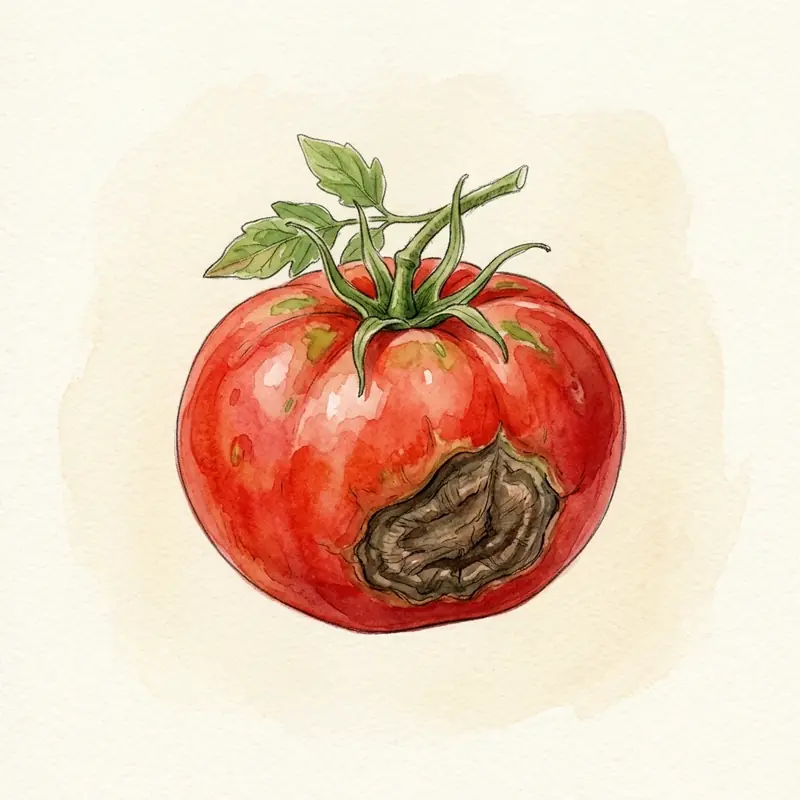
- Blossom end rot. A dark, sunken patch at the tip of the fruit caused by irregular watering; do not confuse it with poor pollination.
- Whitefly. It weakens the plant and coats the leaves with honeydew in hot summers.
Warning signs
The courgette tastes very bitter.
Likely cause: It may contain cucurbitacins, which are more likely in plants grown from saved seed or under stress.
What to do: Do not eat it, and throw the fruit away; if it happens again, pull up the plant and do not save its seed.
The plant stops setting fruit in midsummer.
Likely cause: Large fruits have been forgotten on the plant, or the plant is going thirsty.
What to do: Remove the overgrown fruits and water regularly.
Reference photos
When it moves on to the next stageThe cycle ends when the cool of autumn, or powdery mildew, exhausts the plant and it stops setting fruit.
Stage 7End of the cycleEnd of the cycle: Jul–OctLasts about 7–21 daysWith the cool of autumn, or when powdery mildew covers almost all the leaves, the plant stops producing. It is time to pull it up and prepare the soil for the next crop.
With the cool of autumn, or when powdery mildew covers almost all the leaves, the plant stops producing. It is time to pull it up and prepare the soil for the next crop.
Jobs for this stage
- Pick the last usable fruits before the first cold weather.
- Pull up the plants and put them on the compost heap if they are healthy; leaves badly affected by mildew are better removed from the garden.
- Sow a green manure or a winter crop from another family, such as broad beans, garlic or cabbages.
- Do not plant courgettes, squashes, cucumbers or melons in the same place again for two or three years.
Common problems
- Powdery mildew. At the end of the cycle it is almost inevitable; do not leave it in the garden so that it does not overwinter there.
Warning signs
The leaves blacken and go limp after a cold night.
Likely cause: A frost or intense cold; the plant will not recover.
What to do: Pick the usable fruits and pull up the plant.
Stage 8Seeds and propagationSeeds and propagation: Jul–OctLasts about 60–100 daysTo save courgette seed you have to leave a fruit on the plant until it is fully ripe, as if it were a squash. The big challenge is that it crosses very easily with other courgettes and with many squashes. Fruit for seed is picked from July to October in a temperate climate, and well-stored seed keeps for four to six years.
To save courgette seed you have to leave a fruit on the plant until it is fully ripe, as if it were a squash. The big challenge is that it crosses very easily with other courgettes and with many squashes. Fruit for seed is picked from July to October in a temperate climate, and well-stored seed keeps for four to six years.
Six to eight weeks from flower until the fruit hardens on the plant, plus another three or four of resting and drying.
Saving seed
When the seed is ripe: Leave a well-formed fruit from a healthy plant on the vine until it grows very large, the skin hardens and the stalk starts to dry, which usually takes six to eight weeks from flowering. Then leave it to ripen indoors for two or three more weeks.
How to extract it: Open the fruit, scoop out the seeds with your hand or a spoon, separate them from the fibres and wash them in water. Seeds that float or are flat and empty are no good.
Drying: Spread them in a thin layer on a plate or a rack, in the shade and somewhere airy, for one or two weeks, turning them often, until they snap rather than bend.
Storage: Store them in a paper envelope or a tightly closed jar, labelled with the name and the year, in a cool, dry, dark place.
The seed stays viable for about 4–6 years.
F1 hybrids: Many commercial courgettes are F1 hybrids, and their seeds will produce uneven plants, sometimes with bitter fruit. Save seed only from open-pollinated varieties.
Cross-pollination: Courgette is Cucurbita pepo, like patty pan squash, Halloween pumpkin, spaghetti squash and acorn squash, and bees cross them with one another easily and over long distances. To get pure seed, hand-pollinate: the evening before, tape shut a female flower and a male flower that are about to open, pollinate in the morning, close the female flower again and mark that fruit.
Reference photos
Sources and review
Reviewed on 4 November 2026. Approximate figures, written from these sources and the data in this profile.
- Oregon State University Extension: soil temperature and vegetable seed germination
- Royal Horticultural Society: How to grow courgettes
- Utah State University Extension: How to grow pumpkins in your garden (cucurbits, pollination and harvest)
- Suzanne Ashworth: Seed to Seed (Seed Savers Exchange), chapter on the cucurbits
- Vuelta al Huerto catalogue data (germination, calendar, tolerances and Visual harvest guide)
03Planting
Where and how to plant it
Sow the seed 2.5 cm deep; leave 70 cm between plants and 90 cm between rows.
70 cm between plants · 90 cm between rows
Seed at a depth of 2.5 cm.
- In a square-foot bed
- 1 plant every 9 squares30 × 30 cm squares
- Direct sowing
- Apr–Jun
- Germination
- ~6 days
- Common mistakePlanting too close together cuts down air flow and encourages fungal disease.
04Care
Care through the year
Sun and aspectFull sun · 8 h of sun · South or south-west, with nothing casting shade at midday
- Too little sun
- Ideal range
- Plenty of sun
South or south-west, with nothing casting shade at midday
Strong sun: Loves full midday sun and high temperatures.
WateringMoist but never waterlogged · summer: every 2-3 days
- Summerevery 2-3 days2 L per plant/week
- Spring / Autumnevery 4-5 days1 L per plant/week
- Winterevery 2-3 weeks0.3 L per plant/week
Moist but never waterlogged: Water before the surface is completely dry. Never puddles. Mulch: straw or dry plant material cuts watering by 30-50 %.
When to water? Push your finger 3 cm into the soil next to the base of the plant:
- Damp: soil sticks to your finger. Do not water today. The moisture is fine.
- Cool but clean, no mud. Water early tomorrow if it stays like this, or this evening.
- Dry and dusty. Water now, and deeply. This is not where it likes to be.
- Common mistakeWatering in fits and starts (bone dry, then waterlogged) splits the fruit and leaves flowers that fail to set.
Soil and feedingRich, airy loam
Rich, airy loam.
40 % topsoil · 40 % well-rotted compost · 20 % perlite or sand.
Medium: moist but never waterlogged.
This plant prefers a pH between 6.0 and 7.0 (slightly acidic to neutral).
- Well-rotted compost every season and well-decomposed manure in autumn.
- Mulch with straw or dry plant material to hold moisture and smother weeds.
- Rotate crops: do not grow the same family in the same spot two years running.
- Compacted soil or unbroken clay can halve the harvest.
- Watering with a hose from above compacts the soil: drip irrigation or watering at the base is better.
- TipDig compost into the soil before planting and keep watering regular so growth never stalls.
Common mistakes and tips
- TipIf small fruits rot at the tip, poor pollination is usually to blame.
05Harvest
Harvesting and storing
Harvest in Jun–Sep; the first, about 50 days after sowing.
- TipGrow it just like a green courgette: harvest the fruits young and often so that the plant keeps producing, and water at the base without wetting the leaves to hold back powdery mildew.
- TipHarvest often: the more you pick, the more the plant produces.
06Uses and health
What it is used for, and with what care
Edible. Very occasionally a fruit turns out very bitter because of excess cucurbitacin: if so, do NOT eat it (it causes severe digestive upset).
- Properties
- A light summer vegetable that is very versatile in the kitchen.
- Uses
- Cooked (sautéed, griddled, in soups) or raw in thin slices.
For guidance only; this is not medical treatment and does not replace advice from a doctor or vet.
07Companions and related plants
What to plant it with
Good companions
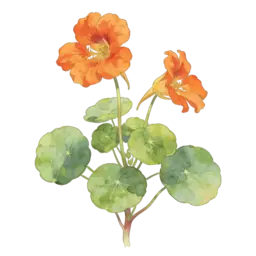
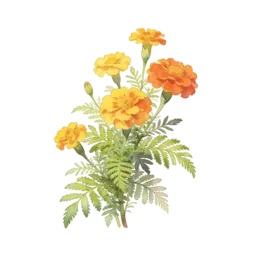
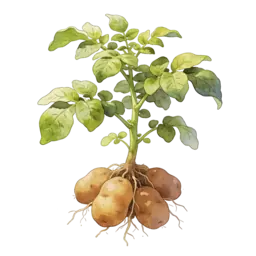
Keep apart
Group it in the same bedPlants with the same watering or the same sun
They are not essential companions, but you will not have to water or position them differently.
Compare with similar varieties
| Variety | Sowing | Harvest | Days | Spacing | Difficulty |
|---|---|---|---|---|---|
| Golden courgette | Apr–Jun | Jun–Sep | ~50 | 70 cm | Easy |
| White Virginia courgette | Mar–May | Jun–Sep | ~60 | 80 cm | Easy |
| Courgette 'Nero di Milano' | Apr–Jun | Jun–Sep | ~50 | 70 cm | Easy |
| Courgette 'Ronde de Nice' | Mar–May | Jun–Sep | ~60 | 80 cm | Easy |
08Pests and diseases
Critters and ailments to keep an eye on
The most common ones on this plant. Tap one to see how to recognise it and what to do.