
Cutworms
Also known as: cutworms, cutworm, turnip moth caterpillar, black cutworm, Agrotis
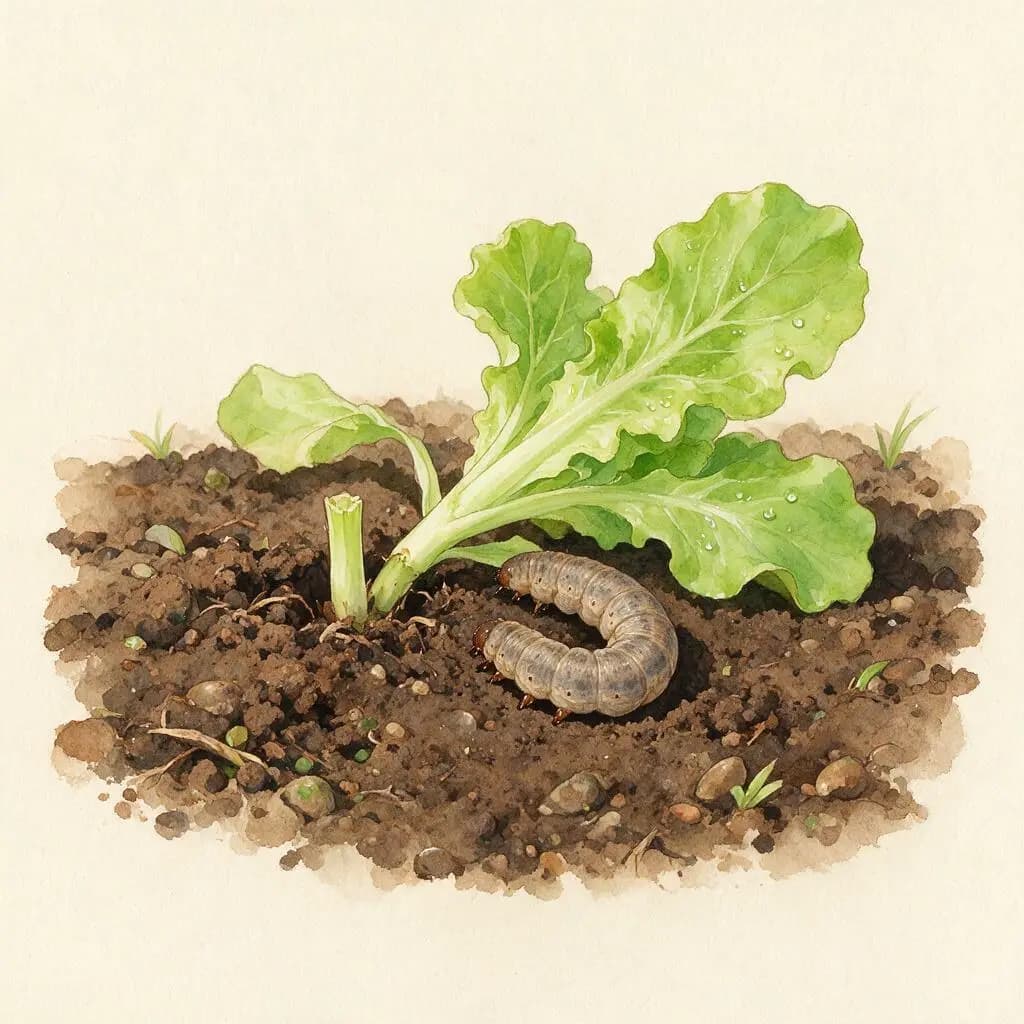
Fat, greyish, night-feeding caterpillars that cut seedlings off at the base, at ground level. During the day they curl up under the soil or among debris. The first step is to protect each seedling with a collar and look for the caterpillars by scratching the soil next to the plants that have been cut.
Its best ally
Ground beetle
A natural predator that helps to keep this pest under control. Tap to see how to attract it.

How to recognise it at every stage
Shares your gardenThey like your freshly transplanted seedlings: they cut them off at ground level.
Life cycle: Complete metamorphosis: egg (1 week), caterpillar living in the soil (3-5 weeks), buried pupa and night-flying moth. Two or three generations a year; it overwinters as a caterpillar.
Tap a stage to see it full size. The photos are AI reference images checked against real photographs; stages without a reliable photo are shown as text only.
Life-stage calendar
| Jan | Feb | Mar | Apr | May | Jun | Jul | Aug | Sep | Oct | Nov | Dec | |
|---|---|---|---|---|---|---|---|---|---|---|---|---|
| Eggs | ||||||||||||
| Caterpillar | ||||||||||||
| Pupa | ||||||||||||
| Moth |
Approximate months for mainland Spain; in cold areas they start later and in warm areas they last longer. Garden creatures this month
- 1Keep an eye on it
Eggs
· 0.5 mmRibbed white spheres that darken, laid singly or in small groups.
- Where to find it
- On low leaves, weeds or plant debris at ground level.
- When: Apr–Sep
- What to do
- Keep the bed free of tall weeds before transplanting.
- 2Protect your plants
Caterpillar
· Up to 4-5 cmPlump, grey or brown, smooth and greasy-looking; it curls into a C when touched.
- Where to find it
- By day, buried at the foot of the plant; at night it comes out and cuts tender stems.
- When: Mar–Nov
- What to do
- Put cardboard or bottle collars round each seedling. Dig around cut plants: it will be curled up a few centimetres down. Take it far away.
- Often confused with
- Chafer grub. White, C-shaped, with an orange head and long legs; it eats roots and does not cut stems. See profile
- Leatherjacket (crane fly larva). Grey, legless, tough as leather and with no visible head. It eats roots in damp soils.
- 3Keep an eye on it
Pupa
· 2 cmReddish-brown and shiny, in a small soil cell.
- Where to find it
- 5-10 cm below ground.
- When: May–Oct
- What to do
- Nothing; ground beetles and birds scratching in the soil find many.
- 4Keep an eye on it
Moth
· 3.5-4.5 cm wingspanA brown moth with dark marks (one kidney-shaped) on the forewings and whitish hindwings.
- Where to find it
- Flies at night and comes indoors attracted by light.
- When: Apr–Oct
- What to do
- Bats and barn owls take care of many.
Often confused with
- Chafer grub. White, C-shaped, with an orange head and long legs; it eats roots and does not cut stems. See profile
- Leatherjacket (crane fly larva). Grey, legless, tough as leather and with no visible head. It eats roots in damp soils.
How to recognise it (symptoms)
- Seedlings cut off at the base as if with scissors and lying in the row
- Scratching 1-2 cm into the soil near the cut plant reveals a fat, curled-up caterpillar
- Night-time attacks: in the morning plants are missing from the row
Crops affected
 LettuceCos lettuce, with a long, crisp heart.
 CabbageSavoy cabbage, with blistered, crinkled leaves, which grows sweeter with the cold; it does best in autumn…
 TomatoMarmande tomato, flattened and ribbed, a good size for salads.
 PepperCalifornia Wonder pepper, a blocky bell type with thick flesh, for stuffing or eating fresh.
 BeansA dwarf green bean that does not need a support and is easy to grow in a bed.
 SweetcornMaize with tender, sugary kernels for eating on the cob.
What favours it
- Soils with lots of dry plant debris, where the pupae shelter
- Weeds on which the moths lay their eggs
- Transplanting in summer or early autumn, when the pest is active
Prevention
- Put cardboard collars around each seedling (about 2 cm below ground and 3 cm above)
- Weed the plot before transplanting to remove the weeds where the moth lays eggs
- Lightly turn the soil before transplanting and remove any caterpillars that appear
Organic treatment
Always start here: these remedies are kind to the garden, the soil and pollinators.
- First: protect each seedling with a cardboard collar and go out at night with a torch to collect the caterpillars that are cutting plants
- Insect-killing nematodes (Steinernema carpocapsae) applied in the irrigation water at dusk to moist soil
- Bacillus thuringiensis (a registered product) sprayed at dusk if the caterpillars climb up to eat the leaves
- Encourage birds and hedgehogs, which hunt them
Don't confuse it with…
Damage at ground level looks similar to slug damage. If there is a caterpillar buried nearby, it is a cutworm: slugs eat the leaf and leave slime, they do not cut through the base.
In-depth guide — cutworms (Agrotis)
These are night-feeding caterpillars that cut seedlings off at soil level. Protect transplants and check them at dawn.
Spotting the damage
A fallen seedling with a clean cut at the base. Scratch gently in the soil nearby: you will find a curled-up grey larva.
Pheromone traps and collecting
- A trap for the adults (moths) gives you an idea of the highest-risk period on large plots.
- Go out at dawn and collect the larvae by hand from under debris and mulch.
Physical protection
- A cardboard collar or tube around the stem at transplanting.
- Keep the soil next to the plant's collar free of debris.
- Let seedlings grow on in the seed tray until they are sturdy.
Biological control
Apply Steinernema carpocapsae nematodes to moist soil, at dusk, around the base of the plants. Bacillus thuringiensis only works if the larva climbs up to eat the leaves.
Use plant protection products responsibly, even organic ones. Always read and follow the label, the doses and the harvest interval, and never treat plants in flower or while bees are flying, in order to protect pollinators. If in doubt, put prevention and organic methods first.

In the plant catalogue you'll see what to plant, how and when: a well-tended plant resists pests much better.