
Rhizoctonia and damping off
Also known as: damping off, damping-off, Rhizoctonia, Rhizoctonia solani, collar rot, seedling wilt
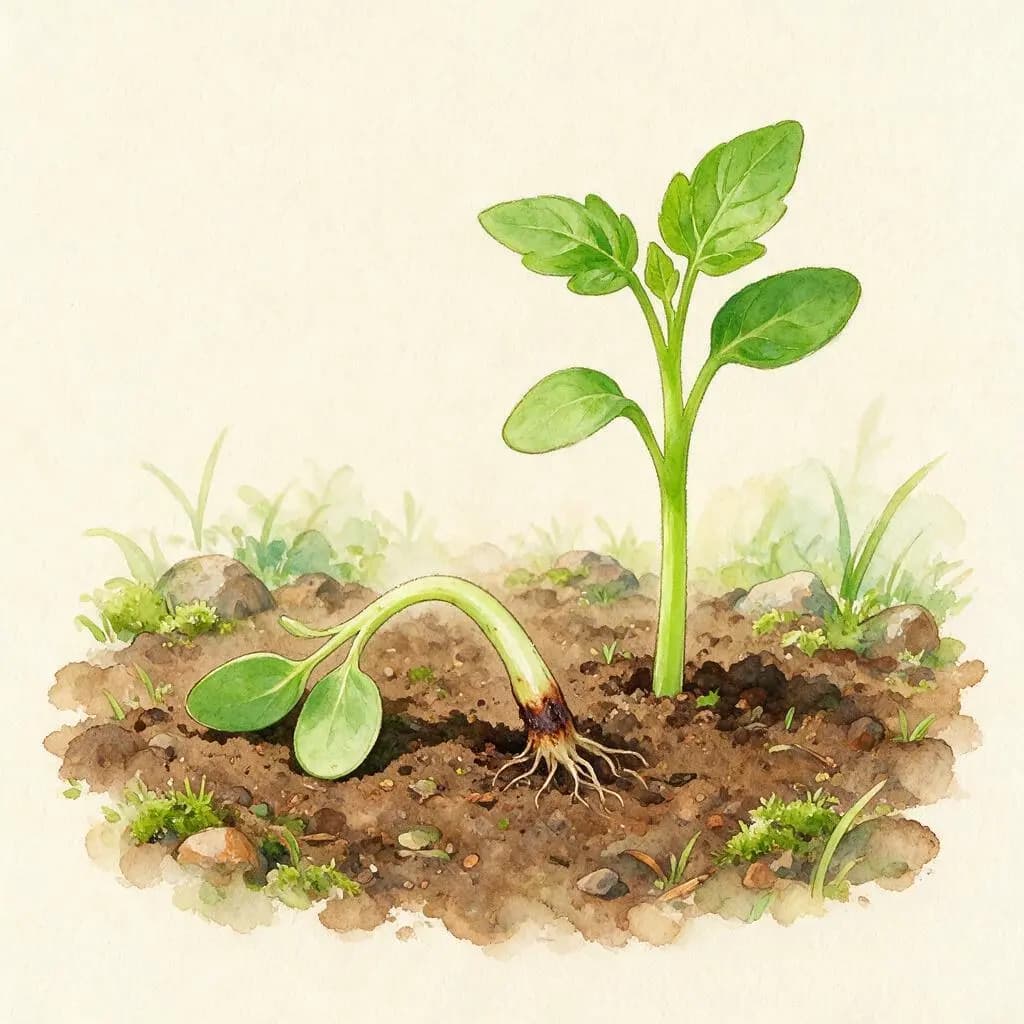
A group of soil fungi (Rhizoctonia, Pythium, Fusarium) that pinch the collar of newly emerged seedlings and make them suddenly keel over. The first step is to remove affected seedlings, water less often and ventilate the seed tray.

How to recognise it (symptoms)
- Seedlings lying flat with a pinched, brown, thinned collar
- Seed trays with empty gaps that grow day by day
- Brown roots with few root hairs when you dig them up
- Seeds that fail to come up when the potting mix is very wet
Crops affected
What favours it
- Very damp, poorly lit seed trays
- Reused potting mix that has not been sterilised, which harbours the fungus from the previous crop
- Heavy soil prone to waterlogging, which holds water at the surface
Prevention
- Use fresh seed compost: reused mix often carries collar-rot fungi
- Water by capillary action, with water in the tray below, so as not to wet the seedlings' collars
- Give plenty of light and ventilate well
- Do not use fresh manure in seed-tray potting mix
Organic treatment
Always start here: these remedies are kind to the garden, the soil and pollinators.
- First: remove affected seedlings along with a handful of the surrounding potting mix, water less often and ventilate. This removes the fungus and lowers the humidity that helps it multiply
- Trichoderma in the sowing mix, as a preventive (a registered product)
- Lukewarm chamomile tea instead of ordinary watering, every 5-7 days, may help as support, although its effect has not been proven
Don't confuse it with…
With scorch from fertiliser salts or too much sun. In damping off the collar is pinched; with scorch, the leaf dries from the outside.
In-depth guide — Rhizoctonia and damping off
In the seed tray, seedlings bend at the collar and keel over (damping off). In the ground, the collar of the plant rots.
Seed tray
Use fresh potting mix, clean trays, water from below and provide good ventilation.
- Do not sow too thickly.
- Remove plastic covers once the seeds germinate so that the surface can dry.
- Throw away trays with outbreaks and do not reuse infected potting mix.
In the ground
Avoid waterlogging and fresh organic matter in contact with the collar.
- Plant at the correct depth.
- Improve the drainage of the bed.
Use plant protection products responsibly, even organic ones. Always read and follow the label, the doses and the harvest interval, and never treat plants in flower or while bees are flying, in order to protect pollinators. If in doubt, put prevention and organic methods first.

In the plant catalogue you'll see what to plant, how and when: a well-tended plant resists pests much better.