
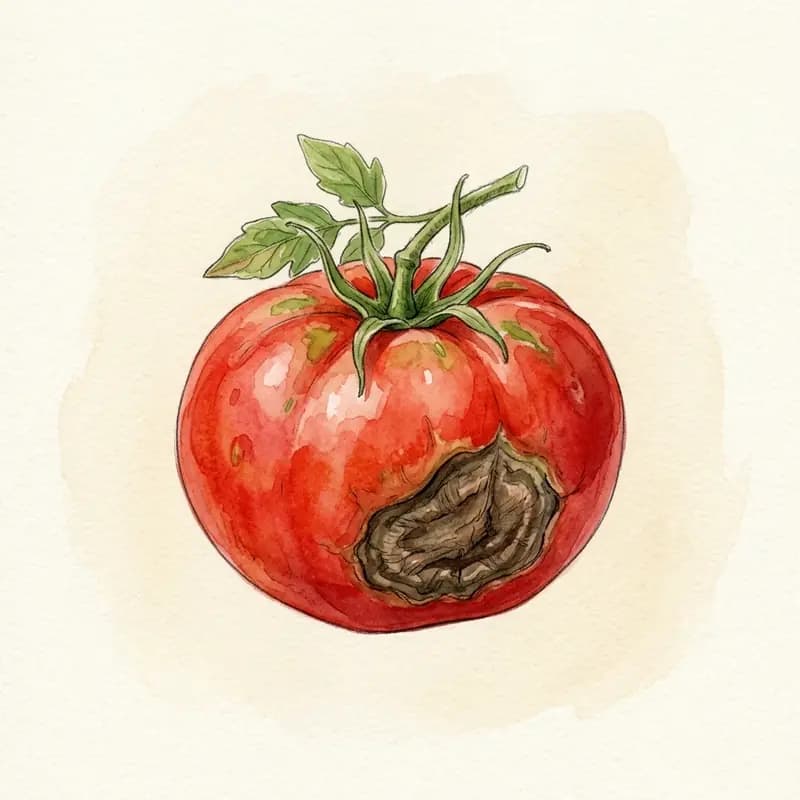
Blossom end rot
Also known as: blossom end rot, BER, tomato blossom end rot, black bottom on tomatoes, calcium deficiency in tomatoes
A sunken black patch at the base of the fruit, on the opposite side from the stalk. It is not a fungus: it is a disorder caused by a lack of calcium in the fruit, almost always due to irregular watering. The first step is to water regularly and mulch the soil.

How to recognise it (symptoms)
- A sunken, leathery brown or black patch at the base of the fruit
- It mainly affects the first fruits and elongated tomatoes
- The affected area dries out and hardens like leather
- The plant is otherwise green and healthy: the damage is limited to the fruit
Crops affected
 TomatoMarmande tomato, flattened and ribbed, a good size for salads.
 PepperCalifornia Wonder pepper, a blocky bell type with thick flesh, for stuffing or eating fresh.
 AubergineAn aubergine with glossy black fruit, for warm climates.
 CourgetteA cylindrical, very dark green courgette, productive and early, the classic bush type for continuous picking.
What favours it
- Irregular watering, with dry spells followed by waterlogging
- Too much nitrogen and overly fast growth
- Strong heat and wind, which drive up transpiration and divert water to the leaves
- High salinity in the soil or in the irrigation water
Prevention
- Water regularly and consistently, without ups and downs
- Mulch the soil to keep moisture levels steady
- Do not overuse ammonium nitrogen or potassium
- If a soil test shows low calcium, correct it, but first check your watering, which is almost always the cause
Organic treatment
Always start here: these remedies are kind to the garden, the soil and pollinators.
- First: make watering steady, with consistent, deep watering, and mulch the soil. This is the main cause and the real solution
- Remove affected fruit: it will not recover, but the following fruits will be healthy if you correct the watering
- Only if a test shows a lack of calcium in the soil, add calcium well before the crop, following the product label
Chemical treatment (with caution)
It is not a pest: it is not treated with fungicides or insecticides. Foliar calcium feeds help little if watering remains irregular.
Don't confuse it with…
With a fungal disease or an insect puncture. Here the patch is always at the base of the fruit and is dry, not wet or mouldy.
In-depth guide — blossom end rot in tomatoes
The black patch at the base of the fruit appears because of a lack of calcium in the growing tissue, almost always due to irregular watering. It is not a fungus: there is no need to treat it with a fungicide.
Regular watering
Keep the moisture steady deep down. In pots, water when the top centimetre of potting mix dries out, without alternating between drought and waterlogging.
Available calcium
- Most soils have plenty of calcium; the problem is that it does not reach the fruit because of irregular watering.
- Only if a soil test says so, correct it with a calcium amendment, and check the pH as well.
- Avoid too much nitrogen, which speeds up erratic growth.
Mulch
Straw or bark reduces swings in soil moisture in a dry Mediterranean climate.
Fruit already affected
Cut away the damaged part and, if the rest of the fruit is sound and free of mould, you can use it. The plant can go on producing well if you correct the watering before the next flushes of flowers.
Use plant protection products responsibly, even organic ones. Always read and follow the label, the doses and the harvest interval, and never treat plants in flower or while bees are flying, in order to protect pollinators. If in doubt, put prevention and organic methods first.

In the plant catalogue you'll see what to plant, how and when: a well-tended plant resists pests much better.