
Credits and licences
- #1 — vueltaalhuerto illustration
- #2 — vueltaalhuerto illustration
- #3 — vueltaalhuerto illustration
- #4 — vueltaalhuerto illustration
- #5 — vueltaalhuerto illustration
- #6 — vueltaalhuerto illustration
- #7 — vueltaalhuerto illustration
- #8 — vueltaalhuerto illustration
- #9 — vueltaalhuerto illustration
- #10 — vueltaalhuerto illustration
- #11 — vueltaalhuerto illustration
- #12 — vueltaalhuerto illustration
- #13 — vueltaalhuerto illustration
- #14 — Dinesh Valke from Thane, India · CC BY-SA 2.0 see on Wikimedia
- #15 — Zenon Sych · CC BY-SA 4.0 see on Wikimedia
- #16 — Wilfredor · CC0 see on Wikimedia
Armenian cucumber
and 1 more names
Cucumis melo var. flexuosusArmenian cucumber is sown in seed trays from March to April or directly outdoors from April to May, and planted out in May. It is harvested from July to September (about 70 days to the first harvest). Grow it in full sun, 60 cm apart, with plenty of watering. Dates are for a mild temperate climate in the northern hemisphere; the calendar below adjusts them to your zone.
What else to sow in March, April and May
The Armenian cucumber, or snake cucumber, is long with smooth skin. It is grown like a summer cucumber. It is best given a support, and steady soil moisture reduces bitterness.
Family and origin: Gourd family (Cucurbitaceae) · native to Armenia and the Caucasus · More plants from Fertile Crescent
01In your area
How will it do in your garden?
Year calendar
| Task | J | F | M | A | M | J | J | A | S | O | N | D |
|---|---|---|---|---|---|---|---|---|---|---|---|---|
| Seed trayMar–Apr | no | no | yes | yes | no | no | no | no | no | no | no | no |
| Direct sowingApr–May | no | no | no | yes | yes | no | no | no | no | no | no | no |
| Plant / transplantMay | no | no | no | no | yes | no | no | no | no | no | no | no |
| HarvestJul–Sep | no | no | no | no | no | no | yes | yes | yes | no | no | no |
| FloweringJun–Aug | no | no | no | no | no | yes | yes | yes | no | no | no | no |
Its life cycle at a glance
Swipe and tap a stage to see its details.
02Step by step
From seed to harvest, stage by stage
What the plant needs at each point in its life, from the seed to the harvest and on to the next seed. The figures are only a guide: your climate, your soil and the variety will shift them.
Approximate months for a temperate Spanish climate. Choose your zone in the calendar to adjust them.
Stage 1Seed and germinationSeed and germination: Mar–AprGerminates in 3–10 daysCucumber seed comes up very quickly if it is warm, but it rots easily in cold, soggy potting mix. Two smooth, oval seed leaves appear first, followed shortly by the first true leaf, rough and heart-shaped.
Cucumber seed comes up very quickly if it is warm, but it rots easily in cold, soggy potting mix. Two smooth, oval seed leaves appear first, followed shortly by the first true leaf, rough and heart-shaped.
At 25 °C it comes up in three or four days; below 15 °C it hardly comes up at all.
Temperature
min. 16°Cideal 24°C–30°Cmax. 40°CBelow 15 °C it germinates poorly and the seedlings come up weak.
Moisture and watering
Water once at sowing and then keep the potting mix just moist. Heavy watering over the seed before it comes up is the most common reason for it rotting.
How often: Every two or three days, depending on how quickly the surface dries.
Light · Not important
It needs no light to germinate, but as soon as it comes up it must be given as much light as possible so that it does not become leggy.
Container · Pot
0.3–0.5 L
It is best sown directly into individual 8 cm pots or large cells, with one or two seeds 1-2 cm deep, because cucumbers do not like their roots being disturbed.
Potting mix or soil
pH 6–7
Use a light, free-draining seed compost without strong fertiliser.
Nutrients
Mainly needs: no fertiliser
It needs no fertiliser at this stage.
Protection
- A heat mat under the pots or a warm corner of the house brings germination forward and stops the seed rotting.
Common problems
- Damping off. The seedlings keel over at the base in cold, waterlogged potting mix.
Warning signs
The seeds do not come up and are soft when you dig them up.
Likely cause: They have rotted from cold and too much water.
What to do: Sow again somewhere above 20 °C and water less until they come up.
The seedlings come up long and floppy.
Likely cause: They are short of light.
What to do: Move them to the brightest window or under a grow light as soon as they emerge.
Reference photos
When it moves on to the next stageMove on to the seed tray stage when the seed leaves are fully open and the first true leaf is starting to show between them.
Stage 2Seed tray and seedlingsSeed tray and seedlings: Mar–MayLasts about 20–35 daysYoung cucumber plants grow quickly and should not be kept in the pot for long. In three or four weeks they form two or three true leaves and are ready to go out as soon as the weather is mild.
Young cucumber plants grow quickly and should not be kept in the pot for long. In three or four weeks they form two or three true leaves and are ready to go out as soon as the weather is mild.
Three to five weeks from emergence; longer in the pot weakens it.
Temperature
min. 15°Cideal 20°C–26°Cmax. 32°CNights below 15 °C slow growth and toughen the leaves.
Moisture and watering
Water when the top layer feels dry to the touch, soaking the pot and letting the excess drain away.
How often: Every two or three days.
Light · Full sun
10–14 h of light
It needs plenty of light to grow compact; with too little it becomes leggy and the stem bends.
Container · Pot
0.3–1 L
An individual 8-10 cm pot, or a biodegradable fibre pot, so that it can be planted without breaking the roots.
Potting mix or soil
A light, free-draining multipurpose compost with a little sieved garden compost.
Nutrients
Mainly needs: nitrogen (N)
It does not usually need feeding, because it spends little time in the pot; if it turns pale, a little worm compost is enough.
What with: worm compost
Jobs for this stage
- Leave a single seedling per pot, snipping off the others at soil level with scissors.
- Put the pots outside during the mild hours as soon as the weather allows, so that the plants toughen up.
Common problems
- Damping off. It remains a danger in cold, constantly wet potting mix.
- Aphids. They settle on the undersides of tender leaves, especially indoors or in a greenhouse.
Warning signs
The leaves turn yellow and roots are poking out of the holes in the pot.
Likely cause: It has outgrown its pot.
What to do: Transplant it as soon as possible, or move it to a bigger pot if it is still cold outside.
Reference photos
When it moves on to the next stageIt is ready to be hardened off when it has two or three true leaves and the roots hold the rootball together without having completely filled the pot.
Stage 3Hardening off and transplantingHardening off and transplanting: MayLasts about 5–10 daysBefore going out into the garden, the young plants must get used gradually to sun and wind. Cucumbers are very sensitive to cold, so it is best to wait until the soil is warm and the nights are mild.
Before going out into the garden, the young plants must get used gradually to sun and wind. Cucumbers are very sensitive to cold, so it is best to wait until the soil is warm and the nights are mild.
A few days of hardening off before planting out.
Temperature
min. 12°Cideal 18°C–28°Cmax. 34°CPlant out when nights stay above 12-15 °C and the soil is warm.
Moisture and watering
Water the rootball thoroughly before planting and again straight afterwards so that the soil settles around the roots.
How often: For the first few days, daily, or every two days in hot weather.
How much: About 1-2 L per plant at planting.
Light · Full sun
At least 6 h of light
While hardening off, put it out in the shade at first and gradually increase the hours of sun. In the garden it needs full sun, although in very dry summers it appreciates light shade at midday.
Container · Straight into the ground
20–30 L
In a bed or in open ground, about 35-60 cm between plants and 90 cm between rows if it is trained up a support. In a container, at least 20 L, with netting or a stake for it to climb.
Potting mix or soil
pH 6–7
It prefers loose, cool soil that is very rich in organic matter and holds moisture without becoming waterlogged. Mix one or two spadefuls of well-rotted compost into the planting hole.
Nutrients
Mainly needs: nitrogen (N), phosphorus (P)
The compost in the hole is enough for the first few weeks; keep fresh manure away from the roots.
What with: well-rotted compost, well-rotted manure
Protection
- If nights below 10 °C are forecast, cover the plants with horticultural fleece.
- Put the netting or stake in at planting time so that you do not damage the roots later.
Jobs for this stage
- Plant without breaking up the rootball and at the same depth as it was in the pot.
- Mulch around the plants with straw once the soil has warmed up.
Common problems
- Slugs and snails. They nibble newly planted cucumbers, especially after rain or watering.
- Cutworms. At night they cut through the stems of young plants at ground level.
Warning signs
The plant wilts in the sunny hours for the first few days.
Likely cause: It is transplant stress, worse if the roots were damaged.
What to do: Give it light shade for a few days and keep the soil moist.
Reference photos
When it moves on to the next stageIt has taken when, a few days later, it produces new leaves and starts stretching its stem in search of its support.
Stage 4GrowthGrowth: JunLasts about 20–35 daysIn warm, humid weather the cucumber lengthens its stems and clings with its tendrils to anything it finds. This is the stage for training it up the netting, watering regularly and keeping an eye on the leaves.
In warm, humid weather the cucumber lengthens its stems and clings with its tendrils to anything it finds. This is the stage for training it up the netting, watering regularly and keeping an eye on the leaves.
Three to five weeks from transplanting to the first flowers.
Temperature
min. 12°Cideal 18°C–28°Cmax. 35°CBelow 12 °C it stops growing; in hot, dry weather it suffers badly.
Moisture and watering
Water at the base, without wetting the leaves, and do not let the soil dry out. Cucumbers have shallow roots and need constant moisture.
How often: Every one or two days in hot weather; two or three times a week in a mild spring.
How much: As a guide, 1-3 L per plant each time you water, more in containers.
Light · Full sun
6–10 h of light
Full sun, with good air flow between plants.
Potting mix or soil
Keep the soil crumbly and mulched so that it holds moisture.
Nutrients
Mainly needs: nitrogen (N)
It needs nitrogen to form its stems; a dressing of compost or diluted plant feed is enough.
How often: Every three weeks.
What with: compost, diluted nettle feed, worm compost
Protection
- Mulch with straw to keep the soil moist and keep low-hanging fruit clean.
Jobs for this stage
- Train the stems up the netting or tie them loosely to the stake.
- On climbing varieties, pinch out the main stem when it reaches the top of its support.
- Remove the lower leaves that touch the ground.
Common problems
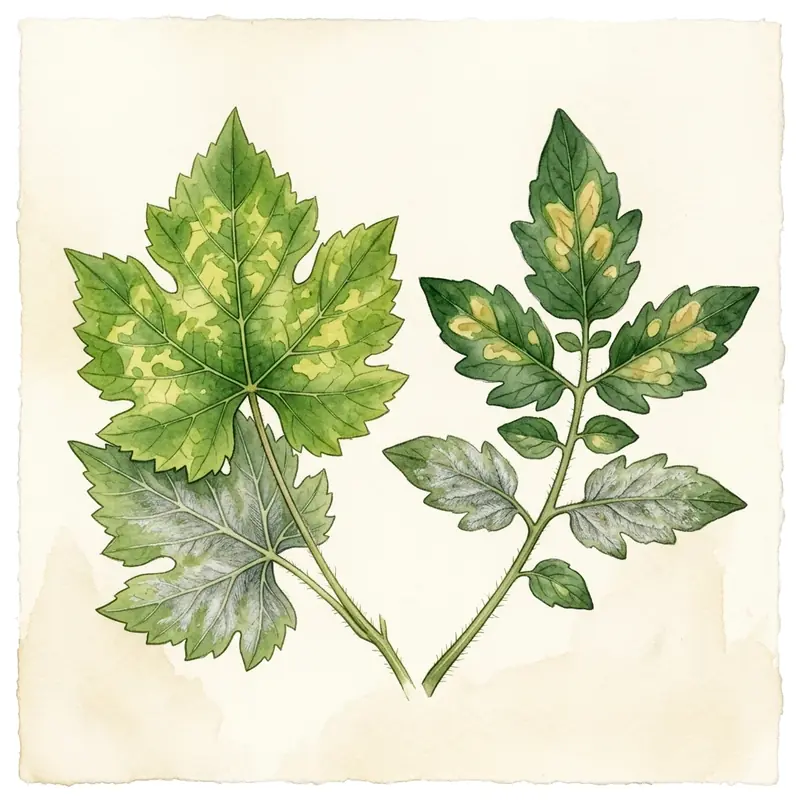
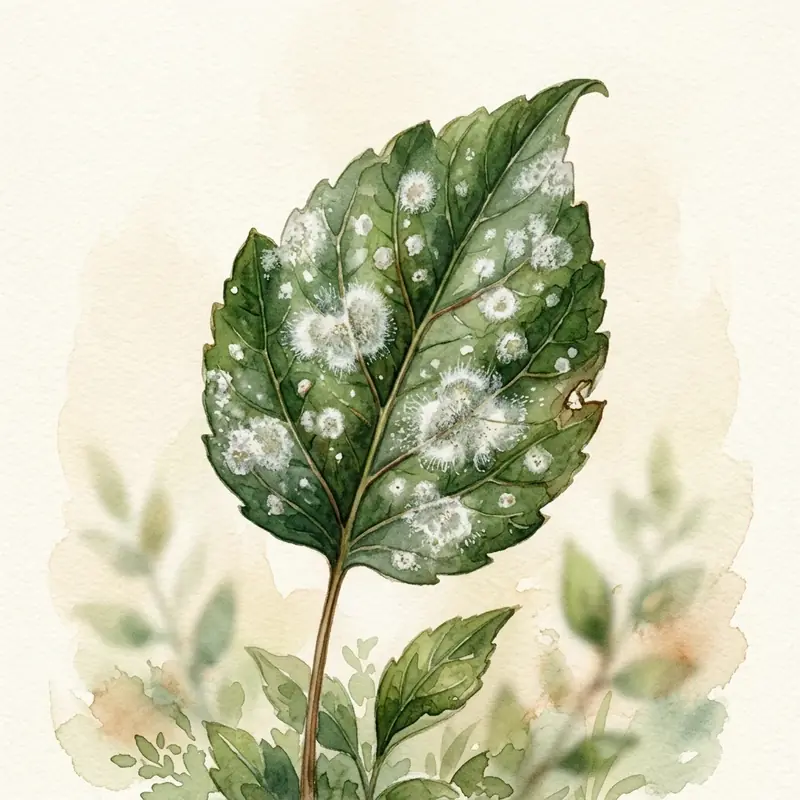
- Powdery mildew. White powder on the leaves in warm, humid weather.
- Downy mildew. Angular yellow patches on the upper side of the leaves, bounded by the veins, and greyish mould on the underside after damp days.
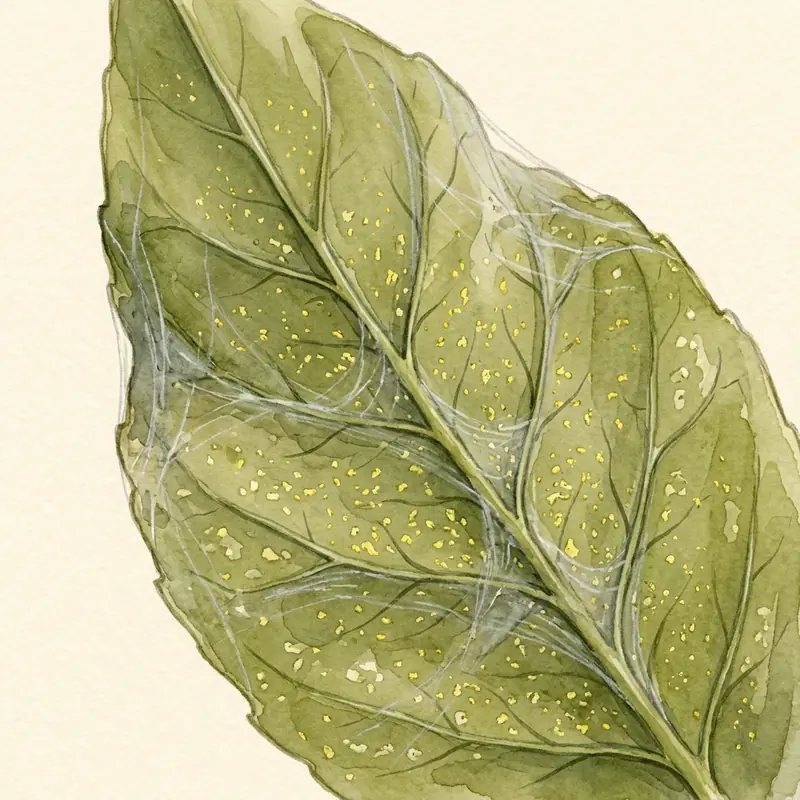
- Red spider mite. Leaves with tiny yellow speckles and fine webbing on the undersides in hot, dry weather, especially in a greenhouse.
- Aphids. Colonies on the undersides of young leaves; they also spread viruses.
Warning signs
The lower leaves turn evenly yellow.
Likely cause: Lack of nitrogen.
What to do: Add compost or an organic fertiliser rich in nitrogen.
The plant wilts in the heat of the day even though the soil is moist.
Likely cause: It may be excessive heat, but also root damage from nematodes or fungi.
What to do: Provide shade in the middle of the day; if it does not recover by the evening, check the roots.
Reference photos
When it moves on to the next stageMove on to flowering when the first yellow flowers open in the leaf axils.
Stage 5Flowering and pollinationFlowering and pollination: Jun–AugLasts about 7–20 daysMost cucumbers have male and female flowers on the same plant; the female ones can be recognised by the tiny cucumber behind them. Bees do the pollinating, except with parthenocarpic cucumbers, which set fruit on their own.
Most cucumbers have male and female flowers on the same plant; the female ones can be recognised by the tiny cucumber behind them. Bees do the pollinating, except with parthenocarpic cucumbers, which set fruit on their own.
The first flowers are usually male; the female ones appear one or two weeks later.
Temperature
min. 15°Cideal 18°C–30°Cmax. 35°CIn cold or extreme heat fruit set is poor and the fruits come out misshapen.
Moisture and watering
Keep moisture levels very steady: thirst during fruit set gives bitter, curved fruit that is narrow at one end.
How often: Every one or two days in hot weather.
How much: As a guide, 1-3 L per plant each time you water.
Light · Full sun
At least 6 h of light
It still needs full sun, with no other crops casting shade and taking away its light.
Nutrients
Mainly needs: potassium (K)
From flowering onwards it benefits from a little more potassium and less nitrogen.
How often: Every three weeks.
What with: compost, sieved wood ash (in moderation)
Protection
- Sow flowers nearby, such as pot marigolds or borage, to attract pollinators.
Jobs for this stage
- If you see few bees and your variety is not parthenocarpic, hand-pollinate in the morning with a freshly opened male flower.
- Keep training the stems and tie in any that come loose.
Common problems
Warning signs
The baby cucumbers shrivel and drop without growing.
Likely cause: The flower was not properly pollinated, or the plant is carrying too many fruits at once.
What to do: Hand-pollinate, water regularly and pick ready fruit often.
Reference photos
When it moves on to the next stageWhen the female flower dries and the tiny cucumber behind it keeps growing, it has set.
Stage 6Fruiting and harvestFruiting and harvest: Jul–SepLasts about 30–75 daysCucumbers grow very fast and must be picked young, before they turn yellow and the seeds harden. Picking often keeps the plant producing for weeks.
Cucumbers grow very fast and must be picked young, before they turn yellow and the seeds harden. Picking often keeps the plant producing for weeks.
Each fruit is ready one to three weeks after setting; the harvest lasts one to two and a half months.
For this varietyThe Armenian cucumber profile gives about 70 days to the first harvest; treat it as a rough guide.
Temperature
min. 12°Cideal 18°C–30°Cmax. 35°CBelow 16 °C or above 32 °C the fruits tend to turn bitter.
Moisture and watering
Keep watering regularly and generously at the base throughout the harvest. Uneven watering is the most common cause of bitter, misshapen cucumbers.
How often: Every one or two days in high summer.
How much: As a guide, 2-3 L per plant each time you water in summer; more often in containers.
Light · Full sun
At least 6 h of light
It still needs full sun, with no other crops casting shade and taking away its light.
Nutrients
Mainly needs: potassium (K)
A dressing of compost halfway through the harvest helps to keep production going.
How often: Every three or four weeks.
What with: compost, organic fertiliser rich in potassium
Protection
- In very hot summers, light shade netting in the middle of the day prevents bitterness.
Jobs for this stage
- Check the plant every one or two days and pick the cucumbers as soon as they reach their size.
- Remove overgrown fruit, even if you are not going to use it, because it holds the plant back.
- Remove old, dry or diseased leaves.
Harvesting
When it is ready: Harvest when the fruit has reached the size typical of its variety, is firm and evenly green, before it turns yellow. Salad cucumbers are usually ready at 15-25 cm, mini cucumbers at 10-12 cm and pickling ones even smaller.
How to pick: Cut the stalk with scissors or a knife, leaving a short piece attached to the fruit. Do not pull it off, because the stems break.
Time of day: Pick early in the morning, when the fruits are cool and firm.
Yield: As a guide, 2 to 5 kg per plant, or 15 to 40 fruits depending on the variety, the climate and the care given.
How to store: They keep for a week to ten days in the least cold part of the fridge, preferably wrapped so that they do not lose moisture. Pickling gherkins should be prepared on the day they are picked.
Common problems
- Powdery mildew. At the end of summer it covers the leaves and greatly reduces cropping.
- Downy mildew. In damp weather it dries out the leaves in a few days.
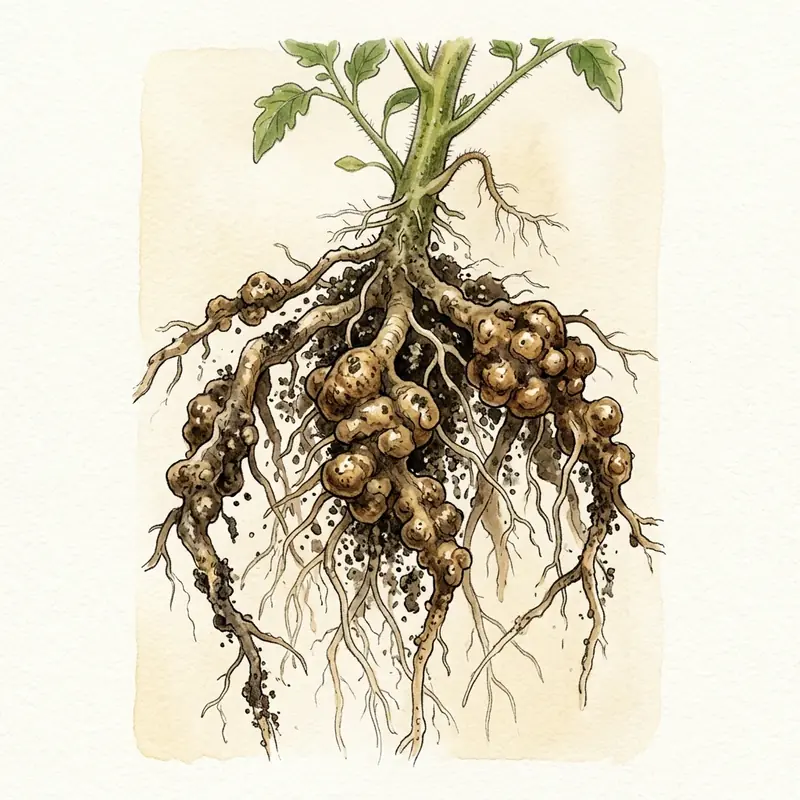
- Nematodes. The plant wilts in the heat and the roots show swellings or knots; common in sandy soils.
Warning signs
The cucumbers taste bitter.
Likely cause: Stress from thirst, heat or cold; the bitterness is concentrated near the skin and the stalk.
What to do: Water regularly and peel the fruit; if one tastes very bitter, do not eat it.
The fruits come out curved or narrow at one end.
Likely cause: Poor pollination or a lack of water and nutrients.
What to do: Water consistently, feed with compost and remove misshapen fruit.
Reference photos
When it moves on to the next stageThe cycle ends when the cool of autumn, powdery mildew or downy mildew exhausts the plant.
Stage 7End of the cycleEnd of the cycle: Aug–OctLasts about 7–21 daysWith the cool of autumn, or when leaf diseases take hold, the plant stops producing. It is time to pull it up and prepare the soil for the next crop.
With the cool of autumn, or when leaf diseases take hold, the plant stops producing. It is time to pull it up and prepare the soil for the next crop.
Jobs for this stage
- Pick the last usable fruits before the first cold weather.
- Pull up the plants and put them on the compost heap if they are healthy; those with downy mildew or a lot of powdery mildew are better removed from the garden.
- Sow a green manure or a winter crop from another family, such as broad beans, garlic or cabbages.
- Do not plant cucumbers, melons, courgettes or squashes in the same place again for two or three years.
Common problems
- Downy mildew. Late-summer rains make it take off; remove the affected plants and do not compost them.
Warning signs
The leaves blacken and go limp after a cold night.
Likely cause: Intense cold; the plant will not recover.
What to do: Pick the usable fruits and pull up the plant.
Stage 8Seeds and propagationSeeds and propagation: Aug–OctLasts about 45–70 daysTo save cucumber seed you have to leave a fruit or two on the plant well beyond the harvest stage, until they turn yellow and soften. The seeds are separated from the pulp by a short fermentation. It is collected from August to October in a temperate climate, and well-stored seed keeps for five to seven years.
To save cucumber seed you have to leave a fruit or two on the plant well beyond the harvest stage, until they turn yellow and soften. The seeds are separated from the pulp by a short fermentation. It is collected from August to October in a temperate climate, and well-stored seed keeps for five to seven years.
Five to six weeks from flower until the fruit turns yellow, plus one or two more for fermenting and drying.
For this varietyArmenian cucumber is actually a melon (Cucumis melo var. flexuosus): it does not cross with cucumber, but it does cross with any melon flowering nearby, and its seed is taken from yellow, very ripe fruit, just like melon seed.
Saving seed
When the seed is ripe: Leave one or two fruits from healthy plants on the vine until they are yellow or orange, soft and with hard skin, which usually takes five to six weeks from flowering. Then leave them to ripen indoors for a few more days.
How to extract it: Cut the fruit open lengthways, scoop out the pulp with the seeds and leave it to ferment for two or three days in a jar, stirring every day. Then wash the seeds in a sieve; the ones that float are no good.
Drying: Spread them in a thin layer on a plate or a coffee filter, in the shade and somewhere airy, for one or two weeks, until they snap rather than bend.
Storage: Store them in a paper envelope or a tightly closed jar, labelled with the name and the year, in a cool, dry, dark place.
The seed stays viable for about 5–7 years.
F1 hybrids: Many commercial cucumbers, especially Dutch and parthenocarpic ones, are F1 hybrids and form hardly any seed, or produce plants unlike the parent. Save seed only from open-pollinated varieties, such as 'Marketmore'.
Cross-pollination: Bees easily cross cucumber varieties with one another, although cucumber does not cross with melon, watermelon or squashes. To get pure seed, grow only one variety, or hand-pollinate and tape the female flower shut until it withers.
Reference photos
Sources and review
Reviewed on 4 November 2026. Approximate figures, written from these sources and the data in this profile.
- Oregon State University Extension: soil temperature and vegetable seed germination
- Royal Horticultural Society: How to grow cucumbers
- Penn State Extension: Cucumber Production
- Suzanne Ashworth: Seed to Seed (Seed Savers Exchange), chapter on the cucurbits
- Vuelta al Huerto catalogue data (germination, calendar, tolerances and Visual harvest guide)
03Planting
Where and how to plant it
Sow the seed 2.5 cm deep; leave 60 cm between plants; give it a stake from the start.
60 cm between plants
Seed at a depth of 2.5 cm; seedlings go in with the root ball level with the soil.
- In a square-foot bed
- 1 plant every 4 squares30 × 30 cm squares
- Transplanting
- May
- Seed tray
- Mar–Apr
- Direct sowing
- Apr–May
- TipTransplant in May and give it a support so the fruits grow straight and clean.
- Common mistakePlanting too close together cuts down air flow and encourages fungal disease.
04Care
Care through the year
Sun and aspectFull sun · 8 h of sun · South or south-west, with nothing casting shade at midday
- Too little sun
- Ideal range
- Plenty of sun
South or south-west, with nothing casting shade at midday
Strong sun: Loves full midday sun and high temperatures.
WateringConstantly moist · summer: daily or every 2 days when above 30 °C
- Summerdaily or every 2 days when above 30 °C3.5 L per plant/week
- Spring / Autumnevery 3-4 days1.6 L per plant/week
- Winterevery 2 weeks if dry0.4 L per plant/week
Constantly moist: The soil should always feel cool and damp. Ideal with mulch and drip irrigation. Mulch: straw or dry plant material cuts watering by 30-50 %.
When to water? Push your finger 2 cm into the soil next to the base of the plant:
- Damp: soil sticks to your finger. Do not water, although for this plant it is just right — check again tomorrow.
- Cool but clean, no mud. Water today: it likes to stay constantly moist.
- Dry and dusty. Water urgently and add mulch to hold in moisture.
- Common mistakeWatering in fits and starts (bone dry, then waterlogged) splits the fruit and leaves flowers that fail to set.
Soil and feedingRich, airy loam
Rich, airy loam.
40 % topsoil · 40 % well-rotted compost · 20 % perlite or sand.
Medium: moist but never waterlogged.
This plant prefers a pH between 6.0 and 7.0 (slightly acidic to neutral).
- Well-rotted compost every season and well-decomposed manure in autumn.
- Mulch with straw or dry plant material to hold moisture and smother weeds.
- Rotate crops: do not grow the same family in the same spot two years running.
- Compacted soil or unbroken clay can halve the harvest.
- Watering with a hose from above compacts the soil: drip irrigation or watering at the base is better.
- TipDig compost into the soil before planting and keep watering regular so growth never stalls.
Common mistakes and tips
- TipAlthough it is eaten like a cucumber, botanically it is a melon: it does not cross with cucumbers, but it does cross with melons if you save seed.
05Harvest
Harvesting and storing
Harvest in Jul–Sep; the first, about 70 days after sowing.
- TipWater often without waterlogging and harvest the fruits young, before they fatten and the skin hardens.
- TipHarvest often: the more you pick, the more the plant produces.
06Uses and health
What it is used for, and with what care
- Properties
- A long, sweet cucumber that is easy to digest and very hydrating.
- Uses
- Raw in salads.
For guidance only; this is not medical treatment and does not replace advice from a doctor or vet.
07Companions and related plants
Related plants
Group it in the same bedPlants with the same watering or the same sun
They are not essential companions, but you will not have to water or position them differently.
Same watering · Lots of water
Compare with similar varieties
| Variety | Sowing | Harvest | Days | Spacing | Difficulty |
|---|---|---|---|---|---|
| Armenian cucumber | Mar–May | Jul–Sep | ~70 | 60 cm | Moderate |
| Cucumber 'Marketmore' | Mar–May | Jul–Sep | ~65 | 40 cm | Moderate |
| Dutch greenhouse cucumber | Mar–Apr | Jun–Sep | ~60 | 40 cm | Moderate |
| Mini snack cucumber | Mar–Apr | Jun–Sep | ~55 | 35 cm | Easy |
08Pests and diseases
Critters and ailments to keep an eye on
The most common ones on this plant. Tap one to see how to recognise it and what to do.
- Red spider miteSeriousA minute, almost invisible mite that settles on the undersides of leaves in hot, dry weather
- Downy mildewSeriousA very destructive disease encouraged by damp conditions
- NematodesSeriousMicroscopic soil worms that attack the roots and form knots or galls
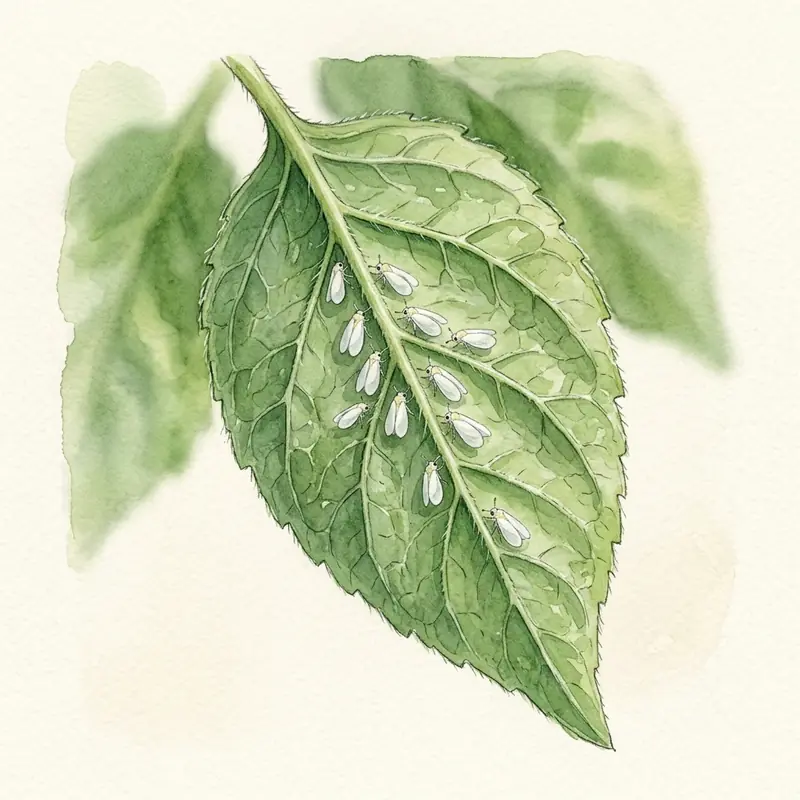
- WhiteflyModerateTiny white insects that fly up in a cloud when the plant is disturbed
- Powdery mildewModerateA fungus that covers the leaves in a white, flour-like powder
No known toxicity to people or pets
Not toxic to people or pets.