
Health and common problems
 Health and common problems
A visual guide to the most common health problems in chickens, ducks, rabbits, quail, geese, turkeys and goats. Browse by system (droppings, plumage, eyes, breathing…), with what to look for, likely causes, first steps and prevention.
This content is for guidance only and does not replace a vet.
For serious symptoms, anything that lasts more than 24 hours or any reasonable doubt, consult a professional. Many poultry and rabbit illnesses develop within hours.
Digestive (droppings, appetite)
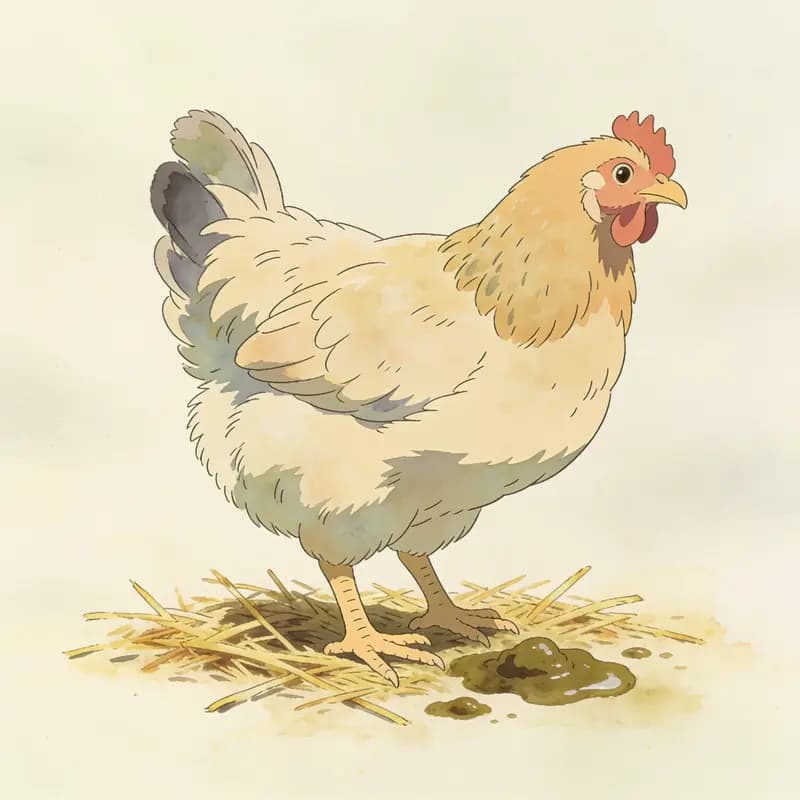
Watery diarrhoea
Very loose, frequent droppings. It may be due to stress, heat or something more serious. Keep a close eye on it if it lasts more than 24 hours.
ChickensDucksQuailGeeseTurkeysRabbitsGoats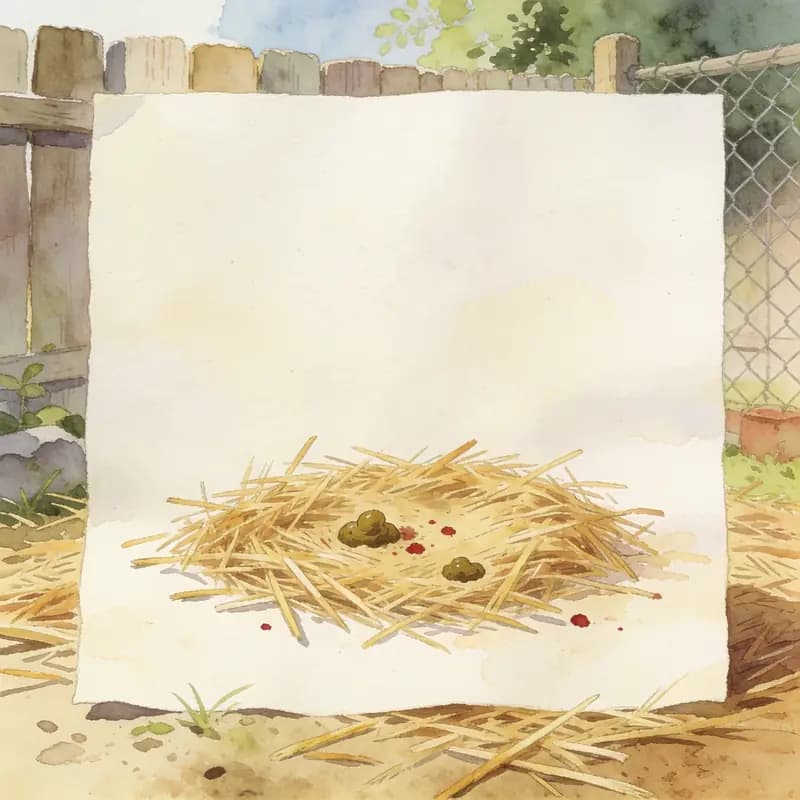
Blood in the droppings
Any red thread or stain in the droppings is a warning sign. In chicks, ducklings and young rabbits it is usually coccidiosis, which progresses quickly.
ChickensDucksQuailGeeseTurkeysRabbitsGoats Urgent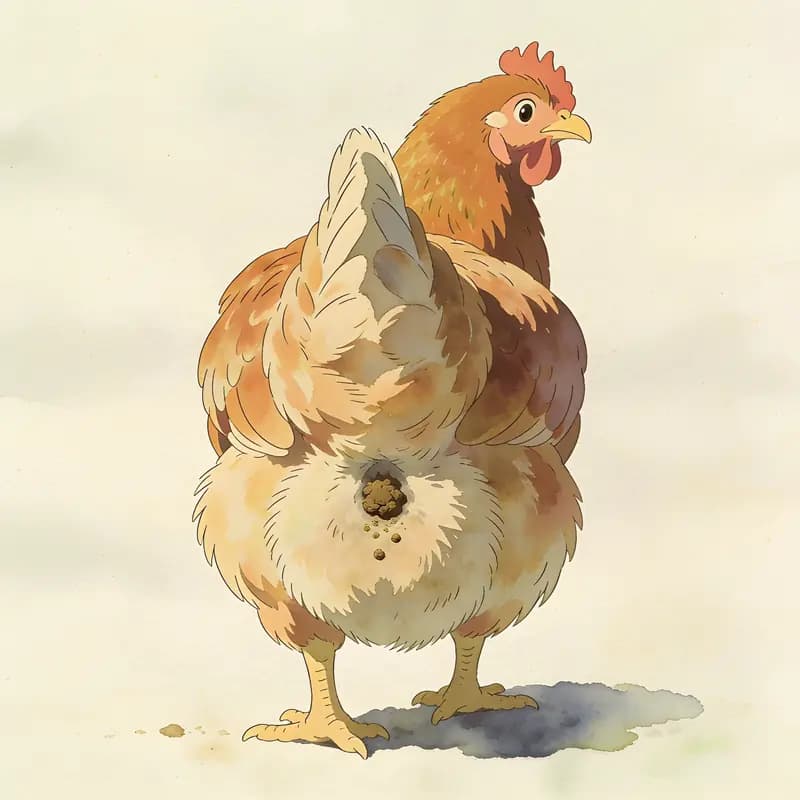
Constipation and hard droppings
Scarce, very dry droppings or none at all for hours. In rabbits and goats it is an emergency: it means digestive stasis.
ChickensDucksQuailGeeseTurkeysRabbitsGoats
Respiratory (discharge, coughing)
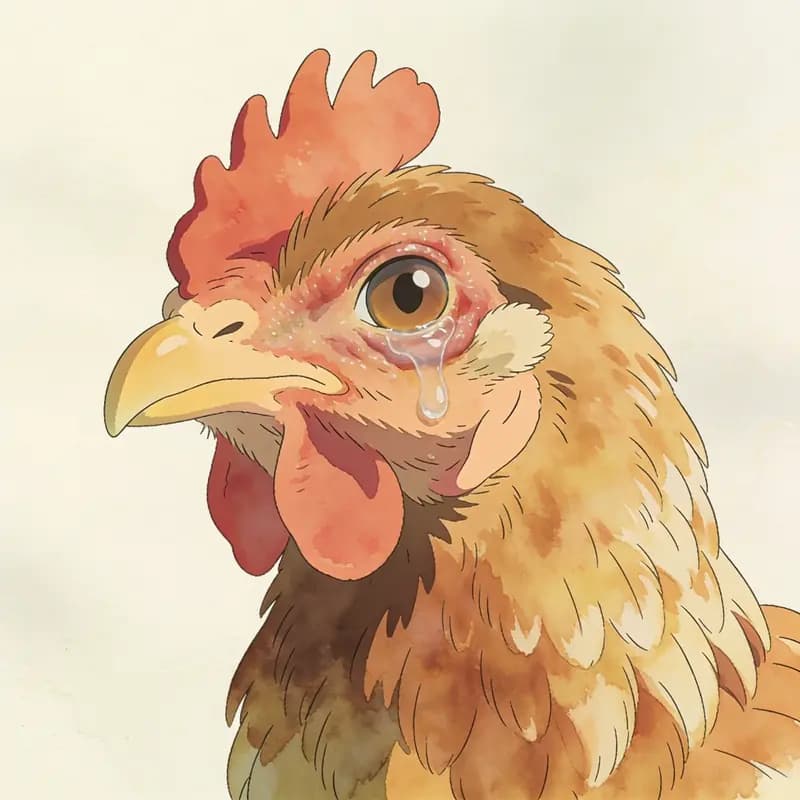
Coryza / nasal discharge and swollen eyes
Nasal discharge and swollen eyes in birds. It is highly contagious among chickens: isolate the bird as soon as you see thick, bad-smelling discharge.
ChickensDucksQuailGeeseTurkeys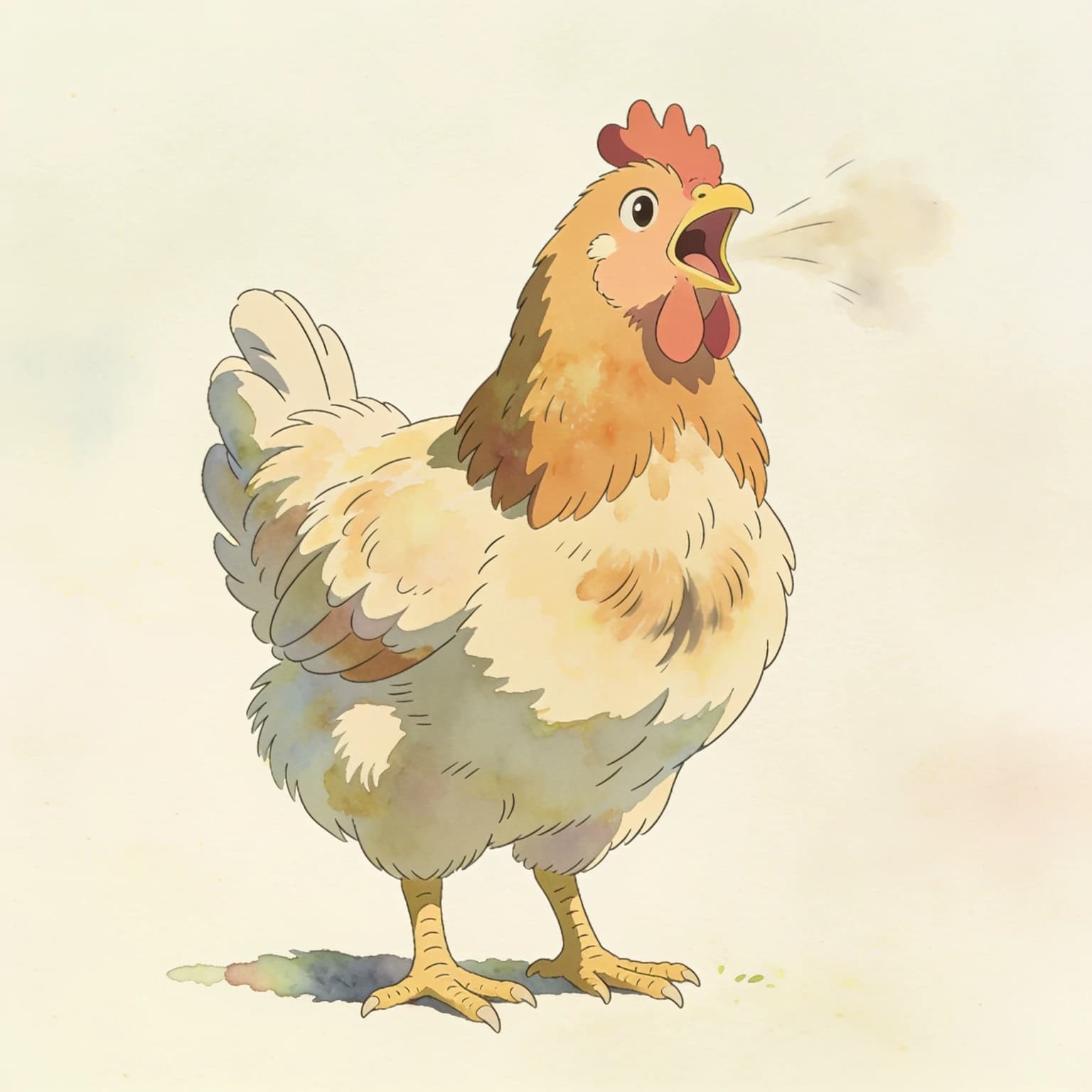
Whistling and noisy breathing
Wet noises, whistling or an open beak when breathing. It usually points to a respiratory infection or internal parasites.
ChickensDucksQuailGeeseTurkeysRabbitsGoats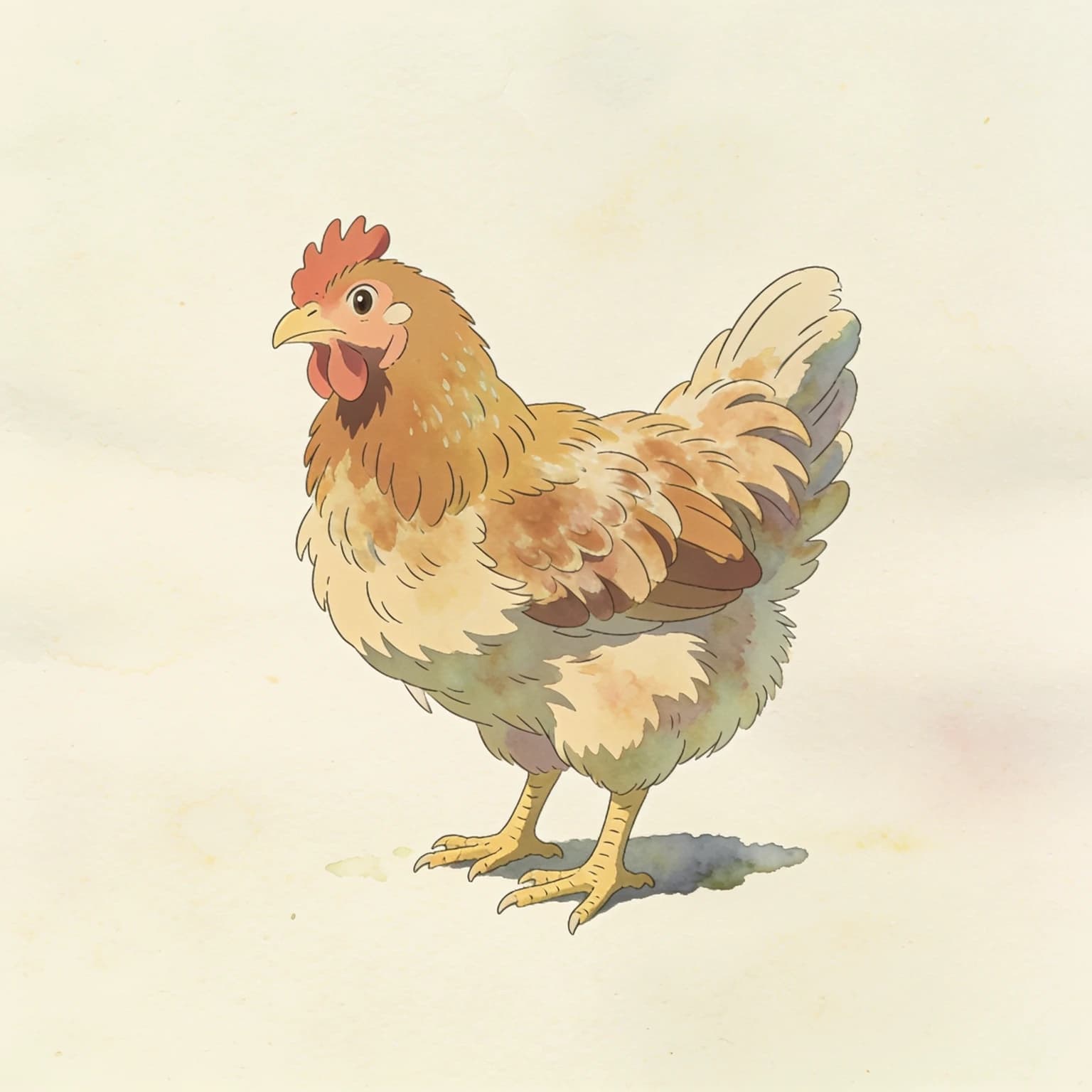
Aspergillosis (respiratory mould)
The lungs fill with mould from mouldy bedding or feed. Very serious in chicks reared on damp straw.
ChickensDucksQuailGeeseTurkeys
Skin, feathers and fur
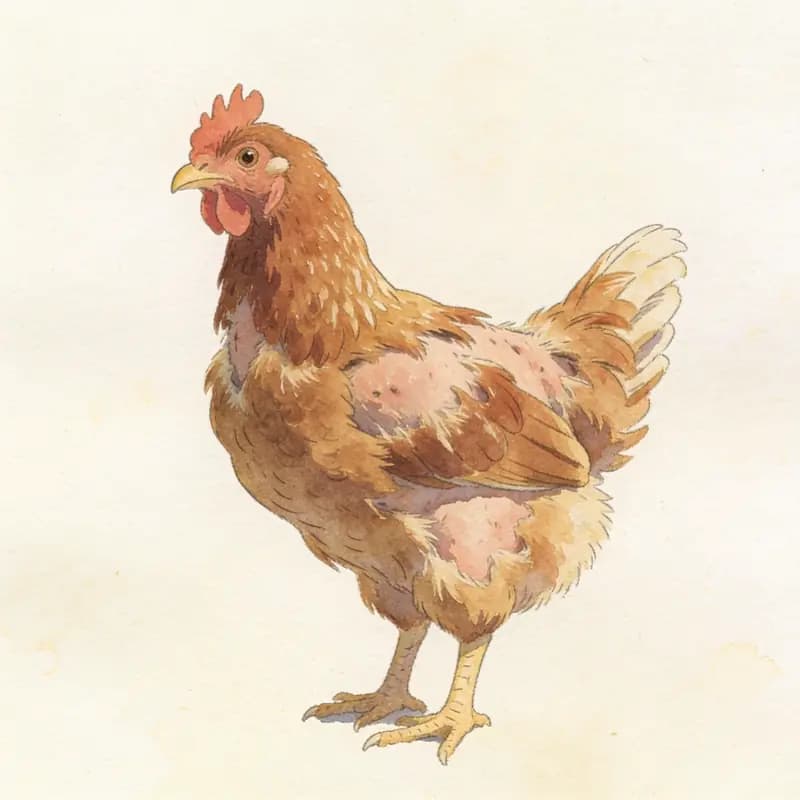
Feather loss (moult vs feather pecking)
If it is the annual moult (autumn), it is normal and new feathers will grow. If there are wounds, peck marks or only one bird is affected, it is feather pecking.
ChickensDucksQuailGeeseTurkeys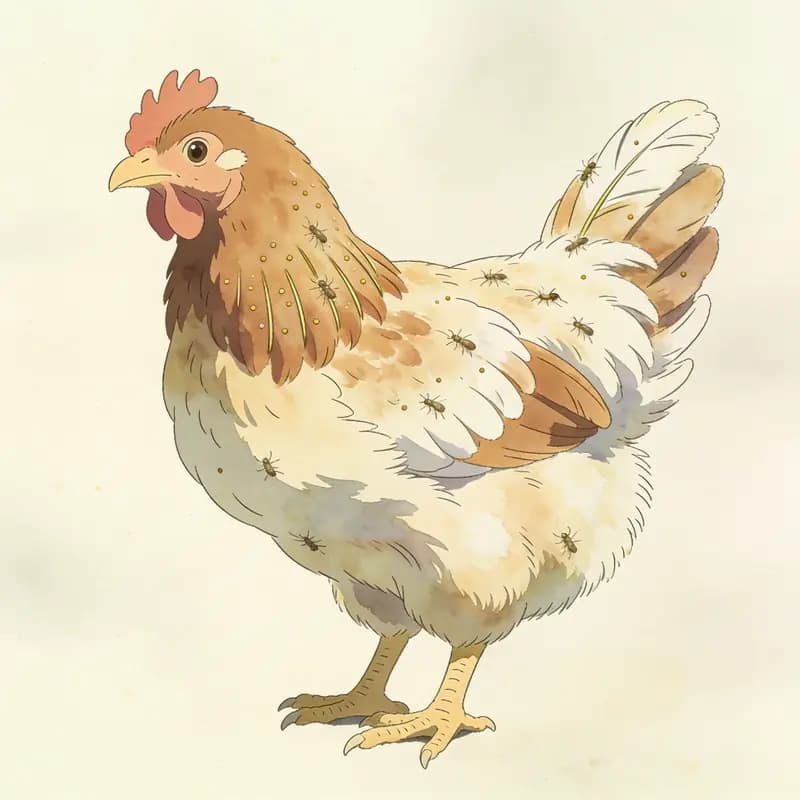
Lice and mites in feathers or fur
Small yellowish or reddish insects among the feathers or fur. The comb looks pale, there is itching and laying drops.
ChickensDucksQuailGeeseTurkeysRabbitsGoats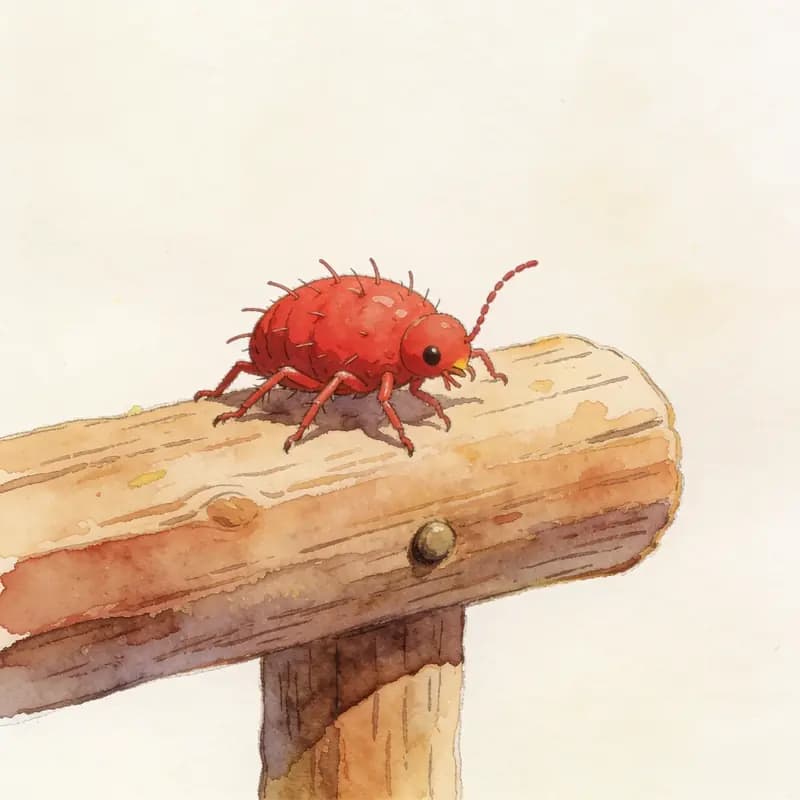
Poultry red mite
Mites that hide in cracks by day and come out at night to suck blood. They can weaken birds and even cause their death within a few weeks.
ChickensDucksQuailGeeseTurkeys
Mange (scabs and fur/feathers)
Whitish scabs on rabbit ears, thick scales on chicken legs or bald patches with scabs in goats.
ChickensDucksQuailGeeseTurkeysRabbitsGoats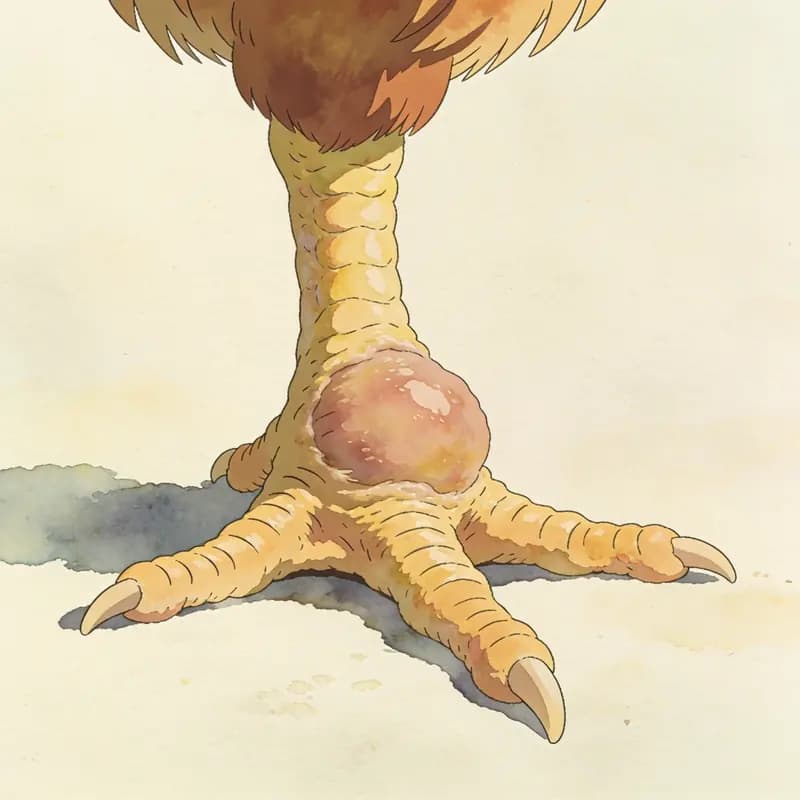
Pododermatitis or 'bumblefoot' (inflamed sole of the foot)
An infected wound on the sole of a bird's foot, typical in heavy birds or with hard perches. A black/brown plug can be seen in the centre.
ChickensDucksQuailGeeseTurkeys
Eyes
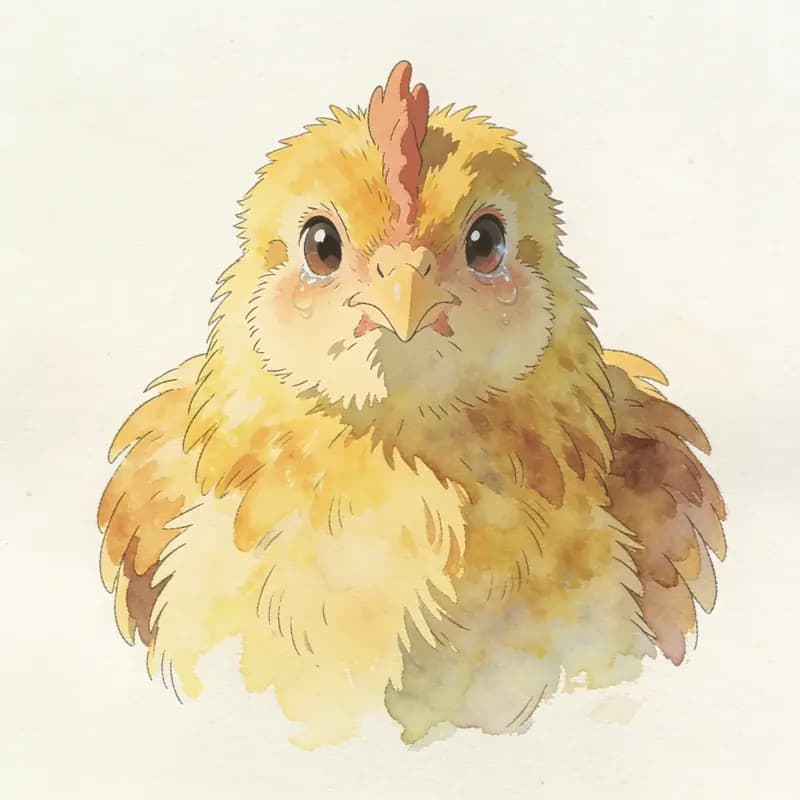
Watery or swollen eyes
Watering, a swollen or closed eyelid. It may be dust, a scratch or the start of a respiratory infection.
ChickensDucksQuailGeeseTurkeysRabbitsGoats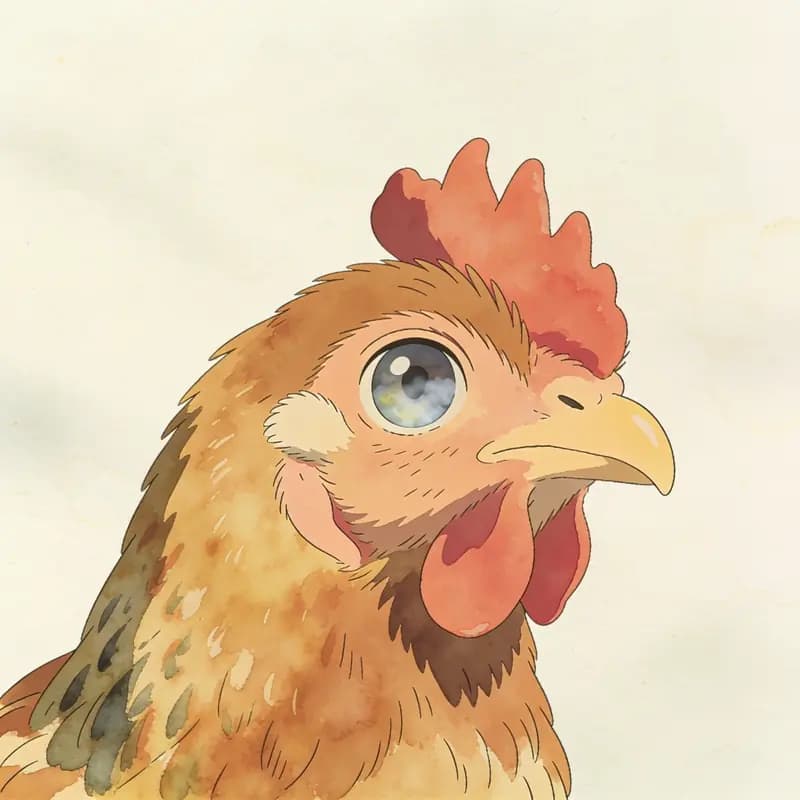
Cloudiness or white spot on the eye
The eye looks whitish, with a film or spot. It may be a corneal ulcer (painful and urgent) or a cataract (chronic).
ChickensDucksQuailGeeseTurkeysRabbitsGoats
Mobility (lameness, legs)
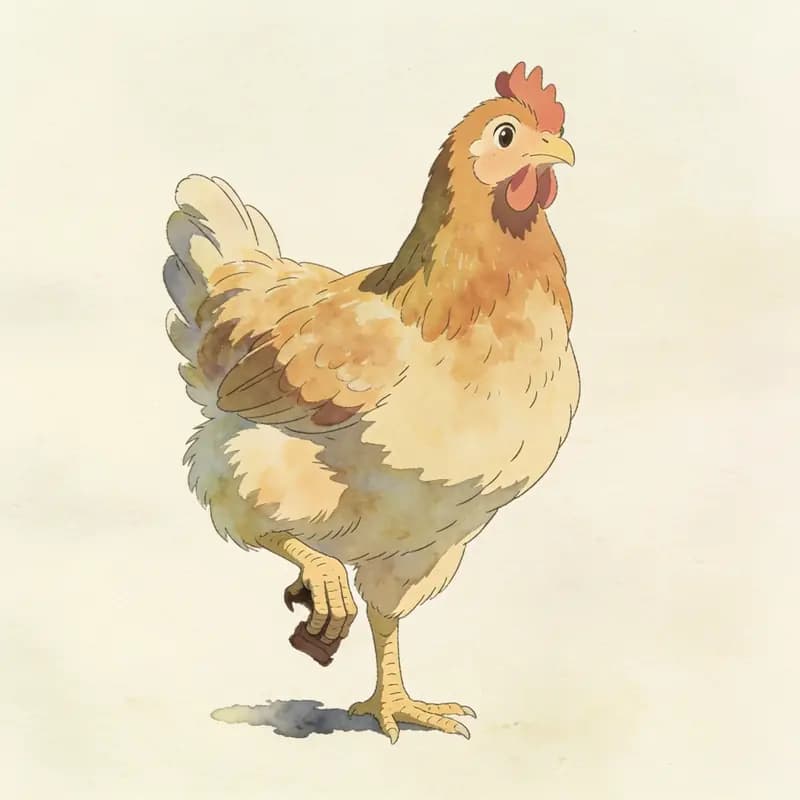
Sudden lameness
The animal limps or stops putting weight on a leg. Rule out wounds, bumblefoot, arthritis, dislocations and vitamin deficiencies.
ChickensDucksQuailGeeseTurkeysRabbitsGoats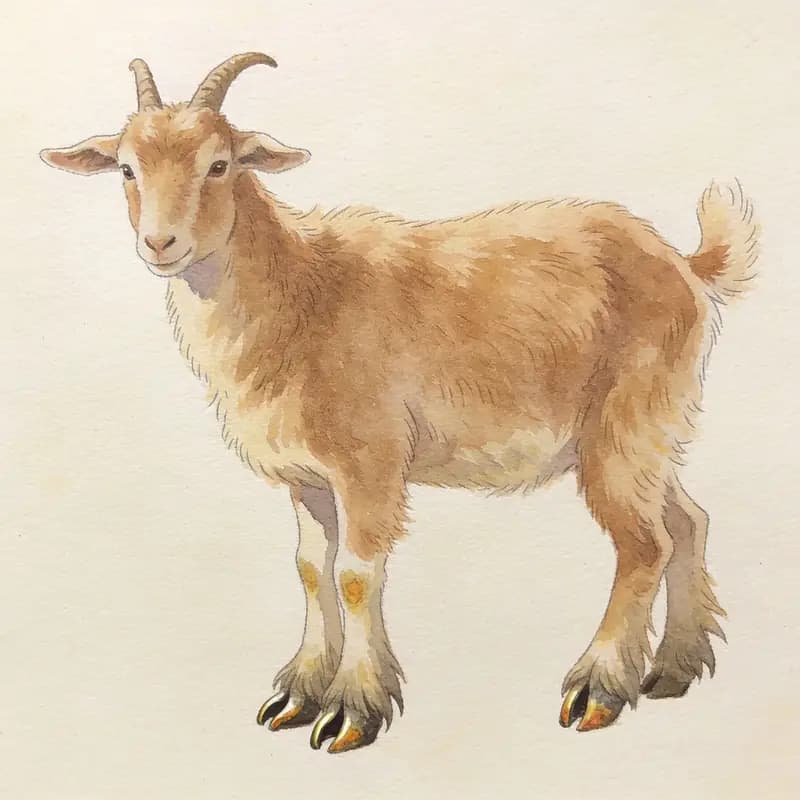
Overgrown hooves or long nails
Goat hooves and bird nails grow constantly. If they are not worn down or trimmed, the animal limps and foot rot may appear.
GoatsChickensDucksGeese
Laying and reproductive

Retained egg (egg-bound hen)
An egg gets stuck in the oviduct. The hen squats, swells and does not pass droppings. She can die in a day or two if it is not resolved.
ChickensDucksQuailGeeseTurkeys Urgent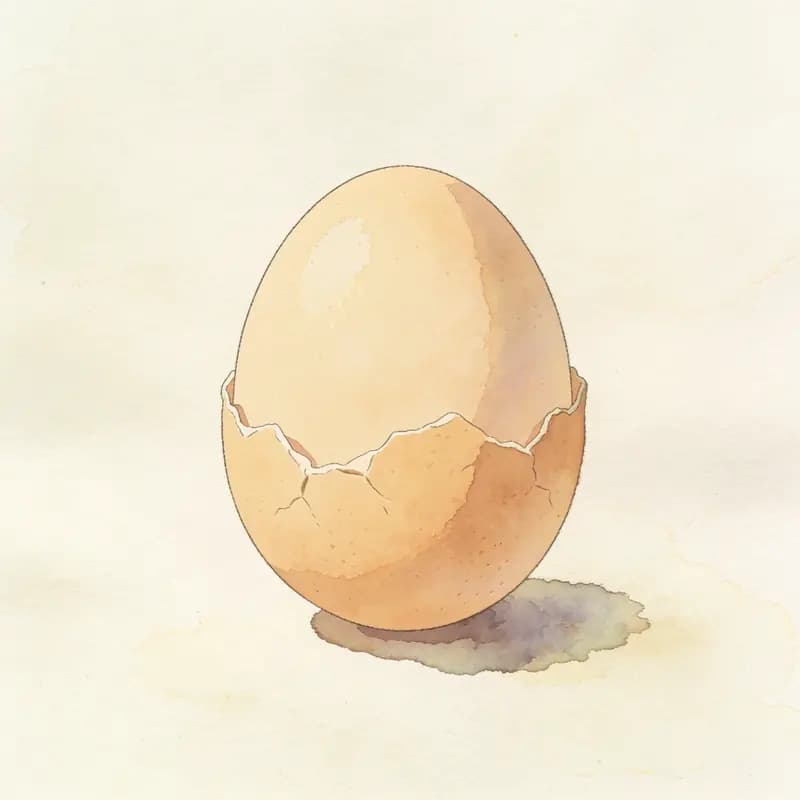
Soft-shelled or shell-less eggs
Eggs with a very thin shell or only a membrane. It is almost always a lack of calcium or vitamin D.
ChickensDucksQuailGeeseTurkeys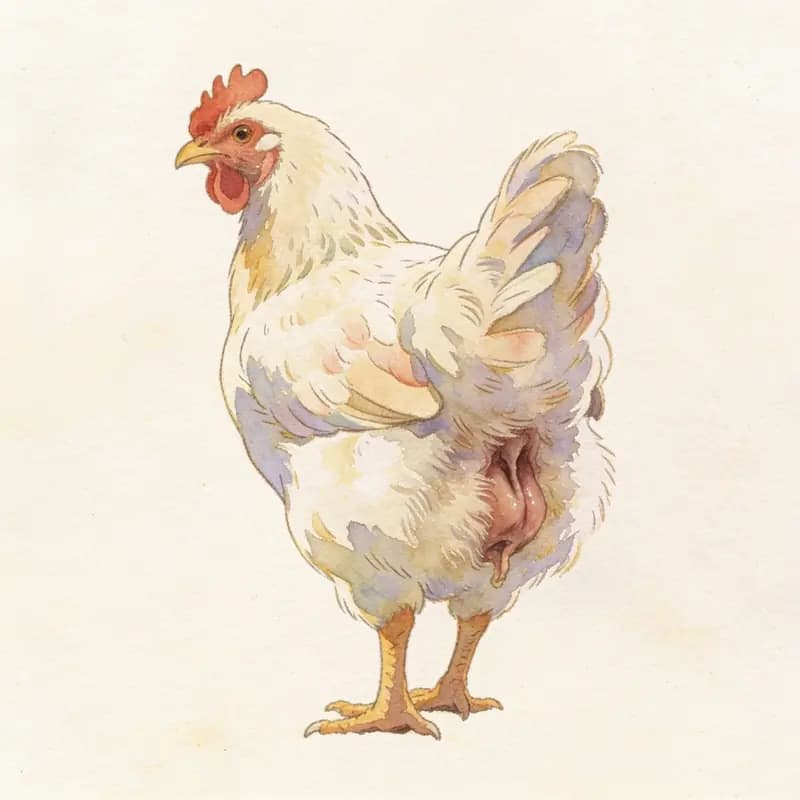
Vent prolapse
Red tissue protrudes under the tail. It is an emergency: the rest of the group pecks at it and it bleeds.
ChickensDucksQuailGeeseTurkeys Urgent
Behaviour
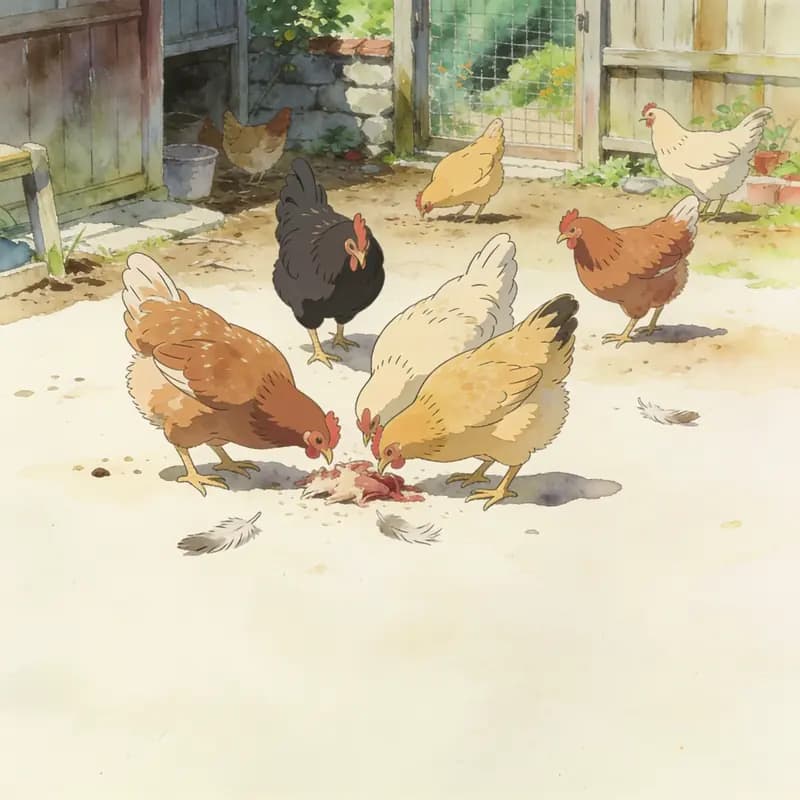
Cannibalism and pecking
Birds peck at the feathers, comb or vent of others until they bleed. It is usually due to overcrowding, boredom or a lack of protein.
ChickensDucksQuailGeeseTurkeys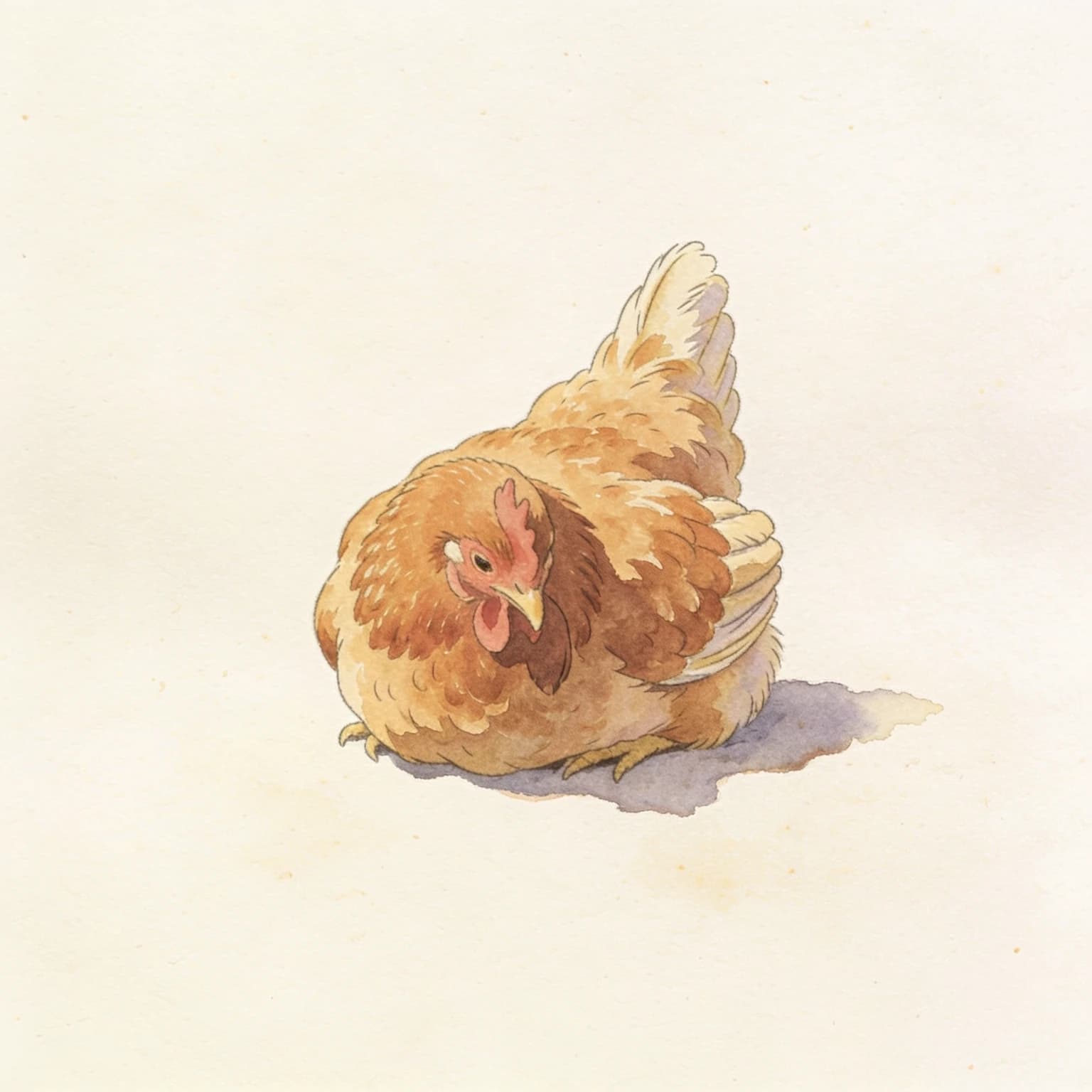
Lethargy, isolation, a dull animal
The animal separates from the group, hunches up, stays motionless or sleeps a lot. It is the most general warning sign.
ChickensDucksQuailGeeseTurkeysRabbitsGoats
General condition
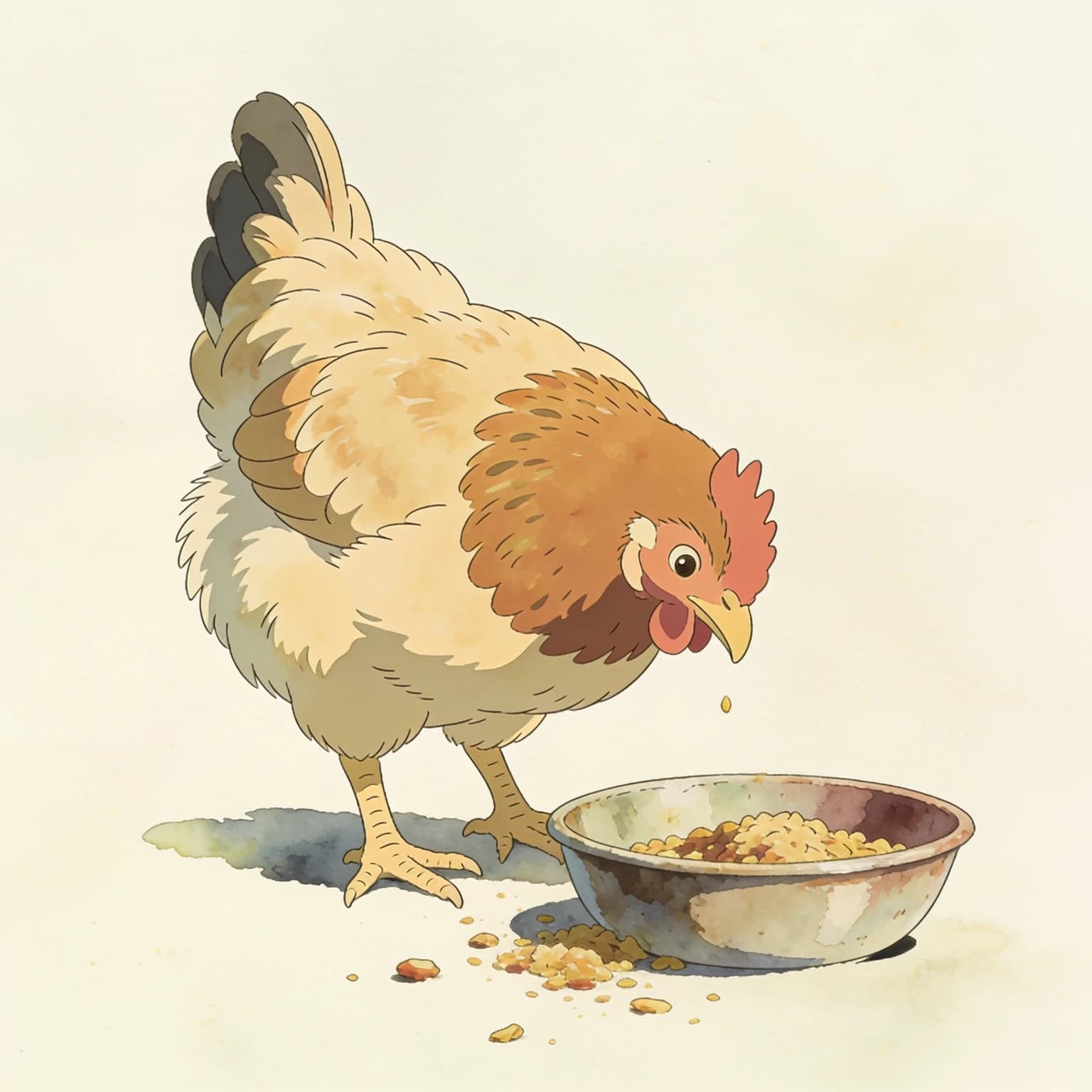
Loss of appetite
The animal stops eating for more than 12-24 h. In rabbits and goats it is an emergency: the rumen/gut stops quickly.
ChickensDucksQuailGeeseTurkeysRabbitsGoats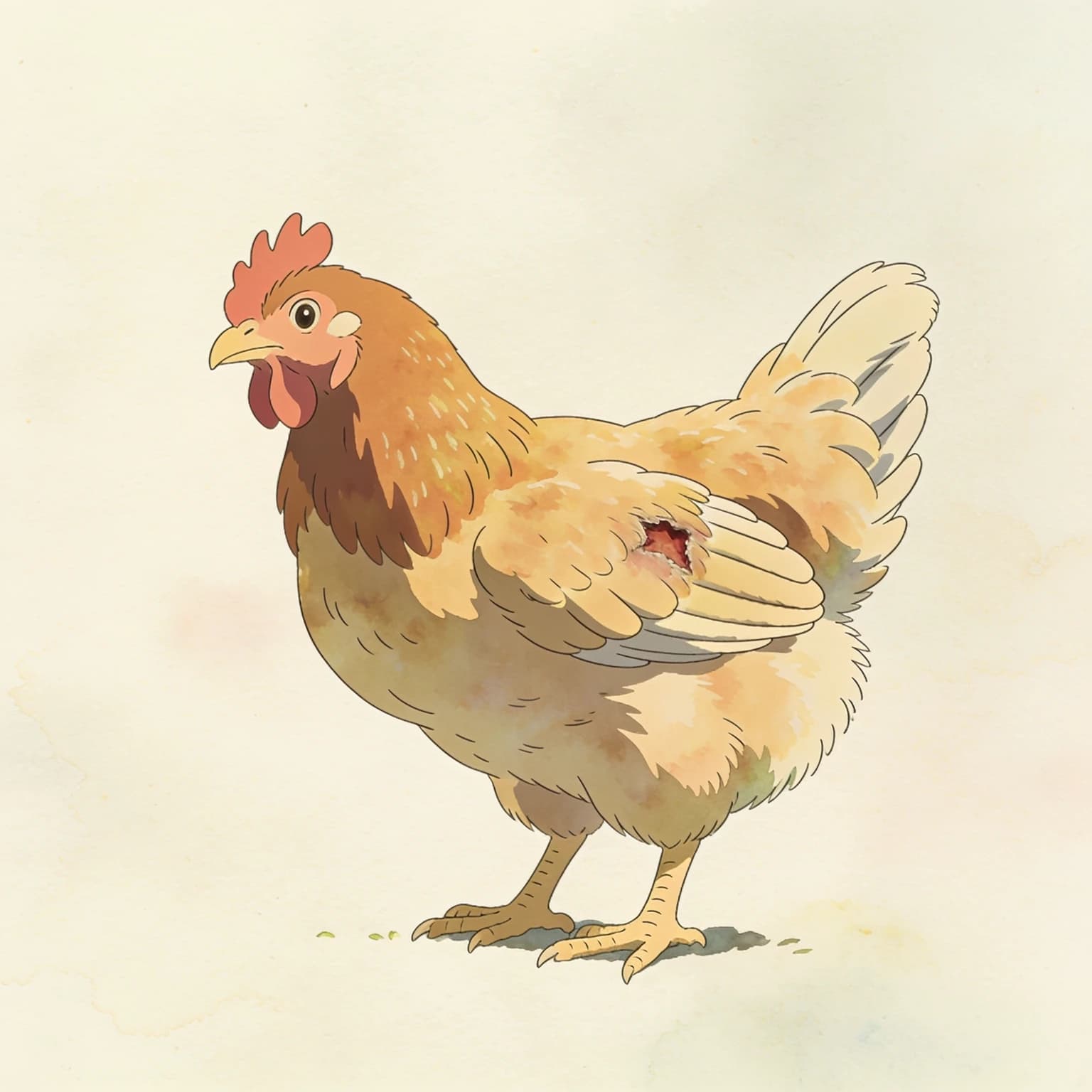
Visible blood / fight wounds
A bleeding wound from a fight, a predator attack or an accident. Isolate and clean; the smell of blood attracts more attacks.
ChickensDucksQuailGeeseTurkeysRabbitsGoats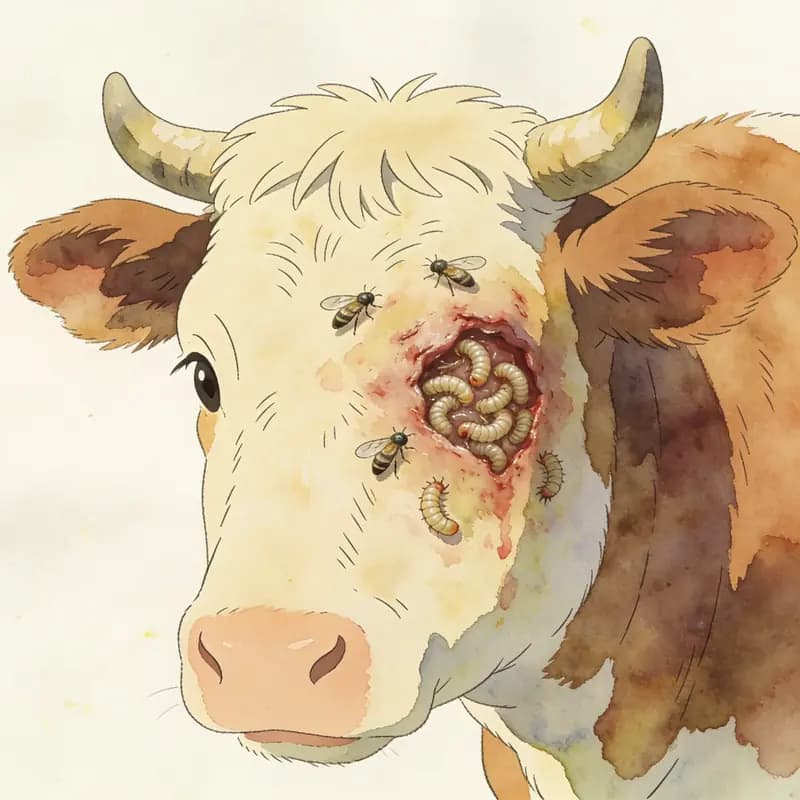
Myiasis (maggots in wounds)
Flies lay eggs in wounds, soiled plumage or damp areas and within hours maggots hatch and eat living tissue. Very common in summer.
ChickensDucksQuailGeeseTurkeysRabbitsGoats Urgent