
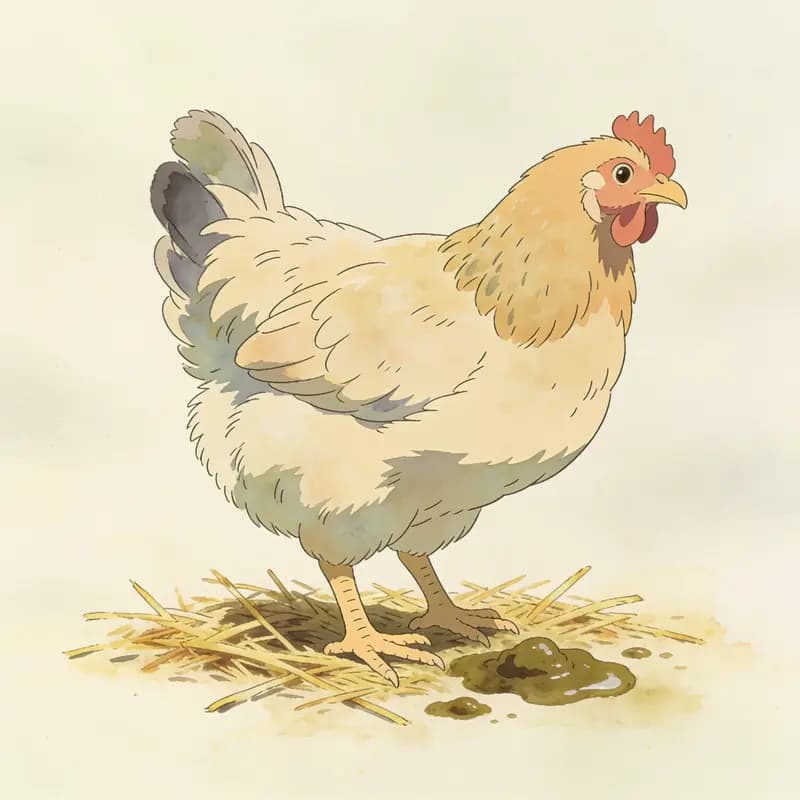
What to look for
- Loose, shapeless droppings, sometimes with bubbles
- Soiling underneath the vent / under the tail
- The animal drinks more and eats less
- Hunched posture, ruffled feathers or matted fur
Possible causes
- In extreme heat, birds drink a lot and the droppings come out very loose. That is normal, but watch that it does not last more than a day.
- A sudden change of feed or too much fresh greenery: the gut cannot adapt and responds with diarrhoea
- Spoiled food or dirty water: bacteria and toxins irritate the gut and cause diarrhoea within a few hours
- Coccidiosis (an intestinal parasite, especially in young animals)
- Salmonella, colibacillosis and other bacterial infections: they cause diarrhoea and listlessness and spread through droppings, water or dirty food
- Stress from a move, from frights or from the arrival of new animals can cause diarrhoea even when there is no infection: keep to the routine and keep the water clean.
What to do now
- Isolate the animal in a quiet, dry place at a comfortable temperature
- Remove juicy fruit and vegetables and leave only its basic feed for 24-48 hours (for rabbits and goats, with hay always available)
- Offer clean, fresh water freely. Do not give medicines or home remedies on your own without checking with your vet first.
- Clean the floor thoroughly and renew the bedding of straw, shavings or other dry material to break the cycle of coccidia reinfection.
- Note down what it eats each day: that way you can see whether the diarrhoea coincides with a new food or with spoiled feed
Prevention
- Introduce changes to the diet gradually: one new thing a week at most, so the gut gets used to it without going out of control.
- Clean the drinker daily and keep it free of droppings: dirty water reinfects the group with intestinal bacteria
- Keep the floor dry: damp is the environment in which coccidia thrive and young animals get reinfected
- Store feed in an airtight container away from rodents: they contaminate it with urine and pathogens
When to call the vet
Consult your vet if it lasts more than 24-48 hours, if there is blood, if it stops eating or if it becomes dull, with a hunched posture and closed eyes. In rabbits, goats and young animals do not wait that long, because they dehydrate very quickly.
This guide is for guidance only. If you have any reasonable doubt, it is always better to ask. Note down the symptoms, how they progress and the times, to help the professional.
Other digestive problems
- Blood in the droppingsAny red thread or stain in the droppings is a warning sign. In chicks, ducklings and young rabbits it is usually coccidiosis, which progresses quickly.
- Constipation and hard droppingsScarce, very dry droppings or none at all for hours. In rabbits and goats it is an emergency: it means digestive stasis.
- Enterotoxaemia from a sudden change of dietA sudden switch to more feed, tender shoots or grain: the bacteria in the gut get out of control and the animal collapses within a few hours.
- Bloat (swollen belly)Rumen full of gas from tender grass, legumes or a sudden change. The goat swells on the left flank. It is an emergency.