
This is a vet emergency
Do not wait 24 hours. Isolate the animal, give first aid and call a professional as soon as you can. In young birds and rabbits, many of these conditions can be fatal within hours.
What to look for
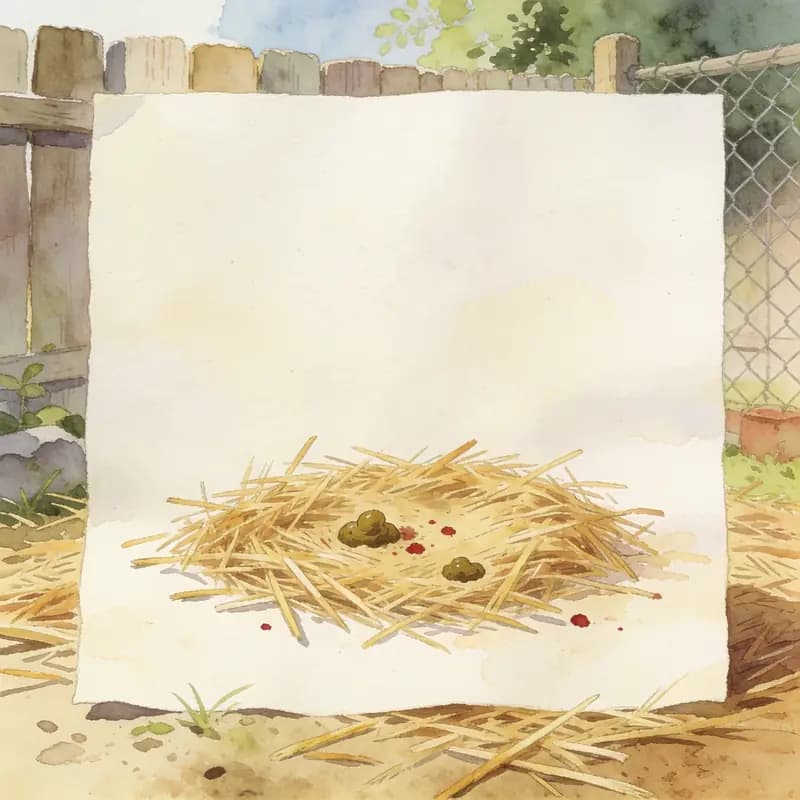
- Droppings with reddish mucus, threads or clots of blood
- The animal is listless, with ruffled feathers or dull fur
- It stops eating or drinks very little
- In young rabbits: rapid weight loss and dehydration
- In young birds: they huddle under the lamp and become dull
Possible causes
- Coccidiosis (Eimeria) — very common in chickens, ducklings, goslings and young rabbits on damp ground
- Haemorrhagic enteritis or clostridial infection: serious inflammation of the gut with blood; it is a veterinary emergency
- Vent prolapse or cloacitis: the lining protrudes or becomes inflamed and bleeds; the bird must be isolated and treated at once to prevent the others from pecking at it
- Hepatic coccidiosis of rabbits (Eimeria stiedae): it attacks the liver, causes diarrhoea and often needs veterinary treatment
- Foreign body or internal injuries: a piece of plastic, bone or wire can damage the digestive tract and cause bleeding
What to do now
- Isolate the animal in a clean, dry, warm place: it reduces spread and makes it easier for it to recover without competition
- Do not wait 48 h: contact a vet as soon as you see blood, especially if it is young
- Offer clean water and its usual feed: do not change its food abruptly, because a sudden change makes the diarrhoea and digestive stress worse.
- Clean and disinfect the bedding and cage, and renew it daily while there is blood in the droppings: the environment contaminates it again
Prevention
- A dry floor is key: change the bedding as soon as it becomes damp
- A preventive programme agreed with your vet in the risk seasons
- Avoid overcrowding and mixing very different ages: young animals get infected easily by what adults already tolerate
- Vaccination against coccidiosis in chicks reared on the ground, if your vet recommends it for your area and your rearing system.
When to call the vet
Always. Blood in the droppings is treated as an emergency.
This guide is for guidance only. If you have any reasonable doubt, it is always better to ask. Note down the symptoms, how they progress and the times, to help the professional.
Other digestive problems
- Watery diarrhoeaVery loose, frequent droppings. It may be due to stress, heat or something more serious. Keep a close eye on it if it lasts more than 24 hours.
- Constipation and hard droppingsScarce, very dry droppings or none at all for hours. In rabbits and goats it is an emergency: it means digestive stasis.
- Enterotoxaemia from a sudden change of dietA sudden switch to more feed, tender shoots or grain: the bacteria in the gut get out of control and the animal collapses within a few hours.
- Bloat (swollen belly)Rumen full of gas from tender grass, legumes or a sudden change. The goat swells on the left flank. It is an emergency.