
This is a vet emergency
Do not wait 24 hours. Isolate the animal, give first aid and call a professional as soon as you can. In young birds and rabbits, many of these conditions can be fatal within hours.
What to look for
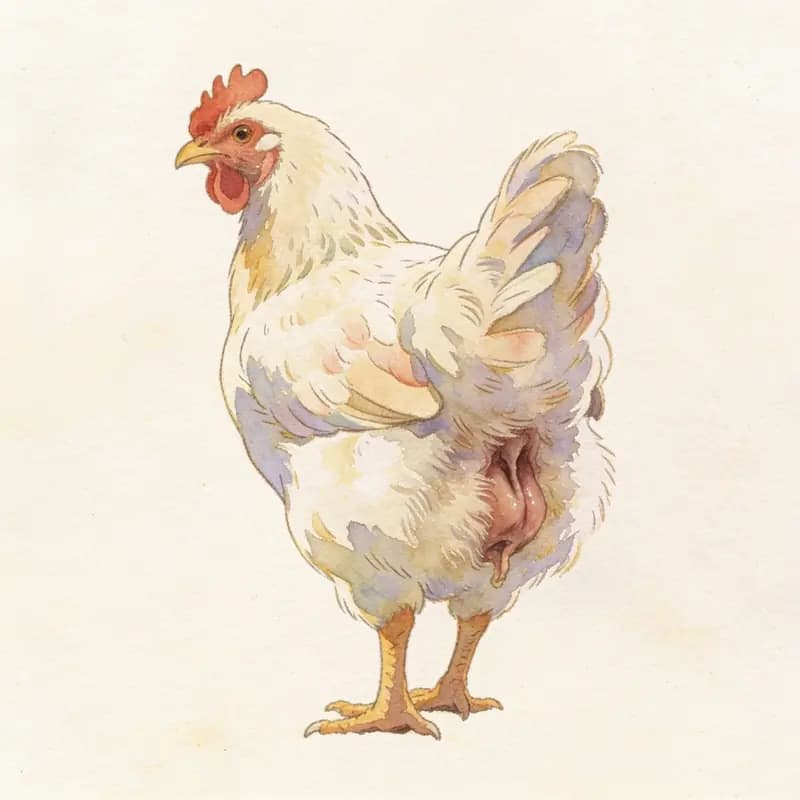
- A red or pink lump coming out of the vent
- Visible blood
- Other birds pecking at that area
- The bird isolates itself or stays dull
Possible causes
- An egg too large for the vent: when she pushes, the lining comes out and a prolapse occurs
- Very early laying or laying forced with artificial light: the oviduct is not ready and prolapse is more frequent
- An obese layer: the fat around the oviduct makes it harder to expel the egg cleanly
- Chronic diarrhoea: it irritates and weakens the vent, which becomes more prone to prolapse
- A lack of calcium combined with stress: poor shells and strained laying that trigger prolapses
What to do now
- Isolate the bird at once in a dark area so the others do not peck her
- Clean the area with lukewarm saline solution, which removes dirt without drying it out as alcohol would
- Keep the area moist with saline and a harmless lubricant, and do not use medicated creams without consulting your vet
- If you cannot get to the vet straight away and the prolapse is small and recent, you can try to reduce it gently with a lubricated glove; if it does not go in easily, do not insist
- Call your vet now: a prolapse that is not reduced soon becomes necrotic or gets pecked by the other birds
Prevention
- Do not lengthen the day with artificial light for young pullets: forcing laying before time wears out the reproductive tract and increases the risk of a retained egg.
- Keep a suitable weight and daily exercise: it is the best prevention of prolapse along with not forcing laying
- Leave oyster shell freely available in a separate feeder for strong shells and less strained laying
- Comfortable, dark nests with no harassment: if they are pecked while laying, they push badly and the risk of prolapse increases
When to call the vet
Always. An untreated prolapse is quickly fatal because of pecking by the group or infection.
This guide is for guidance only. If you have any reasonable doubt, it is always better to ask. Note down the symptoms, how they progress and the times, to help the professional.