
What to look for
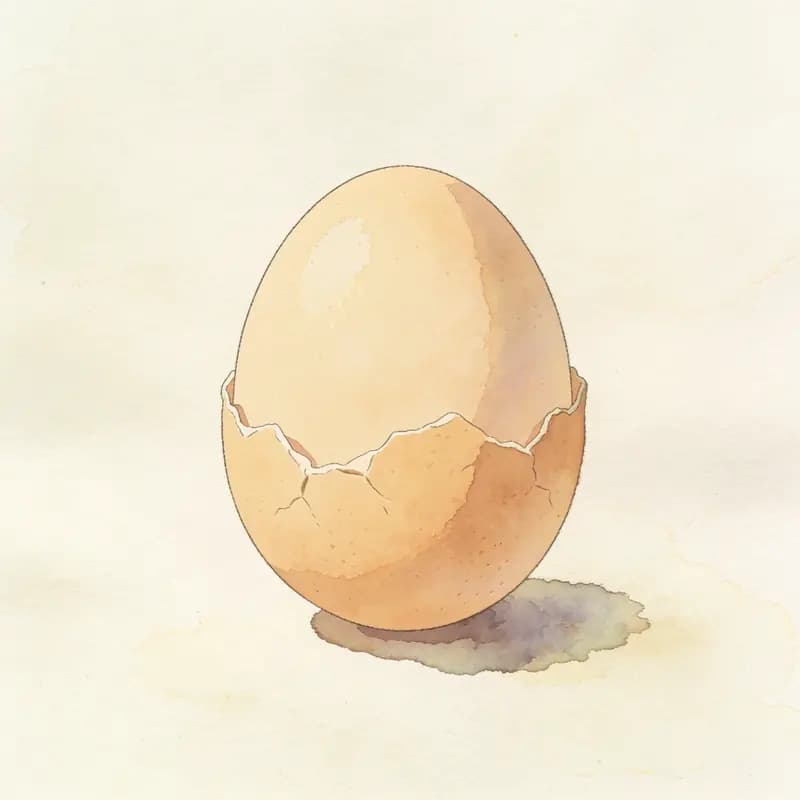
- The shell gives way or dents when you touch it gently: it is too thin to protect the egg.
- Sometimes only the soft membrane appears, with no mineral shell: the 'rubber' egg.
- These eggs break easily in the nest box and soil the rest; remove them straight away.
Possible causes
- A lack of calcium in the diet: without it the shell comes out thin or does not form
- Too little sun or a lack of vitamin D3: without D3 the body does not fix calcium properly in the shell
- A respiratory disease such as infectious bronchitis: it damages the oviduct and leaves odd shells or no shell
- An old layer: with the years the shell becomes thinner even if the diet is right
- An occasional stress (a fright, a move, a predator, a change of flock): it can produce an isolated soft egg
What to do now
- Offer crushed oyster shell in a feeder separate from the feed: that way each hen takes the calcium she needs without it being mixed blindly into the rest of the ration.
- Increase the hours of real sunshine or, if they cannot go out, supplement vitamin D3 as your vet directs: without D3 the calcium is not fixed properly in the shell.
- Remove the remains of broken eggs from the nest box as soon as you see them: if a hen tastes the yolk, she may get used to pecking and eating whole eggs.
Prevention
- Use a complete layer feed and leave oyster shell freely available in a separate feeder: maintenance feed does not provide enough calcium for regular laying.
- Guarantee daily access outdoors: the sun stimulates vitamin D and the hens scratch, move around and get less stressed.
- If soft eggs persist for more than one or two weeks despite calcium and sun, ask for a health check: there may be infectious bronchitis or another underlying problem.
When to call the vet
If it persists for more than 15 days with a correct diet, or if it affects several birds: rule out respiratory disease.
This guide is for guidance only. If you have any reasonable doubt, it is always better to ask. Note down the symptoms, how they progress and the times, to help the professional.