
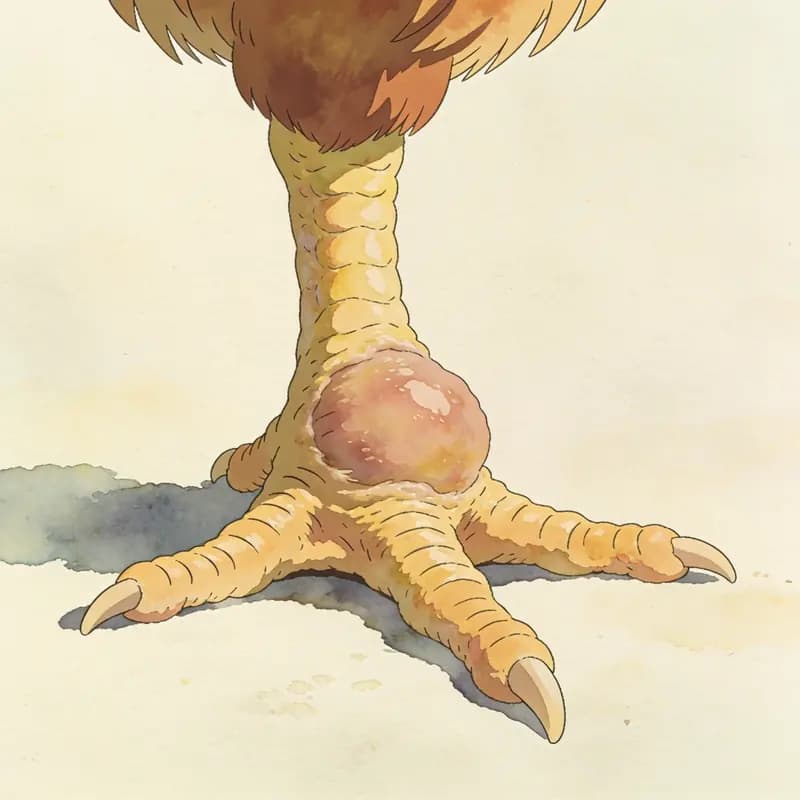
What to look for
- Limping when walking
- Swelling and heat on the sole of the foot
- A black or brown scab in the centre of the pad
- A less active bird that avoids the perches
Possible causes
- Jumping down from high perches onto hard ground: the impact on the pad opens wounds that become infected (bumblefoot)
- Perches with splinters or sharp edges: they rub and open the sole of the foot
- Overweight, especially in large meat breeds: more load on the pads and more risk of bumblefoot
- Damp bedding with ammonia: it softens the skin of the feet and encourages infections
What to do now
- Give the foot a daily soak in warm water with Epsom salts for fifteen or twenty minutes to soften the scab. Do not try to pull out the plug on your own.
- After the soak, dry the foot well and apply a clean bandage: damp on the wound makes the infection worse
- Isolate in a clean space with low perches: that way it puts less weight on the injured pad
- In cases with a large plug, the vet may need to drain it
Prevention
- Use round perches without splinters and at a height of sixty centimetres or less for heavy breeds, so they do not fall from too high.
- Put soft flooring of straw or shavings under the perches to cushion the impact when they jump and to prevent bumblefoot.
- Keep the bedding dry and clean under the perches: it is the basic prevention of bumblefoot
- Keep a weight suited to the breed: avoid overfeeding with feed or treats, because excess weight overloads the feet and encourages bumblefoot.
When to call the vet
If the foot is very swollen, with red lines spreading upwards, a smell, or the bird will not put weight on it, go to the vet for drainage and antibiotics.
This guide is for guidance only. If you have any reasonable doubt, it is always better to ask. Note down the symptoms, how they progress and the times, to help the professional.
Other skin, feather and fur problems
- Feather loss (moult vs feather pecking)If it is the annual moult (autumn), it is normal and new feathers will grow. If there are wounds, peck marks or only one bird is affected, it is feather pecking.
- Lice and mites in feathers or furSmall yellowish or reddish insects among the feathers or fur. The comb looks pale, there is itching and laying drops.
- Poultry red miteMites that hide in cracks by day and come out at night to suck blood. They can weaken birds and even cause their death within a few weeks.
- Mange (scabs and fur/feathers)Whitish scabs on rabbit ears, thick scales on chicken legs or bald patches with scabs in goats.