
What to look for
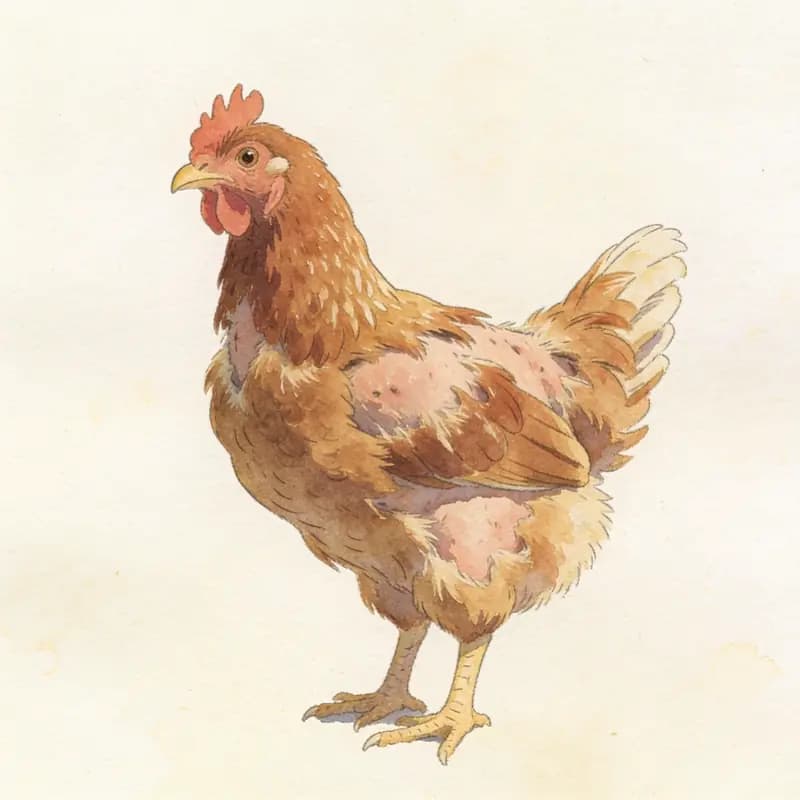
- Moult: feathers are lost all over the body in a more or less symmetrical way
- Feather pecking: specific bald patches on the back, neck or around the vent
- Reddened skin, dried blood or wounds
- It is normal for the animal to stop laying during the moult, for several weeks, while it regrows its feathers.
Possible causes
- The annual moult responds to day length and usually happens at the end of summer and in autumn: the bird loses feathers more or less symmetrically all over the body.
- Too many birds or too little space: stress and boredom trigger feather pecking
- A lack of protein during the moult: without it the new feathers grow badly and the birds peck each other more
- Mites or lice: the itching leads birds to pull out feathers and to peck each other
- Stress from an aggressive cockerel or from predators nearby: the birds peck each other and pull out each other's feathers
What to do now
- Rule out mites/lice with a check under the wings and tail
- Increase protein during the moult: layer feed + insects, cooked peas
- Isolate the pecked bird until the wounds heal: blood attracts more pecking from the rest
- Add enrichment: perches, hanging vegetables, a dust-bath area
Prevention
- Do not keep more than 3-4 hens per square metre in the coop: the more space they have, the less pecking there will be.
- Make sure they get protein during the moult and at the change of season: if they lack it, they look for keratin by pecking feathers
- Always provide a dust bath of soil or dry ash: it is their natural way of cleaning off external parasites
- Watch the pecking order and separate very dominant birds if they bully: social pecking can be fatal for the weakest
When to call the vet
If the wounds are large or infected, if it spreads quickly or if you suspect systematic feather pecking.
This guide is for guidance only. If you have any reasonable doubt, it is always better to ask. Note down the symptoms, how they progress and the times, to help the professional.
Other skin, feather and fur problems
- Lice and mites in feathers or furSmall yellowish or reddish insects among the feathers or fur. The comb looks pale, there is itching and laying drops.
- Poultry red miteMites that hide in cracks by day and come out at night to suck blood. They can weaken birds and even cause their death within a few weeks.
- Mange (scabs and fur/feathers)Whitish scabs on rabbit ears, thick scales on chicken legs or bald patches with scabs in goats.
- Pododermatitis or 'bumblefoot' (inflamed sole of the foot)An infected wound on the sole of a bird's foot, typical in heavy birds or with hard perches. A black/brown plug can be seen in the centre.