
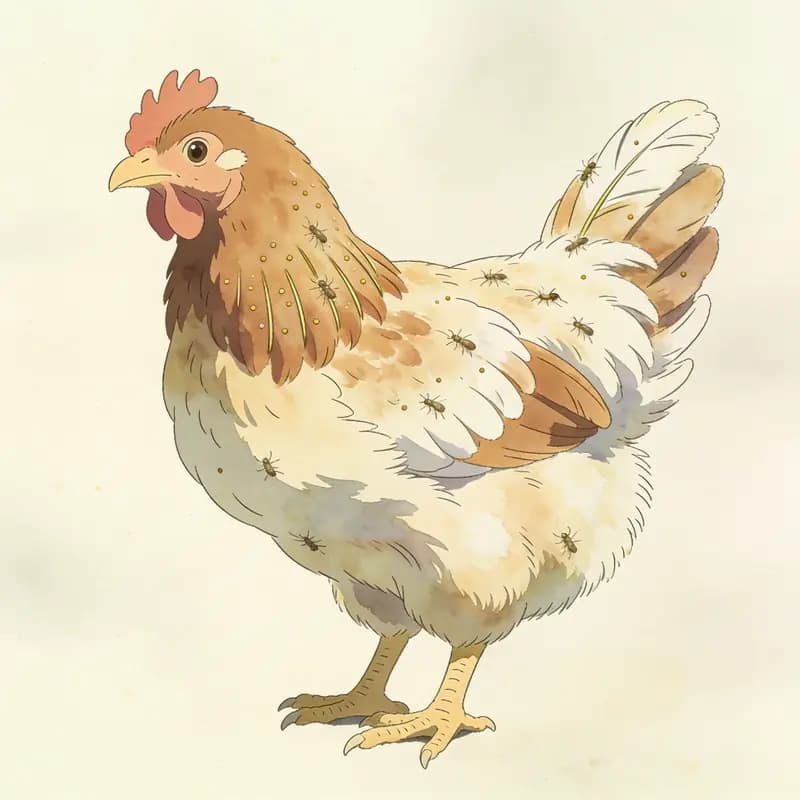
What to look for
- Tiny yellowish critters running among the feathers (lice)
- Pale or bluish comb and wattles
- Birds scratching, shaking their heads, dejected
- Red dots on eggs and perches in the morning (red mite)
Possible causes
- Poultry lice (Menopon, Menacanthus): they live their whole life cycle on the feather
- Red mite (Dermanyssus gallinae): it hides in cracks by day and comes out at night to suck blood
- Scaly leg mites (Knemidocoptes): they lift the scales, cause scabs and lameness if not treated
- In rabbits and goats: mange mites or walking dandruff mites (Cheyletiella)
What to do now
- Offer a dust bath of sand with ash and food-grade diatomaceous earth
- At night, check perches and cracks with a torch to detect red mite
- Treat the whole coop, not just the animals: corners, perches and nest boxes, with an approved product that your vet advises
- Change all the bedding and remove it far from the coop: mites and their eggs survive in used bedding
Prevention
- Always provide a dust bath of soil or dry ash: it is their natural way of cleaning off external parasites
- Check under the perches and in cracks every month: by day the red mites hide there
- Quarantine new birds or animals for 2-3 weeks before mixing them: that way you detect mites and diseases before they spread to the rest
- Choose round perches without deep cracks
When to call the vet
If you suspect mange in rabbits with scabs on the ears or in goats with hair loss and scabs, it requires acaricide treatment under veterinary prescription.
This guide is for guidance only. If you have any reasonable doubt, it is always better to ask. Note down the symptoms, how they progress and the times, to help the professional.
Other skin, feather and fur problems
- Feather loss (moult vs feather pecking)If it is the annual moult (autumn), it is normal and new feathers will grow. If there are wounds, peck marks or only one bird is affected, it is feather pecking.
- Poultry red miteMites that hide in cracks by day and come out at night to suck blood. They can weaken birds and even cause their death within a few weeks.
- Mange (scabs and fur/feathers)Whitish scabs on rabbit ears, thick scales on chicken legs or bald patches with scabs in goats.
- Pododermatitis or 'bumblefoot' (inflamed sole of the foot)An infected wound on the sole of a bird's foot, typical in heavy birds or with hard perches. A black/brown plug can be seen in the centre.