
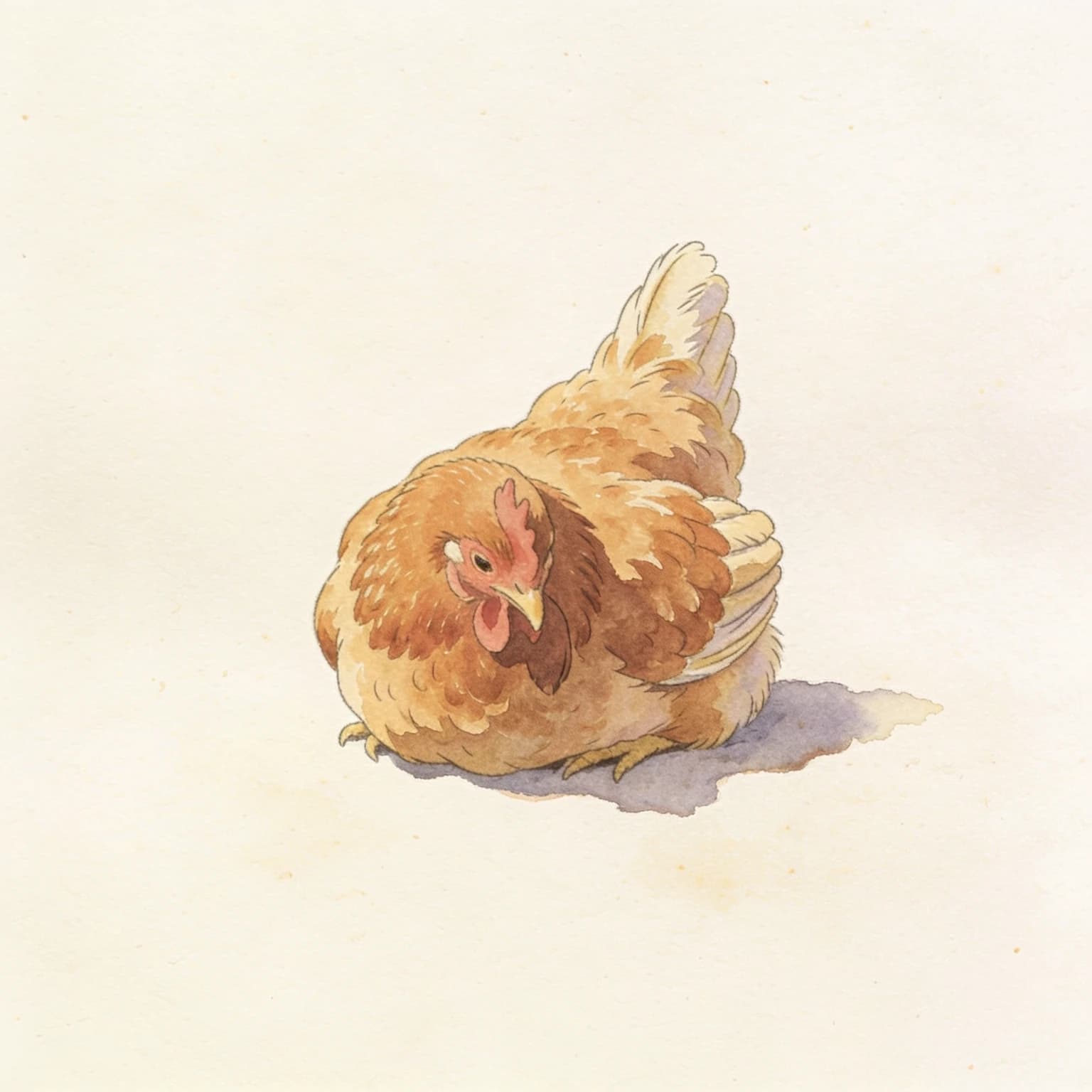
What to look for
- Ruffled / matted feathers or fur
- Half-closed eyes
- Head down, tail drooping
- Does not look for food or the company of the group
Possible causes
- Almost any illness starts with lethargy and ruffled feathers: it is a non-specific warning sign, not a diagnosis
- Severe stress from a move, the presence of a predator or extreme heat can leave the animal listless even if there is no serious underlying illness.
- Dehydration from heat: without shade and water, the animal becomes dull within hours
- A lack of food or spoiled food: without energy, the animal hunches up and stops moving
What to do now
- Isolate in a warm, quiet area with little light: it reduces energy use while you find out the cause
- Fresh, accessible water; its usual food, with no changes
- If you know how, take its temperature and weight: fever or rapid weight loss indicate how urgent it is
- In birds, observe for a few hours before deciding; in rabbits and goats do not wait. If it gets worse, call the vet
Prevention
- Set up daily observation routines: spend about five minutes in the morning and another five in the afternoon checking appetite, posture and droppings.
- Housing with shade, clean water always and dry shelter: they avoid most slumps from heat or stress
- Strict quarantine for new animals before integrating them
When to call the vet
If the animal does not improve within 24 hours or any other symptom appears, such as abnormal droppings, nasal discharge, blood or lameness, consult your vet. In rabbits and goats, do not wait that long. If several birds die suddenly, notify the official veterinary services.
This guide is for guidance only. If you have any reasonable doubt, it is always better to ask. Note down the symptoms, how they progress and the times, to help the professional.