
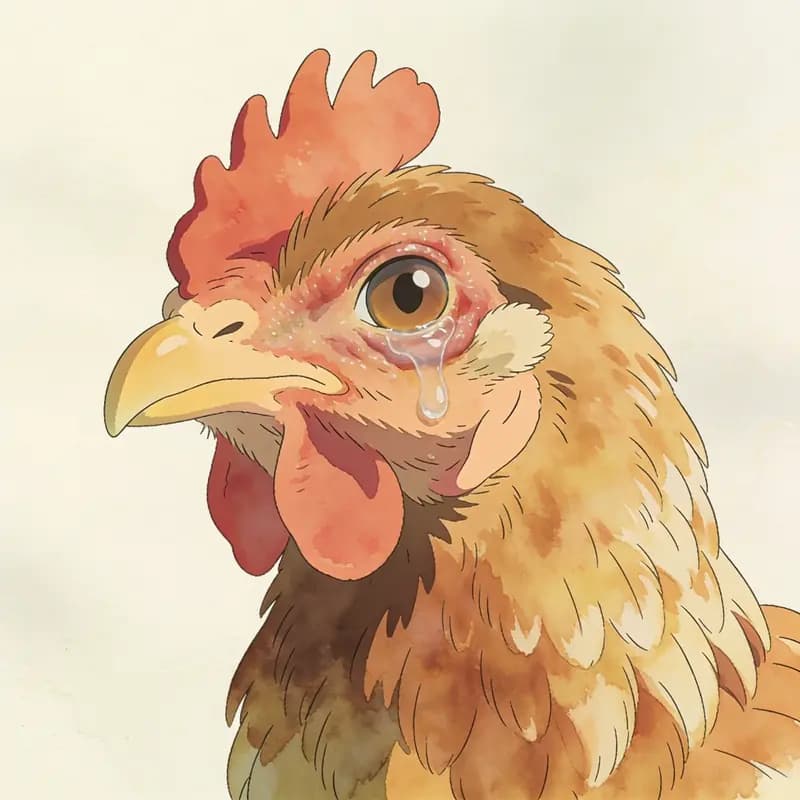
What to look for
- Watery or pus-like discharge from the nostrils
- Swollen eyelid, sometimes closed
- An unpleasant smell around the face
- Sneezing, noisy breathing and a swollen face
Possible causes
- Infectious coryza (Avibacterium paragallinarum): highly contagious; discharge, swollen face and a characteristic smell
- Chronic mycoplasmosis: a bacterium that colonises the airways and causes persistent discharge, especially with cold or ammonia
- Ammonia from dirty bedding: the gas irritates the eyes and airways and opens the door to infections
- Cold draughts at bird height: they chill the birds without ventilating well and encourage coryza and respiratory problems
What to do now
- Isolate the bird in a clean, dry space without draughts
- Ventilate the coop (without a direct draught) and renew all damp or dirty bedding to lower the ammonia
- Clean the eyes and nostrils with lukewarm saline solution and a clean gauze: it removes discharge and makes it easier for her to breathe and see
- Call your vet: it usually needs a specific antibiotic
Prevention
- Quarantine every new bird for at least two weeks, preferably three or four, before putting it with the group, to detect respiratory diseases or parasites in time.
- Keep good high-level ventilation (an outlet for warm air) without draughts at bird height: the air must be renewed without chilling them
- Keep the bedding dry and remove areas that smell of ammonia: that gas opens the door to respiratory infections
- Do not share equipment with other coops without disinfecting it
When to call the vet
As soon as you see more than one bird affected or discharge with a bad smell, because coryza is highly contagious. If several birds fall ill or die at once, also notify the official veterinary services of your autonomous community in case it is avian influenza.
This guide is for guidance only. If you have any reasonable doubt, it is always better to ask. Note down the symptoms, how they progress and the times, to help the professional.