
Credits and licences
- #1 — vueltaalhuerto illustration
- #2 — vueltaalhuerto illustration
- #3 — vueltaalhuerto illustration
- #4 — vueltaalhuerto illustration
- #5 — vueltaalhuerto illustration
- #6 — vueltaalhuerto illustration
- #7 — vueltaalhuerto illustration
- #8 — vueltaalhuerto illustration
- #9 — Adityamadhav83 · CC BY 4.0 see on Wikimedia
- #10 — Kambai Akau · CC BY-SA 4.0 see on Wikimedia
- #11 — Paul Harrison · CC BY-SA 4.0 see on Wikimedia
- #12 — Alejandro Bayer Tamayo from Armenia, Colombia · CC BY-SA 2.0 see on Wikimedia
Mango 'Kensington Pride'
and 2 more names
mango, Mangifera indicaMango 'Kensington Pride' is planted from March to May. It is harvested from July to September. Grow it in full sun, 800 cm apart, with moderate watering. Dates are for a mild temperate climate in the northern hemisphere; the calendar below adjusts them to your zone.
A mango with large, juicy and very aromatic fruit. It needs a subtropical climate, such as that of the coast of Málaga and Granada in southern Spain, or the Canary Islands.
Family and origin: Cashew family (Anacardiaceae) · native to South Asia; Australian cultivar · More plants from South Asia
01In your area
How will it do in your garden?
Year calendar
| Task | J | F | M | A | M | J | J | A | S | O | N | D |
|---|---|---|---|---|---|---|---|---|---|---|---|---|
| Plant / transplantMar–May | no | no | yes | yes | yes | no | no | no | no | no | no | no |
| HarvestJul–Sep | no | no | no | no | no | no | yes | yes | yes | no | no | no |
| FloweringFeb–Apr | no | yes | yes | yes | no | no | no | no | no | no | no | no |
| PruningMar–Apr | no | no | yes | yes | no | no | no | no | no | no | no | no |
Its life cycle at a glance
Swipe and tap a stage to see its details.
02Planting
Where and how to plant it
Leave 8 m between plants.
8 m between plants
Seedlings are planted with the root ball level with the soil.
- In a square-foot bed
- 1 plant every 729 squares30 × 30 cm squares
- Transplanting
- Mar–May
03Care
Care through the year
Sun and aspectFull sun · 8 h of sun · South or south-west, with nothing casting shade at midday
- Too little sun
- Ideal range
- Plenty of sun
South or south-west, with nothing casting shade at midday
Strong sun: Loves full midday sun and high temperatures.
WateringMoist but never waterlogged · summer: every 2-3 days
- Summerevery 2-3 days30 L per tree/week
- Spring / Autumnevery 4-5 days15 L per tree/week
- Winterevery 2-3 weeks4.5 L per tree/week
Moist but never waterlogged: Water before the surface is completely dry. Never puddles. Mulch: straw or dry plant material cuts watering by 30-50 %.
When to water? Push your finger 3 cm into the soil next to the base of the plant:
- Damp: soil sticks to your finger. Do not water today. The moisture is fine.
- Cool but clean, no mud. Water early tomorrow if it stays like this, or this evening.
- Dry and dusty. Water now, and deeply. This is not where it likes to be.
Soil and feedingA deep planting hole and well-drained soil
A deep planting hole and well-drained soil.
The site's own topsoil + 1/3 well-rotted compost + a handful of sand if there is clay.
Good: prolonged waterlogging rots the roots.
This plant prefers a pH between 6.0 and 7.0 (slightly acidic to neutral).
- Dig a hole at least 60×60×60 cm before planting.
- A thick mulch around the tree (not touching the trunk) reduces water stress.
- Spread compost on the surface every autumn; never bury the graft union.
- A narrow hole in hard ground: the roots end up trapped as if in a pot.
- Burying the graft encourages rot and takes vigour away from the rootstock.
- Common mistakeDo not bury the graft union (the bulge on the trunk): if it ends up below ground it rots. Leave it a little above the soil.
PruningWhen: Mar–Apr
Pruning time for this plant: Mar–Apr.
- TipFormative pruning in the first few years to keep its vigorous habit in check; plenty of water in summer during growth, cutting back before flowering to encourage it.
- TipPlant while dormant (autumn to winter) and shape the canopy by pruning in the first few years.
04Harvest
Harvesting and storing
Harvest in Jul–Sep.
- TipA good mulch and drip irrigation in summer make all the difference to the harvest.
05Propagation
Make new plants
Plant in spring, once there is no longer any risk of frost and the soil has warmed up. Buy grafted trees from a nursery.
06Uses and health
What it is used for, and with what care
The flesh is edible. The skin and sap contain urushiol (like poison ivy): they can cause dermatitis in sensitive people. Do not give the stone to pets (choking hazard).
- Properties
- A very sweet tropical fruit, rich in vitamins A and C.
- Uses
- Fresh flesh, in smoothies, desserts or salads.
For guidance only; this is not medical treatment and does not replace advice from a doctor or vet.
07Companions and related plants
What to plant it with
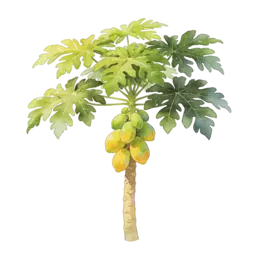
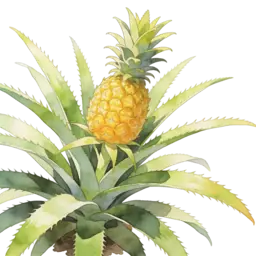
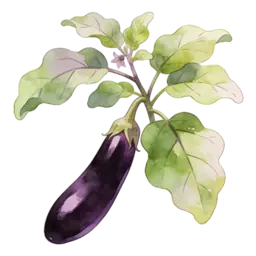
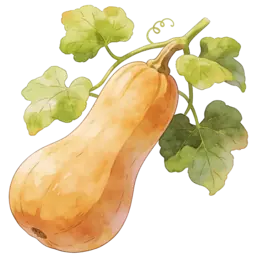
Group it in the same bedPlants with the same watering or the same sun
They are not essential companions, but you will not have to water or position them differently.
Same watering · Moderate watering
Compare with similar varieties
| Variety | Sowing | Harvest | Days | Spacing | Difficulty |
|---|---|---|---|---|---|
| Mango 'Kensington Pride' | Mar–May | Jul–Sep | — | 800 cm | Difficult |
| Mango 'Osteen' | Mar–May | Sep–Oct | — | 700 cm | Difficult |
| Mangifera laurina (mangga pari) | Apr–Jun | Jul–Sep | ~365 | 800 cm | Difficult |