
Credits and licences
- #1 — vueltaalhuerto illustration
- #2 — vueltaalhuerto illustration
- #3 — vueltaalhuerto illustration
- #4 — vueltaalhuerto illustration
- #5 — vueltaalhuerto illustration
- #6 — vueltaalhuerto illustration
- #7 — vueltaalhuerto illustration
- #8 — vueltaalhuerto illustration
- #9 — vueltaalhuerto illustration
- #10 — vueltaalhuerto illustration
Mangifera laurina (mangga pari)
and 2 more names
Mangifera sumatrana, mangoMangifera laurina (mangga pari) is sown in seed trays from April to June, and planted out from April to June. It is harvested from July to September (about 365 days to the first harvest). Grow it in full sun, 800 cm apart, with moderate watering. Dates are for a mild temperate climate in the northern hemisphere; the calendar below adjusts them to your zone.
What else to sow in April, May and June
Mangifera laurina is a close relative of the common mango (Mangifera indica), which it resembles so closely that the two are often confused. It is an evergreen tree that reaches 30 m or more in the rainforest, with long, smooth, glossy leaves and very small greenish-white flowers in loose panicles. The fruit is a small drupe, 6 to 10 cm, greenish yellow when ripe, with little fibrous, soft, juicy flesh that turns to liquid and can almost be drunk; it is much less fleshy than a mango. In South-East Asia it is also eaten green, in slices, with a spicy sauce. It is of interest to collectors and as a rootstock for other mangoes, because its seed is polyembryonic and it tolerates waterlogging. In Spain it can only be tried in the Canary Islands or on the warmest stretches of coast, or in a pot with a greenhouse; it is a collector's plant, not a productive fruit tree.
Family and origin: Cashew family (Anacardiaceae) · native to South-East Asia: from peninsular Thailand to New Guinea, in humid lowland forest · More plants from Southeast Asia
01In your area
How will it do in your garden?
Year calendar
| Task | J | F | M | A | M | J | J | A | S | O | N | D |
|---|---|---|---|---|---|---|---|---|---|---|---|---|
| Seed trayApr–Jun | no | no | no | yes | yes | yes | no | no | no | no | no | no |
| Plant / transplantApr–Jun | no | no | no | yes | yes | yes | no | no | no | no | no | no |
| HarvestJul–Sep | no | no | no | no | no | no | yes | yes | yes | no | no | no |
| PruningSep–Oct | no | no | no | no | no | no | no | no | yes | yes | no | no |
Its life cycle at a glance
Swipe and tap a stage to see its details.
02Planting
Where and how to plant it
Sow the seed 3 cm deep; leave 8 m between plants and 9 m between rows.
8 m between plants · 9 m between rows
Seed at a depth of 3 cm; seedlings go in with the root ball level with the soil.
- In a square-foot bed
- 1 plant every 729 squares30 × 30 cm squares
- Transplanting
- Apr–Jun
- Seed tray
- Apr–Jun
- Germination
- ~20 days
03Care
Care through the year
Sun and aspectFull sun · 8 h of sun · South or south-west, with nothing casting shade at midday
- Too little sun
- Ideal range
- Plenty of sun
South or south-west, with nothing casting shade at midday
Strong sun: Loves full midday sun and high temperatures.
Full sun and warm temperatures all year round. Below 5 to 10 °C it stops growing and frost damages or kills it, especially when young. Cold figures are only a guide and there are no reliable data on growing it in Spain.
- TipPlant it in spring, once there is no longer any risk of cold, in the warmest, sunniest spot, or grow it in a large container that you can move into a greenhouse in winter.
WateringMoist but never waterlogged · summer: every 2-3 days
- Summerevery 2-3 days30 L per tree/week
- Spring / Autumnevery 4-5 days15 L per tree/week
- Winterevery 2-3 weeks4.5 L per tree/week
Moist but never waterlogged: Water before the surface is completely dry. Never puddles. Mulch: straw or dry plant material cuts watering by 30-50 %.
Regular watering during growth and less in winter, always in soil that drains. Although it is used as a rootstock on land that floods seasonally, do not plant it in heavy soil without drainage; in a pot, let the top few centimetres dry out between waterings.
When to water? Push your finger 3 cm into the soil next to the base of the plant:
- Damp: soil sticks to your finger. Do not water today. The moisture is fine.
- Cool but clean, no mud. Water early tomorrow if it stays like this, or this evening.
- Dry and dusty. Water now, and deeply. This is not where it likes to be.
Soil and feedingpH 5.5–7.5 · A deep planting hole and well-drained soil
A deep planting hole and well-drained soil.
The site's own topsoil + 1/3 well-rotted compost + a handful of sand if there is clay.
Good: prolonged waterlogging rots the roots.
This plant prefers a pH between 5.5 and 7.5 (slightly acidic to slightly alkaline).
- Dig a hole at least 60×60×60 cm before planting.
- A thick mulch around the tree (not touching the trunk) reduces water stress.
- Spread compost on the surface every autumn; never bury the graft union.
- A narrow hole in hard ground: the roots end up trapped as if in a pot.
- Burying the graft encourages rot and takes vigour away from the rootstock.
- Common mistakeDo not bury the graft union (the bulge on the trunk): if it ends up below ground it rots. Leave it a little above the soil.
PruningWhen: Sep–Oct
Pruning time for this plant: Sep–Oct.
- TipFeed with compost and prune only to thin the crown and keep it at a manageable height.
- TipLike other members of the Anacardiaceae, its sap, fruit skin and leaves can irritate the skin of sensitive people, just like the common mango; wear gloves when pruning.
- TipPlant while dormant (autumn to winter) and shape the canopy by pruning in the first few years.
Common mistakes and tips
- TipWatch out for scale insects, and for aphids on the shoots.
04Harvest
Harvesting and storing
Harvest in Jul–Sep; the first, about 365 days after sowing.
- TipPick the fruit when it changes from green to greenish yellow and gives slightly when pressed; there is little flesh and it turns to liquid, so eat it carefully.
- TipHeight, cold tolerance and harvest time are only a guide.
- TipA good mulch and drip irrigation in summer make all the difference to the harvest.
05Propagation
Make new plants
It is propagated from seed and by grafting. The seed is large (a kernel inside a fibrous stone) and polyembryonic: several seedlings can come from one seed, and most are copies of the parent, so a seedling tree usually resembles the original. It must be sown fresh, straight out of the fruit and cleaned of flesh, with warmth; it comes up in two to four weeks. To reproduce a particular variety or bring forward fruiting it is grafted, just like the common mango. Cuttings are not a reliable method.
Seeds: how to germinate them~20 days
06Uses and health
What it is used for, and with what care
WARNING: like other members of the Anacardiaceae (mango, cashew), its sap, fruit skin and leaves can cause contact dermatitis in sensitive people, especially those allergic to mango or to North American poison ivy; if this happens to you with mango, avoid touching it without gloves and do not bite into the fruit skin. There are no reliable data on toxicity in dogs and cats: to be safe, do not let them chew the leaves, branches or stone.
- Properties
- A small fruit with juicy, sour flesh and vitamin C; in its native range it is eaten green with a spicy sauce.
- Uses
- The flesh of the ripe fruit is eaten by sucking it, or the green fruit is eaten sliced with a spicy sauce in South-East Asia. The skin and stone are not eaten.
For guidance only; this is not medical treatment and does not replace advice from a doctor or vet.
07Companions and related plants
What to plant it with
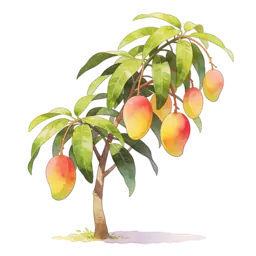
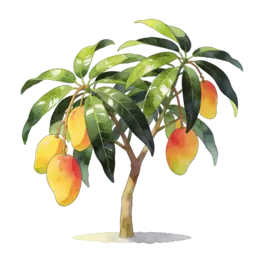
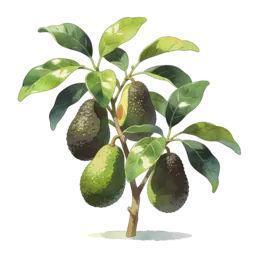
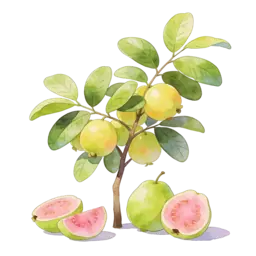
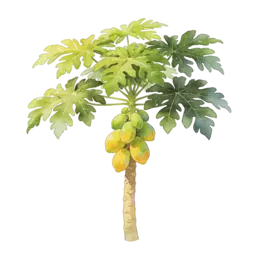
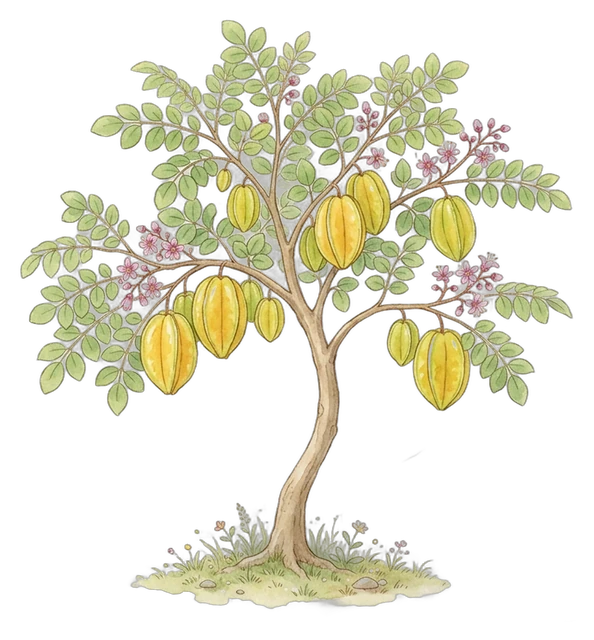
Group it in the same bedPlants with the same watering or the same sun
They are not essential companions, but you will not have to water or position them differently.
Same watering · Moderate watering
Compare with similar varieties
| Variety | Sowing | Harvest | Days | Spacing | Difficulty |
|---|---|---|---|---|---|
| Mango 'Kensington Pride' | Mar–May | Jul–Sep | — | 800 cm | Difficult |
| Mango 'Osteen' | Mar–May | Sep–Oct | — | 700 cm | Difficult |
| Mangifera laurina (mangga pari) | Apr–Jun | Jul–Sep | ~365 | 800 cm | Difficult |