
Credits and licences
- #1 — vueltaalhuerto illustration
- #2 — vueltaalhuerto illustration
- #3 — vueltaalhuerto illustration
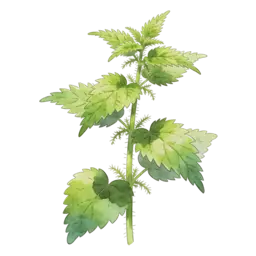
Cleavers (Galium)
and 3 more names
bedstraw, Galium aparine, amor de hortelanoCleavers (Galium) is sown directly outdoors in February and from October to November. It flowers from April to June. Grow it in sun or partial shade, 30 cm apart, with moderate watering. Dates are for a mild temperate climate in the northern hemisphere; the calendar below adjusts them to your zone.
What else to sow in February, October and November
A climbing annual with square stems and leaves in whorls, covered in tiny hooked hairs that make it cling to clothes and animal fur; hence its Spanish name. It appears by itself in vegetable plots, verges and hedges from autumn, and flowers in spring with very small white flowers. It is a host plant for hummingbird hawk-moth caterpillars, and other hawk-moths eat it too, so an uncut corner is a good place for them. It belongs to the same family as coffee and madder. In the garden it can tangle over small plants, so it is left on a margin and kept in check before its hooked fruits set.
Family and origin: Coffee family (Rubiaceae) · native to Temperate Eurasia, naturalised almost worldwide · More plants from Temperate Europe
01In your area
How will it do in your garden?
Year calendar
| Task | J | F | M | A | M | J | J | A | S | O | N | D |
|---|---|---|---|---|---|---|---|---|---|---|---|---|
| Direct sowingFeb, Oct–Nov | no | yes | no | no | no | no | no | no | no | yes | yes | no |
| FloweringApr–Jun | no | no | no | yes | yes | yes | no | no | no | no | no | no |
Its life cycle at a glance
Swipe and tap a stage to see its details.
02Planting
Where and how to plant it
Sow the seed 1.5 cm deep; leave 30 cm between plants.
30 cm between plants
Seed at a depth of 1.5 cm.
- In a square-foot bed
- 1 plant per square30 × 30 cm squares
- Direct sowing
- Feb, Oct–Nov
- Germination
- ~30 days
- TipTraditional uses as an infusion or in salads are attributed to it, but they are not recommended without professional advice, and it must not be confused with other wild plants.
03Care
Care through the year
Sun and aspectSun and shade · 4 h of sun · shade in summer
- Too little sun
- Ideal range
- Plenty of sun
Any, with partial shade
Moderate sun: Copes with full sun, but give it some shade during heatwaves.
It prefers gentle sun or partial shade and cool soil. In strong summer heat it dries out and finishes its cycle.
WateringMoist but never waterlogged · summer: none; it completes its cycle in spring
- Summernone; it completes its cycle in spring0.8 L per plant/week
- Spring / Autumnrain is usually enough0.4 L per plant/week
- Winterrain is usually enough0.1 L per plant/week
Moist but never waterlogged: Water before the surface is completely dry. Never puddles.
The soil moisture of autumn, winter and spring is enough for it. It does not need watering.
When to water? Push your finger 3 cm into the soil next to the base of the plant:
- Damp: soil sticks to your finger. Do not water today. The moisture is fine.
- Cool but clean, no mud. Water early tomorrow if it stays like this, or this evening.
- Dry and dusty. Water now, and deeply. This is not where it likes to be.
- Common mistakeOverwatering: most prefer to dry out between waterings.
Soil and feedingpH 5.5–8 · Free-draining, airy mix
Free-draining, airy mix.
40 % topsoil · 30 % coarse sand or perlite · 30 % well-rotted compost (less compost for Mediterranean herbs).
High: almost all prefer being thirsty to being wet.
This plant prefers a pH between 5.5 and 8.0 (slightly acidic to alkaline).
- Mediterranean herbs in very rich, heavily watered soil: they grow a lot but lose their aroma.
- A pot without a drainage hole: the roots rot within weeks.
- TipMany Mediterranean herbs prefer poor soil and little water: more aroma.
Pruning
- TipPinch out the tips often so it branches and does not run to seed so soon.
Common mistakes and tips
- TipLeave it on a margin or a corner of the plot, away from small lettuces and strawberries, so it does not tangle them; it is easy to pull by hand, better with gloves because the hooked hairs prick a little and itch on sensitive skin.
- TipIf you pull it from the bed, keep a patch aside for the caterpillars.
- Common mistakeLetting them flower early makes the leaves bitter (in leafy herbs).
04Propagation
Make new plants
It is propagated only from seed, and it does so by itself: the little hooked fruits cling to whatever passes and drop to the ground. It germinates with cold, from autumn to early spring, so if you want it for the butterflies, leave a corner untouched or scatter local seed on loose soil in late autumn.
Seeds: how to germinate them~30 days
05Uses and health
What it is used for, and with what care
No significant toxicity is known. The hooked hairs can irritate sensitive skin. If a pet eats a lot, consult a vet.
- Properties
- A wild plant useful as shelter and food for hawk-moth caterpillars. Medicinal home use is not recommended.
- Uses
- Eating it is not recommended without safe identification and advice: it has traditional uses, but there is no reason to forage it.
For guidance only; this is not medical treatment and does not replace advice from a doctor or vet.
06Companions and related plants
What to plant it with
Good companions
Group it in the same bedPlants with the same watering or the same sun
They are not essential companions, but you will not have to water or position them differently.