
Credits and licences
- #1 — vueltaalhuerto illustration
- #2 — vueltaalhuerto illustration
- #3 — vueltaalhuerto illustration
- #4 — vueltaalhuerto illustration
- #5 — vueltaalhuerto illustration
- #6 — vueltaalhuerto illustration
- #7 — vueltaalhuerto illustration
- #8 — vueltaalhuerto illustration
- #9 — Rob Hille · CC BY-SA 3.0 see on Wikimedia
- #10 — Rob Hille · Public domain see on Wikimedia
- #11 — Rob Hille · CC BY-SA 3.0 see on Wikimedia
- #12 — Rob Hille · CC BY-SA 3.0 see on Wikimedia
Lovage
Lovage is sown in seed trays from January to February or directly outdoors from March to April and in September, and planted out from March to April. It is harvested from May to September. Grow it in sun or partial shade, 60 cm apart, with moderate watering. Dates are for a mild temperate climate in the northern hemisphere; the calendar below adjusts them to your zone.
What else to sow in January, February, March, April and September
A perennial member of the carrot family with an intense flavour of celery and stock. Widely used in central European cooking.
Family and origin: Carrot family (Apiaceae) · native to South-west Asia and eastern Europe · More plants from Temperate Europe
01In your area
How will it do in your garden?
Year calendar
| Task | J | F | M | A | M | J | J | A | S | O | N | D |
|---|---|---|---|---|---|---|---|---|---|---|---|---|
| Seed trayJan–Feb | yes | yes | no | no | no | no | no | no | no | no | no | no |
| Direct sowingMar–Apr, Sep | no | no | yes | yes | no | no | no | no | yes | no | no | no |
| Plant / transplantMar–Apr | no | no | yes | yes | no | no | no | no | no | no | no | no |
| HarvestMay–Sep | no | no | no | no | yes | yes | yes | yes | yes | no | no | no |
| FloweringJun–Jul | no | no | no | no | no | yes | yes | no | no | no | no | no |
Its life cycle at a glance
Swipe and tap a stage to see its details.
02Planting
Where and how to plant it
Sow the seed 6 mm deep; leave 60 cm between plants.
60 cm between plants
Seed at a depth of 6 mm; seedlings go in with the root ball level with the soil.
- In a square-foot bed
- 1 plant every 4 squares30 × 30 cm squares
- Transplanting
- Mar–Apr
- Seed tray
- Jan–Feb
- Direct sowing
- Mar–Apr, Sep
- TipA single plant is usually enough, because it grows very large.
03Care
Care through the year
Sun and aspectSun and shade · 5 h of sun · shade in summer
- Too little sun
- Ideal range
- Plenty of sun
East, or south with light shade in the middle of the day
Moderate sun: Copes with full sun, but give it some shade during heatwaves.
WateringMoist but never waterlogged · summer: every 2-3 days
- Summerevery 2-3 days0.8 L per plant/week
- Spring / Autumnevery 4-5 days0.4 L per plant/week
- Winterevery 2-3 weeks0.1 L per plant/week
Moist but never waterlogged: Water before the surface is completely dry. Never puddles. Mulch: straw or dry plant material cuts watering by 30-50 %.
When to water? Push your finger 3 cm into the soil next to the base of the plant:
- Damp: soil sticks to your finger. Do not water today. The moisture is fine.
- Cool but clean, no mud. Water early tomorrow if it stays like this, or this evening.
- Dry and dusty. Water now, and deeply. This is not where it likes to be.
- TipCut off the flower stems to extend leaf production and water moderately; the young leaves of spring and summer are the most aromatic.
- Common mistakeOverwatering: most prefer to dry out between waterings.
Soil and feedingFree-draining, airy mix
Free-draining, airy mix.
40 % topsoil · 30 % coarse sand or perlite · 30 % well-rotted compost (less compost for Mediterranean herbs).
High: almost all prefer being thirsty to being wet.
This plant prefers a pH between 6.5 and 7.5 (neutral to slightly alkaline).
- Mediterranean herbs in very rich, heavily watered soil: they grow a lot but lose their aroma.
- A pot without a drainage hole: the roots rot within weeks.
- TipFull sun or partial shade, with deep, moist soil.
- TipMany Mediterranean herbs prefer poor soil and little water: more aroma.
Pruning
- TipPinch out the tips often so it branches and does not run to seed so soon.
Common mistakes and tips
- Common mistakeLetting them flower early makes the leaves bitter (in leafy herbs).
04Harvest
Harvesting and storing
Harvest in May–Sep.
05Propagation
Make new plants
A member of the carrot family with a taproot: direct sowing is best; a mature clump can also be divided in spring.
06Uses and health
What it is used for, and with what care
- Properties
- Leaves, stems and seeds with an intense celery flavour that give body to stocks, soups and stews.
- Uses
- Leaves and stems in stocks, soups and stews, used sparingly because of their strong flavour; seeds as a spice.
For guidance only; this is not medical treatment and does not replace advice from a doctor or vet.
07Companions and related plants
What to plant it with
Good companions
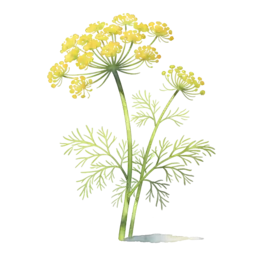
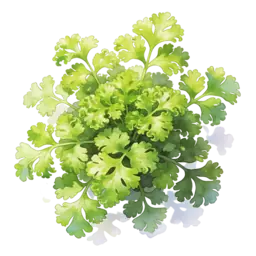
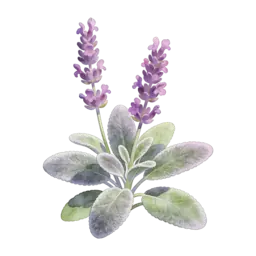
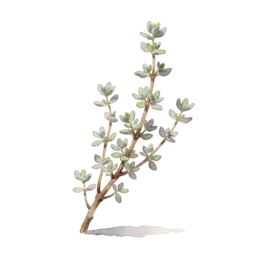
Group it in the same bedPlants with the same watering or the same sun
They are not essential companions, but you will not have to water or position them differently.
Same watering · Moderate watering
No known toxicity to people or pets
No notable toxicity at culinary amounts for people or pets; avoid medicinal doses during pregnancy and if you have any kidney disease. Do not gather wild 'mountain celery': other similar members of the carrot family, such as hemlock (Conium maculatum) or hemlock water dropwort (Oenanthe crocata), are deadly.