
Credits and licences
- #1 — vueltaalhuerto illustration
- #2 — vueltaalhuerto illustration
- #3 — vueltaalhuerto illustration
- #4 — vueltaalhuerto illustration
- #5 — vueltaalhuerto illustration
- #6 — vueltaalhuerto illustration
- #7 — vueltaalhuerto illustration
- #8 — vueltaalhuerto illustration
- #9 — J JMesserly · CC BY-SA 3.0 see on Wikimedia
- #10 — Photo by David J. Stang · CC BY-SA 4.0 see on Wikimedia
- #11 — Andrey Zharkikh from Salt Lake City, USA · CC BY 2.0 see on Wikimedia
- #12 — Photo by David J. Stang · CC BY-SA 4.0 see on Wikimedia
Pineapple
Pineapple is planted from April to June. It is harvested from June to August. Grow it in full sun, 40 cm apart, with moderate watering. Dates are for a mild temperate climate in the northern hemisphere; the calendar below adjusts them to your zone.
A perennial herbaceous plant with a rosette of tough leaves with spiny edges, which produces a single fruit in the centre and then sends out offsets. Grown from the crown, it takes a year and a half to two years to fruit. It needs constant warmth and does not withstand frost: outdoors it is only viable in the Canary Islands, and on the Spanish mainland in a pot, in a bright, mild spot, or in a greenhouse.
Family and origin: Bromeliad family (Bromeliaceae) · native to Southern Brazil and north-eastern Paraguay · More plants from South America
01In your area
How will it do in your garden?
Year calendar
| Task | J | F | M | A | M | J | J | A | S | O | N | D |
|---|---|---|---|---|---|---|---|---|---|---|---|---|
| Plant / transplantApr–Jun | no | no | no | yes | yes | yes | no | no | no | no | no | no |
| HarvestJun–Aug | no | no | no | no | no | yes | yes | yes | no | no | no | no |
Its life cycle at a glance
Swipe and tap a stage to see its details.
02Planting
Where and how to plant it
Leave 40 cm between plants.
40 cm between plants
Seedlings are planted with the root ball level with the soil.
- In a square-foot bed
- 1 plant every 4 squares30 × 30 cm squares
- Transplanting
- Apr–Jun
- Common mistakePlanting too close together cuts down air flow and encourages fungal disease.
03Care
Care through the year
Sun and aspectFull sun · 8 h of sun · South or south-west, with nothing casting shade at midday
- Too little sun
- Ideal range
- Plenty of sun
South or south-west, with nothing casting shade at midday
Strong sun: Loves full midday sun and high temperatures.
- TipIt needs sun and warmth; in the cold it barely grows.
WateringMoist but never waterlogged · summer: every 2-3 days
- Summerevery 2-3 days2 L per plant/week
- Spring / Autumnevery 4-5 days1 L per plant/week
- Winterevery 2-3 weeks0.3 L per plant/week
Moist but never waterlogged: Water before the surface is completely dry. Never puddles. Mulch: straw or dry plant material cuts watering by 30-50 %.
When to water? Push your finger 3 cm into the soil next to the base of the plant:
- Damp: soil sticks to your finger. Do not water today. The moisture is fine.
- Cool but clean, no mud. Water early tomorrow if it stays like this, or this evening.
- Dry and dusty. Water now, and deeply. This is not where it likes to be.
Soil and feedingRich, airy loam
Rich, airy loam.
40 % topsoil · 40 % well-rotted compost · 20 % perlite or sand.
Medium: moist but never waterlogged.
This plant prefers a pH between 6.0 and 7.0 (slightly acidic to neutral).
- Well-rotted compost every season and well-decomposed manure in autumn.
- Mulch with straw or dry plant material to hold moisture and smother weeds.
- Rotate crops: do not grow the same family in the same spot two years running.
- Compacted soil or unbroken clay can halve the harvest.
- Watering with a hose from above compacts the soil: drip irrigation or watering at the base is better.
- TipWater sparingly and let the potting mix dry out between waterings: like a true bromeliad, it collects water in the centre of the rosette and rots with excess.
- TipUse a light, slightly acidic potting mix.
- TipDig compost into the soil before planting and keep watering regular so growth never stalls.
04Harvest
Harvesting and storing
Harvest in Jun–Aug.
- TipAfter cutting the pineapple, leave one or two offsets for the next harvest.
- TipWatch the plant and harvest at the right moment: every crop has its own.
- Common mistakeWatering in fits and starts (bone dry, then waterlogged) stresses the plant and lowers the yield.
05Propagation
Make new plants
It is not grown from seed: plant the crown (the tuft of leaves) of a ripe pineapple once the risk of cold has passed, with warmth and regular watering until it roots.
06Uses and health
What it is used for, and with what care
- Properties
- Rich in vitamin C and bromelain (a digestive enzyme).
- Uses
- Fresh fruit or juice.
For guidance only; this is not medical treatment and does not replace advice from a doctor or vet.
07Companions and related plants
What to plant it with
Good companions
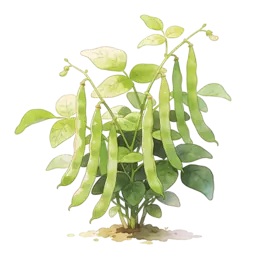
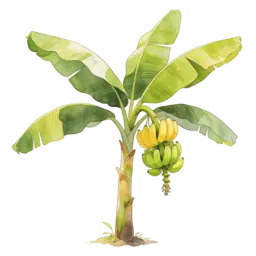
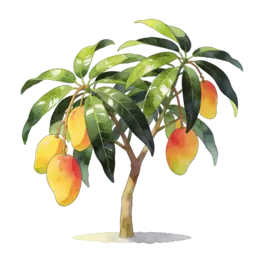
Group it in the same bedPlants with the same watering or the same sun
They are not essential companions, but you will not have to water or position them differently.
Same watering · Moderate watering
No known toxicity to people or pets
The ripe flesh is not toxic; for pets, give it in moderation because of its acidity and sugar.