
Credits and licences
- #1 — vueltaalhuerto illustration
- #2 — vueltaalhuerto illustration
- #3 — vueltaalhuerto illustration
- #4 — vueltaalhuerto illustration
- #5 — vueltaalhuerto illustration
- #6 — vueltaalhuerto illustration
- #7 — vueltaalhuerto illustration
- #8 — vueltaalhuerto illustration
- #9 — vueltaalhuerto illustration
- #10 — vueltaalhuerto illustration
American cranberry
and 1 more names
cranberry 'Stevens'American cranberry is planted from October to March. It is harvested from September to November. Grow it in full sun, 40 cm apart, with plenty of watering. Dates are for a mild temperate climate in the northern hemisphere; the calendar below adjusts them to your zone.
A creeping, evergreen shrub with long, slender stems that spread over the ground, small leathery leaves that stay green almost all year and pink flowers with swept-back petals. It produces red berries with a sour, astringent flavour that ripen in autumn and are eaten cooked, in sauce, jam, juice or dried. It demands acid, very moist soil rich in organic matter, and suffers in hot, dry climates or with hard water. It is sold as a potted plant, with cultivars such as Early Black or Stevens. It is not the blueberry (Vaccinium corymbosum), which is an upright shrub with blue berries, nor the lingonberry (Vaccinium vitis-idaea).
Family and origin: Heather family (Ericaceae) · native to North-eastern North America · More plants from North America
01In your area
How will it do in your garden?
Year calendar
| Task | J | F | M | A | M | J | J | A | S | O | N | D |
|---|---|---|---|---|---|---|---|---|---|---|---|---|
| Plant / transplantOct–Mar | yes | yes | yes | no | no | no | no | no | no | yes | yes | yes |
| HarvestSep–Nov | no | no | no | no | no | no | no | no | yes | yes | yes | no |
| FloweringJun–Jul | no | no | no | no | no | yes | yes | no | no | no | no | no |
| PruningFeb | no | yes | no | no | no | no | no | no | no | no | no | no |
| CuttingsMay–Jun | no | no | no | no | yes | yes | no | no | no | no | no | no |
| Divide the clumpFeb–Mar | no | yes | yes | no | no | no | no | no | no | no | no | no |
Its life cycle at a glance
Swipe and tap a stage to see its details.
02Planting
Where and how to plant it
Leave 40 cm between plants and 60 cm between rows.
40 cm between plants · 60 cm between rows
Seedlings are planted with the root ball level with the soil.
- In a square-foot bed
- 1 plant every 4 squares30 × 30 cm squares
- Transplanting
- Oct–Mar
03Care
Care through the year
Sun and aspectFull sun · 8 h of sun · South or south-west, with nothing casting shade at midday
- Too little sun
- Ideal range
- Plenty of sun
South or south-west, with nothing casting shade at midday
Strong sun: Loves full midday sun and high temperatures.
Full sun to fruit well; in areas with very hot summers it appreciates light shade at midday.
- TipLight frosts do not harm it.
WateringConstantly moist · summer: daily, or every 2 days above 30 °C
- Summerdaily, or every 2 days above 30 °C14 L per tree/week
- Spring / Autumnevery 3-4 days6.5 L per tree/week
- Winterevery 2 weeks if dry1.6 L per tree/week
Constantly moist: The soil should always feel cool and damp. Ideal with mulch and drip irrigation. Mulch: straw or dry plant material cuts watering by 30-50 %.
It needs constant moisture, without reaching the point of waterlogging. Use rainwater or soft water: limy water raises the pH and the leaves turn yellow (chlorosis). Mulch with pine bark or acid peat to keep the roots cool.
When to water? Push your finger 2 cm into the soil next to the base of the plant:
- Damp: soil sticks to your finger. Do not water, although for this plant it is just right — check again tomorrow.
- Cool but clean, no mud. Water today: it likes to stay constantly moist.
- Dry and dusty. Water urgently and add mulch to hold in moisture.
- TipIn a Mediterranean climate it is a demanding crop: it does better in the Atlantic part of Spain or in a pot, watered with soft water.
Soil and feedingpH 4–5.5 · Cool, slightly acidic soil with organic matter
Cool, slightly acidic soil with organic matter.
Medium: constant moisture but no puddles.
This plant prefers a pH between 4.0 and 5.5 (acidic to slightly acidic).
- Use pine needles or pine bark as a mulch (they lower the pH little by little).
- Water with rainwater or softened water if your tap water is hard.
- Compost made from chestnut leaves or leaf litter in autumn keeps up the humus.
- Chalky or alkaline soils cause chlorosis (yellow leaves with green veins).
- Letting the roots dry out while fruiting ruins the harvest.
- TipPrepare a bed or a large pot with acid peat and sand, with good drainage, and keep the pH between 4 and 5.5.
- TipDo not feed with lime or fresh manure; if needed, use an acid ericaceous fertiliser.
- TipSet several plants about 40 cm apart so that they form a carpet, and do not tread on the soil, because the stems are fragile.
- TipMulch the base: almost all berry bushes want cool, slightly acidic soil.
PruningWhen: Feb
Pruning time for this plant: Feb.
- Common mistakeNot pruning the canes that have already fruited leaves the clump congested.
Common mistakes and tips
- TipRenew old canes every year to keep up production and air flow.
04Harvest
Harvesting and storing
Harvest in Sep–Nov.
- TipHarvest when the berries are red and firm, in autumn.
- Common mistakeLetting it dry out while fruiting ruins the harvest.
05Propagation
Make new plants
It is propagated from stem cuttings, which is the usual method: they are taken in spring and early summer, from soft or semi-ripe shoots, and rooted in moist peat and sand. The stems touch the ground and put out roots, so rooted pieces ('runners') can also be separated at the end of winter. It can be grown from seed, but the seed is minute, the plants take years to fruit and they do not come true to the cultivar.
06Uses and health
What it is used for, and with what care
The fruit is edible and not toxic. If you take anticoagulants (such as warfarin), consult your doctor before drinking a lot of concentrated cranberry juice, and if you have kidney stones bear in mind that it contains oxalates. For dogs and cats, a few berries do not usually cause problems, but eating many can cause digestive upset; do not give them dried fruit mixes containing raisins, sugar or chocolate.
- Properties
- A fruit rich in vitamin C and antioxidants (proanthocyanidins), with fibre; in folk tradition eating it is associated with urinary health, though it does not replace any treatment.
- Uses
- The berries are sour and astringent when raw and are eaten cooked: sauces for meat and poultry, jams, compotes, juice, bread stuffings and baking, or dried and sweetened. They freeze very well.
For guidance only; this is not medical treatment and does not replace advice from a doctor or vet.
07Companions and related plants
What to plant it with
Good companions
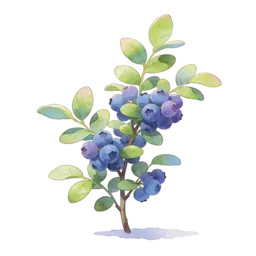
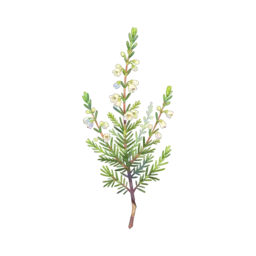
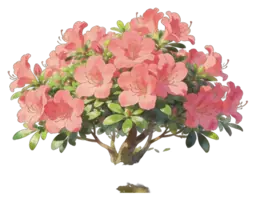
Keep apart
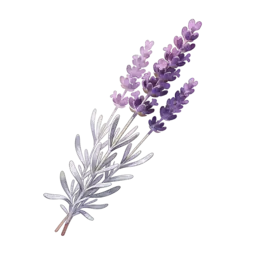
Group it in the same bedPlants with the same watering or the same sun
They are not essential companions, but you will not have to water or position them differently.
Same watering · Lots of water
Compare with similar varieties
| Variety | Sowing | Harvest | Days | Spacing | Difficulty |
|---|---|---|---|---|---|
| Bluecrop blueberry | Nov–Mar | Jun–Aug | — | 120 cm | Difficult |
| Legacy blueberry | Nov–Mar | Jul–Aug | — | 120 cm | Moderate |
| Lowbush blueberry | Oct–Nov | Jul–Aug | ~730 | 40 cm | Difficult |
| Rabbiteye blueberry | Nov–Mar | Jun–Aug | — | 200 cm | Moderate |
| American cranberry | Oct–Mar | Sep–Nov | — | 40 cm | Difficult |
| Lingonberry | Oct–Nov | Aug–Oct | — | 40 cm | Difficult |
| Bilberry | Oct–Nov | Jul–Sep | ~730 | 30 cm | Difficult |