In this article (12 sections)
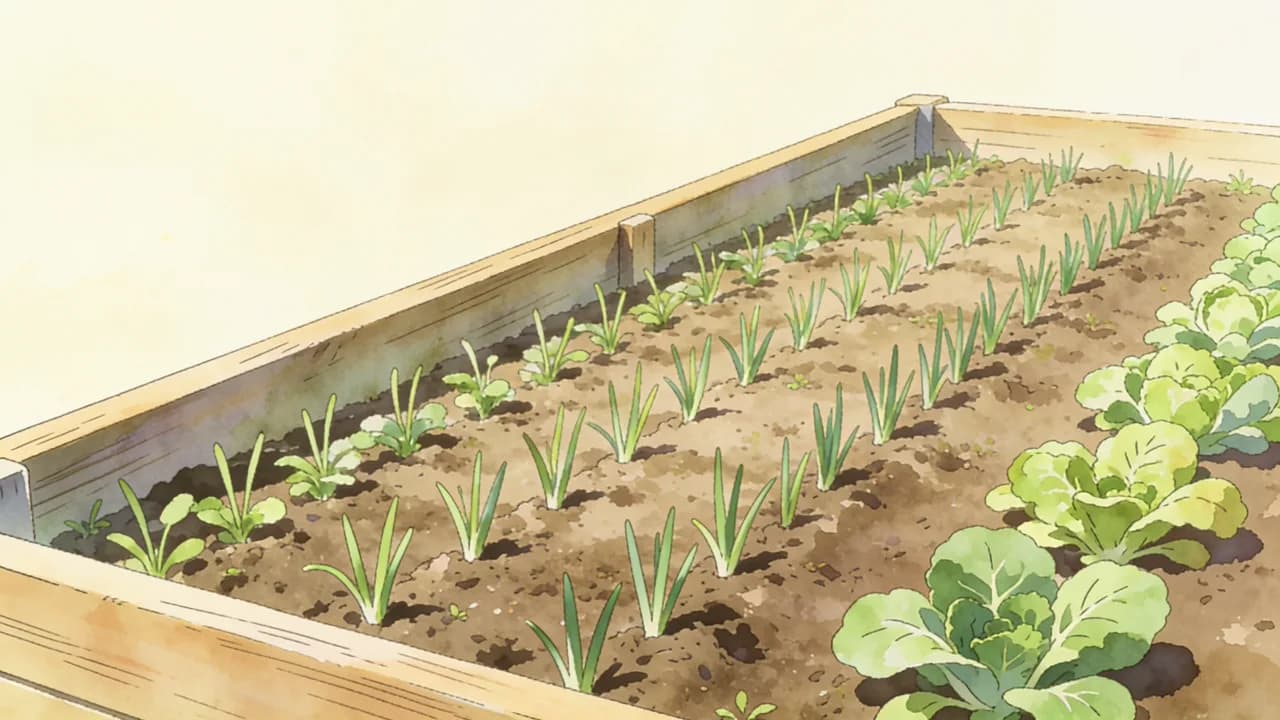
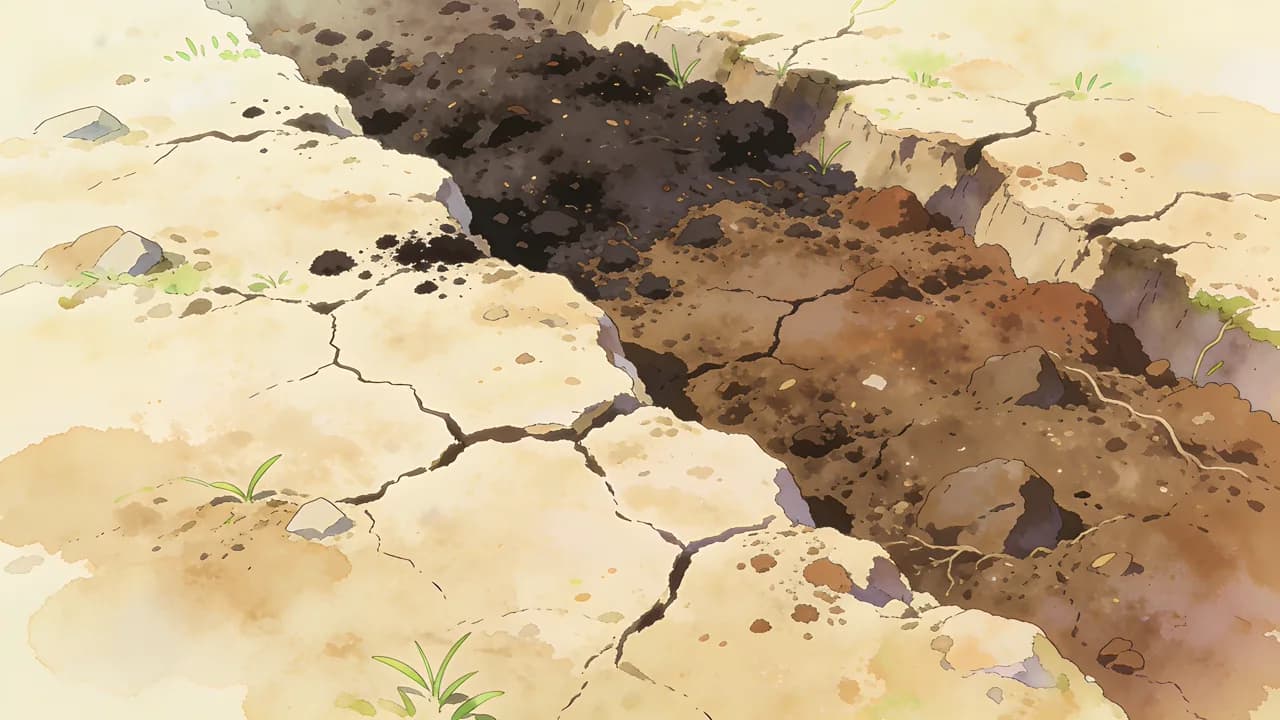
A bed that stays empty for weeks compacts with the rain, loses structure and ends up invaded by wild plants. The solution is green manures: plants that you sow on purpose, do not harvest and that enrich the soil.
What a green manure is

It is a plant sown solely to:
- Cover the soil and stop the rain from eroding or caking it.
- Supply biomass as it breaks down.
- Fix nitrogen from the air (only the legumes).
- Aerate and decompact hard layers with its roots.
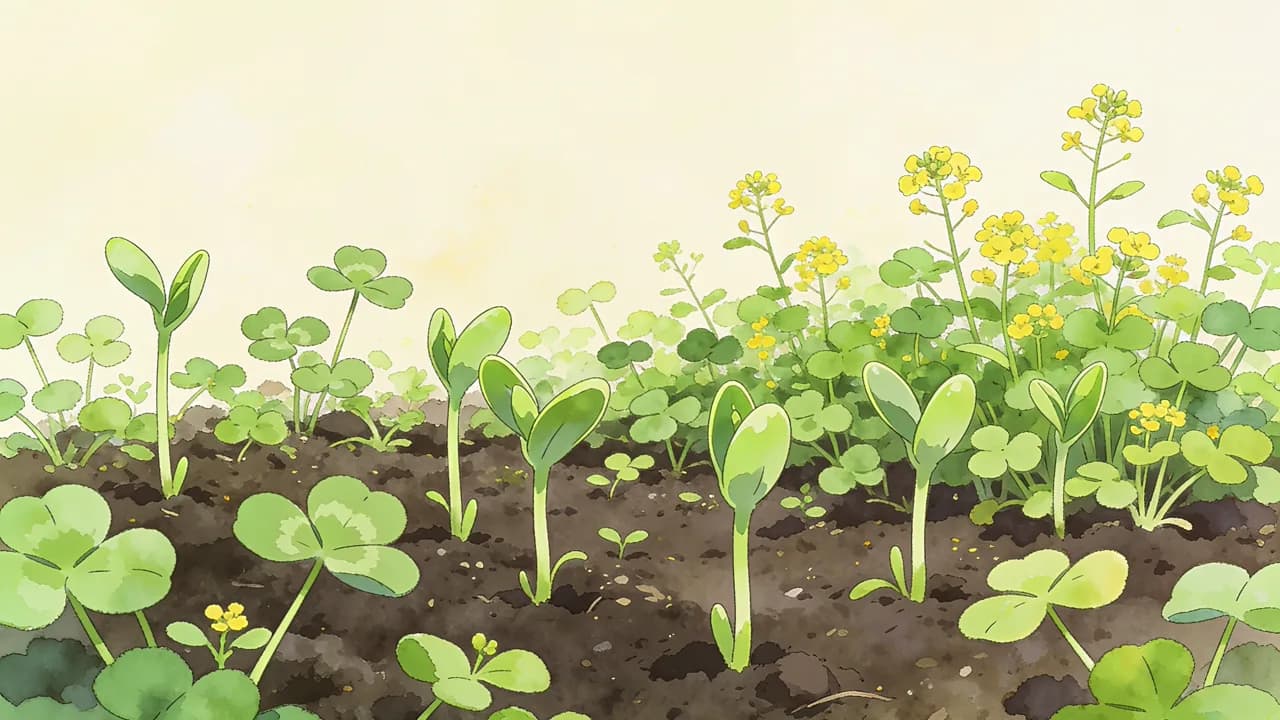
It is sown dense. When it reaches 30-40 cm (11.8–15.7 in), it is cut and worked in shallowly into the soil (0-5 cm, 0–2 in) or left on top as mulch. After a few weeks of breaking down, the bed is ready for the next crop.
The 5 most useful
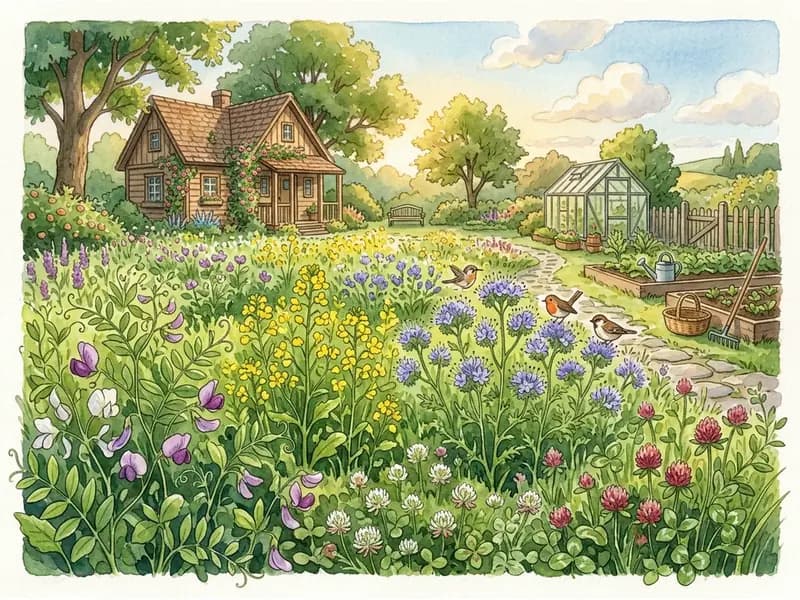
1. Vetch (Vicia sativa)
It is the queen of green manures. As a legume, it fixes nitrogen from the air (as a guide, from 60 to 100 kg, 132.3–220.5 lb per hectare per year, depending on soil and climate) and stands up well to cold. It is best sown in October and cut in March.
2. White mustard (Sinapis alba)
It grows very fast (40-60 days), so it is useful for filling a short gap between crops. It has some biofumigant effect against nematodes and some soil fungi, although results vary a lot depending on the soil and humidity, so do not make it your only treatment. Do not sow it right before or after cabbages, radishes or other brassicas: they share family, visitors and diseases.
3. White clover (Trifolium repens)
It is perennial and fixes nitrogen. It works very well as a permanent cover in the paths between beds and attracts bees.
4. Fodder rye (Secale cereale)
It is a very hardy cereal, with powerful roots that decompact and good resistance to hard frosts. It is sown in October-November and cut in April.
5. Phacelia (Phacelia tanacetifolia)
It is not a legume, but it is one of the best plants for attracting pollinators. It flowers violet-blue. Cut it before it sets seed, or it will self-sow. It stands up to mild frosts, but a hard, prolonged frost can finish it off, so in cold areas it is better to sow it at the end of summer or in spring.
Mixes that work
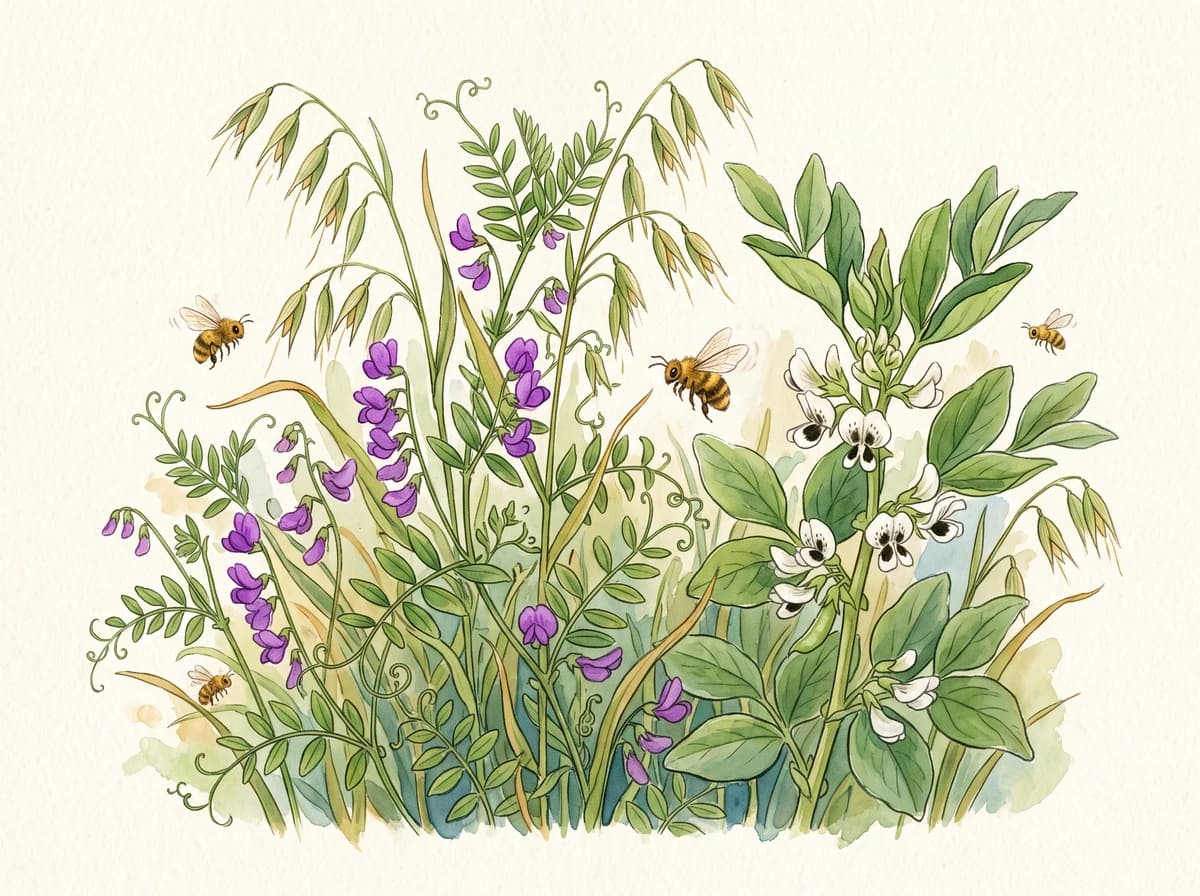
- Autumn-winter (north and centre): vetch + rye, with phacelia if the winter is not very hard. It is the classic mix: the rye supports the vetch and both complement each other.
- Autumn-winter (Mediterranean): vetch + oats. They stand up better to drought.
- Quick summer (2-month gap): white mustard + buckwheat. Short cycle, of about 40-60 days.
How to sow
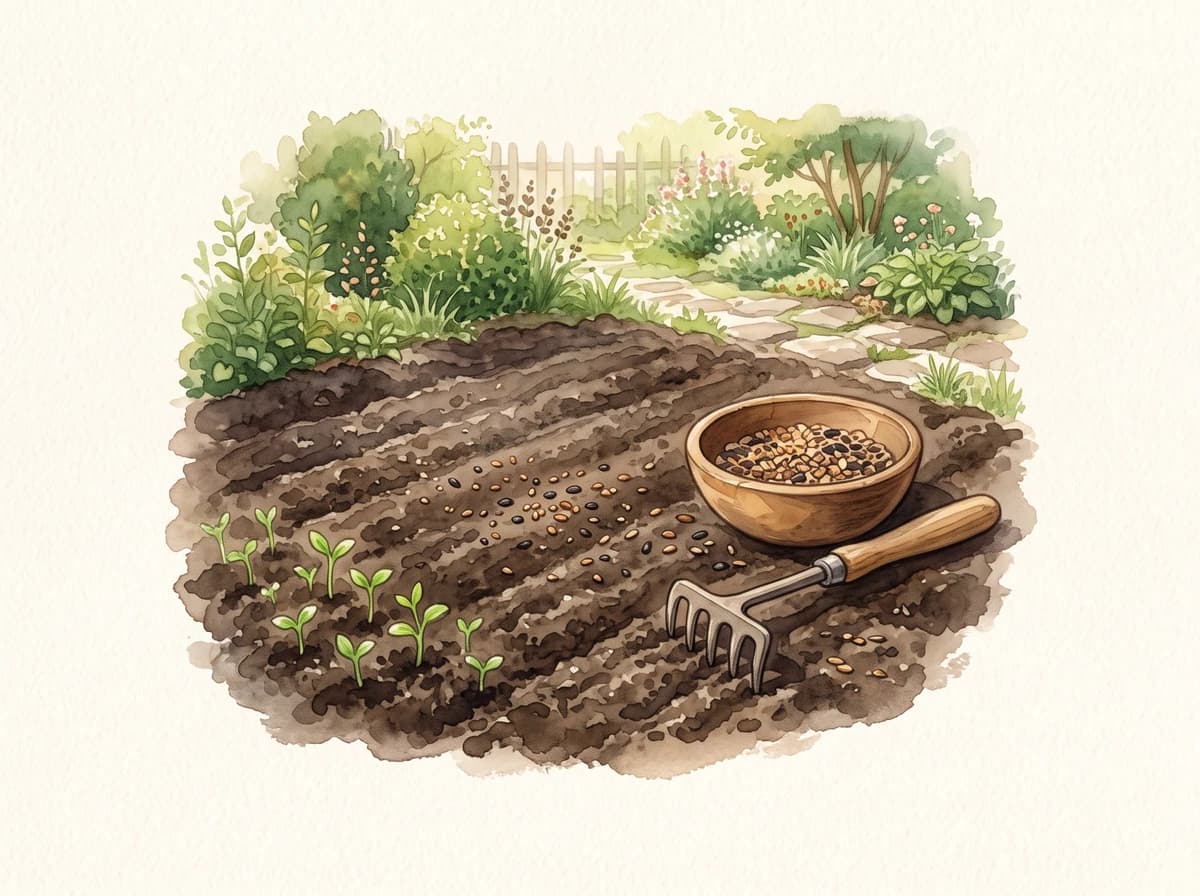
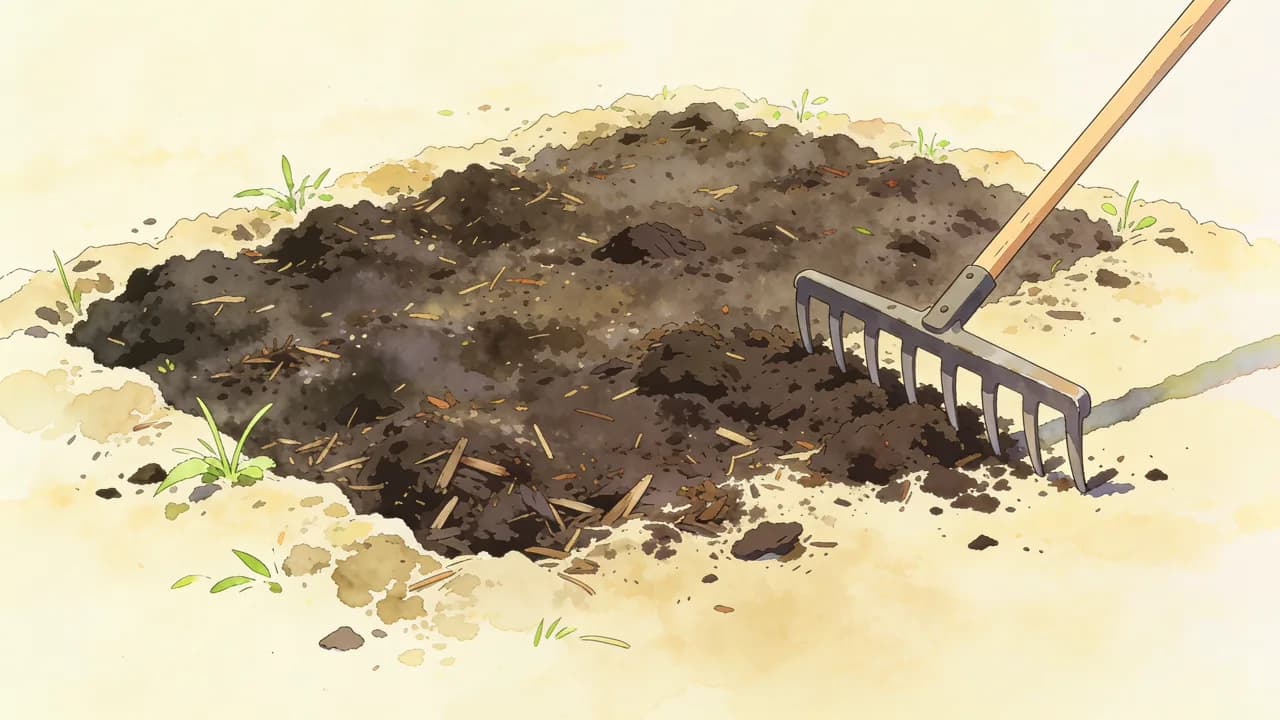
- Rake the surface of the bed to leave loose soil.
- Broadcast the seeds; for a mix of vetch and cereal, about 20-30 g/m² is usually enough (as a guide, always look at the dose on the packet). The denser, the more weeds it smothers.
- Cover with 1-2 cm (0.4–0.8 in) of soil or compost.
- Water well that first week. After that it is hardly needed, because in autumn-winter rain is enough.
When to cut and work in

It is best to cut at the start of flowering, before they form seed: it is when the plant has the most nutrients and does not yet self-sow.
- Cut with a scythe, scissors or light brush cutter.
- Leave the remains on top of the soil 3-5 days to dry a little.
- Work them in shallowly (0-5 cm, 0–2 in) with a fork or hoe. If you do not want to disturb the soil, leave them as mulch and plant or sow directly among them.
- Wait 2-3 weeks before sowing the next crop, and somewhat more if the soil is cold or the plant mass was very abundant. That way it breaks down and does not compete with the seedlings.
When NOT to use green manures

- Very small beds (less than 2 m², 22 sq ft), where the effort of sowing and cutting is not worth it.
- When the gap between crops is less than six weeks, because there is no time to grow, cut and wait for it to break down.
- If your soil is already very fertile (annual compost + rotation) and has no compaction.
Invisible benefit

With years of use in rotation, the usual result is that the soil gains organic matter and structure, that you need less compost and external fertilisers and that weeds are less noticeable, although the persistent ones (bindweed, thistle) do not disappear by themselves. Harvests usually improve, but the change is gradual and depends on the starting soil.
And the work is little: one afternoon of sowing and another of cutting for each green manure.

Greens, browns, moisture and troubleshooting.