
Credits and licences
- #1 — vueltaalhuerto illustration
- #2 — vueltaalhuerto illustration
- #3 — vueltaalhuerto illustration
- #4 — vueltaalhuerto illustration
- #5 — vueltaalhuerto illustration
- #6 — vueltaalhuerto illustration
- #7 — vueltaalhuerto illustration
- #8 — vueltaalhuerto illustration
Common vetch
and 1 more names
Vicia sativaCommon vetch is sown directly outdoors from September to November. It is harvested from March to April (about 150 days to the first harvest). Grow it in full sun, 5 cm apart, with little watering. Dates are for a mild temperate climate in the northern hemisphere; the calendar below adjusts them to your zone.
What else to sow in September, October and November
Common vetch. A green-manure legume: it covers the soil and leaves nitrogen for the next crop. Sow thickly in autumn. Cut it in March, before it forms pods. Do not let it set seed if you do not want it to spread.
Family and origin: Pea family (Fabaceae) · native to Mediterranean basin and the Fertile Crescent · More plants from Mediterranean basin
01In your area
How will it do in your garden?
Year calendar
| Task | J | F | M | A | M | J | J | A | S | O | N | D |
|---|---|---|---|---|---|---|---|---|---|---|---|---|
| Direct sowingSep–Nov | no | no | no | no | no | no | no | no | yes | yes | yes | no |
| HarvestMar–Apr | no | no | yes | yes | no | no | no | no | no | no | no | no |
Its life cycle at a glance
Swipe and tap a stage to see its details.
02Planting
Where and how to plant it
Sow the seed 2 cm deep; leave 5 cm between plants.
03Care
Care through the year
Sun and aspectFull sun · 8 h of sun · shade in summer
- Too little sun
- Ideal range
- Plenty of sun
South or south-west, with nothing casting shade at midday
Strong sun: Loves full midday sun and high temperatures.
WateringLet it dry out between waterings · summer: every 5-7 days
- Summerevery 5-7 days1 L per plant/week
- Spring / Autumnevery 10-14 days0.4 L per plant/week
- Winteronly in extreme drought (once a month)0.2 L per plant/week
Let it dry out between waterings: A Mediterranean favourite: better thirsty than overwatered.
When to water? Push your finger 5 cm into the soil next to the base of the plant:
- Damp: soil sticks to your finger. Do not water yet. It has more than enough; wait for it to dry out more.
- Cool but clean, no mud. Wait another 1-2 days before watering.
- Dry and dusty. Water now, but moderately. Do not overdo it: it prefers thirst to excess.
- TipAlmost no watering once it has come up.
Soil and feedingpH 6–7.5 · Soil low in nitrogen (they fix their own)
Soil low in nitrogen (they fix their own).
50 % topsoil · 30 % very well-rotted compost · 20 % sand or perlite.
Medium, with good air around the roots.
This plant prefers a pH between 6.0 and 7.5 (slightly acidic to slightly alkaline).
- Do not add nitrogen: they fix their own in root nodules.
- Add wood ash or rock phosphate before sowing (more flowers and pods).
- Leave the roots in the soil after harvesting: they enrich the ground.
- Feeding with manure or urea produces lots of plant and few pods.
- Overwatering during germination rots the seed before it comes up.
- TipYou do not eat it: it is sown to be cut and left on the soil.
- TipIt mixes well with rye or oats: they provide structure and the vetch supplies nitrogen.
- TipSow densely to cover the soil and cut it before it sets seed; leave it as mulch or work it into the surface.
- Common mistakeBurying it deep or in waterlogged soil: it breaks down poorly.
04Harvest
Harvesting and storing
Harvest in Mar–Apr; the first, about 150 days after sowing.
- TipNo extra feeding: its job is to improve the soil, not to give a crop.
05Propagation
Make new plants
By seed, broadcast. 8 to 12 g/m² on its own; 4 to 6 g/m² in a mix with a cereal. Cover with 1 to 2 cm of soil. It comes up in 5 to 10 days.
06Uses and health
What it is used for, and with what care
Vetch seeds can be toxic if eaten raw or in quantity. In the vegetable garden it is cut and left on the soil, not eaten. If it is swallowed, consult a professional.
- Properties
- Green manure: it leaves nitrogen in the soil for the next crop.
- Uses
- It is not grown for eating. The raw seeds are not a garden food.
For guidance only; this is not medical treatment and does not replace advice from a doctor or vet.
07Companions and related plants
What to plant it with
Good companions
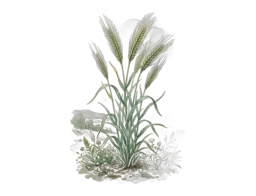
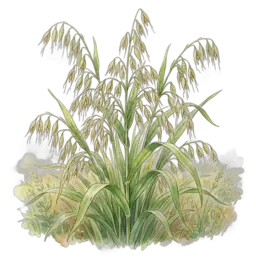
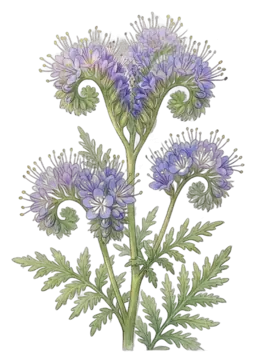
Group it in the same bedPlants with the same watering or the same sun
They are not essential companions, but you will not have to water or position them differently.