
Credits and licences
- #1 — vueltaalhuerto illustration
- #2 — vueltaalhuerto illustration
- #3 — vueltaalhuerto illustration
- #4 — vueltaalhuerto illustration
- #5 — vueltaalhuerto illustration
- #6 — vueltaalhuerto illustration
- #7 — vueltaalhuerto illustration
- #8 — vueltaalhuerto illustration
- #9 — vueltaalhuerto illustration
- #10 — vueltaalhuerto illustration
Giant granadilla
and 1 more names
square-stemmed passion flowerGiant granadilla is sown in seed trays from February to March, and planted out in May. It is harvested from October to December (about 365 days to the first harvest). Grow it in full sun, 400 cm apart, with moderate watering. Dates are for a mild temperate climate in the northern hemisphere; the calendar below adjusts them to your zone.
What else to sow in February and March
A highly vigorous climbing passionflower, reaching 10 m or more in a warm season, with square, winged stems that cling to pergolas and trellises with tendrils. The leaves are large, oval or heart-shaped, with large leaf-like stipules at the base of the leaf stalk. The very showy flowers have fleshy salmon-pink and white petals and a corona of filaments banded in purple, white and red. The fruit is a large, elongated oval, 15 to 30 cm long, with smooth yellowish-green skin, a thick white wall and juicy, sweet-and-sour pulp surrounding the flat, dark seeds. It is a plant for warm, humid climates: it needs a minimum of about 13 °C in winter and does not survive frost, so in Spain it is only realistic in the Canary Islands and in very sheltered spots on the warm coast, and elsewhere in a greenhouse. The flowers usually need hand pollination, in the morning and a few hours after they open. Its roots, leaves and green fruits are not eaten. It is not listed in the Spanish Catalogue of Invasive Alien Species (RD 630/2013 and amendments) or on the EU list (Reg. 1143/2014).
Family and origin: Passion flower family (Passifloraceae) · native to Tropical America (probably northern South America and Central America); grown throughout the tropics · More plants from South America
01In your area
How will it do in your garden?
Year calendar
| Task | J | F | M | A | M | J | J | A | S | O | N | D |
|---|---|---|---|---|---|---|---|---|---|---|---|---|
| Seed trayFeb–Mar | no | yes | yes | no | no | no | no | no | no | no | no | no |
| Plant / transplantMay | no | no | no | no | yes | no | no | no | no | no | no | no |
| HarvestOct–Dec | no | no | no | no | no | no | no | no | no | yes | yes | yes |
| FloweringJun–Sep | no | no | no | no | no | yes | yes | yes | yes | no | no | no |
| PruningFeb–Mar | no | yes | yes | no | no | no | no | no | no | no | no | no |
| CuttingsMay–Jul | no | no | no | no | yes | yes | yes | no | no | no | no | no |
Its life cycle at a glance
Swipe and tap a stage to see its details.
02Planting
Where and how to plant it
Sow the seed 1 cm deep; leave 4 m between plants and 4 m between rows; give it a stake from the start.
4 m between plants · 4 m between rows
Seed at a depth of 1 cm; seedlings go in with the root ball level with the soil.
- In a square-foot bed
- 1 plant every 196 squares30 × 30 cm squares
- Transplanting
- May
- Seed tray
- Feb–Mar
- Germination
- ~21 days
- TipProtect ripe fruits from rats and birds with netting.
03Care
Care through the year
Sun and aspectFull sun · 8 h of sun · South or south-west, with nothing casting shade at midday
- Too little sun
- Ideal range
- Plenty of sun
South or south-west, with nothing casting shade at midday
Moderate sun: Copes with full sun, but give it some shade during heatwaves.
Plenty of light and warmth; against a south-facing wall or in a greenhouse, with light shade from the strongest sun if grown under glass. Below 10 to 13 °C it stops growing and the foliage can be damaged; the cold figure is approximate.
- TipPlant it in spring, once there is no longer any risk of cold, in a sunny, sheltered spot, next to a pergola or a very sturdy trellis: the plant is vigorous and heavy.
WateringMoist but never waterlogged · summer: every 2-3 days
- Summerevery 2-3 days12 L per tree/week
- Spring / Autumnevery 4-5 days6 L per tree/week
- Winterevery 2-3 weeks1.8 L per tree/week
Moist but never waterlogged: Water before the surface is completely dry. Never puddles. Mulch: straw or dry plant material cuts watering by 30-50 %.
Water regularly and keep the soil cool and moist in summer, especially during flowering and while the fruit swells, but with good drainage: waterlogging rots it. In winter, give just enough so that it does not dry out completely. A loose soil rich in organic matter, with mulch, suits it.
When to water? Push your finger 3 cm into the soil next to the base of the plant:
- Damp: soil sticks to your finger. Do not water today. The moisture is fine.
- Cool but clean, no mud. Water early tomorrow if it stays like this, or this evening.
- Dry and dusty. Water now, and deeply. This is not where it likes to be.
- Common mistakeOverwatering in summer swells the fruit but takes away its flavour.
Soil and feedingpH 5.5–7.5 · Deep, free-draining, not too rich soil
Deep, free-draining, not too rich soil.
Topsoil + 20-30 % coarse sand or fine gravel. Little compost.
High: wet feet rot the vine.
This plant prefers a pH between 5.5 and 7.5 (slightly acidic to slightly alkaline).
- Very fertile soil gives lots of leaf and shoots, little fruit and poor quality.
- Frequent watering in summer swells the fruit and takes away its sugar.
PruningWhen: Feb–Mar
Pruning time for this plant: Feb–Mar.
- TipPrune it every year at the end of winter to control its size and encourage young wood, which is what bears the flowers.
- TipWinter pruning concentrates the sap and improves next year's fruit.
- Common mistakeNot pruning leaves an unproductive tangle that is prone to disease.
Common mistakes and tips
- TipFor the fruits to set, hand pollination is usually needed: with a soft brush, in mid-morning and no more than about four to six hours after the flower opens, transfer pollen from one flower to another (sources disagree on how necessary this is when insects are present).
- TipGive it a sturdy support (pergola, wires) from the start.
04Harvest
Harvesting and storing
Harvest in Oct–Dec; the first, about 365 days after sowing.
- TipHarvest when the fruit turns yellow.
- TipSize, time to harvest, months and cold tolerance are approximate.
05Propagation
Make new plants
The most common method is to sow the seed, taken from a fully ripe fruit and washed to remove the aril; in a warm seed tray (20 to 30 °C) it germinates in two or three weeks, although with less warmth it can take weeks longer. Seedlings are not all identical. It can also be propagated from semi-ripe cuttings with two nodes in spring and summer, rooted in moist sand with warmth, and by layering; these methods reproduce a plant that fruits well.
Seeds: how to germinate them~21 days
06Uses and health
What it is used for, and with what care
WARNING: only the pulp of the fully ripe fruit is eaten. Like other passionflowers, the leaves, stems and unripe fruits may contain cyanogenic compounds, and some sources describe the roots as poisonous: do not use any part of the plant in herbal teas or home remedies. Some people with latex or tropical fruit allergies may react to the pulp. There are no reliable data for dogs and cats: do not let them chew the leaves, stems or green fruits. Do not confuse it with passion fruit (Passiflora edulis) or the ornamental blue passionflower (Passiflora caerulea): they are different species with much smaller fruits.
- Properties
- The ripe pulp is a refreshing fruit containing vitamin C and fibre. No solid health uses are attributed to it and the plant should not be used as a remedy.
- Uses
- The fully ripe pulp is eaten on its own or with a little sugar, or strained for juices, smoothies, ice creams and desserts. The spongy white wall and the seeds are not eaten.
For guidance only; this is not medical treatment and does not replace advice from a doctor or vet.
07Companions and related plants
What to plant it with
Good companions
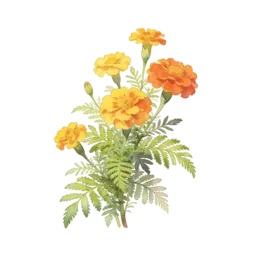
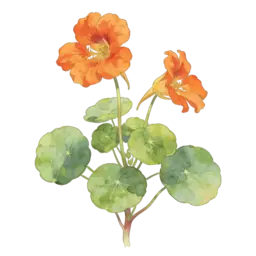
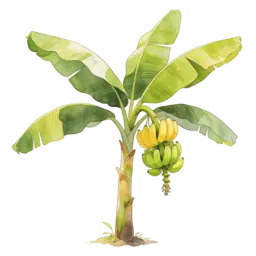
Group it in the same bedPlants with the same watering or the same sun
They are not essential companions, but you will not have to water or position them differently.