
Credits and licences
- #1 — vueltaalhuerto illustration
- #2 — vueltaalhuerto illustration
- #3 — vueltaalhuerto illustration
- #4 — vueltaalhuerto illustration
- #5 — vueltaalhuerto illustration
- #6 — vueltaalhuerto illustration
- #7 — vueltaalhuerto illustration
- #8 — vueltaalhuerto illustration
- #9 — vueltaalhuerto illustration
- #10 — vueltaalhuerto illustration
- #11 — vueltaalhuerto illustration
- #12 — vueltaalhuerto illustration
Watermelon radish
Watermelon radish is sown directly outdoors from August to September. It is harvested from October to December (about 60 days to the first harvest). Grow it in full sun, 15 cm apart, with moderate watering. Dates are for a mild temperate climate in the northern hemisphere; the calendar below adjusts them to your zone.
What else to sow in August and September
A large radish with greenish-white skin and fuchsia-pink flesh, sweet and only mildly peppery. Spectacular raw.
Family and origin: Cabbage family (Brassicaceae) · native to China · More plants from Far East
01In your area
How will it do in your garden?
Year calendar
| Task | J | F | M | A | M | J | J | A | S | O | N | D |
|---|---|---|---|---|---|---|---|---|---|---|---|---|
| Direct sowingAug–Sep | no | no | no | no | no | no | no | yes | yes | no | no | no |
| HarvestOct–Dec | no | no | no | no | no | no | no | no | no | yes | yes | yes |
Its life cycle at a glance
Swipe and tap a stage to see its details.
02Step by step
From seed to harvest, stage by stage
What the plant needs at each point in its life, from the seed to the harvest and on to the next seed. The figures are only a guide: your climate, your soil and the variety will shift them.
Approximate months for a temperate Spanish climate. Choose your zone in the calendar to adjust them.
Stage 1Direct sowing and germinationDirect sowing and germination: Aug–SepGerminates in 3–10 daysRadish is the fastest vegetable in the garden: it is sown directly where it is to grow and comes up in a few days if the soil is moist. Its seed, round and a good size, is easy to handle and to sow thinly.
Radish is the fastest vegetable in the garden: it is sown directly where it is to grow and comes up in a few days if the soil is moist. Its seed, round and a good size, is easy to handle and to sow thinly.
In warm soil it comes up in three to five days; in cold weather it can take ten.
Temperature
min. 5°Cideal 15°C–30°Cmax. 32°CIt germinates over a very wide range of temperatures, but sowings made in strong heat give plants that bolt before the roots swell.
Moisture and watering
Keep the sowing row moist with gentle watering that does not uncover the seed until it comes up.
How often: Every one or two days if it does not rain.
Light · Not important
Light makes no difference to germination; as soon as the seedlings emerge they need direct sun so that they do not become leggy.
Container · Straight into the ground
Sow thinly along drills 1-1.5 cm deep and 15-25 cm apart. In a trough or pot, 15 cm of depth is enough for small radishes; daikon needs at least 30-40 cm.
Potting mix or soil
pH 6–7.5
It prefers loose, cool, stone-free soil that holds some moisture. In heavy soils the root grows misshapen and splits easily.
Nutrients
Mainly needs: no fertiliser
It needs no fertiliser to germinate; the compost left over from a previous crop is enough.
Protection
- Cover the sowing with fine mesh or horticultural fleece if flea beetles are a problem in your area, as they attack as soon as the seedlings emerge.
Common problems
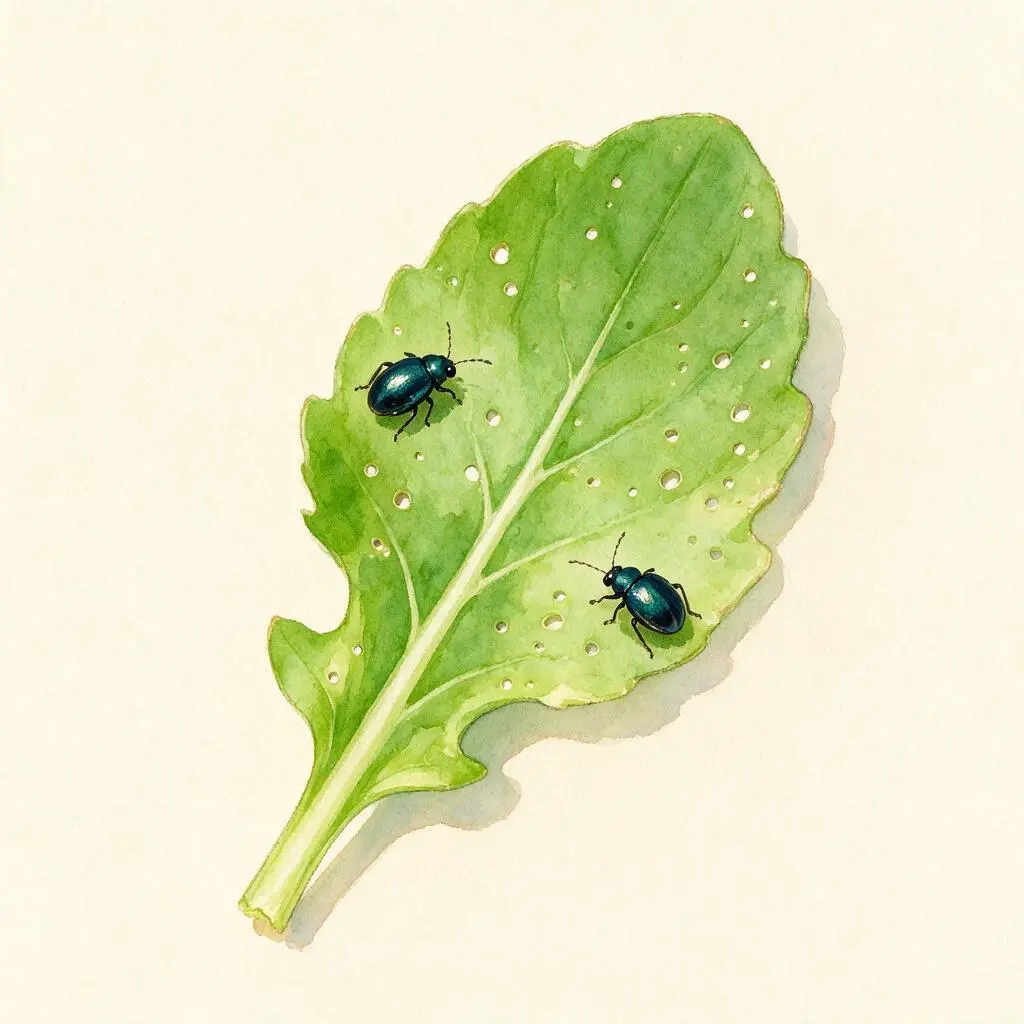
- Flea beetle. Small jumping beetles that riddle the seed leaves with tiny holes; in dry weather they can wipe out a sowing.
Warning signs
The seedlings come up with their seed leaves full of tiny holes.
Likely cause: Flea beetles, especially in spring when the weather is dry and warm.
What to do: Water often, because moisture holds them back, and cover the next sowing with fine mesh.
Reference photos
When it moves on to the next stageMove on to thinning once the two heart-shaped seed leaves have opened and the first true leaf, slightly rough, is showing.
Stage 2ThinningThinning: Aug–SepLasts about 5–10 daysRadishes are not transplanted: they are thinned. Giving each plant its own space from the start is what decides whether the root swells round or stays as thin as a thread, because crowded radishes only produce leaves.
Radishes are not transplanted: they are thinned. Giving each plant its own space from the start is what decides whether the root swells round or stays as thin as a thread, because crowded radishes only produce leaves.
Thin once, one to two weeks after the seedlings emerge.
Temperature
min. 0°Cideal 10°C–20°Cmax. 28°CAbove 25 °C and with long days it tends to bolt without forming a root.
Moisture and watering
Water a little before thinning so that the seedlings come out easily, and again afterwards to settle the soil.
How often: Every two days if it does not rain.
How much: As a guide, 3 to 5 L per square metre each time you water.
Light · Full sun
At least 5 h of light
Full sun, or light partial shade for late spring sowings.
Container · Straight into the ground
Leave 3 to 5 cm between small round radishes and 10 to 15 cm between large ones, such as daikon or watermelon radish, with 15-25 cm between rows.
Potting mix or soil
Firm the soil gently around the seedlings that remain so that they do not flop over.
Nutrients
Mainly needs: no fertiliser
It needs no fertiliser at this stage.
Jobs for this stage
- Pull out or snip off the surplus seedlings at ground level; the most tender ones can be eaten in salads as microgreens.
- Weed by hand, because radishes cannot cope with competition in such a short cycle.
Common problems
- Flea beetle. They remain the main danger while the plant has only a few leaves.
- Slugs and snails. They nibble the tender leaves and the exposed root, especially after rain.
Warning signs
The plants produce plenty of leaves but the base does not swell.
Likely cause: They are too close together, they lack sun or there is too much nitrogen.
What to do: Thin them further and, for the next sowing, choose a sunny spot without fresh manure.
Reference photos
When it moves on to the next stageMove on to the growing stage when the plants are at their final spacing and the base of the stem begins to swell.
Stage 3Root developmentRoot development: Aug–OctLasts about 45–70 daysWithin a few weeks the root swells and takes on its colour. Growth is so fast that any shortage of water shows at once: a radish that goes thirsty becomes hot, fibrous or hollow.
Within a few weeks the root swells and takes on its colour. Growth is so fast that any shortage of water shows at once: a radish that goes thirsty becomes hot, fibrous or hollow.
Large autumn radishes need two to two and a half months to swell.
For this varietyLarge autumn radishes, such as daikon and watermelon radish, are sown in mid to late summer so that they swell in the cool of autumn. They need more room, about 10-15 cm between plants, and deep soil; if they are sown in spring they bolt before forming a root.
Temperature
min. -2°Cideal 10°C–20°Cmax. 28°CAt 10-20 °C it forms tender, mild roots; in heat and long days it bolts and the root turns woody. Autumn radishes tolerate light frosts.
Moisture and watering
Water often and evenly so that the soil never dries out. A heavy watering after dry days splits the root, and drought makes it hot and spongy.
How often: Every two or three days in spring and autumn; daily in hot weather.
How much: As a guide, 3 to 5 L per square metre each time you water.
Light · Full sun
5–10 h of light
Full sun in spring and autumn; for late spring sowings, light shade delays bolting.
Potting mix or soil
Keep the soil crumbly, with a thin mulch to hold moisture between waterings.
Nutrients
Mainly needs: no fertiliser
In such a short cycle it needs no feeding. Too much nitrogen gives lots of leaf and little root.
Protection
- Keep the fine mesh over the row if flea beetle or cabbage root fly is present in your garden.
- In spring, shade netting during the hottest hours extends the time before it bolts.
Jobs for this stage
- Sow a small batch every two weeks in spring and autumn, rather than a lot at once, so that you are not left with radishes past their best.
- Pull one or two before the expected date to check their size.
Common problems
- Flea beetle. It peppers the leaves with holes and slows the swelling of the root, especially in a dry spring.
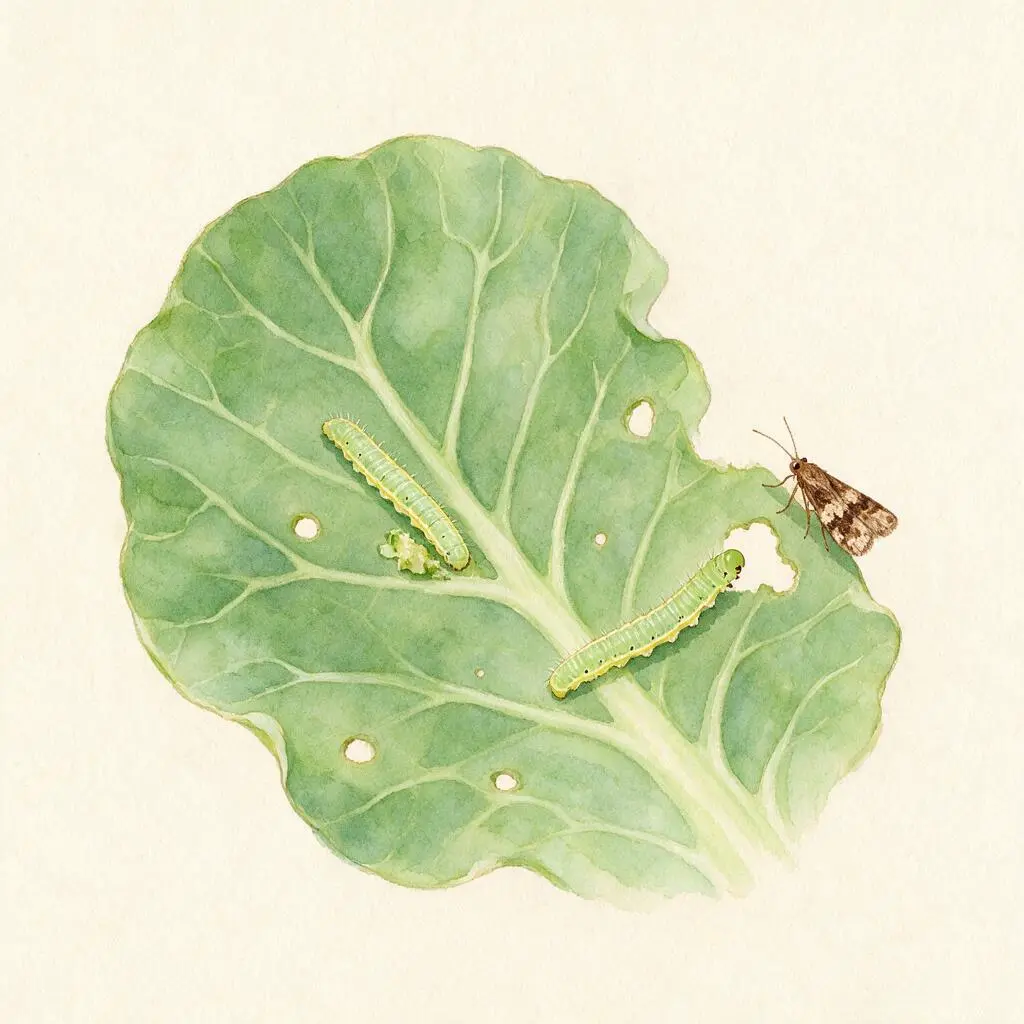
- Diamondback moth. Small green caterpillars that graze the undersides of the leaves in the warm months.
- Cabbage white caterpillars. On large autumn radishes they can devour the leaves if the plants are not checked.
- Cabbage root fly. Its white larvae tunnel into the root, which turns brown and rots; they attack mainly in spring and autumn.
- Aphids. Greyish colonies on the undersides of the leaves, especially in mild autumns.
Warning signs
The radish is very hot, tough or hollow inside.
Likely cause: Lack of water, heat, or it has been left too long.
What to do: Water regularly, harvest as soon as the roots reach their size and sow in small batches.
The root has tunnels and brown patches.
Likely cause: Cabbage root fly larvae.
What to do: Pull up and remove the damaged plants, cover the next sowings with fine mesh and do not grow brassicas in the same spot again.
Reference photos
When it moves on to the next stageIt is ready when the root has reached the size typical of its variety and the shoulder shows smooth and brightly coloured above the soil.
Stage 4HarvestHarvest: Oct–DecLasts about 5–30 daysSpring radishes are at their best for a very short time, only a few days, so check them often and pull them as soon as they reach their size. Large autumn radishes stand much longer in the ground.
Spring radishes are at their best for a very short time, only a few days, so check them often and pull them as soon as they reach their size. Large autumn radishes stand much longer in the ground.
A few days for small radishes; several weeks for autumn ones.
For this varietyStart lifting daikon when the root is about 20 cm long, and watermelon radish when it reaches 5 to 10 cm across. Both will stand in the ground through autumn, until the hard frosts, without spoiling as quickly as small radishes. The Watermelon radish profile gives about 60 days to the first harvest; treat it as a rough guide.
Temperature
min. -4°Cideal 8°C–20°Cmax. 28°CIn hot weather the root goes past its best in a few days.
Moisture and watering
Keep watering regularly until the end; if the soil is hard, water the evening before so that you can pull them without breaking them.
How often: Every two or three days, depending on the weather.
Light · Full sun
At least 5 h of light
Full sun in spring and autumn.
Nutrients
Mainly needs: no fertiliser
No feeding is needed at harvest time.
Jobs for this stage
- Pull the thickest ones in the row first and let the rest finish swelling.
- Use the tender leaves too; they are good in omelettes, soups or stir-fried.
Harvesting
When it is ready: For round spring radishes, harvest when the root is about 2-3 cm across, smooth and brightly coloured, three to five weeks after sowing. Any bigger and they turn spongy and hot. Autumn radishes are harvested much larger, depending on the variety.
How to pick: Hold the leaves at the base, close to the ground, and pull gently. With large radishes, loosen the soil first with a fork so as not to snap the root.
Time of day: Pull them in the morning, when the root is cool and firm.
Yield: As a guide, 1 to 2 kg per square metre for small radishes, which are harvested within a few weeks, and quite a lot more for large autumn ones.
How to store: Cut off the leaves, leaving 1-2 cm of stalk, and store the roots unwashed in a bag in the fridge, where small radishes keep for one or two weeks and large autumn ones for several weeks.
Common problems
- Flea beetle. It does not spoil the root, but it leaves the leaves unfit to eat.
- Cabbage root fly. Roots that stay in the ground for a long time are the worst affected.
Warning signs
The skin cracks and a lengthening stem rises from the centre.
Likely cause: The radish has gone past its best and is starting to bolt.
What to do: Pull the ones that are left and sow another batch; in hot weather they bolt sooner.
Reference photos
When it moves on to the next stageThe cycle ends when you pull the last ones or when a flower stem begins to rise from the centre.
Stage 5Bolting and seed podsBolting and seed pods: May–JulLasts about 20–40 daysWith heat and long days the radish sends up a branched flower stem with white or mauve flowers, which then form fleshy pods. In the kitchen this marks the end of the root, but the tender pods are edible and, if you want seed, it is the start of the last stage.
With heat and long days the radish sends up a branched flower stem with white or mauve flowers, which then form fleshy pods. In the kitchen this marks the end of the root, but the tender pods are edible and, if you want seed, it is the start of the last stage.
From when the stem rises until the first pods have formed.
Temperature
min. 5°Cideal 15°C–25°Cmax. 30°CMoisture and watering
If you are going to save seed, keep watering moderately until the pods have formed and then cut back on water.
How often: Every three or four days, depending on the heat.
Light · Full sun
At least 6 h of light
It needs full sun to set seed.
Jobs for this stage
- If you are not going to save seed, pull up the bolted plants and free the space for another sowing.
- If you are saving seed, leave at least half a dozen plants together and support the stems, which grow over a metre tall and blow over in the wind.
- Try the green, tender pods, which are crunchy and slightly peppery, raw or stir-fried.
Common problems
- Aphids. They cluster on the tender flower stems and the young pods.
Warning signs
Spring radishes bolt before forming a root.
Likely cause: Late sowing in heat and long days, or lack of water.
What to do: Sow earlier in spring or wait until late summer, and water regularly.
Reference photos
When it moves on to the next stageMove on to the seed stage when the pods stop growing and begin to turn straw-coloured.
Stage 6End of the cycleEnd of the cycle: Oct–DecLasts about 1–7 daysRadishes free up their space very quickly and hardly tire the soil, which makes them the ideal crop to grow between slower ones. The important thing when you finish is not to follow on with brassicas in the same place.
Radishes free up their space very quickly and hardly tire the soil, which makes them the ideal crop to grow between slower ones. The important thing when you finish is not to follow on with brassicas in the same place.
Jobs for this stage
- Pull up the remains and put them on the compost heap if they are healthy; roots with tunnels are best removed from the garden.
- Use the gap for another sowing of radishes elsewhere or for a crop from another family, such as lettuces, carrots or beans.
- Do not sow radishes, turnips or cabbages in the same place in succession, so that cabbage root fly and clubroot do not build up.
Common problems
- Clubroot. Roots with swellings and plants that wilt; its spores survive for years in the soil and are fought with rotation and a pH close to neutral.
Warning signs
The roots of pulled plants have misshapen swellings.
Likely cause: Clubroot.
What to do: Do not compost those roots, and keep brassicas out of that bed for several years.
Stage 7Seeds and propagationSeeds and propagation: Jun–AugLasts about 45–60 daysSpring radishes flower in the same year they are sown, as soon as the warm weather arrives, which makes them one of the easiest brassicas for saving seed. Autumn radishes, on the other hand, usually flower the following spring after spending the winter in the ground. With spring radishes the seed is collected in summer, from June to August in a temperate climate, and stored well it keeps for four to five years.
Spring radishes flower in the same year they are sown, as soon as the warm weather arrives, which makes them one of the easiest brassicas for saving seed. Autumn radishes, on the other hand, usually flower the following spring after spending the winter in the ground. With spring radishes the seed is collected in summer, from June to August in a temperate climate, and stored well it keeps for four to five years.
Six to eight weeks from flower until the pods turn straw-coloured, plus one or two more of drying.
Saving seed
When the seed is ripe: Choose healthy plants that were slow to bolt and have roots typical of the variety. The seed is ripe when the pods turn straw-coloured, dry and hard, six to eight weeks after flowering.
How to extract it: Radish pods do not split open on their own: cut the dry branches, finish drying them under cover and then break them up inside a sack, treading on it or beating it with a stick. Sieve and winnow to separate the seed from the bits of pod.
Drying: Spread the seed in a thin layer, in the shade and somewhere airy, for one or two weeks.
Storage: Store it in a paper envelope inside a tightly closed jar, labelled with the variety and the year, in a cool, dry, dark place.
The seed stays viable for about 4–5 years.
F1 hybrids: Some commercial radishes are F1 hybrids, whose seeds do not produce plants identical to the parent. Save seed only from traditional or open-pollinated varieties.
Cross-pollination: Radishes need pollen from other plants, carried by insects, and cross with any other radish in flower, including daikon, watermelon radish and the wild radish of field margins. Let at least six plants of the same variety flower and keep them several hundred metres away from other radishes, or grow only one variety each year.
Reference photos
Sources and review
Reviewed on 4 November 2026. Approximate figures, written from these sources and the data in this profile.
- Royal Horticultural Society: Radishes, grow your own
- University of Illinois Extension: Radish
- Oregon State University Extension: Radishes
- Utah State University Extension: Radish (growing guide)
- Iowa State University Extension: When should radishes be harvested?
- Seed Savers Exchange: How to grow and save radish seeds
- Vuelta al Huerto catalogue data (germination, calendar, tolerances and Visual harvest guide)
03Planting
Where and how to plant it
Sow the seed 1.5 cm deep; leave 15 cm between plants and 25 cm between rows.
15 cm between plants · 25 cm between rows
Seed at a depth of 1.5 cm.
- In a square-foot bed
- 4 plants per square30 × 30 cm squares
- Direct sowing
- Aug–Sep
- Germination
- ~5 days
- TipSow in small groups directly where they are to grow: the roots do not take well to transplanting.
- Common mistakeNot thinning the seedlings: without space, the roots come out small and misshapen.
04Care
Care through the year
Sun and aspectFull sun · 8 h of sun · shade in summer
- Too little sun
- Ideal range
- Plenty of sun
South or south-west, with nothing casting shade at midday
Strong sun: Loves full midday sun and high temperatures.
WateringMoist but never waterlogged · summer: every 2-3 days
- Summerevery 2-3 days2 L per plant/week
- Spring / Autumnevery 4-5 days1 L per plant/week
- Winterevery 2-3 weeks0.3 L per plant/week
Moist but never waterlogged: Water before the surface is completely dry. Never puddles. Mulch: straw or dry plant material cuts watering by 30-50 %.
When to water? Push your finger 3 cm into the soil next to the base of the plant:
- Damp: soil sticks to your finger. Do not water today. The moisture is fine.
- Cool but clean, no mud. Water early tomorrow if it stays like this, or this evening.
- Dry and dusty. Water now, and deeply. This is not where it likes to be.
- TipWater often and regularly: intermittent drought makes radishes hot and fibrous.
Soil and feedingLoose, deep, stone-free soil
Loose, deep, stone-free soil.
High: constant moisture deforms the root.
This plant prefers a pH between 6.0 and 7.0 (slightly acidic to neutral).
- TipLoose, stone-free soil for a smooth, well-formed root.
- TipLoose, crumbly, stone-free soil lets the root swell straight.
- Common mistakeToo much nitrogen: plenty of leaf and very little root.
05Harvest
Harvesting and storing
Harvest in Oct–Dec; the first, about 60 days after sowing.
06Uses and health
What it is used for, and with what care
- Properties
- A pink-fleshed radish, decorative and rich in vitamin C.
- Uses
- Raw in salads.
For guidance only; this is not medical treatment and does not replace advice from a doctor or vet.
07Companions and related plants
What to plant it with
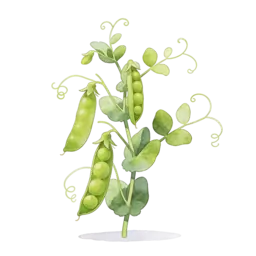
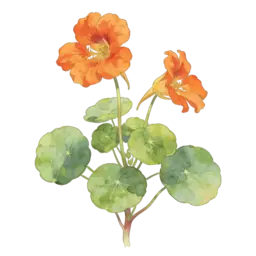
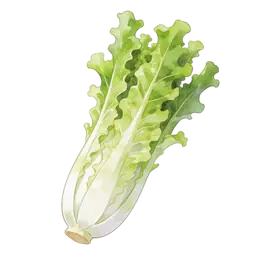
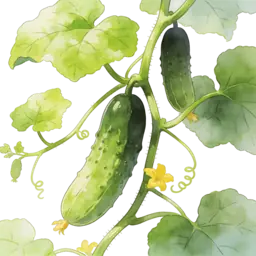
Group it in the same bedPlants with the same watering or the same sun
They are not essential companions, but you will not have to water or position them differently.
Same watering · Moderate watering
Compare with similar varieties
| Variety | Sowing | Harvest | Days | Spacing | Difficulty |
|---|---|---|---|---|---|
| Radish 'Cherry Belle' | Feb–May, Sep–Oct | Mar–Jun, Oct–Nov | ~25 | 5 cm | Easy |
| Daikon radish | Jul–Sep | Oct–Dec | ~60 | 15 cm | Moderate |
| Horseradish | Feb–Mar | Oct–Dec | ~200 | 40 cm | Easy |
| Watermelon radish | Aug–Sep | Oct–Dec | ~60 | 15 cm | Easy |
08Pests and diseases
Critters and ailments to keep an eye on
The most common ones on this plant. Tap one to see how to recognise it and what to do.
No known toxicity to people or pets
Not toxic to people or pets.