In this article (14 sections)
- The 5 basic ingredients
- Formula A: fruiting vegetables (tomato, pepper, courgette)
- Formula B: leaf vegetables (lettuce, chard, spinach, rocket)
- Formula C: Mediterranean herbs (rosemary, thyme, sage, lavender)
- Formula D: green herbs (basil, parsley, coriander, chives)
- Formula E: strawberry
- Formula F: fruit trees in pots (citrus, fig, olive)
- Formula G: acid-loving plants (blueberry, camellia, rhododendron)
- Deadly mistakes in pots
- Garden soil on its own
- No drainage
- Not enough volume
- Not renewing
- Trick: make it yourself and save
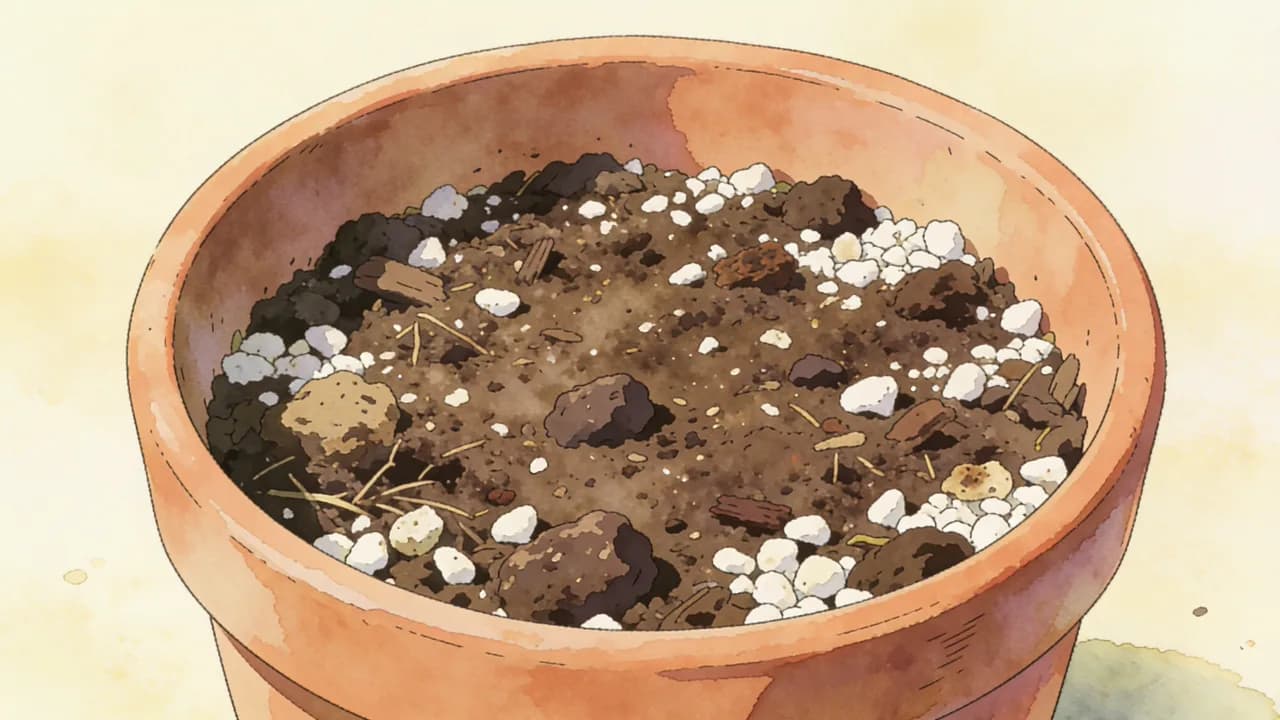
Peat on its own has little food and, once it dries out completely, it is hard to wet again. Garden soil in a pot compacts. The solution is to mix. Here are formulas by type of plant with ingredients you can find in any garden centre.
The percentages are by volume: for example, 40 % means four parts out of ten, measured with the same bucket or container.
The 5 basic ingredients
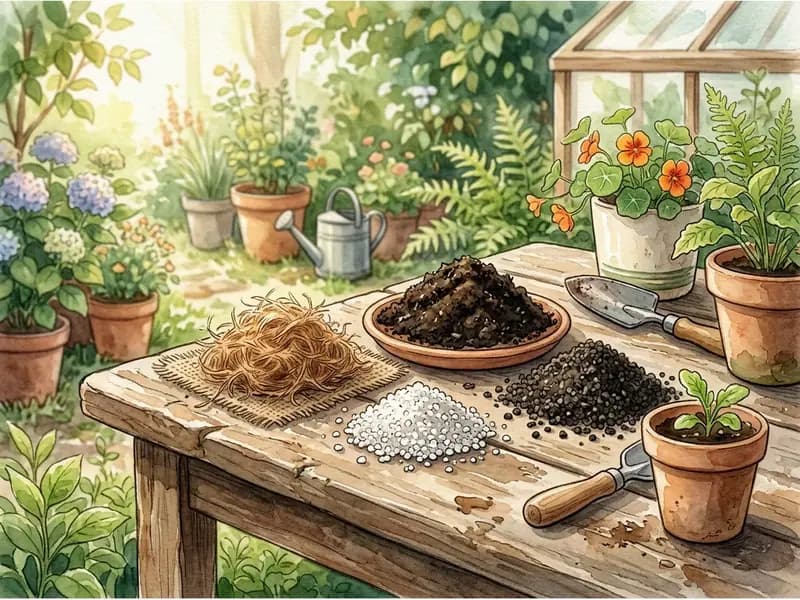
- Blond or black peat: it holds water, is light and supplies few nutrients. It is the base of almost all commercial mixes.
- Coconut fibre: an alternative to peat (which is extracted from peat bogs, a resource that regenerates very slowly). It holds water and drains well. If it comes as a pressed block, rinse it first to remove the salts.
- Compost or worm castings: they supply the nutrients. They should be well matured and sieved.
- Perlite: white, light beads that aerate and favour drainage.
- Coarse river sand (2-4 mm, 0.08–0.16 in): it also drains. It must not be beach sand, because of the salt.
With these five ingredients you can prepare all the mixes that follow.
Formula A: fruiting vegetables (tomato, pepper, courgette)
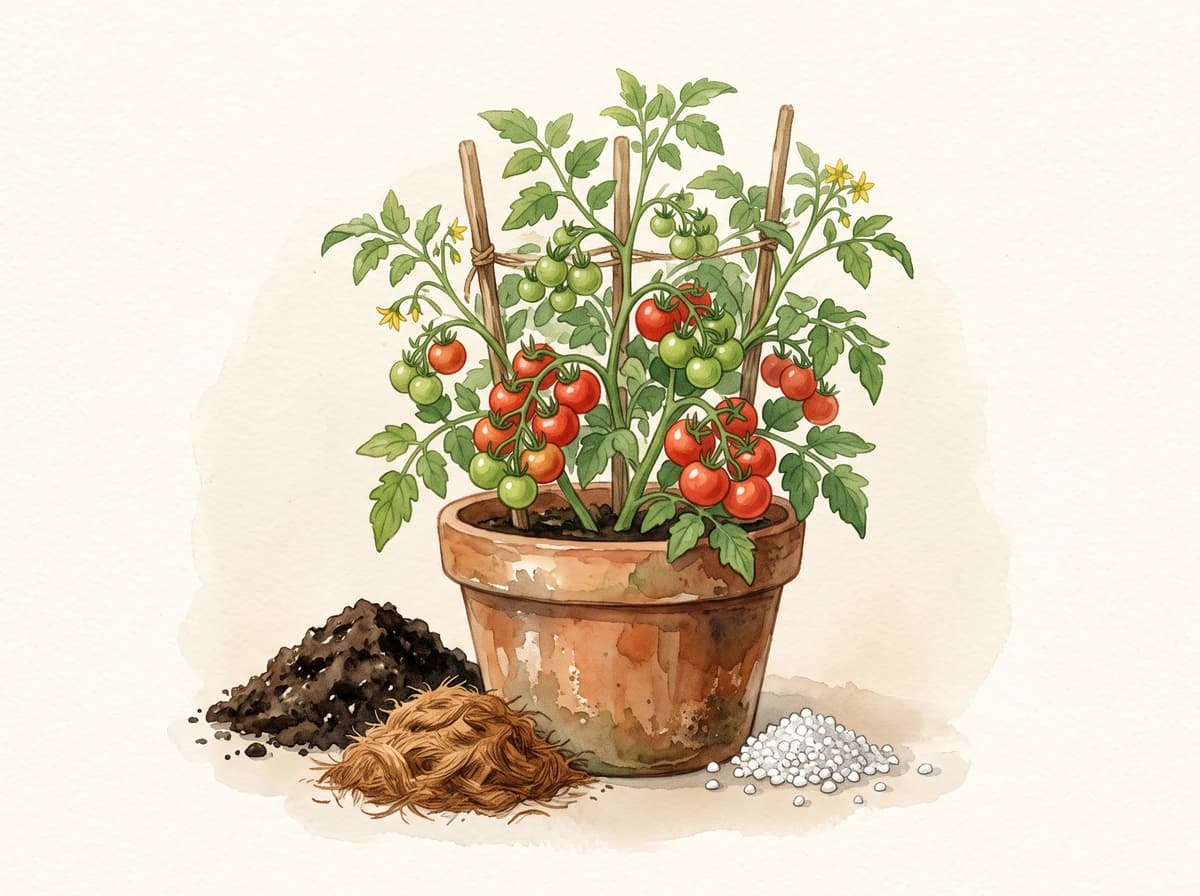
- 40 % coconut fibre or peat
- 30 % compost
- 20 % worm castings
- 10 % perlite
It is a mix rich in organic matter, holds water well and drains. To keep up production, from 4-6 weeks on you have to feed with a liquid organic fertiliser (guano, liquid humus or seaweed extract) every 15 days.
Formula B: leaf vegetables (lettuce, chard, spinach, rocket)
- 50 % peat or coir
- 30 % compost
- 20 % perlite
They ask for fewer nutrients than fruiting ones and have short roots, so it carries more aeration.
Formula C: Mediterranean herbs (rosemary, thyme, sage, lavender)
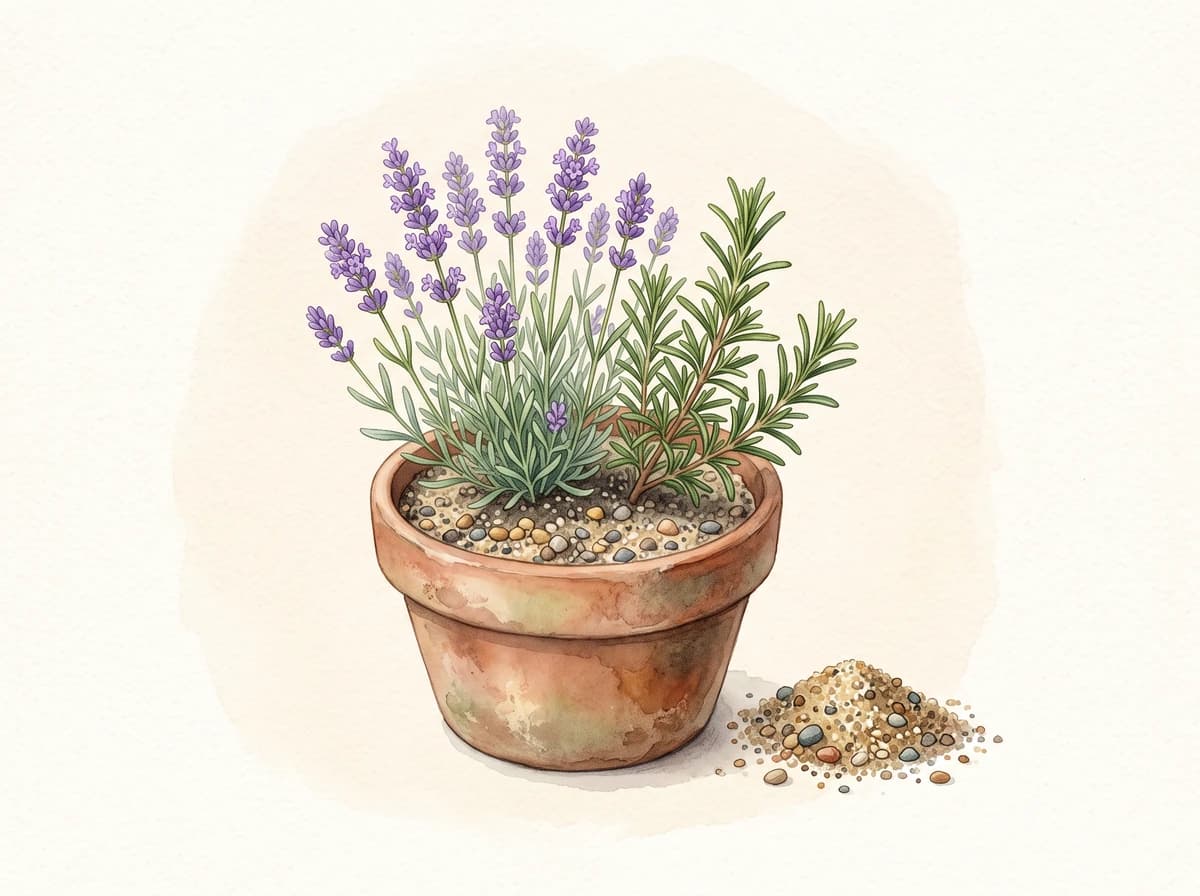
- 40 % peat
- 30 % coarse sand
- 20 % perlite
- 10 % compost
These plants tolerate drought better than excess water, so it is worth making the mix drain very well and carry little compost.
Formula D: green herbs (basil, parsley, coriander, chives)
- 50 % peat or coir
- 30 % compost
- 20 % perlite
It is similar to the leaf one: they ask for constant moisture, but with good drainage.
Formula E: strawberry
- 45 % peat
- 25 % compost
- 15 % worm castings
- 15 % perlite
You can add a handful of vermiculite to keep moisture steadier.
Formula F: fruit trees in pots (citrus, fig, olive)
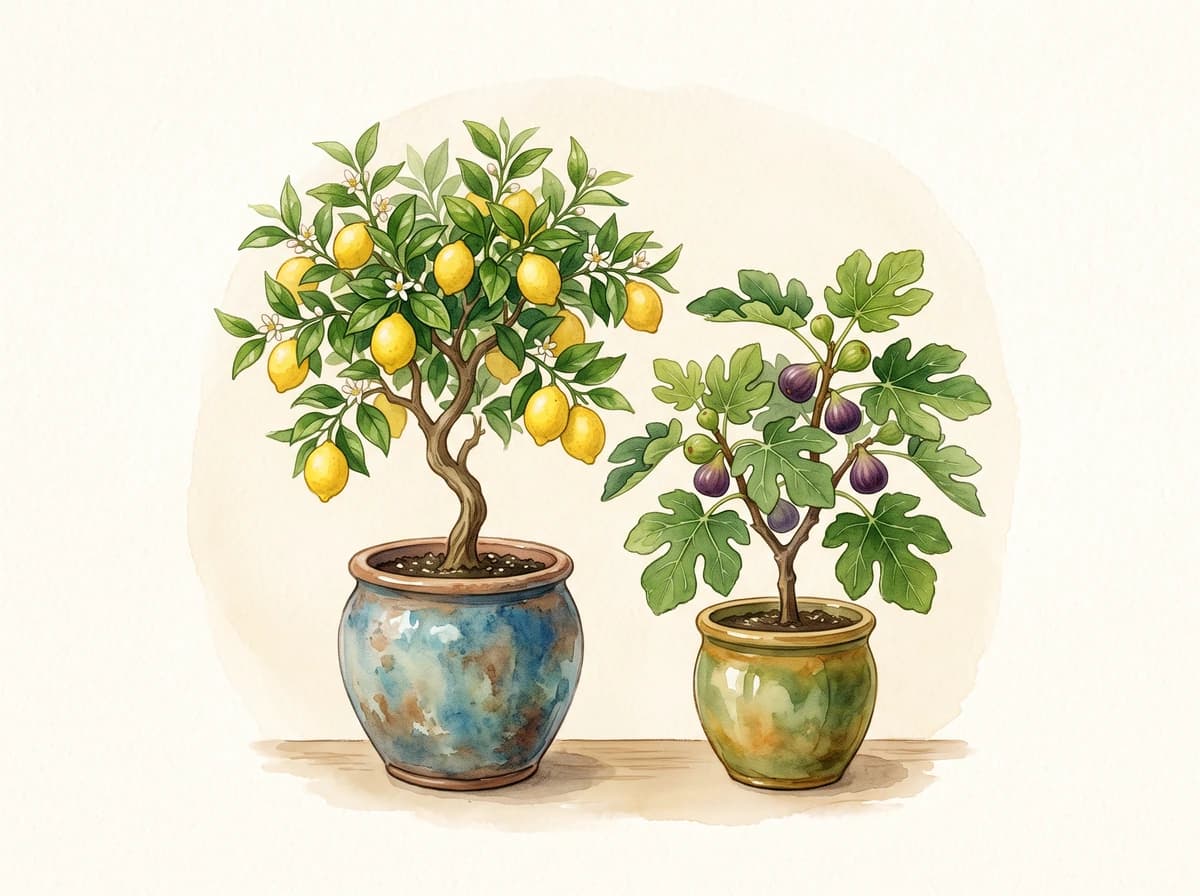
- 40 % peat
- 25 % coarse sand
- 20 % compost
- 15 % perlite
Use a pot of 40 L (about 10.6 US gal) at least and move it to a bigger one every 2-3 years.
Formula G: acid-loving plants (blueberry, camellia, rhododendron)
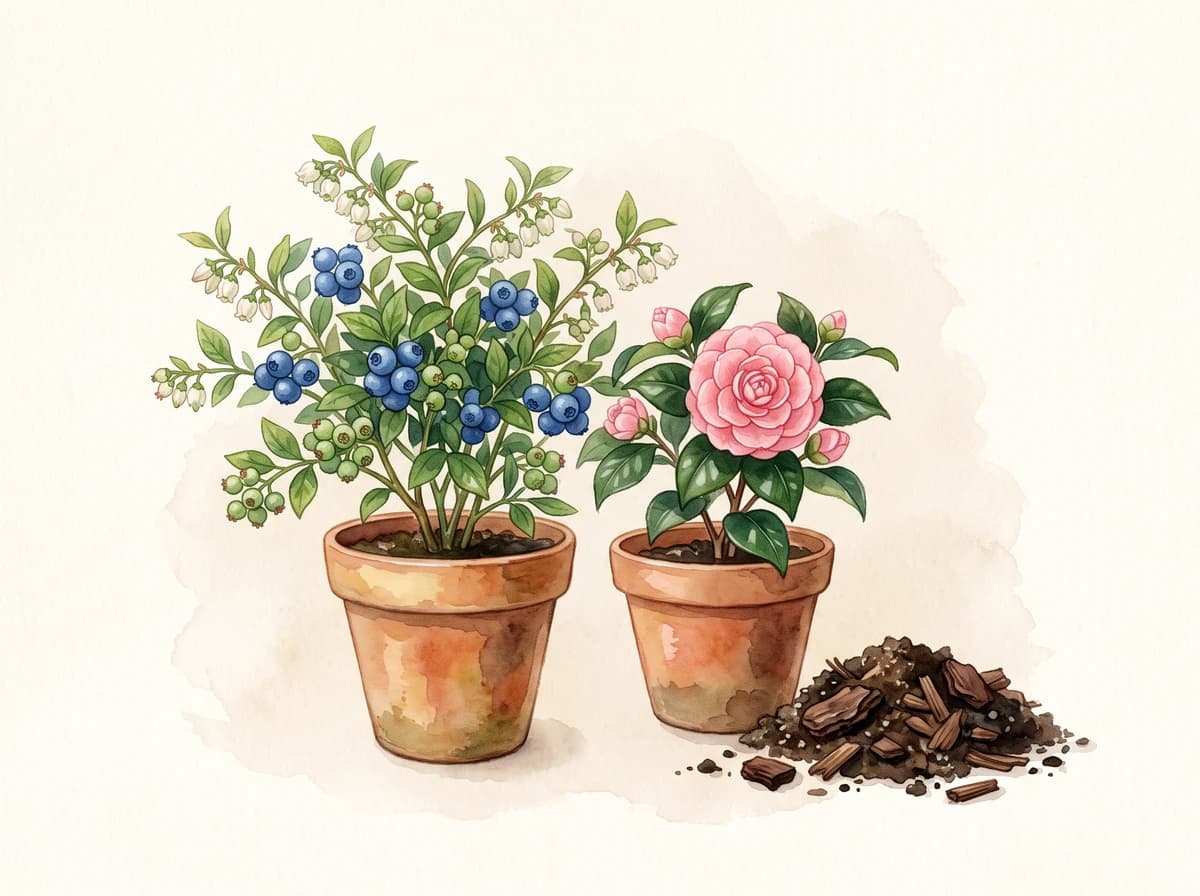
- 60 % acid blond peat (pH 4-5)
- 20 % composted pine bark
- 20 % perlite
It carries no usual compost, because it raises the pH. Water with rainwater if tap water is hard (rich in lime).
Deadly mistakes in pots
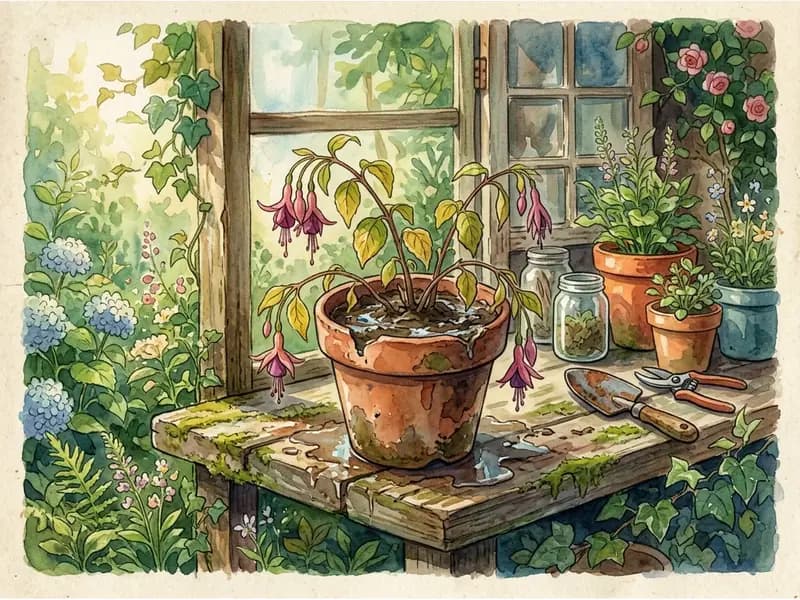
Garden soil on its own
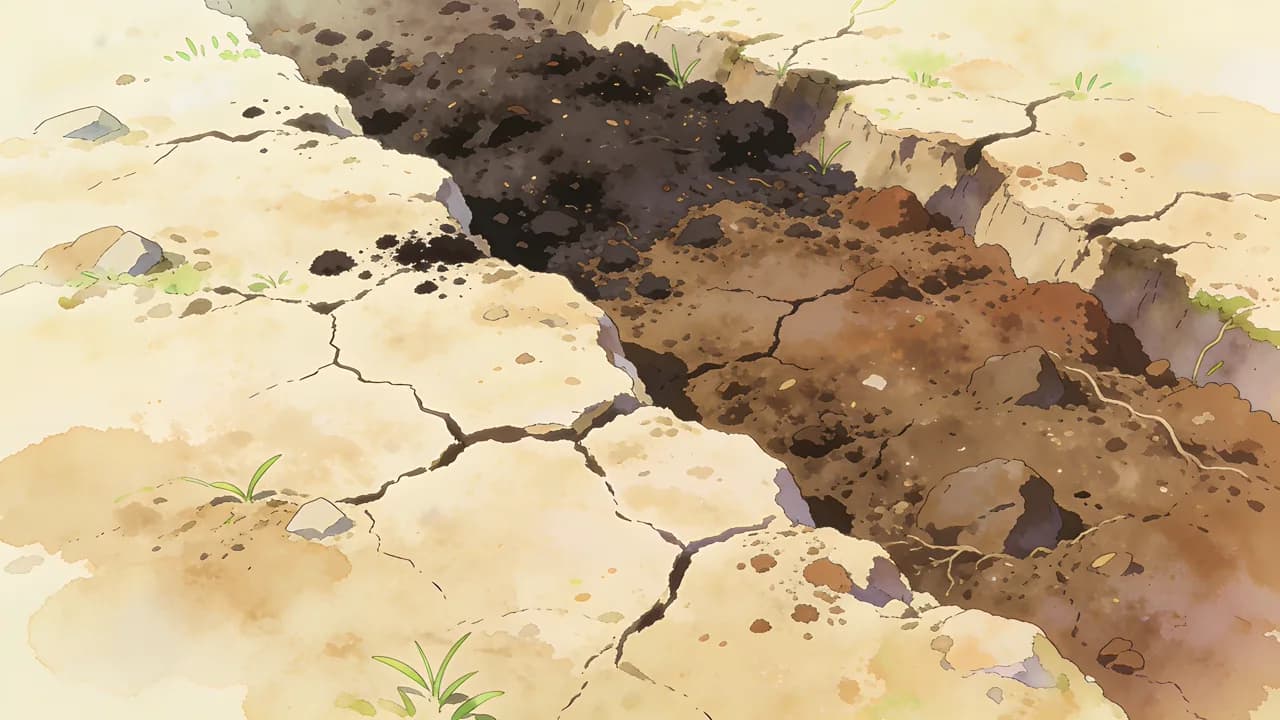
It compacts within a couple of weeks, stops draining and the roots drown. The soil from your garden should only be a small part of the mix (less than 20 %).
No drainage
Every container needs holes in the bottom, and it must not be left with standing water in the saucer. Cover the holes with a mesh or a piece of tile so that the growing medium does not escape. What really prevents waterlogging is an airy mix, not a layer of gravel at the bottom, whose effect is disputed.
Not enough volume
These are indicative minimum volumes per plant:
- Tomato: 25-30 L (about 6.6–7.9 US gal).
- Courgette: 40-50 L (about 10.6–13.2 US gal).
- Pepper: 15-20 L (about 4–5.3 US gal).
- Lettuce: 3-5 L (about 0.8–1.3 US gal).
- Large herb: 10-15 L (about 2.6–4 US gal).
A tomato in a 10 L (about 2.6 US gal) pot usually runs short of water and root. You will find the full table in How to choose the ideal pot.
Not renewing
The nutrients of a new mix last about 4-8 weeks. After that you have to feed with a liquid organic fertiliser (guano or liquid humus) every 15 days on fruiting plants, and less often on leaf plants and on Mediterranean herbs. The following year, renew 30-50 % of the mix with fresh compost.
Trick: make it yourself and save
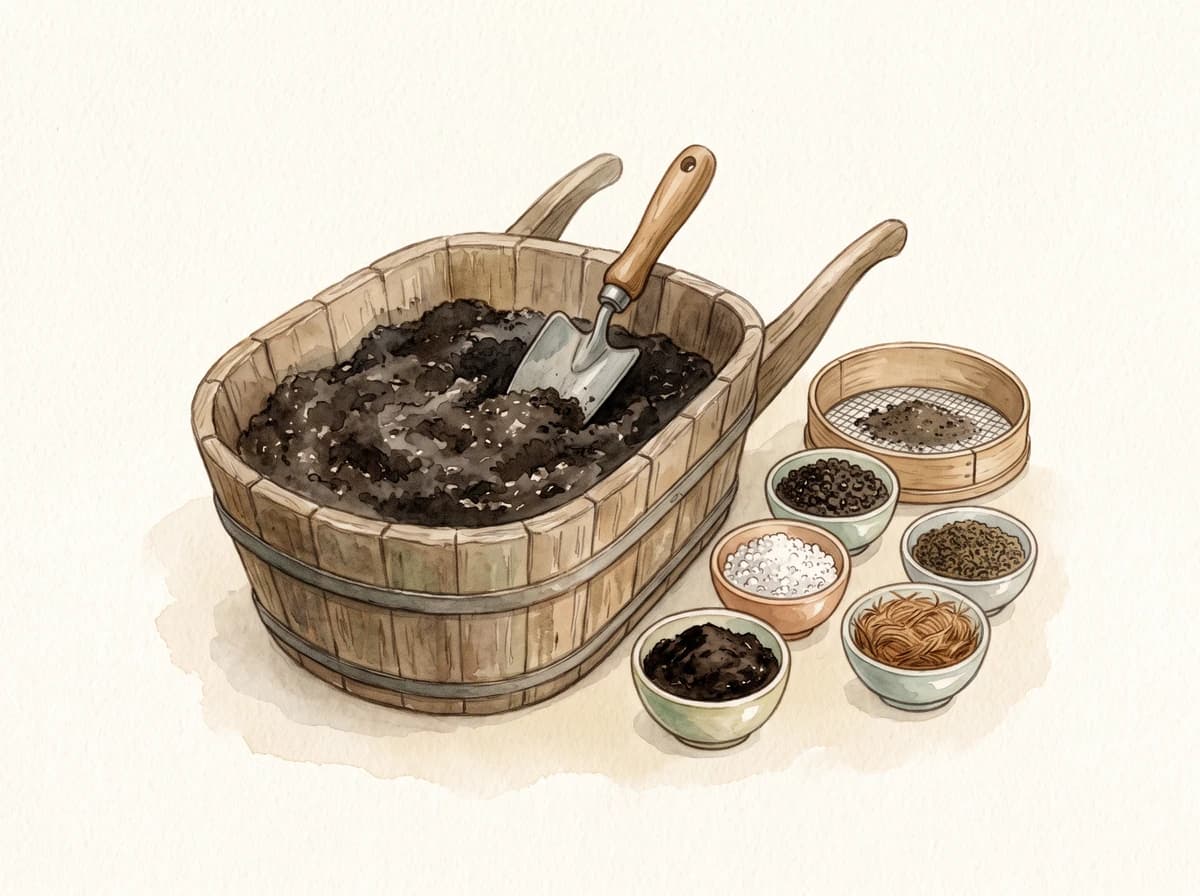
Making the mix at home usually comes out cheaper than buying ready-made “tomato” growing medium, and you know exactly what is in it.

Greens, browns, moisture and troubleshooting.