In this article (25 sections)
- Minimum size by crop
- Key rule: more depth than width
- Materials
- Terracotta (fired clay)
- Plastic
- Wood
- Metal (sheet)
- Felt (geotextile pots)
- Shape of the pot
- Cylindrical
- Rectangular (trough)
- Tall and narrow
- Low and wide (bonsai style)
- Drainage
- Reuse and saving
- Reuse
- Buy cheap
- Mistakes with pots
- Small pot to “start” a tomato
- No drainage
- In the August sun without protection
- Reused growing medium not renewed
- Not feeding
- Trick: double pot
- Budget per balcony
A pot that is too small is one of the first causes of failure in the urban garden. These are the concrete rules by species, and which material and shape suits each case.
Minimum size by crop
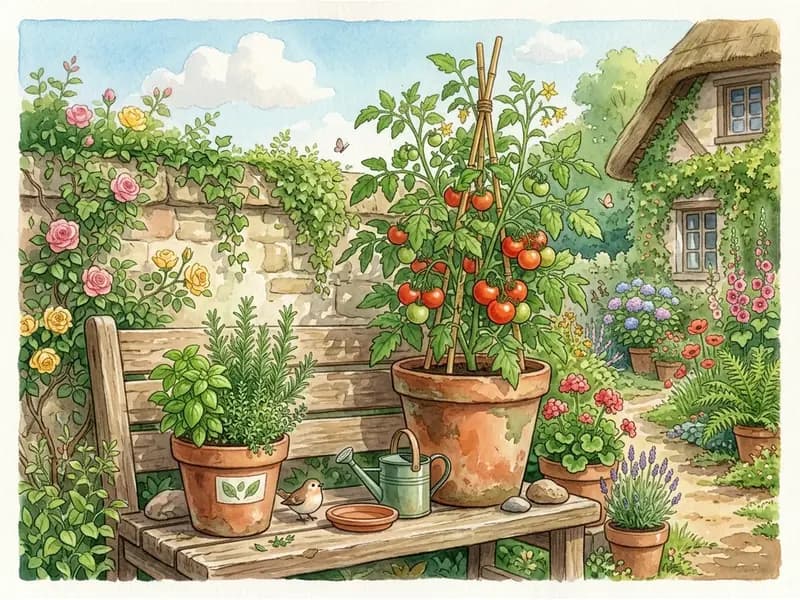
The figures are indicative and correspond to one plant, except where otherwise indicated. If you are torn between two sizes, choose the bigger: the plant will thank you, and the soil dries out more slowly.
| Crop | Minimum volume | Min. depth |
|---|---|---|
| Small herbs (parsley, chives) | 3-5 L (about 0.8–1.3 US gal) | 15 cm (5.9 in) |
| Lettuce | 3-5 L (about 0.8–1.3 US gal) / plant | 15 cm (5.9 in) |
| Rocket | 3 L (about 3.2 quarts) | 15 cm (5.9 in) |
| Radish | 5 L (about 1.3 US gal) | 20 cm (7.9 in) |
| Carrot (Nantes) | 10 L (about 2.6 US gal) | 25 cm (9.8 in) |
| Spinach | 5 L (about 1.3 US gal) | 20 cm (7.9 in) |
| Strawberry | 3 L (about 3.2 quarts) / plant | 20 cm (7.9 in) |
| Large herbs (rosemary, sage) | 10-15 L (about 2.6–4 US gal) | 30 cm (11.8 in) |
| Pepper | 15-20 L (about 4–5.3 US gal) | 30 cm (11.8 in) |
| Aubergine | 20-25 L (about 5.3–6.6 US gal) | 35 cm (13.8 in) |
| Cherry tomato | 15-20 L (about 4–5.3 US gal) | 30 cm (11.8 in) |
| Medium tomato | 25-30 L (about 6.6–7.9 US gal) | 35 cm (13.8 in) |
| Large tomato | 30-40 L (about 7.9–10.6 US gal) | 40 cm (15.7 in) |
| Courgette | 30-50 L (about 7.9–13.2 US gal) | 40 cm (15.7 in) |
| Cucumber | 20-25 L (about 5.3–6.6 US gal) | 35 cm (13.8 in) |
| Leek | 10 L (about 2.6 US gal) | 30 cm (11.8 in) |
| Onion | 10 L (about 2.6 US gal) | 30 cm (11.8 in) |
| Garlic | 10 L (about 2.6 US gal) | 25 cm (9.8 in) |
| Climbing bean | 20 L (about 5.3 US gal) / 3 plants | 30 cm (11.8 in) |
| Dwarf bean | 15 L (about 4 US gal) / 3 plants | 25 cm (9.8 in) |
| Dwarf fruit tree | 40-60 L (about 10.6–15.9 US gal) | 40 cm (15.7 in) |
| Citrus | 40-80 L (about 10.6–21.1 US gal) | 50 cm (19.7 in) |
Key rule: more depth than width
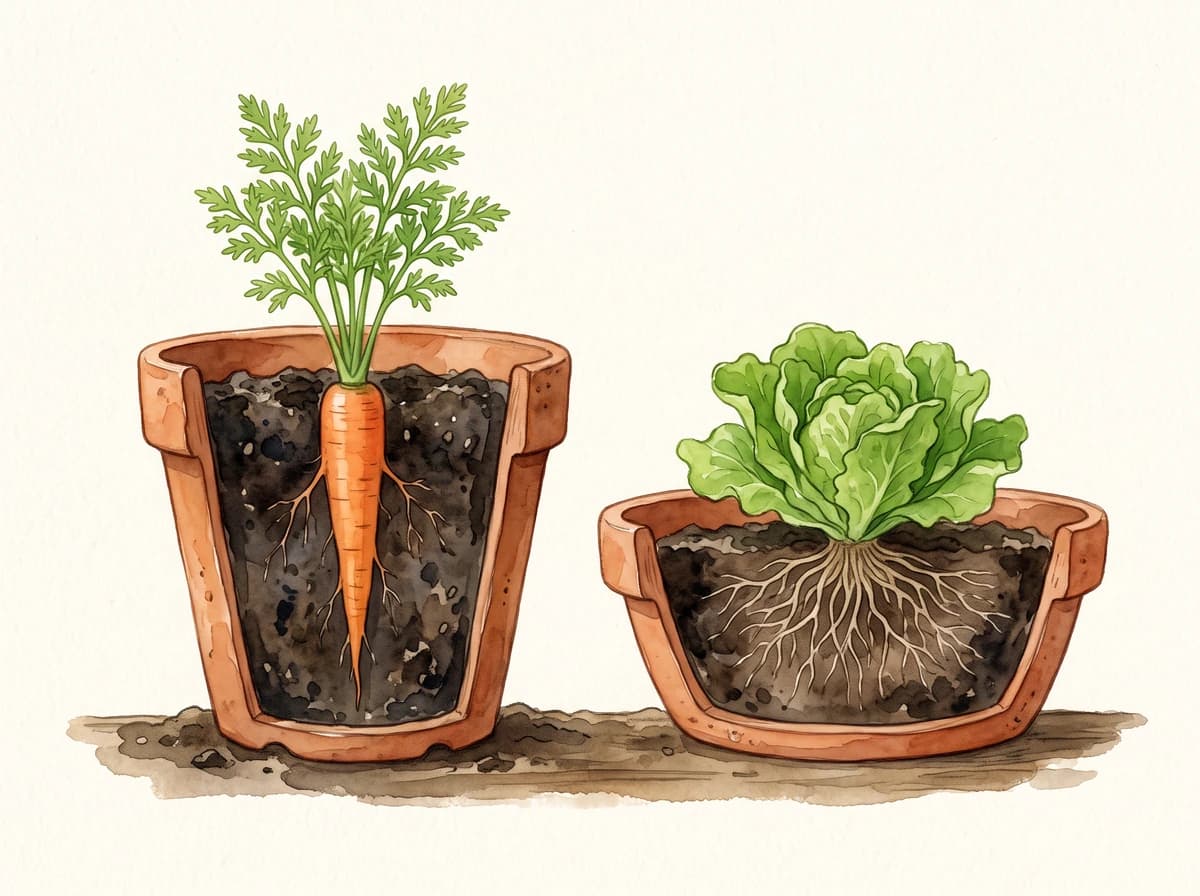
Between two pots with the same volume, the deeper one does better. For example, one of 40×20×20 cm (7.9 in) (16 L, about 4.2 US gal) works better than another of 40×40×10 cm (3.9 in) (also 16 L, about 4.2 US gal), because most vegetables put roots downwards and, besides, the bottom dries out less than the surface.
Materials
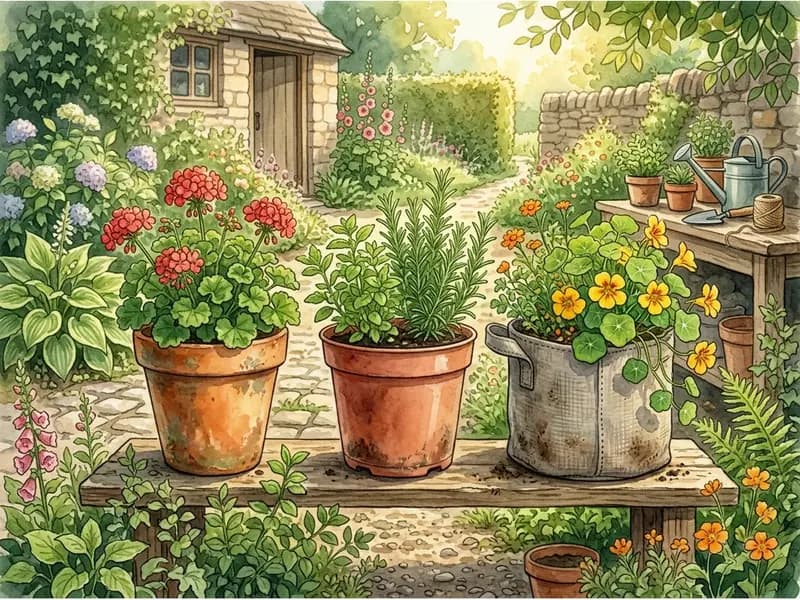
If you do not want to complicate things, the most practical default option is light-coloured plastic or wood; clay and metal ask for more care with watering and heat.
Terracotta (fired clay)
Advantages:
- It breathes well: the roots breathe.
- Natural look.
- Durable.
Disadvantages:
- It dries out fast (evaporation).
- Fragile and heavy.
- It can crack in frost if it holds water.
Ideal for: Mediterranean herbs, sun-loving plants and citrus in warm areas.
Plastic
Advantages:
- Light and cheap.
- It holds moisture longer.
- Many colours and sizes.
Disadvantages:
- It heats up in the sun and the roots suffer, especially in dark colours.
- Limited looks.
- In the sun it becomes brittle over the years (it usually lasts between 5 and 10).
Ideal for: crops that need constant moisture (tomato, courgette, leaves). Choose it in a light colour.
Wood
Advantages:
- It insulates well from changes of temperature.
- Attractive and natural.
- It can be built to measure (raised bed).
Disadvantages:
- It rots with damp if it is not well treated. Avoid wood treated with creosote (for example, railway sleepers) and old wood treated with copper, chromium and arsenic salts (CCA).
- Useful life of 5-10 years.
- It is heavy.
Ideal for: balcony growing tables and raised beds on a terrace.
Metal (sheet)
Advantages:
- Very durable.
- Industrial look.
Disadvantages:
- It gets very hot in the sun and can cook the roots in August.
- Sharp edges.
Ideal for: cool places or those with partial shade. In full sun, line the inside with an insulator.
Felt (geotextile pots)
Advantages:
- Very good aeration: the roots stop growing when they reach the wall, because the air “prunes” them and they make more fine roots.
- Light.
- Foldable for storing in winter.
Disadvantages:
- They dry out faster, so they ask for more frequent watering.
- Debatable looks.
Ideal for: potatoes, pumpkin and large plants.
Shape of the pot
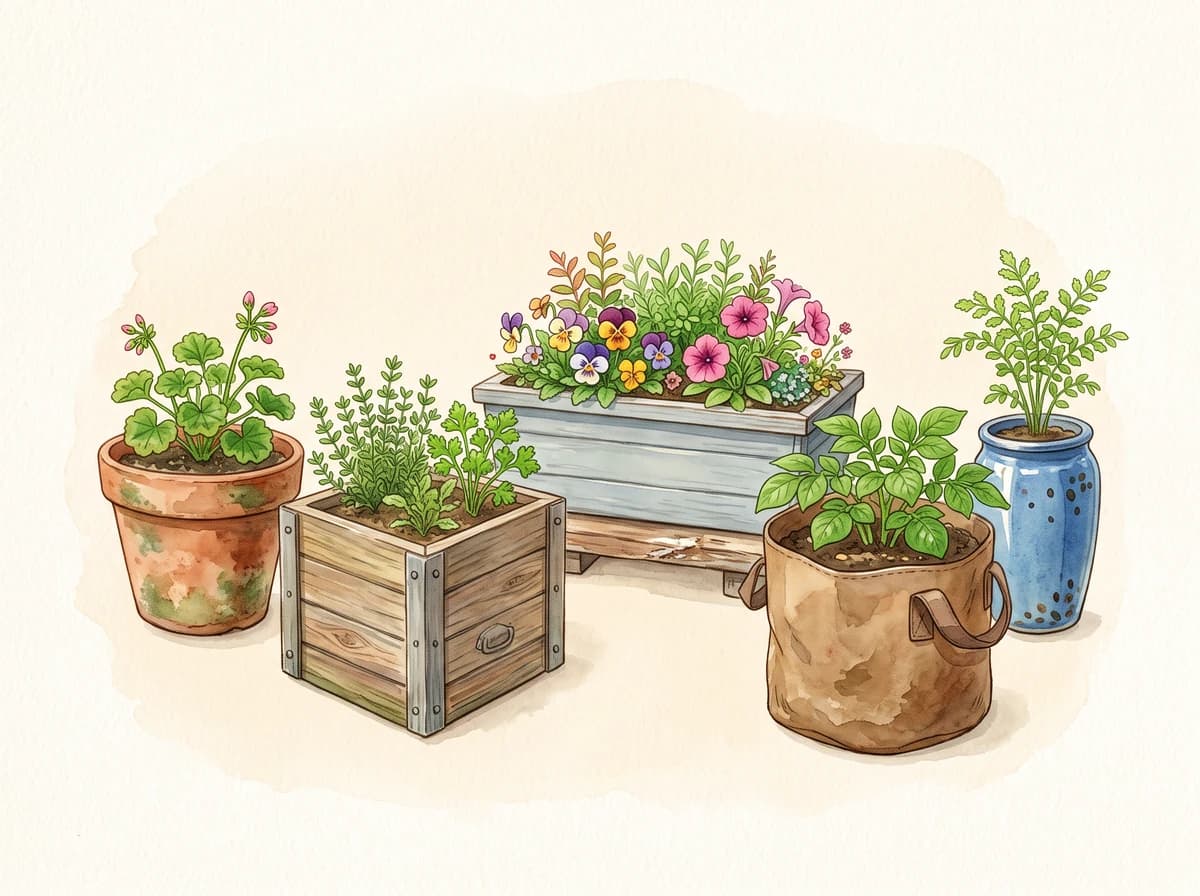
Cylindrical
It spreads the roots well. It is the best for most crops.
Rectangular (trough)
It allows several plants in a row. Ideal for herbs, leaves, strawberry and bean.
Tall and narrow
It gives space to deep roots. Ideal for carrot and potato.
Low and wide (bonsai style)
It is only good for creeping herbs and alpine plants. It is not good for fruiting vegetables.
Drainage
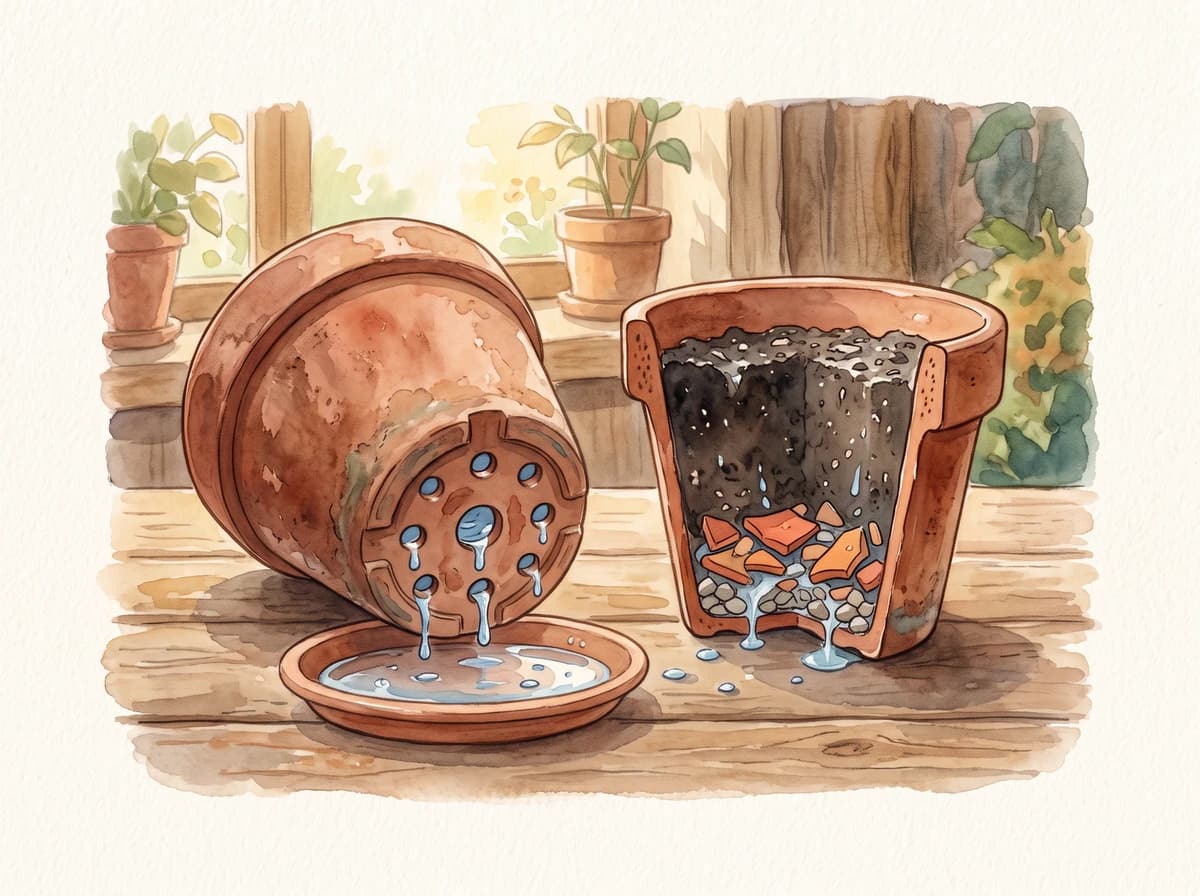
All pots must have a water outlet:
- 1-2 large holes (5-10 mm, 0.2–0.39 in) in the bottom.
- A piece of mesh or a ceramic shard over the hole, so that it does not get blocked by the growing medium. A layer of gravel is not needed: it does not improve drainage and, by reducing the useful growing medium, can leave the water closer to the roots. What really drains is an airy growing medium.
- Drip tray underneath, so as not to make a mess. Empty it after abundant waterings and do not leave water standing.
Without drainage, the water stagnates, the roots suffocate and rot quickly.
Reuse and saving
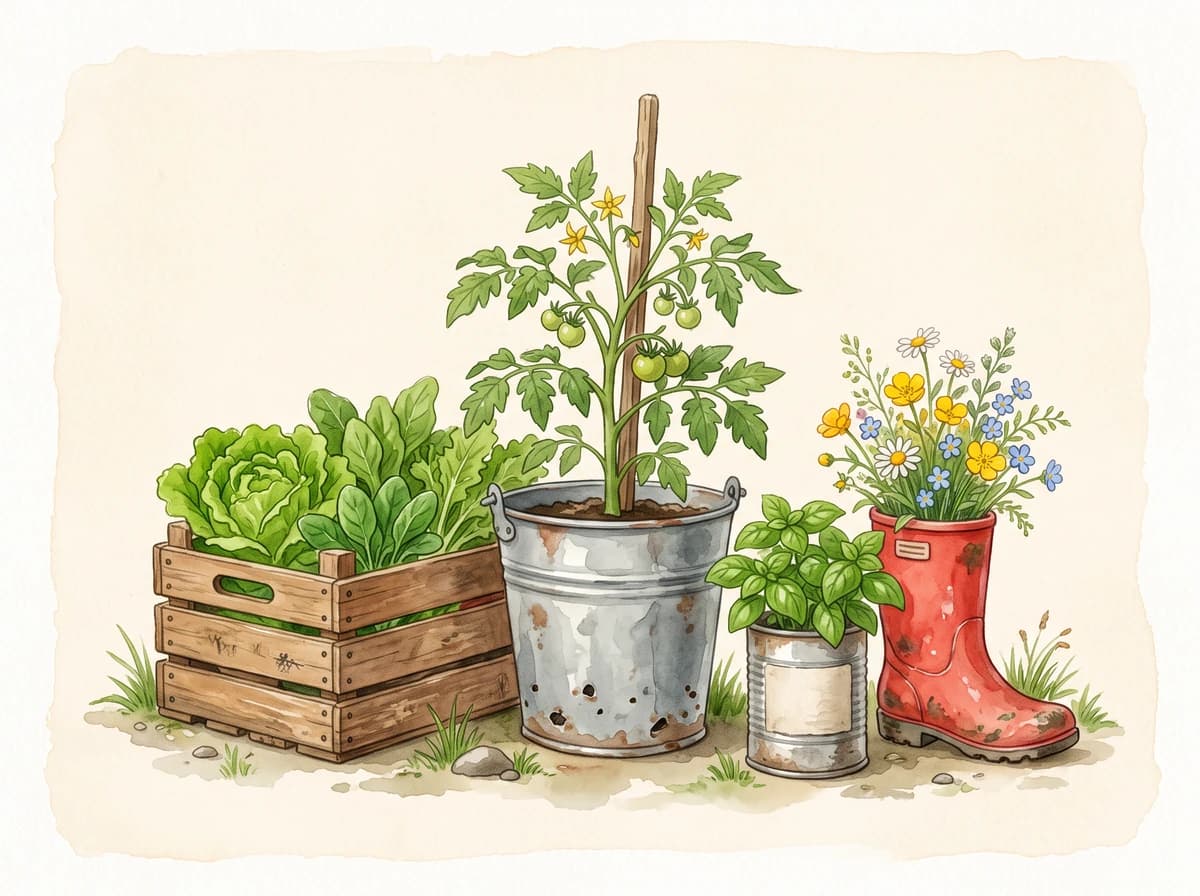
Reuse
- Growing medium sacks: you can grow directly in them. Place them lying down or standing, make holes at the bottom for drainage and open a gap on top for planting.
- Old buckets and pails: make holes in the bottom and that is it. They should be food-grade or have held something harmless, not paint or chemical products.
- Wooden fruit crates: line them with perforated plastic; they last 2-3 years.
- Cut-down drums of 60-200 L (about 15.9–52.8 US gal): excellent for tomato (same precautions as with buckets).
Buy cheap
- Second-hand websites and apps in your area.
- At the end of the season (September-October) garden centres usually reduce pots a lot.
Mistakes with pots
Small pot to “start” a tomato
Avoid it. In a 10 L (about 2.6 US gal) pot, a tomato gives a small harvest and suffers thirst continually; in a 30 L (about 7.9 US gal) one it produces much more and is easier to water.
No drainage
It almost certainly ends badly: the roots rot.
In the August sun without protection
Dark pots in full sun can heat the growing medium above 50 °C (122 °F), and the roots suffer or die. Shade the pots at midday or use light-coloured pots.
Reused growing medium not renewed
After a season, the growing medium is exhausted and compacted. Renew 30-50 % with fresh compost.
Not feeding
The nutrients of new growing medium last about 6-8 weeks. After that, add a liquid organic fertiliser (liquid humus, guano) following the dose on the pack, about every 2 weeks during the crop.
Trick: double pot
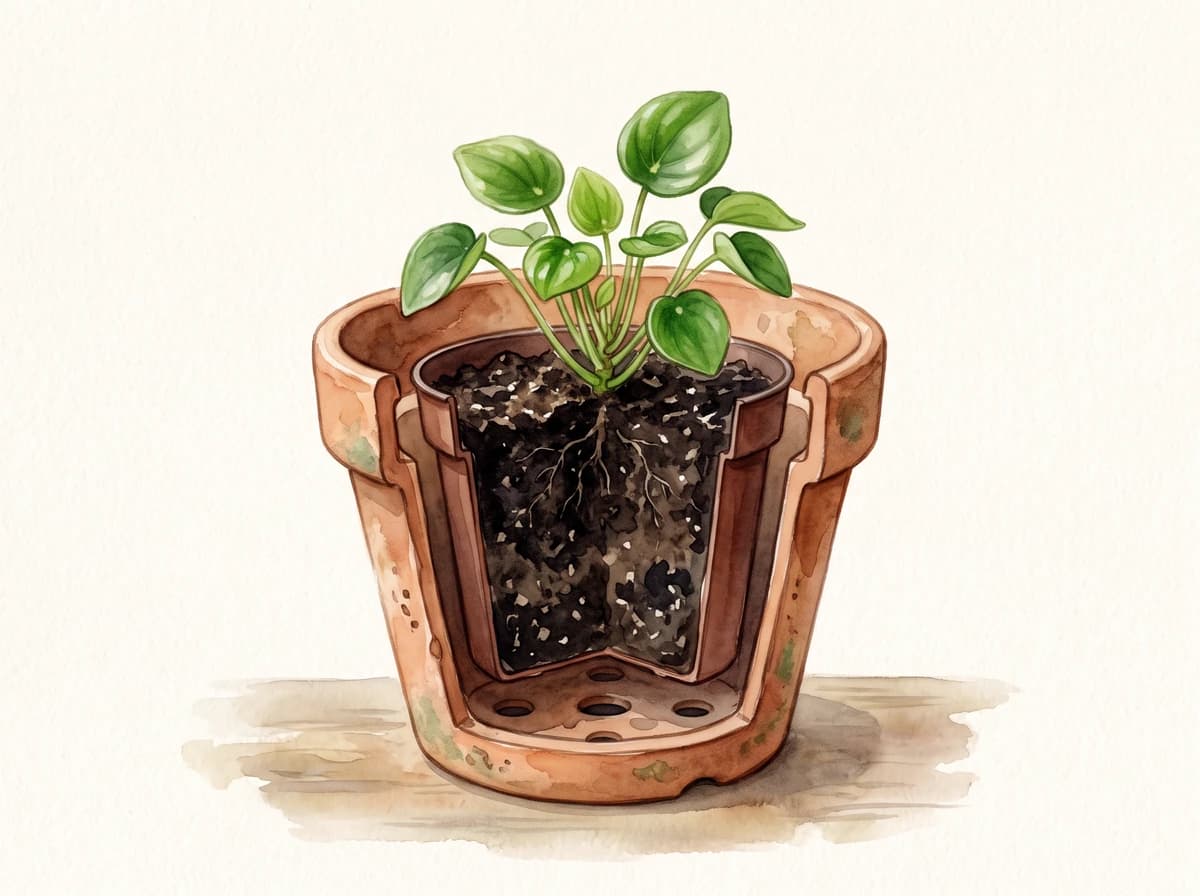
To reduce stress from heat and lack of water:
- Inner pot with growing medium and plant.
- Larger outer pot (clay or ceramic).
- The space between the two, filled with straw or damp moss.
It insulates the temperature and keeps moisture steadier. It is very useful for delicate herbs on a south-facing balcony.
Budget per balcony
Initial equipment for about 2 m² (22 sq ft):
- 2 large pots (30 L, about 7.9 US gal): €30-50.
- 3 medium troughs: €30-50.
- 2 small pots for herbs: €10-20.
- Growing medium for everything (100 L, about 26.4 US gal): €30-50.
- Compost or humus (10 L, about 2.6 US gal): €5-10.
Total: €105-180. These are indicative prices, and they drop a lot if you reuse containers.

Design your balcony, terrace or pots by zones.