In this article (21 sections)
- Which plants do well vertically
- Natural climbers
- Trailing downward
- Modular wall systems
- Structures
- Simple stakes (canes, poles)
- Reed trellis or square mesh
- Cane teepee (wigwam)
- Wooden espalier
- Vertical PVC tower
- Tiered shelving
- Lighting in a vertical setup
- Watering vertical structures
- Stability
- A rough example: a 3 m² (32 sq ft) balcony with 2 m (6.6 ft) of usable height
- Common mistakes
- Structures that are too light
- Self-shading
- Unsuitable watering
- Not pruning
- And after two years
On a balcony or in a small garden, every square metre counts. Growing upward lets you harvest quite a lot more from the same area, as long as each plant gets light, water and good support. These are the most useful techniques.
Which plants do well vertically
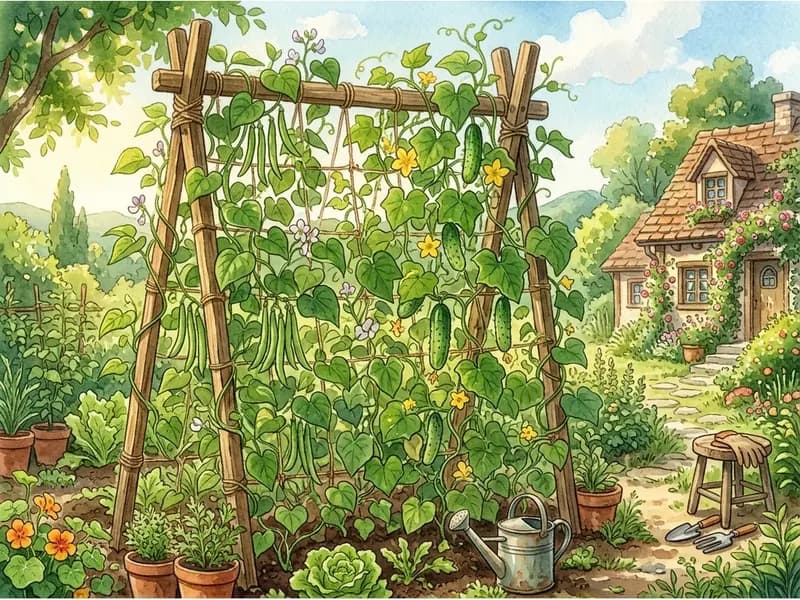
Natural climbers
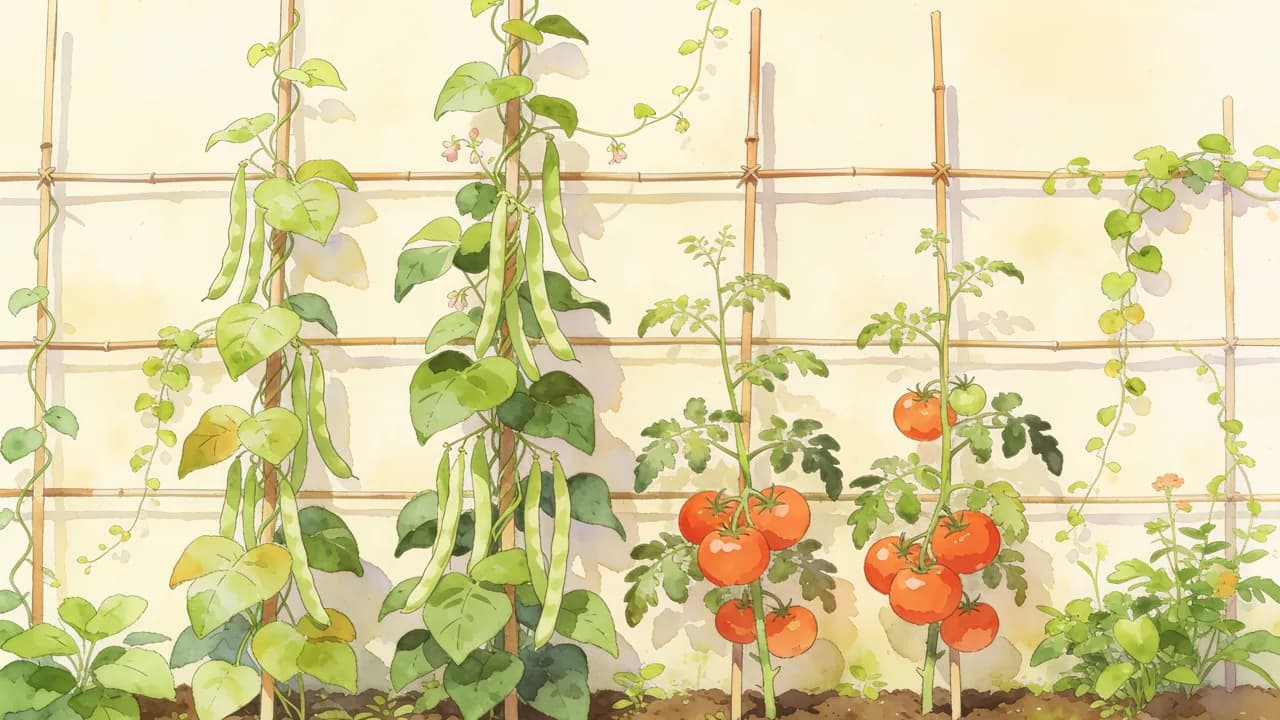
- Climbing bean: 2-3 m (6.6–9.8 ft) tall. Very productive.
- Staked pea: 1-1.5 m (3.3–4.9 ft).
- Cucumber: 1.5-2 m (4.9–6.6 ft) with supports.
- Small squash: 2-3 m (6.6–9.8 ft) if you support it well.
- Indeterminate tomato: 1.5-2 m (4.9–6.6 ft) or more, with a cane.
- Table grape: 2-3 m (6.6–9.8 ft) on a large balcony.
- Thornless blackberry on a reed trellis: 1.5-2 m (4.9–6.6 ft).
Trailing downward
- Strawberry, especially the everbearing ones, in hanging planters.
- Hanging cherry tomato (for example, the "Tumbling Tom" variety).
Modular wall systems
- Lettuce in vertical pocket bags.
- Herbs in pockets.
- Spinach and rocket in stacked horizontal planters.
Structures
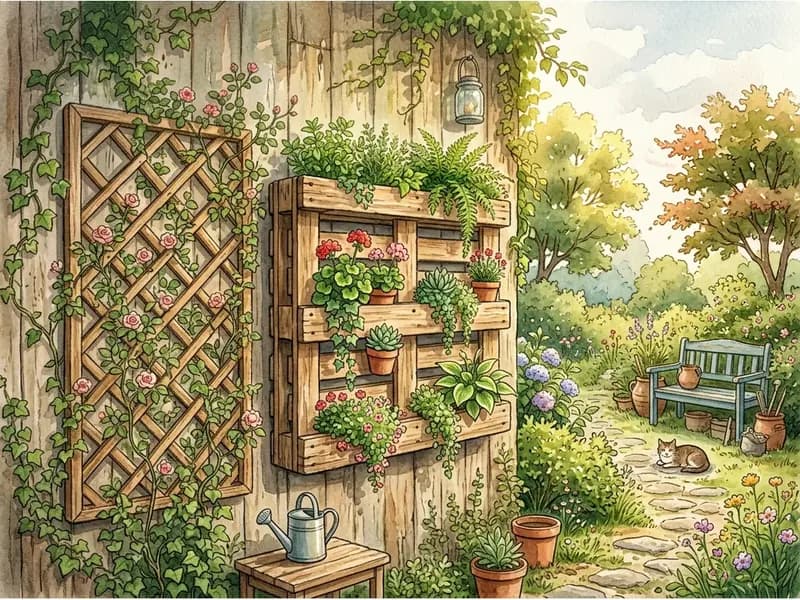
The structure depends on the plant and the site. If you are starting out, the simplest and cheapest options are canes and the teepee; mesh and espalier pay off when you want to cover a wall.
Simple stakes (canes, poles)
- Bamboo canes of 2-2.5 m (6.6–8.2 ft).
- In the ground, push them in 30-40 cm (11.8–15.7 in); in a pot, tie them to a fixed structure or to the railing.
- Ideal for single tomatoes and one bean per plant.
Cost: 1-2 € per cane.
Reed trellis or square mesh
- Plastic or wire mesh with squares of about 15×15 cm (5.9 in).
- Fix it to side stakes.
- Ideal for cucumber, climbing courgette and cordon tomato.
Cost: 10-20 € per 2 m² (22 sq ft) of mesh.
Cane teepee (wigwam)
- 4-6 canes joined at the top in a cone shape.
- Ideal for climbing bean and pea.
- It is fairly stable if the canes are well pushed in and tied, and it looks very decorative.
Cost: 5-10 € (canes and string).
Wooden espalier
- A lattice of interwoven slats or poles.
- Fix it to a wall or between posts.
- Ideal for grape, hanging strawberry and tomato.
Cost: 30-80 € if you build it yourself, 100-200 € bought.
Vertical PVC tower
- PVC pipe of 15 cm (5.9 in) diameter and 1.5 m (4.9 ft), with side holes.
- It is filled with growing mix.
- Lettuces or herbs are planted in the holes.
- Water from the top; it drains out at the bottom.
Cost: 20-40 €, if you build it yourself.
Tiered shelving
- Metal or wooden shelves with pots on each level.
- Set them stepped back so light reaches every level.
- Ideal for herbs and leafy greens.
Cost: 30-80 €.
Lighting in a vertical setup
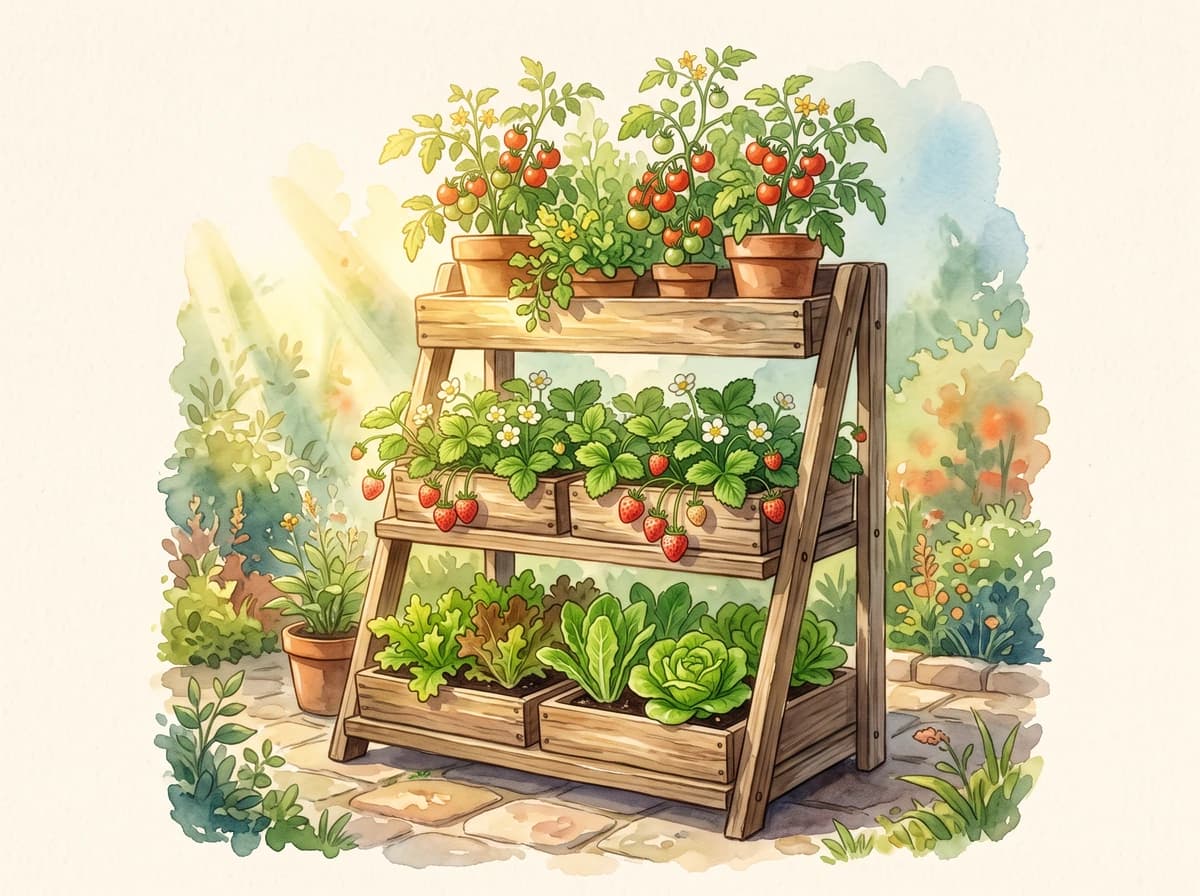
The typical problem is that the plants at the bottom get less light. Solve it like this:
- Put crops that tolerate partial shade (parsley, lettuce, spinach) at the bottom and sun lovers (cherry tomato, Mediterranean herbs) at the top.
- Rotate positions every 2-3 weeks so all of them get light more evenly.
Watering vertical structures
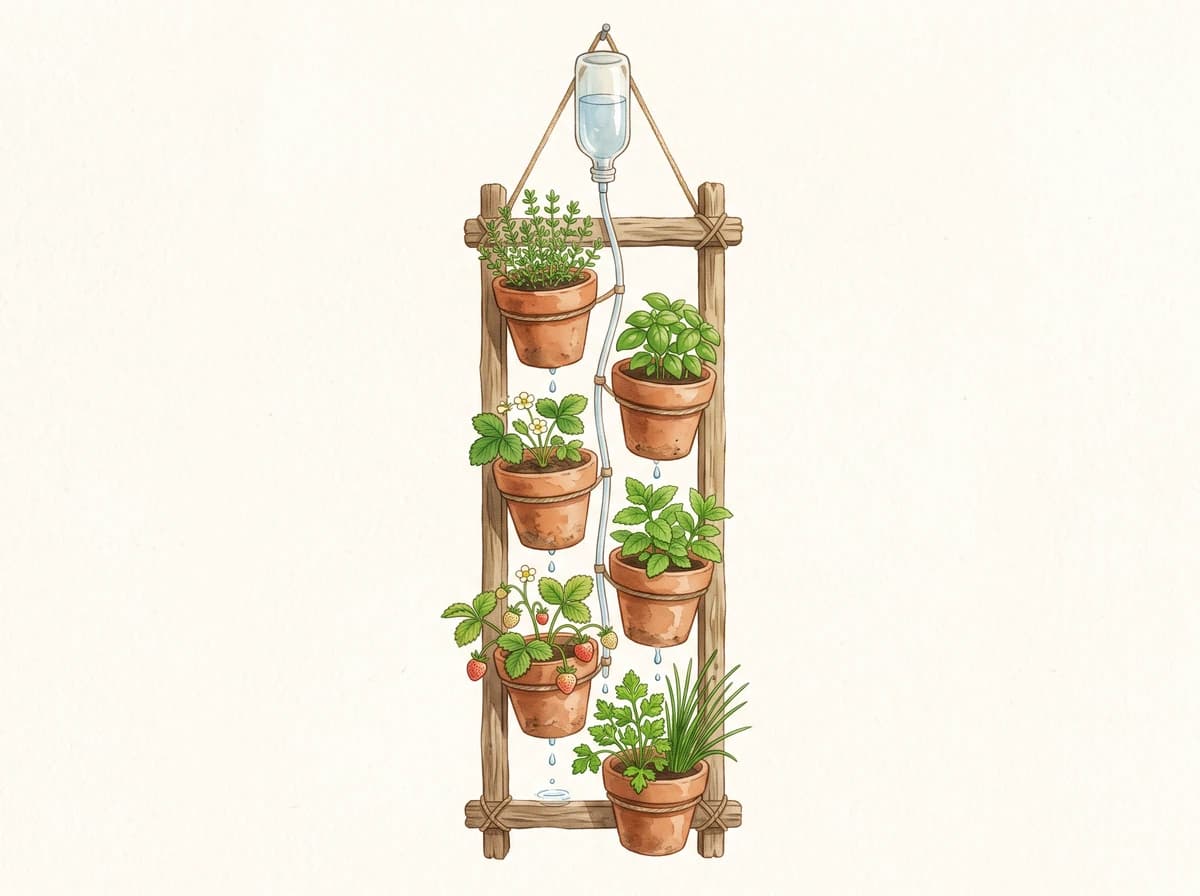
Here the problem is that water tends to run to the lower levels. The most practical solutions:
- Individual drippers for each plant, instead of one shared hose.
- Capillary watering with a wick from below, in small planters.
- A timer with several outlets if the levels have different needs.
Stability
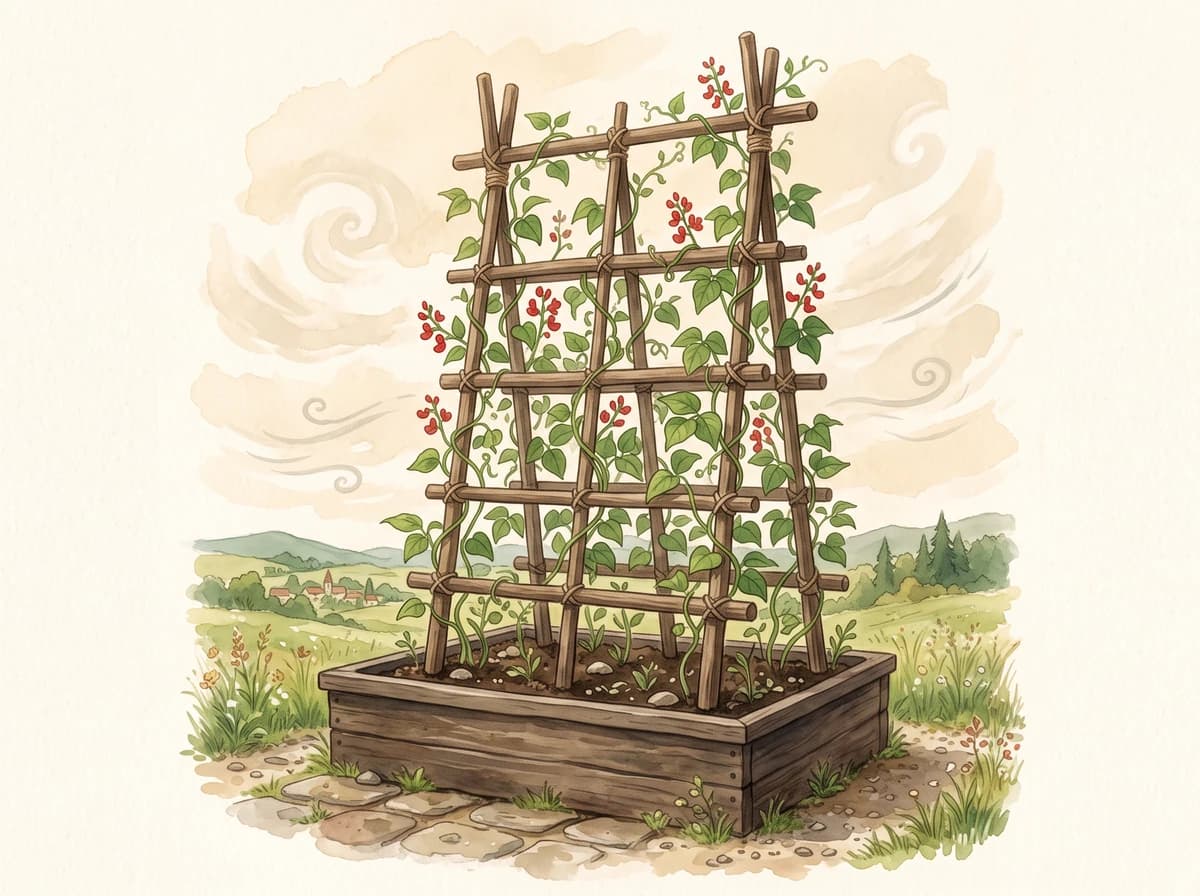
On windy balconies, the structure is the first thing to secure:
- Fix structures to the wall or floor with anchors.
- Use heavy bases or counterweights on tall pots.
- Don't leave any tower free-standing.
- On high floors, tie tomato canes to the railing or the ceiling.
- If you hang planters on the railing, do it on the inner side and with good anchors: a fall is a danger to anyone passing below (and it is worth checking your building's rules).
A rough example: a 3 m² (32 sq ft) balcony with 2 m (6.6 ft) of usable height
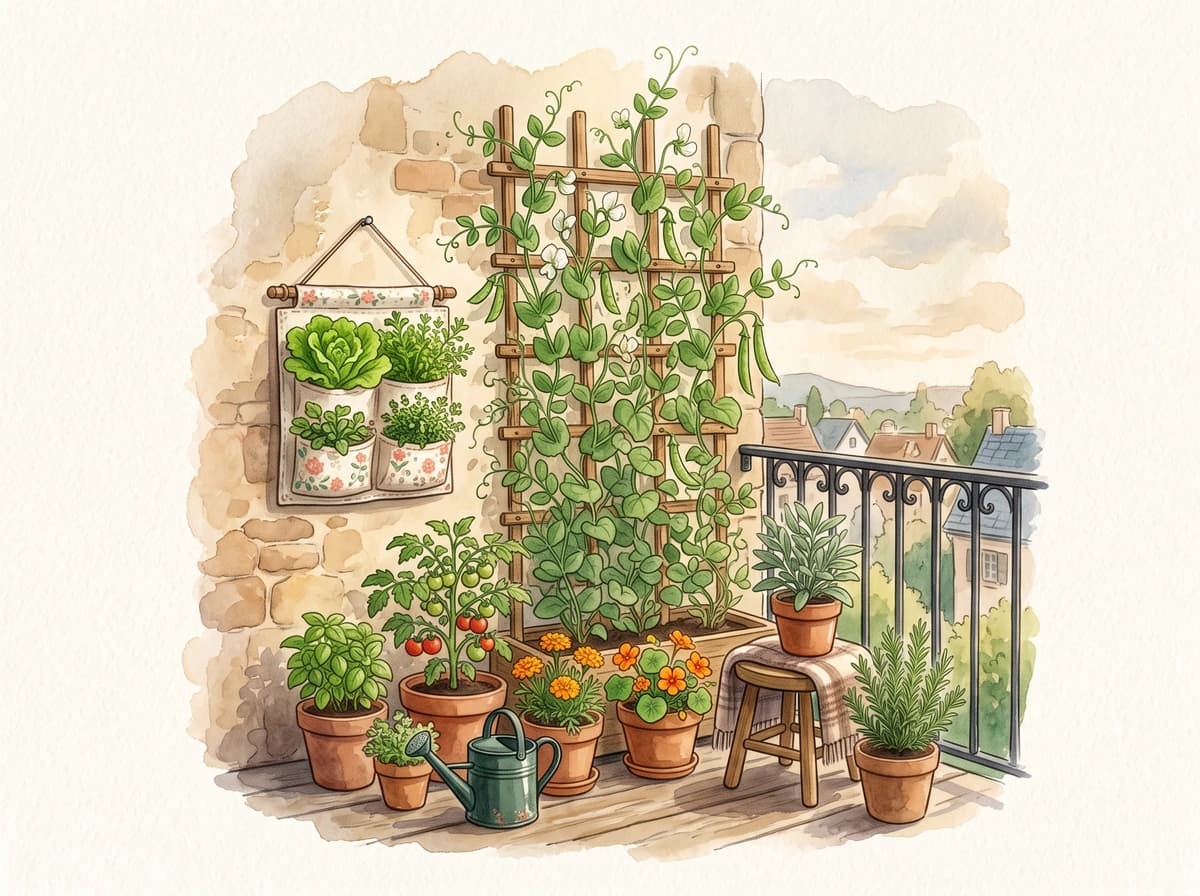
The real growing surface is larger than the floor area:
- 3 m² (32 sq ft) horizontal: tables and base pots.
- About 1.5 m² (16 sq ft) vertical on the wall (3 m, 9.8 ft long by 0.5 m, 1.6 ft of usable width): hanging planters.
- 6 m (19.7 ft)³ of air volume for climbers and trailing plants.
A reasonable harvest, only as an order of magnitude, could be:
- 6-8 kg (13.2–17.6 lb) of cherry tomato (from 2 climbing plants).
- 3-4 kg (6.6–8.8 lb) of courgette (1 plant in a large pot, supported).
- 2 kg (4.4 lb) of cucumber (climbing).
- 1-2 kg (2.2–4.4 lb) of strawberry (hanging).
- 20-30 staggered lettuces (PVC tower and planters).
- Herbs in plenty.
In total, about 15-20 kg (33.1–44.1 lb) of food per season. It is a modest figure compared with a 20 m² (215 sq ft) garden in the ground, but it comes from a space that would otherwise be empty, and your balcony makes very good use of it.
Common mistakes
Structures that are too light
A tomato plant loaded with fruit and shaken by the wind will topple a weak cane. Use thick canes or 2 m (6.6 ft) posts pushed in 40 cm (15.7 in).
Self-shading
The tower shades itself. Leave 20-30 cm (7.9–11.8 in) between levels.
Unsuitable watering
Without individual drip, some plants get waterlogged and others dry out. It is worth setting up a drip system.
Not pruning
When growing vertically, plants get tangled. Regular pruning (removing tomato suckers, thinning the cucumber) is even more important than on the ground.
And after two years
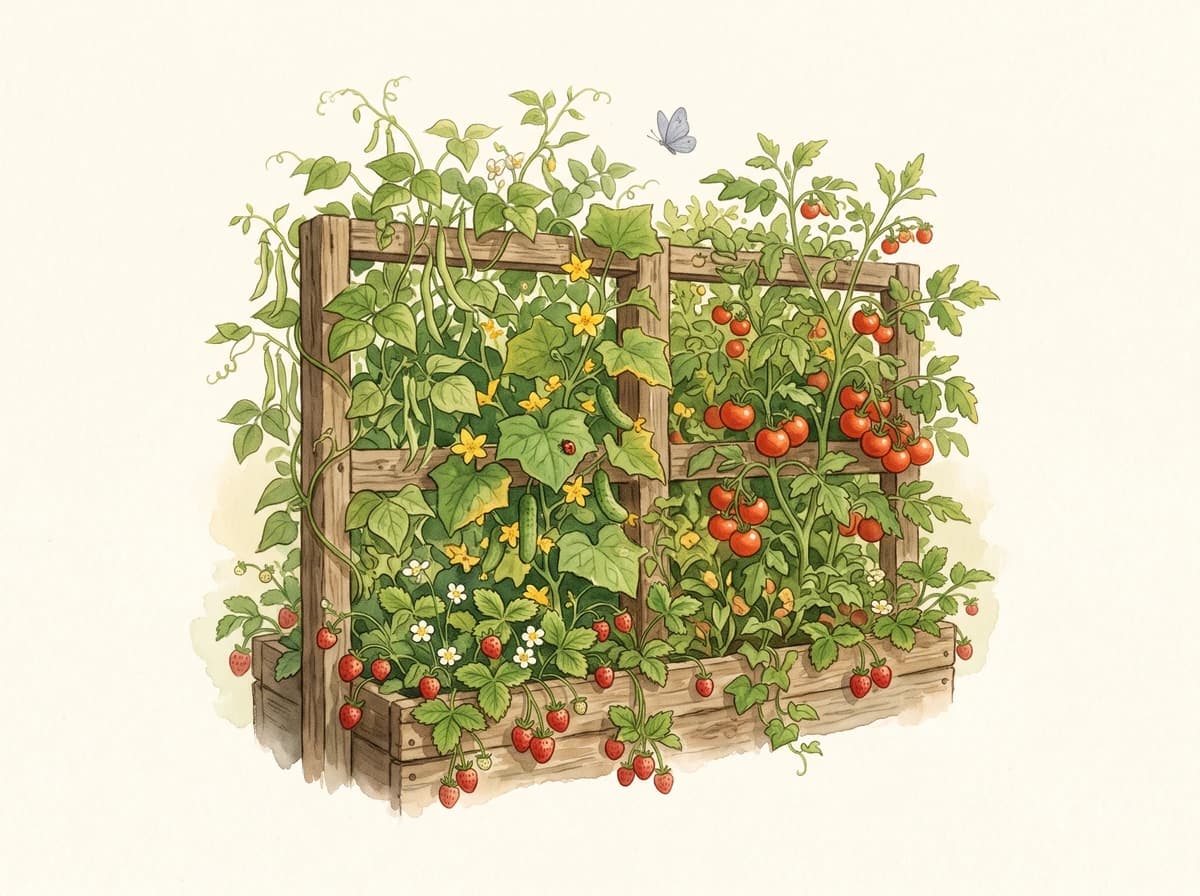
With a balcony well used vertically:
- You harvest quite a bit more than with pots on the floor alone.
- The plants tend to be healthier, because air circulates better and there is less fungus.
- The balcony looks much better.
Height is growing space too, and on a balcony it is usually the one you have most of.

Design your balcony, terrace or pots by zones.