In this article (17 sections)
- The 8 essentials
- 1. Parsley (Petroselinum crispum)
- 2. Chives (Allium schoenoprasum)
- 3. Basil (Ocimum basilicum)
- 4. Rosemary (Rosmarinus officinalis)
- 5. Thyme (Thymus vulgaris)
- 6. Mint (Mentha spicata / M. × piperita)
- 7. Sage (Salvia officinalis)
- 8. Oregano (Origanum vulgare)
- Designing the perfect planter
- Mix for herbs
- Watering
- Best position
- Harvest
- When to buy a young plant and when to sow
- Herbs in winter
- Budget
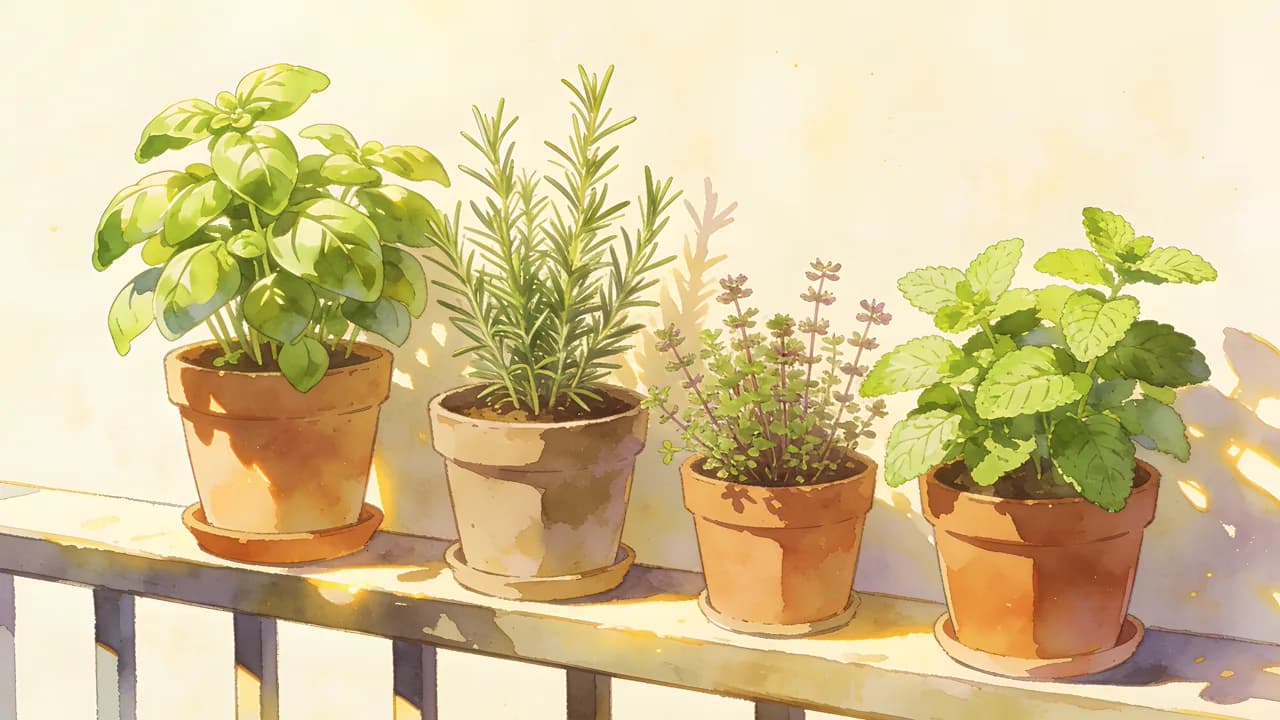
Having fresh herbs changes how you cook. With a planter of 80 × 30 cm (11.8 in) and a few pots you can have 8 herbs all year round, even on a small balcony.
The 8 essentials
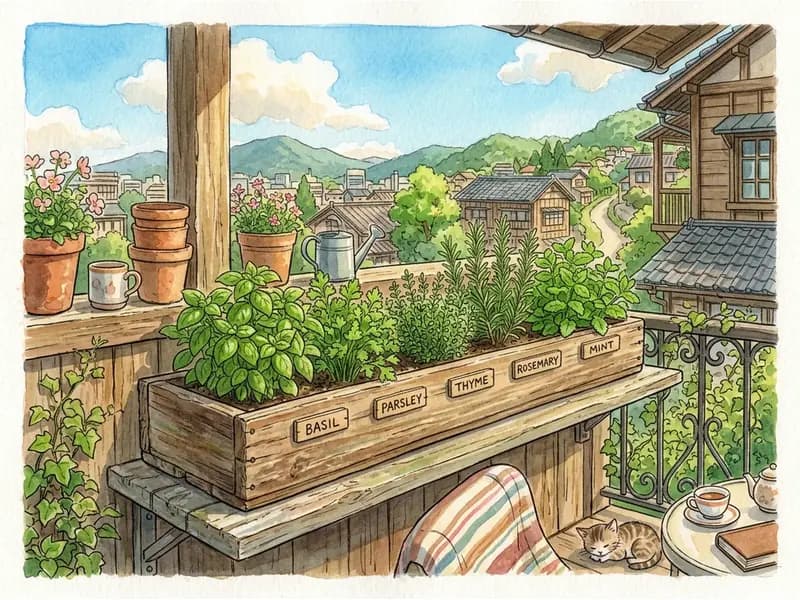
1. Parsley (Petroselinum crispum)
- Use: almost everything: sauteed bases, salads, side dishes.
- Light: partial sun (4-6 h), tolerates shade.
- Pot: 3-5 L (about 0.8–1.3 US gal), deep (taproot).
- Growing: sow in spring and autumn. It is a biennial: in its second year it flowers and loses quality, so it is best to renew it.
- Tip: sow in succession every 3 months so you always have young plants.
2. Chives (Allium schoenoprasum)
- Use: salads, fresh cheeses, eggs, sauces.
- Light: full or partial sun.
- Pot: 5-8 L (about 1.3–2.1 US gal). Perennial.
- Growing: sow once and the clump lasts several years; divide it every 3 or 4 years so it regrows strongly. Cut the outer leaves 2-3 cm (0.8–1.2 in) from the base.
- Tip: its purple spring flowers are edible, decorate dishes and taste slightly of onion.
3. Basil (Ocimum basilicum)
- Use: pesto, tomato, pasta, pizza.
- Light: full sun.
- Pot: 5-8 L (about 1.3–2.1 US gal). Annual: it dies in the cold.
- Growing: sow in April-May and harvest from June to October, until temperatures drop.
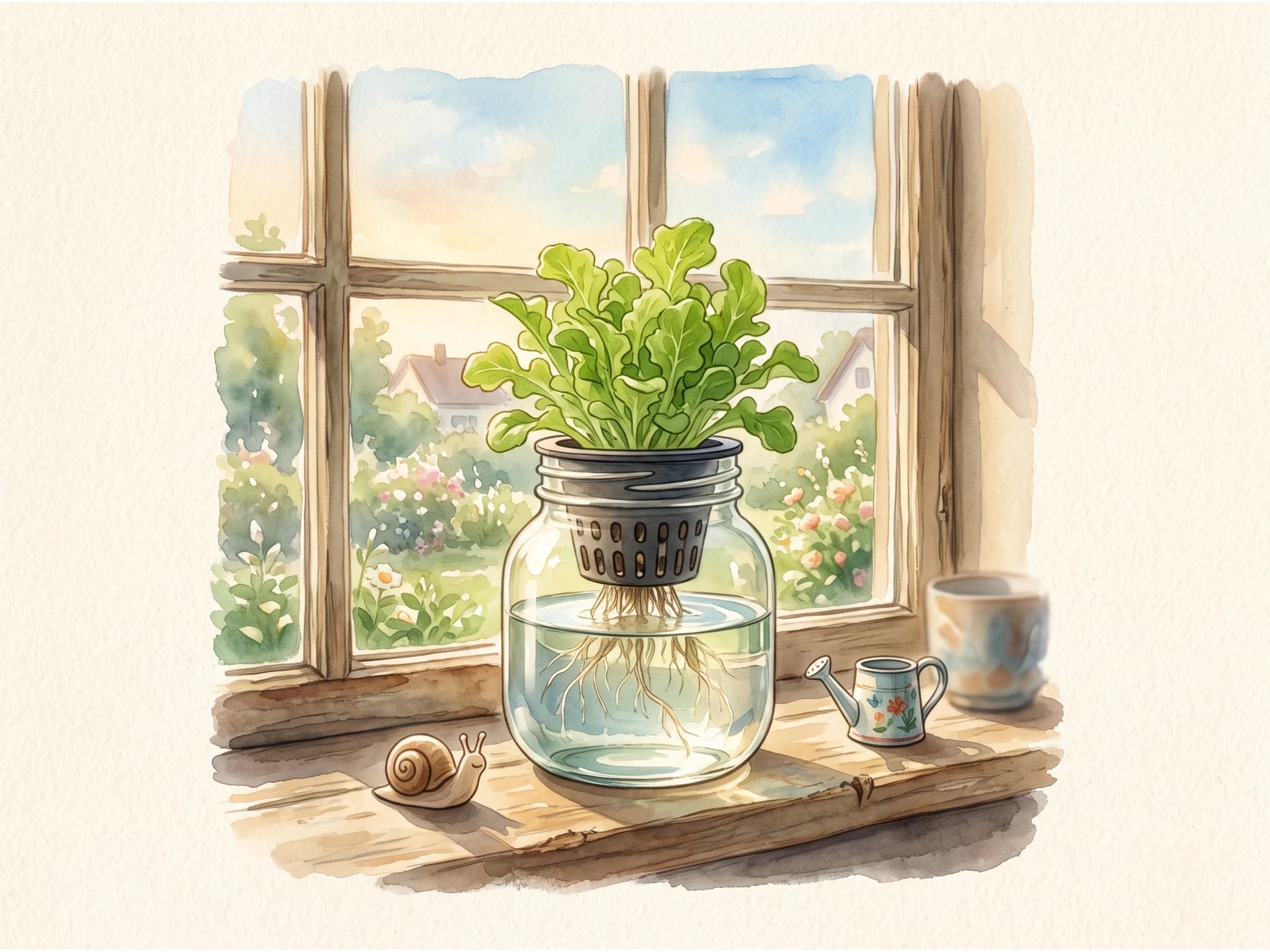
- Tip: pinch off the flowering tips as soon as they appear: this delays flowering and extends the harvest. At the end of summer you can root a cutting in water and keep it indoors, next to a bright window.
4. Rosemary (Rosmarinus officinalis)
- Use: roast meats, potatoes, stews, flavouring oil.
- Light: full sun.
- Pot: 10-15 L (about 2.6–4 US gal). Perennial (lives 20+ years).
- Growing: very little water, because it can't stand waterlogging. It is better to under-water than to overdo it.
- Tip: on a north-facing balcony it doesn't grow well, it needs sun. It propagates by cutting: take sprigs of about 10-15 cm (3.9–5.9 in) and plant them in moist sandy mix (in water they root worse and take longer).
5. Thyme (Thymus vulgaris)
- Use: marinades, stews, tomato sauce, potatoes.
- Light: full sun.
- Pot: 5-10 L (about 1.3–2.6 US gal). Perennial; renew it when it becomes very woody, at about 5 years.
- Growing: well-drained mix, little water.
- Tip: there are many varieties (lemon, orange, red-flowered...). Combine 2 or 3 to get different flavours.
6. Mint (Mentha spicata / M. × piperita)
- Use: mojitos, infusions, fruit salads, tabbouleh.
- Light: partial shade is ideal.
- Pot: kept apart from the others (5-8 L, about 1.3–2.1 US gal). Mint is invasive: its rhizomes crowd out the other plants.
- Growing: perennial; in winter it loses its top growth and sprouts again in spring.
- Tip: renew the mix every 2 years. It multiplies by cutting: a stem of mint bought at the supermarket roots in a glass of water.
7. Sage (Salvia officinalis)
- Use: meats, cheeses, flavoured butter, liver.
- Light: full sun.
- Pot: 10-15 L (about 2.6–4 US gal). Perennial for 5-8 years.
- Growing: same as rosemary. It is very hardy.
- Tip: the "Tricolor" variety, with green, pink and cream leaves, is decorative as well as useful.
8. Oregano (Origanum vulgare)
- Use: pizza, sauces, marinades, Mediterranean salads.
- Light: full sun.
- Pot: 5-10 L (about 1.3–2.6 US gal). Perennial for 5-8 years.
- Growing: it withstands drought, little water.
- Tip: when it flowers, cut it and dry it hanging upside down in bunches. Dried, it keeps its aroma very well.
Designing the perfect planter
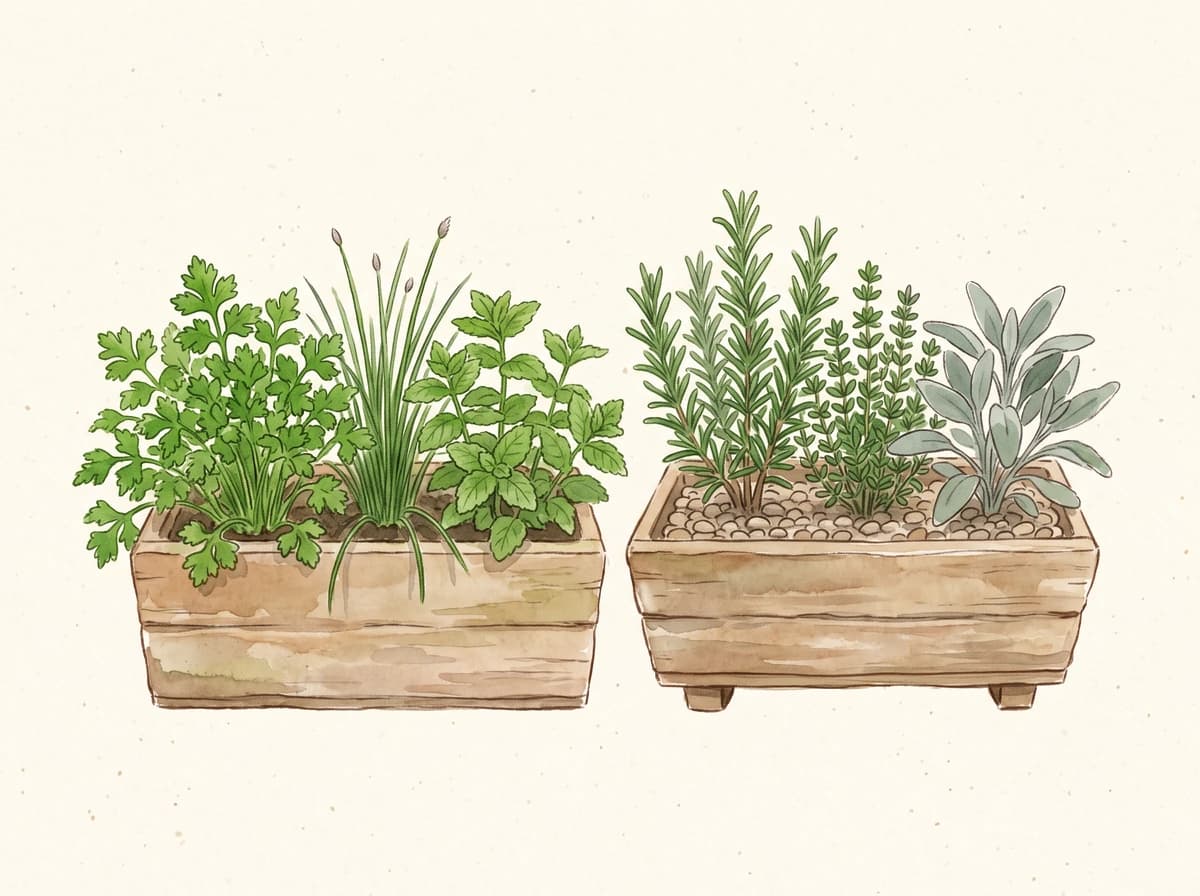
Don't mix in the same container the herbs that need regular watering with the Mediterranean ones, which prefer to dry out between waterings: some would end up dry or the others waterlogged. That's why it is best to divide them like this:
- Planter of 80 × 30 cm (11.8 in) and 25 cm (9.8 in) deep: parsley, chives and basil (the ones that need regular watering).
- Separate pots: one for rosemary, one for sage and a third of about 10 L (about 2.6 US gal) shared by thyme and oregano.
- A separate pot for the mint, because it is invasive.
- If you fancy it, tarragon and chervil, also in their own pot.
Mix for herbs
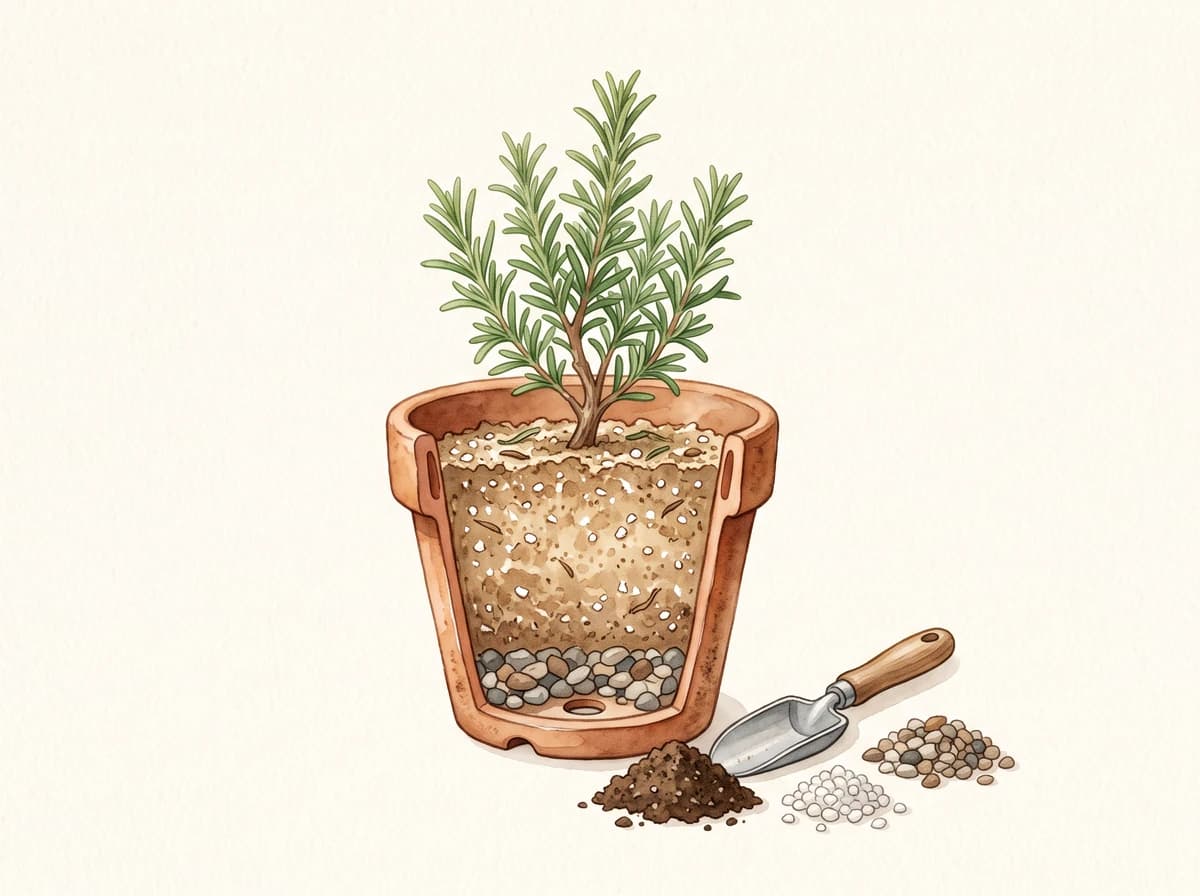
Rule: drain well. Mediterranean herbs hate waterlogging. This mix suits them:
- 40 % peat or coir.
- 30 % coarse sand.
- 20 % perlite.
- 10 % compost.
For mint, basil, parsley and chives (which appreciate more moisture):
- 50 % peat/coir.
- 30 % compost.
- 20 % perlite.
Watering
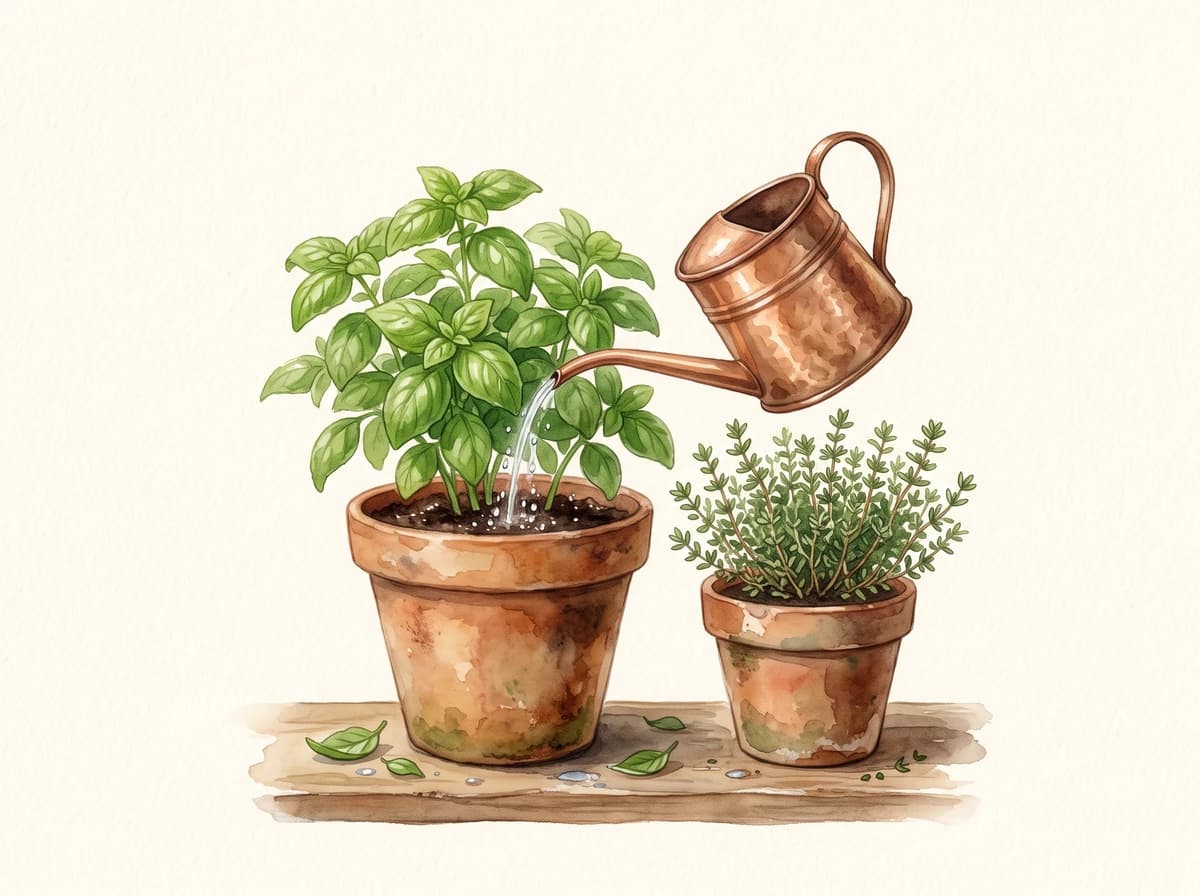
Mediterranean herbs (rosemary, thyme, sage, oregano):
- Let the mix dry out between waterings: check with your finger that it is dry at 2-3 cm (0.8–1.2 in) deep.
- Roughly 1-2 times a week in summer and every 10-15 days in winter.
- Better a little dry than waterlogged.
Fresh herbs (basil, parsley, coriander):
- Regular watering, keeping the mix moist (not waterlogged).
- Roughly 3-4 times a week in summer.
Mint: generous watering, it loves moisture.
Best position
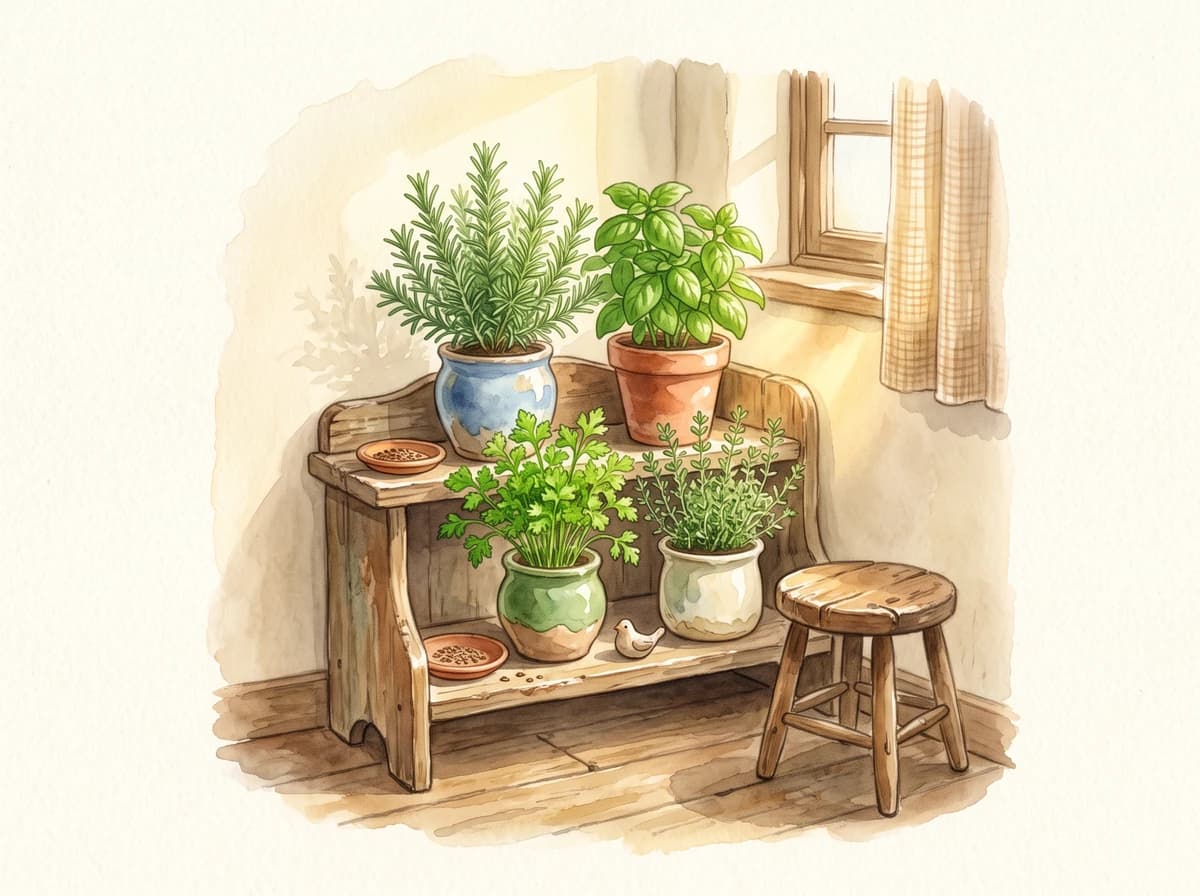
- South-facing balcony: ideal for the Mediterranean herbs. Perfect for rosemary, thyme, oregano and sage. Mint and chervil are better in partial shade.
- East-facing balcony: morning sun, good for almost all of them.
- North-facing balcony: shade. Only parsley, mint, chives and chervil do well here; the Mediterranean ones struggle.
Harvest
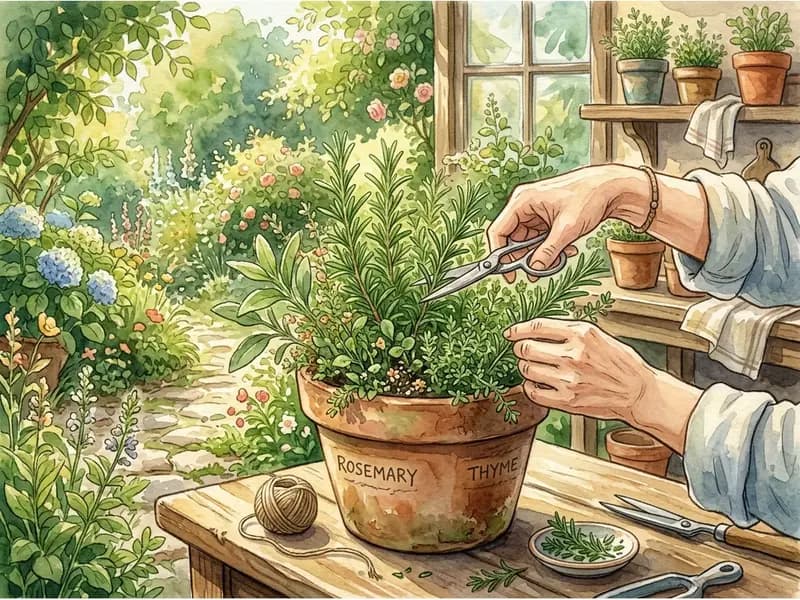
- Cut with scissors always just above a leaf. On rosemary, thyme and sage, cut tender stems and don't go down to the old wood, which regrows poorly.
- Never more than 30 % of the plant at once.
- Harvesting stimulates regrowth: the more you cut (in moderation), the more it produces.
- Harvest first thing in the morning, when the aroma is strongest.
When to buy a young plant and when to sow
Seeds (best for specific varieties and to save money):
- Basil, parsley, chives, coriander, oregano.
- Cycles of 60-100 days from sowing to harvest.
Young plants (save time):
- Rosemary, thyme, sage, mint (better by cutting).
- Each young plant costs roughly 3-6 €. Buy plants that are already grown.
Herbs in winter
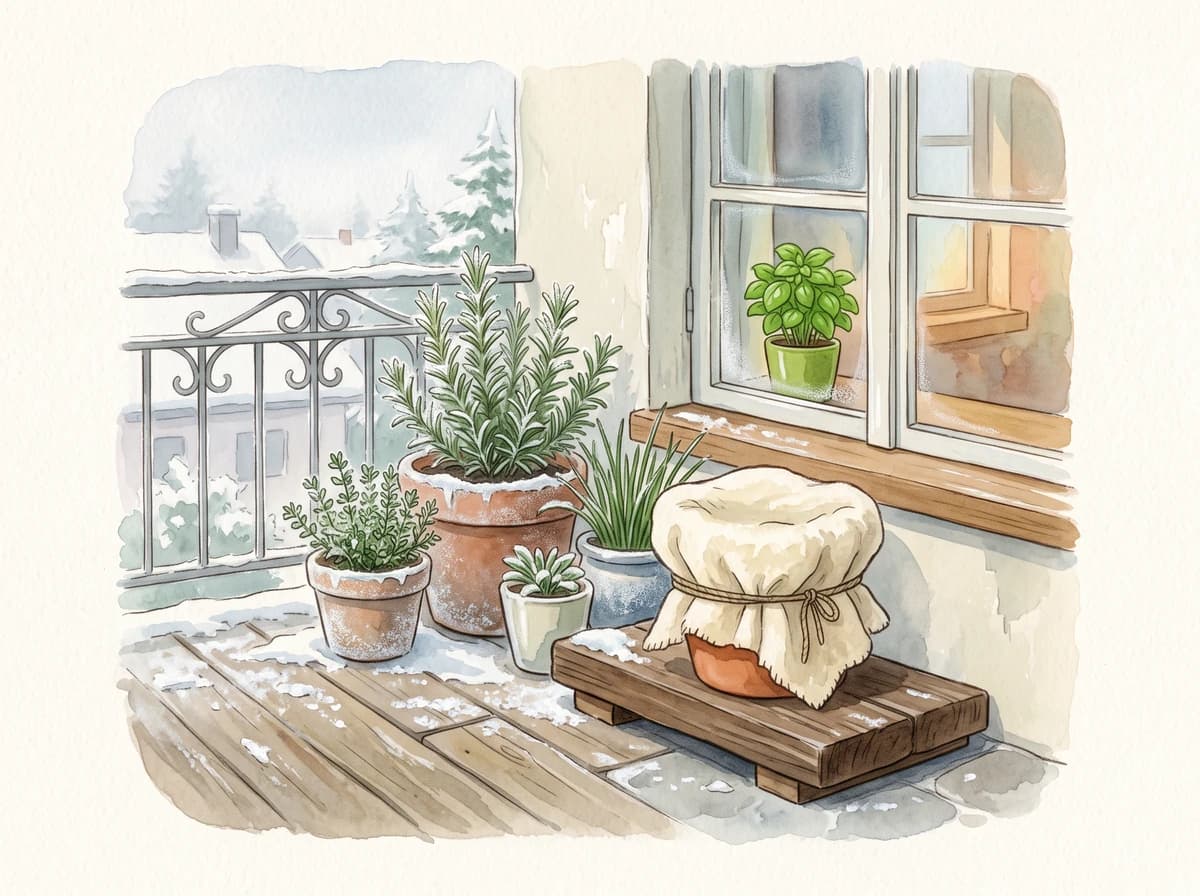
The simplest thing is to leave the perennials outside and renew the basil every spring with a new young plant. If you want to keep it, you will have to bring it indoors.
- Rosemary, thyme, sage and chives stay outside. If your area has hard frosts, protect the pots with fabric or wrap them, because roots in pots freeze sooner than in the ground.
- Parsley withstands light frosts.
- Mint loses its top growth and sprouts again in spring.
- Basil: it is the only one that can't stand the cold. Move a pot to a very bright spot indoors.
Budget
To set up the 8 herbs:
- 80 cm (31.5 in) planter: 20-40 €.
- Four pots (rosemary, sage, thyme-oregano and mint): 15-35 €.
- Growing mix: 15-25 €.
- Young plants and seeds: 20-30 €.
Total, about 70-130 €. Most of the plants last for years, so the big expense is only the first one.
And the most valuable part: cooking with fresh herbs is a leap in quality that is hard to give up.

Design your balcony, terrace or pots by zones.