Credits and licences
- #1 — vueltaalhuerto illustration
- #2 — vueltaalhuerto illustration
- #3 — vueltaalhuerto illustration
- #4 — vueltaalhuerto illustration
- #5 — vueltaalhuerto illustration
- #6 — vueltaalhuerto illustration
- #7 — vueltaalhuerto illustration
- #8 — vueltaalhuerto illustration
- #9 — vueltaalhuerto illustration
- #10 — vueltaalhuerto illustration
Norway spruce (Christmas tree)
and 2 more names
living Christmas tree, Picea abiesNorway spruce (Christmas tree) is sown in seed trays from February to March or directly outdoors from March to April, and planted out from October to March. Grow it in full sun, 500 cm apart, with moderate watering. Dates are for a mild temperate climate in the northern hemisphere; the calendar below adjusts them to your zone.
What else to sow in February, March and April
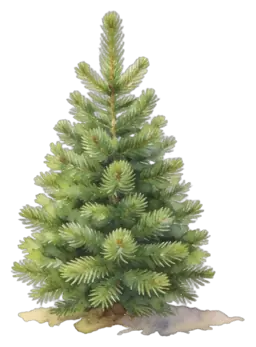
A large evergreen conifer with a conical crown, horizontal branches and drooping branchlets, reaching 30 or 50 m in the forest. The leaves are stiff needles, square in cross-section and sharp-tipped, 1 to 2.5 cm long and dark green, set all the way round the branch. The cones are hanging and cylindrical, 10 to 18 cm long, and ripen to brown in autumn; the flowers are small cones, the female ones red and upright, the male ones yellowish, appearing in spring. It is the most traditional Christmas tree in northern Europe. It is a plant for cool, damp climates, with shallow roots, which suffers in dry heat and dry or chalky soils, which is why in southern and inland Spain specimens bought in pots rarely thrive when planted outside. Do not confuse it with true firs (Abies), which have upright cones and soft needles: Picea is the one with prickly needles and hanging cones. It is not grown to be eaten.
Family and origin: Pine family (Pinaceae) · native to Northern and central Europe and its mountain ranges (the Alps, the Carpathians, Scandinavia); it is not native to Spain, where it is only planted · More plants from Temperate Europe
01In your area
How will it do in your garden?
Year calendar
| Task | J | F | M | A | M | J | J | A | S | O | N | D |
|---|---|---|---|---|---|---|---|---|---|---|---|---|
| Seed trayFeb–Mar | no | yes | yes | no | no | no | no | no | no | no | no | no |
| Direct sowingMar–Apr | no | no | yes | yes | no | no | no | no | no | no | no | no |
| Plant / transplantOct–Mar | yes | yes | yes | no | no | no | no | no | no | yes | yes | yes |
Its life cycle at a glance
Swipe and tap a stage to see its details.
02Planting
Where and how to plant it
Sow the seed 5 mm deep; leave 5 m between plants and 5 m between rows.
5 m between plants · 5 m between rows
Seed at a depth of 5 mm; seedlings go in with the root ball level with the soil.
- Transplanting
- Oct–Mar
- Seed tray
- Feb–Mar
- Direct sowing
- Mar–Apr
- Germination
- ~21 days
- TipPlanted in the ground, it is a very large tree with shallow roots: do not plant it near buildings, pipes or walls, and leave at least 5 m of space.
- Common mistakePlanting in a small hole limits rooting.
03Care
Care through the year
Sun and aspectFull sun · 8 h of sun · shade in summer
- Too little sun
- Ideal range
- Plenty of sun
South or south-west, with nothing casting shade at midday
Gentle sun: Morning or afternoon sun. Midday summer sun stresses and scorches it.
Full sun in cool climates; at the limit of its heat tolerance, some shade at midday. It cannot stand the dry heat or hot winds of the Mediterranean summer: the tips scorch and the tree weakens. It is very cold-hardy, even in winters of -30 °C or lower.
WateringMoist but never waterlogged · summer: deep watering 1 or 2 times a week in the first few years; in a pot, when the surface dries out
- Summerdeep watering 1 or 2 times a week in the first few years; in a pot, when the surface dries out8 L per plant/week
- Spring / Autumnevery 4-5 days4 L per plant/week
- Winteronly if it does not rain1.2 L per plant/week
Moist but never waterlogged: Water before the surface is completely dry. Never puddles. Mulch: straw or dry plant material cuts watering by 30-50 %.
It needs cool, moist soil all year round, without waterlogging, and appreciates frequent rain and fog. In the first few years, a deep watering and a thick mulch of bark stop it drying out. The roots are shallow and dry out quickly in a pot, especially in summer. Potted Christmas trees die mainly from drying out indoors or from heat when planted outside.
When to water? Push your finger 4 cm into the soil next to the base of the plant:
- Damp: soil sticks to your finger. Do not water today. The moisture is fine.
- Cool but clean, no mud. Water early tomorrow if it stays like this, or this evening.
- Dry and dusty. Water now, and deeply. This is not where it likes to be.
- TipIf you buy a Christmas tree in a pot, choose one with a root ball and living roots, not one that has just been cut or whose needles are already brown, and put it in a cool, bright spot, away from heaters and radiators, with the root ball always moist; spruce soon drops its needles in the warmth of a home, and faster than other firs.
- TipAfter the festive season, acclimatise it for a few days in a cool place before taking it outside, and plant it only if the climate is cool and damp (Atlantic and mountain areas of Spain); on the Mediterranean and in the hot interior the most reliable option is to keep it in a large pot, in partial shade and watered, or to choose another conifer.
- TipWater it in well in the first year; after that they are very tough.
Soil and feedingpH 4.5–6.5 · Free-draining, slightly acidic soil
Free-draining, slightly acidic soil.
High.
This plant prefers a pH between 4.5 and 6.5 (acidic to neutral).
- TipFree-draining soil: they cope badly with prolonged waterlogging.
Pruning
- TipIn a favourable area it hardly needs pruning.
- Common mistakePruning back into old wood with no green does not regrow: it leaves bare patches.
Common mistakes and tips
- TipWatch out for red spider mite, gall aphids (adelgids) and bark beetles.
- TipBuy only labelled nursery trees: do not cut firs or spruces in the wild, which is illegal in many places.
- TipHeights, limiting temperatures and timings are approximate.
04Propagation
Make new plants
The species is propagated by seed: the cones are gathered in autumn and left to open in a dry place, and the winged seeds are extracted. Sow at the end of winter or in spring, preferably after a few weeks of moist cold (stratification), in cool, acid potting mix; it comes up after two or three weeks. Dwarf and coloured cultivars are propagated by grafting or by professional cuttings, and seed-raised plants of a cultivar do not repeat its traits. Young plants grow slowly for the first few years.
Seeds: how to germinate them~21 days
05Uses and health
What it is used for, and with what care
The needles are prickly and can irritate the mouth and stomach of dogs and cats if they chew them, causing vomiting or drooling; keep animals away from the tree and sweep up fallen needles. The resin can cause skin irritation in sensitive people: wear gloves when handling a tree. Data on toxicity to people are scarce; do not eat the needles, cones or seeds. Indoors, a dry tree with lights or candles is a fire risk: keep the root ball moist, avoid hot fairy lights and do not place it near heaters.
- Properties
- It is a very decorative, fragrant tree of cool forests, used as a Christmas tree and as a specimen garden tree in cool climates. In its native range it provides shelter for birds and squirrels.
- Uses
- It is not grown to be eaten and is not used in cooking or in home remedies. It is not suitable for herbal teas.
For guidance only; this is not medical treatment and does not replace advice from a doctor or vet.
06Companions and related plants
What to plant it with
Compare with similar varieties
| Variety | Sowing | Harvest | Days | Spacing | Difficulty |
|---|---|---|---|---|---|
| Norway spruce (Christmas tree) | Feb–Apr | — | — | 500 cm | Moderate |
| Crape myrtle (Lagerstroemia) | Feb–Mar | Jul–Sep | — | 300 cm | Easy |
| Soapberry tree (Sapindus saponaria) | Mar–May | — | ~2190 | 600 cm | Moderate |
07Pests and diseases
Critters and ailments to keep an eye on
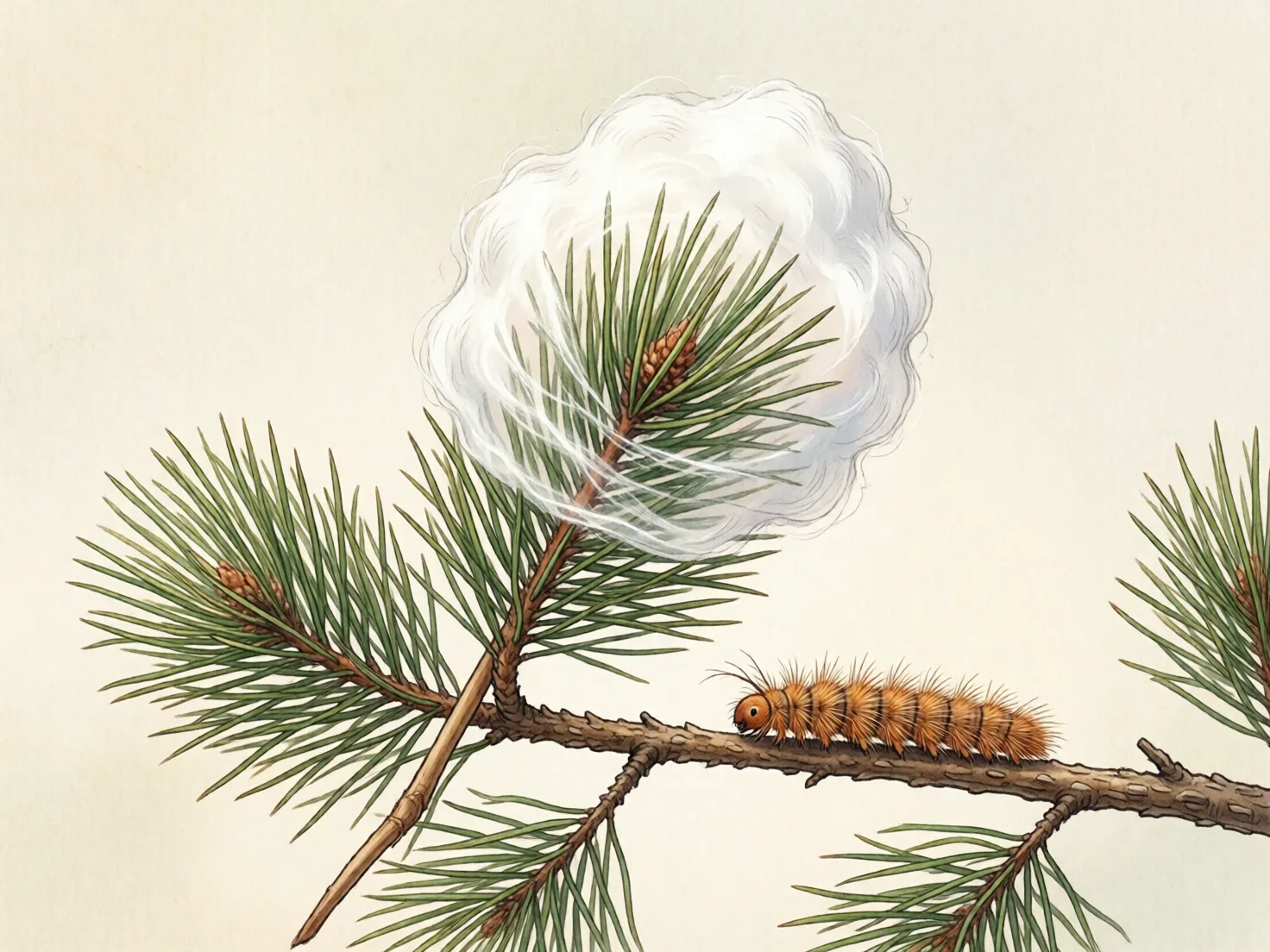
The most common ones on this plant. Tap one to see how to recognise it and what to do.