
Credits and licences
- #1 — vueltaalhuerto illustration
- #2 — vueltaalhuerto illustration
- #3 — vueltaalhuerto illustration
- #4 — vueltaalhuerto illustration
- #5 — vueltaalhuerto illustration
- #6 — vueltaalhuerto illustration
- #7 — vueltaalhuerto illustration
- #8 — vueltaalhuerto illustration
- #9 — vueltaalhuerto illustration
- #10 — vueltaalhuerto illustration
Brooklime (Veronica beccabunga)
and 1 more names
Veronica beccabungaBrooklime (Veronica beccabunga) is sown directly outdoors from March to April. It flowers from May to August. Grow it in full sun, 30 cm apart, with plenty of watering. Dates are for a mild temperate climate in the northern hemisphere; the calendar below adjusts them to your zone.
What else to sow in March and April
Brooklime is a small creeping perennial of streams, with fleshy, sprawling stems that root at the nodes and reach 10 to 60 cm, opposite, oval, thick, glossy leaves, and loose clusters of deep blue four-petalled flowers with a white eye, which emerge from the leaf axils between May and September. It is not watercress, although it looks similar because of its habitat: it lives with its roots in running water or in permanently wet mud, or as a marginal plant with water at most about 10 cm deep. In a pond it covers the edge with a green carpet, provides shelter for small creatures and is visited by bees and hoverflies. It wants sun or a little shade and clean water. LEGAL AND SAFETY NOTICE: it is native to Spain and is not listed as invasive; buy nursery-grown plants and do not pull it up from streams or springs, where it may be protected or part of a fragile habitat. Do not gather it from the wild to eat: the leaves are edible but very bitter, and plants growing in stream water where livestock graze can carry the larvae of the liver fluke Fasciola hepatica and other contaminants; we give no instructions for eating it. Do not confuse it with watercress or other water plants in the wild. Any pond, however shallow, poses a drowning risk for small children: fit a grid or a fence.
Family and origin: Plantain family (Plantaginaceae) · native to Streams, springs, ditches and waterlogged banks of Europe, North Africa and western Asia, including the Iberian Peninsula · More plants from Temperate Europe
01In your area
How will it do in your garden?
Year calendar
| Task | J | F | M | A | M | J | J | A | S | O | N | D |
|---|---|---|---|---|---|---|---|---|---|---|---|---|
| Direct sowingMar–Apr | no | no | yes | yes | no | no | no | no | no | no | no | no |
| Plant / transplantMar–May, Sep | no | no | yes | yes | yes | no | no | no | yes | no | no | no |
| FloweringMay–Aug | no | no | no | no | yes | yes | yes | yes | no | no | no | no |
| PruningMar | no | no | yes | no | no | no | no | no | no | no | no | no |
| CuttingsApr–Aug | no | no | no | yes | yes | yes | yes | yes | no | no | no | no |
| Divide the clumpMar–Apr, Sep | no | no | yes | yes | no | no | no | no | yes | no | no | no |
Its life cycle at a glance
Swipe and tap a stage to see its details.
02Planting
Where and how to plant it
Leave 30 cm between plants and 30 cm between rows.
30 cm between plants · 30 cm between rows
Seedlings are planted with the root ball level with the soil.
- Transplanting
- Mar–May, Sep
- Direct sowing
- Mar–Apr
- Germination
- ~21 days
- Common mistakeSowing out of season: many need warmth or a cold spell beforehand to sprout.
03Care
Care through the year
Sun and aspectFull sun · 6 h of sun · South or south-west, with nothing casting shade at midday
- Too little sun
- Ideal range
- Plenty of sun
South or south-west, with nothing casting shade at midday
Moderate sun: Copes with full sun, but give it some shade during heatwaves.
Sun or partial shade, preferably at least about four to six hours of sun so that it flowers. In very hot areas it appreciates shade during the middle of the day.
WateringVery moist, tolerates waterlogging · summer: daily or every 2 days when above 30 °C
- Summerdaily or every 2 days when above 30 °C2.1 L per plant/week
- Spring / Autumnevery 3-4 days1 L per plant/week
- Winterevery 2 weeks if dry0.2 L per plant/week
Very moist, tolerates waterlogging: Saturated or nearly saturated soil. Still watch out for fungal disease. Mulch: straw or dry plant material cuts watering by 30-50 %.
With the soil always saturated or with the crown under a few centimetres of water, up to about 10 cm above it (that is the usual maximum; some nurseries go up to 15). The rim of the basket should be barely covered. Plant it in a basket with garden soil or aquatic potting mix.
This is a plant for waterlogged soil or pond margins: the finger test does not help, because the soil must stay wet all the time. Make sure the mud never dries out and, if it grows in a pond, that the water covers the base as the profile says; in summer, top up what evaporates.
Soil and feedingpH 6–8 · Loose soil with organic matter and good drainage
Loose soil with organic matter and good drainage.
50 % topsoil · 30 % well-rotted compost · 20 % sand or perlite.
Medium/high.
This plant prefers a pH between 6.0 and 8.0 (slightly acidic to alkaline).
- Overfeeding gives lots of leaf and few flowers.
- Compacted, poorly drained soil rots the roots in winter.
- TipPlant it in a basket with garden soil and a layer of gravel, with the rim barely covered by water, or straight into the mud at the edge.
- Common mistakeOverfeeding gives lush leaves but few flowers.
PruningWhen: Mar
Pruning time for this plant: Mar.
- TipRemove faded flowers to prolong flowering.
Common mistakes and tips
- TipCut back stems that encroach in summer, because it spreads quickly all along the edge.
- TipRemove dead leaves in autumn.
- TipThe depth figures and dates are only a guide.
04Propagation
Make new plants
It is very easily propagated from stem-tip cuttings in spring or summer: cut a piece 8-10 cm long with several nodes and stand it in water or push it into waterlogged soil, and it roots in a few days. You can also divide the clump in spring or autumn, or sow seed on moist soil, uncovered, at about 12-20 °C.
Seeds: how to germinate them~21 days
05Uses and health
What it is used for, and with what care
It is not considered poisonous, but there are no reliable data for dogs and cats: as a precaution, do not let them chew it. Avoid eating plants growing in stream water, where there may be contamination or the liver fluke Fasciola hepatica. LEGAL AND SAFETY NOTICE: it is native and not listed as invasive; buy nursery-grown plants.
- Properties
- A marginal plant useful for sheltering small pond creatures and for the bees and hoverflies that visit its flowers. Uses have been attributed to it in traditional medicine, but they are unproven and this profile does not recommend them.
- Uses
- Although the leaves have traditionally been eaten, they are very bitter and wild water plants may be contaminated (for example, with the parasite Fasciola hepatica); we give no instructions for eating it.
For guidance only; this is not medical treatment and does not replace advice from a doctor or vet.
06Companions and related plants
What to plant it with
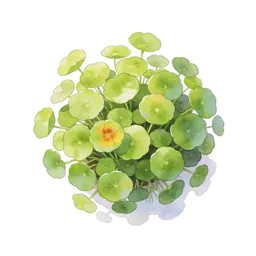
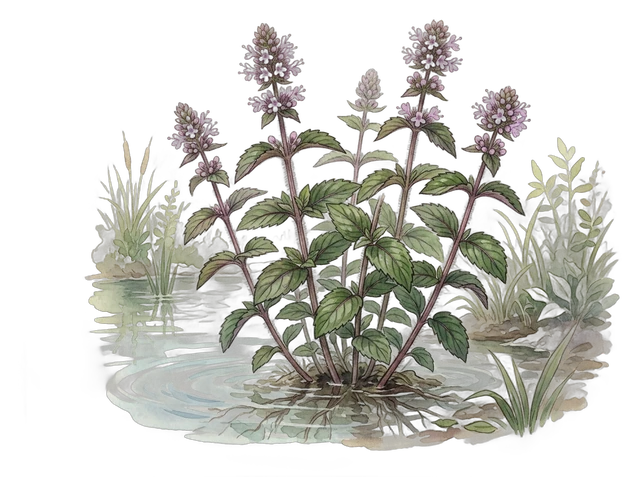
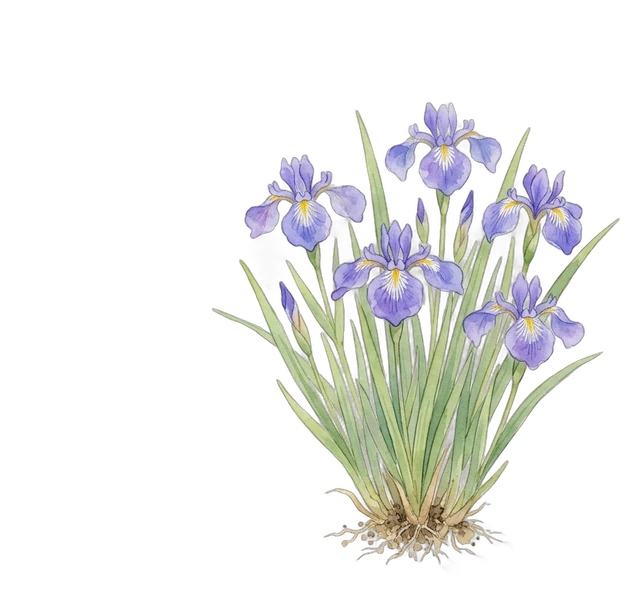
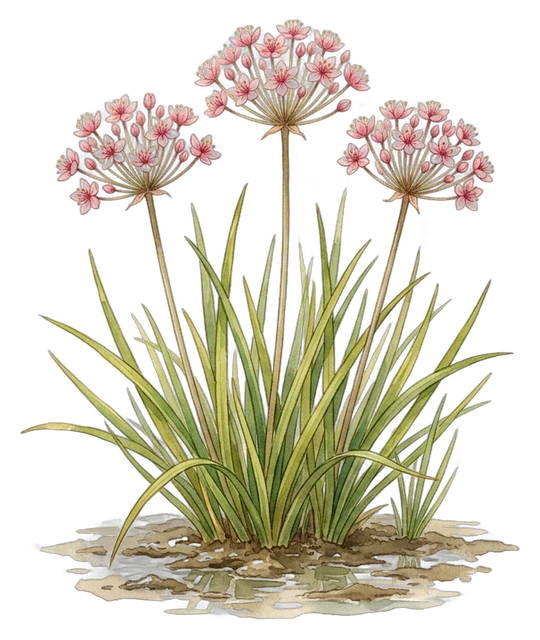
Compare with similar varieties
| Variety | Sowing | Harvest | Days | Spacing | Difficulty |
|---|---|---|---|---|---|
| Brooklime (Veronica beccabunga) | Mar–Apr | — | — | 30 cm | Easy |
| Spiked speedwell | Feb–May, Sep | Jun–Sep | — | 35 cm | Easy |
| Heath speedwell | Feb–Apr, Sep–Oct | Jun–Aug | ~120 | 30 cm | Easy |