Credits and licences
- #1 — vueltaalhuerto illustration
- #2 — vueltaalhuerto illustration
- #3 — vueltaalhuerto illustration
- #4 — vueltaalhuerto illustration
- #5 — vueltaalhuerto illustration
- #6 — vueltaalhuerto illustration
- #7 — vueltaalhuerto illustration
- #8 — vueltaalhuerto illustration
- #9 — vueltaalhuerto illustration
- #10 — vueltaalhuerto illustration
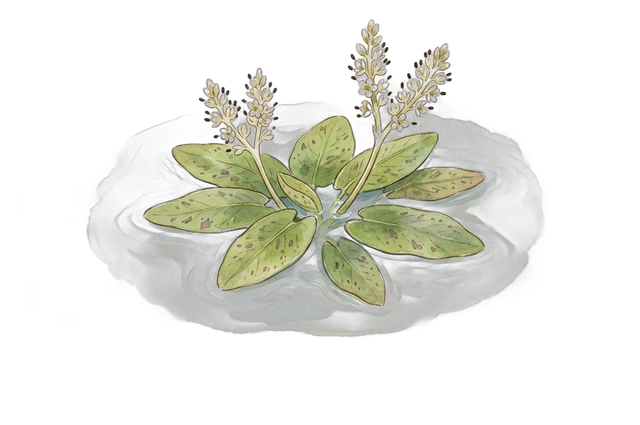
Marsh marigold
and 1 more names
water blobsMarsh marigold is sown directly outdoors from June to July. It flowers from March to May. Grow it in full sun, 40 cm apart, with plenty of watering. Dates are for a mild temperate climate in the northern hemisphere; the calendar below adjusts them to your zone.
What else to sow in June and July
A perennial wetland plant with a short rhizome and fleshy roots, forming a clump of glossy, rounded or kidney-shaped leaves 5 to 20 cm across, with slightly toothed edges, in a deep green. Between March and May, depending on the climate, it opens golden-yellow flowers 2 to 5 cm across that look like buttercups; what look like petals are actually five to eight sepals, with a ring of stamens in the centre. Afterwards it produces star-shaped fruits, the follicles, which split open and release brown seeds. It grows at the edges of ponds, streams and waterlogged meadows, with its roots always wet, and in summer heat it may lose its leaves and go dormant. SAFETY WARNING: the whole fresh plant contains protoanemonin and is irritant: the sap can cause redness and blisters on the skin and digestive upset if eaten, and it is toxic to livestock. It is not eaten or used as a home remedy, and do not confuse it with other yellow-flowered waterside plants, such as buttercups or the yellow flag iris. In the wild its populations are scarce in southern Spain and it may be protected in some Spanish regions, so do not dig up plants from the wild and buy only nursery plants or seed.
Family and origin: Buttercup family (Ranunculaceae) · native to Temperate and cold wetlands of the northern hemisphere, including those of the north and centre of the Iberian Peninsula · More plants from Temperate Europe
01In your area
How will it do in your garden?
Year calendar
| Task | J | F | M | A | M | J | J | A | S | O | N | D |
|---|---|---|---|---|---|---|---|---|---|---|---|---|
| Direct sowingJun–Jul | no | no | no | no | no | yes | yes | no | no | no | no | no |
| Plant / transplantMar–Apr, Sep–Oct | no | no | yes | yes | no | no | no | no | yes | yes | no | no |
| FloweringMar–May | no | no | yes | yes | yes | no | no | no | no | no | no | no |
| Divide the clumpMar–Apr, Sep | no | no | yes | yes | no | no | no | no | yes | no | no | no |
Its life cycle at a glance
Swipe and tap a stage to see its details.
02Planting
Where and how to plant it
Sow the seed 3 mm deep; leave 40 cm between plants and 40 cm between rows.
40 cm between plants · 40 cm between rows
Seed at a depth of 3 mm; seedlings go in with the root ball level with the soil.
- Transplanting
- Mar–Apr, Sep–Oct
- Direct sowing
- Jun–Jul
- Germination
- ~30 days
- TipKeep it away from children and pets that chew plants.
- Common mistakeSowing out of season: many need warmth or a cold spell beforehand to sprout.
03Care
Care through the year
Sun and aspectFull sun · 8 h of sun · shade in summer
- Too little sun
- Ideal range
- Plenty of sun
South or south-west, with nothing casting shade at midday
Moderate sun: Copes with full sun, but give it some shade during heatwaves.
Full sun or partial shade at the edge of a pond. In southern and inland Spain it appreciates some shade in the hottest hours of summer, because with heat and little water it loses its leaves.
WateringVery moist, tolerates waterlogging · summer: daily, or every 2 days above 30 °C
- Summerdaily, or every 2 days above 30 °C2.1 L per plant/week
- Spring / Autumnevery 3-4 days1 L per plant/week
- Winterevery 2 weeks if dry0.2 L per plant/week
Very moist, tolerates waterlogging: Saturated or nearly saturated soil. Still watch out for fungal disease. Mulch: straw or dry plant material cuts watering by 30-50 %.
It needs waterlogged or very moist soil all year round, especially in spring, when it is growing and flowering. Plant it at the edge of the pond or in a basket with the crown just level with the water or with 2 to 5 cm of water above it, never with the crown submerged any deeper. Use heavy, rich garden soil, without granular fertiliser, and keep the water level steady in summer so that it does not dry out.
This is a plant for waterlogged soil or pond margins: the finger test does not help, because the soil must stay wet all the time. Make sure the mud never dries out and, if it grows in a pond, that the water covers the base as the profile says; in summer, top up what evaporates.
Soil and feedingpH 5.5–7.5 · Loose soil with organic matter and good drainage
Loose soil with organic matter and good drainage.
50 % topsoil · 30 % well-rotted compost · 20 % sand or perlite.
Medium/high.
This plant prefers a pH between 5.5 and 7.5 (slightly acidic to slightly alkaline).
- Overfeeding gives lots of leaf and few flowers.
- Compacted, poorly drained soil rots the roots in winter.
- TipPlant it at the edge of a pond, in an aquatic planting basket with gravel on top of the soil so that it does not cloud the water, or in a waterlogged corner of the garden.
- Common mistakeOverfeeding gives lush leaves but few flowers.
Pruning
- TipRemove faded flowers to prolong flowering.
Common mistakes and tips
- TipIf the summer is very hot it may lose its leaves and regrow in the cool of autumn: this is a normal rest period.
- TipThe dates, depths and timings given are only a guide.
04Propagation
Make new plants
It is propagated mainly by division of the clump, in early spring, just after flowering, or at the end of summer: lift the clump, separate pieces with roots and shoots and replant them straight away with the crown level with the water. It can also be sown from fresh seed, collected when the follicles split open: sow it lightly covered in a tray kept waterlogged, outdoors, and it germinates with the cold of winter or the following spring, slowly and erratically. Dry seed germinates poorly.
Seeds: how to germinate them~30 days
- TipRemove dead leaves and flowers so that they do not rot in the water, and divide the clump every three or four years, when it becomes congested and flowers less.
- TipWear gloves when dividing or trimming it, because the sap irritates the skin, and wash your hands afterwards.
05Uses and health
What it is used for, and with what care
SAFETY WARNING: the fresh plant contains ranunculin, which releases protoanemonin, an irritant substance, when the tissues are broken. The sap can cause redness, itching and blisters on the skin, and if eaten it causes irritation of the mouth, stomach pain, vomiting and diarrhoea; it is also toxic to livestock and to dogs and cats. Drying removes much of its toxicity, but it should not be used. Wear gloves when dividing or trimming it, wash your hands and do not confuse it with other yellow-flowered waterside plants. If you suspect it has been swallowed, in Spain call the Toxicology Information Service (91 562 04 20) or 112, or call the vet.
- Properties
- It is an ornamental wetland plant: its spring flowers provide nectar and pollen for bees and flower flies at a time when few flowers are out, and its leaves give shelter to amphibians and pond-edge wildlife. It is not used as a household medicinal plant.
- Uses
- It is not edible: it is not eaten or used in infusions or home remedies. Old references to its buds or flower buds as food refer to a traditional preparation involving repeated boiling, which is not safe at home.
For guidance only; this is not medical treatment and does not replace advice from a doctor or vet.
06Companions and related plants