
Credits and licences
- #1 — vueltaalhuerto illustration
- #2 — vueltaalhuerto illustration
- #3 — vueltaalhuerto illustration
- #4 — vueltaalhuerto illustration
- #5 — vueltaalhuerto illustration
- #6 — vueltaalhuerto illustration
- #7 — vueltaalhuerto illustration
- #8 — vueltaalhuerto illustration
- #9 — vueltaalhuerto illustration
- #10 — Krzysztof Golik · CC BY-SA 4.0 see on Wikimedia
- #11 — Marija Gajić · CC BY-SA 4.0 see on Wikimedia
- #12 — Giancarlo Dessì · CC BY-SA 3.0 see on Wikimedia
Bay laurel
and 1 more names
Laurus nobilisBay laurel is sown in seed trays from March to April, and planted out from March to May and from September to October. It is harvested all year round. Grow it in sun or partial shade, 200 cm apart, with little watering. Dates are for a mild temperate climate in the northern hemisphere; the calendar below adjusts them to your zone.
What else to sow in March and April
Bay is an evergreen shrub or small tree with leathery, aromatic leaves, indispensable in the kitchen. It grows slowly, takes very well to clipping as a hedge or ball and copes with drought and partial shade, although hard frosts scorch its leaves.
Family and origin: Laurel family (Lauraceae) · native to Eastern Mediterranean basin (Greece) · More plants from Mediterranean basin
01In your area
How will it do in your garden?
Year calendar
| Task | J | F | M | A | M | J | J | A | S | O | N | D |
|---|---|---|---|---|---|---|---|---|---|---|---|---|
| Seed trayMar–Apr | no | no | yes | yes | no | no | no | no | no | no | no | no |
| Plant / transplantMar–May, Sep–Oct | no | no | yes | yes | yes | no | no | no | yes | yes | no | no |
| Harvestall year round | yes | yes | yes | yes | yes | yes | yes | yes | yes | yes | yes | yes |
| FloweringFeb–Apr | no | yes | yes | yes | no | no | no | no | no | no | no | no |
| PruningMar–Apr | no | no | yes | yes | no | no | no | no | no | no | no | no |
| CuttingsJul–Sep | no | no | no | no | no | no | yes | yes | yes | no | no | no |
Its life cycle at a glance
Swipe and tap a stage to see its details.
02Planting
Where and how to plant it
Sow the seed 1 cm deep; leave 2 m between plants.
2 m between plants
Seed at a depth of 1 cm; seedlings go in with the root ball level with the soil.
- In a square-foot bed
- 1 plant every 49 squares30 × 30 cm squares
- Transplanting
- Mar–May, Sep–Oct
- Seed tray
- Mar–Apr
- Germination
- ~60 days
03Care
Care through the year
Sun and aspectSun and shade · 5 h of sun · shade in summer
- Too little sun
- Ideal range
- Plenty of sun
East, or south with light shade in the middle of the day
Moderate sun: Copes with full sun, but give it some shade during heatwaves.
WateringLet it dry out between waterings · summer: every 5-7 days
- Summerevery 5-7 days0.4 L per plant/week
- Spring / Autumnevery 10-14 days0.2 L per plant/week
- Winteronly if extremely dry (once a month)0.1 L per plant/week
Let it dry out between waterings: A Mediterranean favourite: better thirsty than overwatered.
When to water? Push your finger 5 cm into the soil next to the base of the plant:
- Damp: soil sticks to your finger. Do not water yet. It has more than enough; wait for it to dry out more.
- Cool but clean, no mud. Wait another 1-2 days before watering.
- Dry and dusty. Water now, but moderately. Do not overdo it: it prefers thirst to excess.
- TipIt grows in sun or partial shade; water it moderately in its first summer and sparingly after that.
- Common mistakeOverwatering: most prefer to dry out between waterings.
Soil and feedingFree-draining, airy mix
Free-draining, airy mix.
40 % topsoil · 30 % coarse sand or perlite · 30 % well-rotted compost (less compost for Mediterranean herbs).
High: almost all prefer being thirsty to being wet.
This plant prefers a pH between 6.5 and 7.5 (neutral to slightly alkaline).
- Mediterranean herbs in very rich, heavily watered soil: they grow a lot but lose their aroma.
- A pot without a drainage hole: the roots rot within weeks.
- TipMany Mediterranean herbs prefer poor soil and little water: more aroma.
PruningWhen: Mar–Apr
Pruning time for this plant: Mar–Apr.
- TipIt is an aromatic shrub that is pruned to keep it in check after the spring flush of growth.
- TipPinch out the tips often so it branches and does not run to seed so soon.
Common mistakes and tips
- Common mistakeLetting them flower early makes the leaves bitter (in leafy herbs).
04Harvest
Harvesting and storing
Harvest in all year round.
05Propagation
Make new plants
The simplest option is to buy a nursery plant or separate the suckers that come up from the base. Semi-ripe cuttings taken in summer root slowly and do not always take. The seed, produced only by female plants, takes months to germinate.
06Uses and health
What it is used for, and with what care
Culinary bay (Laurus nobilis) is safe as a seasoning, but the whole leaf is not eaten: take it out of the stew, because it can cause choking or a blockage. In pets, its oils can cause digestive upset. Do not confuse it with cherry laurel (Prunus laurocerasus) or with oleander, sometimes called 'rose laurel' (Nerium oleander), both of which are very toxic.
- Properties
- An aromatic seasoning that aids digestion; leaves used in stews.
- Uses
- Dried leaf as a seasoning (remove before serving).
For guidance only; this is not medical treatment and does not replace advice from a doctor or vet.
07Companions and related plants
What to plant it with

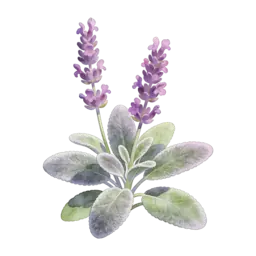
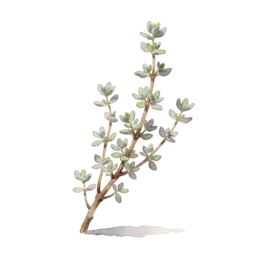
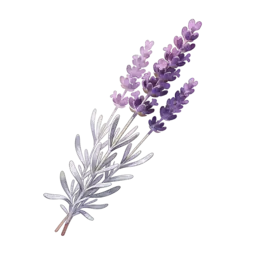
Group it in the same bedPlants with the same watering or the same sun
They are not essential companions, but you will not have to water or position them differently.
Same watering · Little water
Compare with similar varieties
| Variety | Sowing | Harvest | Days | Spacing | Difficulty |
|---|---|---|---|---|---|
| Cherry laurel | — | Apr–May | — | 150 cm | Easy |
| Bay laurel | Mar–Apr | all year round | — | 200 cm | Easy |