
Credits and licences
- #1 — vueltaalhuerto illustration
- #2 — vueltaalhuerto illustration
- #3 — vueltaalhuerto illustration
- #4 — vueltaalhuerto illustration
- #5 — vueltaalhuerto illustration
- #6 — vueltaalhuerto illustration
- #7 — vueltaalhuerto illustration
- #8 — vueltaalhuerto illustration
- #9 — vueltaalhuerto illustration
- #10 — vueltaalhuerto illustration
Baby sage (Salvia microphylla)
and 2 more names
shrubby sage, Salvia microphyllaBaby sage (Salvia microphylla) is sown in seed trays from February to March, and planted out from March to May and from September to October. It flowers from May to October. Grow it in full sun, 80 cm apart, with moderate watering. Dates are for a mild temperate climate in the northern hemisphere; the calendar below adjusts them to your zone.
What else to sow in February and March
A shrubby sage 60 to 120 cm tall and as wide, much branched and with thin stems, forming a rounded clump of small, oval, glossy green aromatic leaves with a scent reminiscent of blackcurrant. It flowers abundantly and almost continuously from spring into autumn, with two-lipped tubular flowers from pink to magenta or cherry red, although there are varieties with red, white, bicoloured or salmon flowers. It attracts bees, bumblebees and, in its native land, hummingbirds. It is a drought-resistant, low-maintenance plant, suitable for beds, low hedges, borders and large pots. In cooking only the flowers are used, as a garnish. Do not confuse it with common sage (Salvia officinalis) or with scarlet sage (Salvia splendens), which is an annual.
Family and origin: Mint family (Lamiaceae) · native to Mexico and the southern United States (Arizona) · More plants from Mesoamerica
01In your area
How will it do in your garden?
Year calendar
| Task | J | F | M | A | M | J | J | A | S | O | N | D |
|---|---|---|---|---|---|---|---|---|---|---|---|---|
| Seed trayFeb–Mar | no | yes | yes | no | no | no | no | no | no | no | no | no |
| Plant / transplantMar–May, Sep–Oct | no | no | yes | yes | yes | no | no | no | yes | yes | no | no |
| HarvestMay–Oct | no | no | no | no | yes | yes | yes | yes | yes | yes | no | no |
| FloweringMay–Oct | no | no | no | no | yes | yes | yes | yes | yes | yes | no | no |
| PruningMar–Apr | no | no | yes | yes | no | no | no | no | no | no | no | no |
| CuttingsMay–Sep | no | no | no | no | yes | yes | yes | yes | yes | no | no | no |
| Divide the clumpMar–Apr | no | no | yes | yes | no | no | no | no | no | no | no | no |
Its life cycle at a glance
Swipe and tap a stage to see its details.
02Planting
Where and how to plant it
Sow the seed 2 mm deep; leave 80 cm between plants and 90 cm between rows.
80 cm between plants · 90 cm between rows
Seed at a depth of 2 mm; seedlings go in with the root ball level with the soil.
- Transplanting
- Mar–May, Sep–Oct
- Seed tray
- Feb–Mar
- Germination
- ~14 days
- Common mistakePlanting too deep smothers the crown of the plant.
03Care
Care through the year
Sun and aspectFull sun · 8 h of sun · South or south-west, with nothing casting shade at midday
- Too little sun
- Ideal range
- Plenty of sun
South or south-west, with nothing casting shade at midday
Strong sun: Loves full midday sun and high temperatures.
Full sun to flower well; it tolerates some light afternoon shade in very hot areas. Shelter it from cold winter winds if you live in a climate with frosts.
WateringLet it dry out between waterings · summer: every 2-3 days
- Summerevery 2-3 days6 L per plant/week
- Spring / Autumnevery 4-5 days3 L per plant/week
- Winterevery 2-3 weeks0.9 L per plant/week
Let it dry out between waterings: A Mediterranean favourite: better thirsty than overwatered. Mulch: straw or dry plant material cuts watering by 30-50 %.
Water regularly during the first year and then moderately; it copes well with drought, but in summer a watering every one or two weeks keeps it flowering. It needs light, well-drained soil: standing water in winter is what harms it most.
When to water? Push your finger 4 cm into the soil next to the base of the plant:
- Damp: soil sticks to your finger. Do not water yet. It has more than enough; wait for it to dry out more.
- Cool but clean, no mud. Wait another 1-2 days before watering.
- Dry and dusty. Water now, but moderately. Do not overdo it: it prefers thirst to excess.
- TipIn areas with hard frosts, mulch the base in winter; if the top growth freezes, it usually resprouts from the base.
- TipWater generously in the first year until it is established; after that it looks after itself.
Soil and feedingpH 6–8 · Deep soil with good drainage
Deep soil with good drainage.
Medium/high.
This plant prefers a pH between 6.0 and 8.0 (slightly acidic to alkaline).
- Water generously in the first year until it is established.
- A thick mulch all year round, not touching the trunk.
PruningWhen: Mar–Apr
Pruning time for this plant: Mar–Apr.
- TipPrune at the end of winter or in spring, when the buds are already breaking, cutting back a third of the plant without reaching old wood, and trim the tips again after the first flush of flowers so that it resprouts.
- TipDeadhead faded flowers to prolong flowering.
- TipFormative pruning after flowering keeps the shape compact.
- Common mistakePruning at the wrong time removes the year's flower buds.
Common mistakes and tips
- TipWatch for aphids, red spider mite in dry heat and snails on young shoots.
04Harvest
Harvesting and storing
Harvest in May–Oct.
05Propagation
Make new plants
Cuttings are the most reliable method, because they keep the flower colour and habit of the parent plant: take softwood cuttings 8 to 10 cm long in spring and early summer, or semi-ripe ones in late summer, and plant them in moist sand and peat, where they root in three to five weeks. A large clump can also be divided in spring. Seed is possible, sown in February or March at 18 to 24 °C, but it gives very variable plants, especially from garden varieties, which are hybrids and selections.
Seeds: how to germinate them~14 days
06Uses and health
What it is used for, and with what care
No cases of serious poisoning from small amounts of the flowers are known. Owing to a lack of studies, avoid the leaves and stems in infusions or as a spice, and do not take it during pregnancy or breastfeeding. There are no reliable data for dogs and cats, so do not let them chew it in quantity. If you are allergic to other members of the mint family, try a single flower with caution. Do not confuse it with common sage, whose culinary use is better documented.
- Properties
- It is an ornamental, nectar-rich plant. Its flowers can be used as a garnish on dishes and desserts, but no proven medicinal properties are attributed to it.
- Uses
- The fresh flowers, with a mild, slightly sweet flavour, are used in small amounts as a garnish for salads, desserts and drinks, only from plants that have not been treated. The leaves are not used as food or in infusions owing to a lack of reliable data. There are no established doses.
For guidance only; this is not medical treatment and does not replace advice from a doctor or vet.
07Companions and related plants
What to plant it with
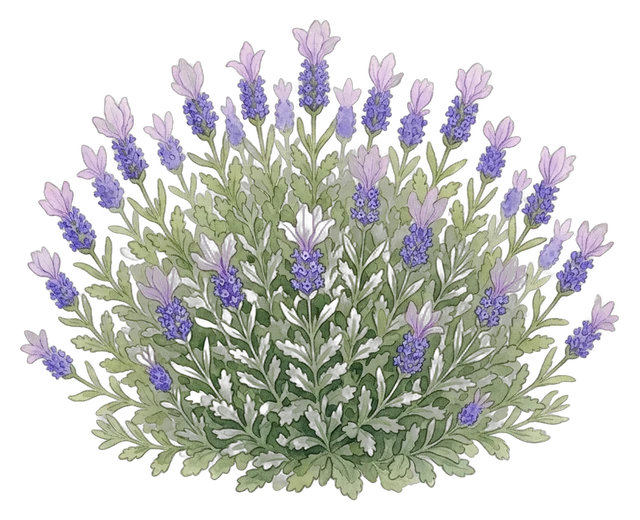

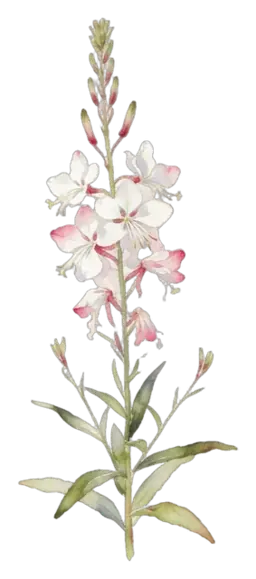
Compare with similar varieties
| Variety | Sowing | Harvest | Days | Spacing | Difficulty |
|---|---|---|---|---|---|
| Mealycup sage (Salvia farinacea) | Jan–May | Jun–Oct | — | 35 cm | Easy |
| White sage | Feb–May | May–Sep | ~365 | 100 cm | Moderate |
| Canary Island sage | Feb–May | Apr–Jul | — | 100 cm | Easy |
| Jerusalem sage | Mar–May | May–Jul | — | 120 cm | Easy |
| Common sage (Salvia officinalis) | Mar–Apr | May–Sep | — | 50 cm | Easy |
| Woodland sage 'Caradonna' | Mar–Apr, Oct | May–Aug | — | 40 cm | Easy |
| Painted sage (annual clary) | Feb–May, Oct | May–Sep | ~90 | 25 cm | Easy |
| Pineapple sage | Mar–Apr | Jun–Oct | — | 60 cm | Moderate |
| Purple sage (Salvia officinalis 'Purpurascens') | Mar–May, Sep–Nov | May–Sep | — | 50 cm | Easy |
| Chinese red sage (danshen) | Feb–Mar | May–Aug | — | 50 cm | Easy |
| Clary sage | Mar–Jun, Sep | Jun–Sep | ~330 | 50 cm | Easy |
| Baby sage (Salvia microphylla) | Feb–Mar | May–Oct | — | 80 cm | Easy |
| Wild clary | Mar–Apr | Apr–Jul | — | 30 cm | Easy |
| Scarlet sage (Salvia splendens) | Mar | Jun–Sep | — | 30 cm | Easy |
| Whorled clary (Salvia verticillata) | Feb–May | Jun–Aug | — | 50 cm | Easy |