In this article (20 sections)
- Nettle feed
- What it supplies
- Ingredients
- Preparation
- How to use it
- When not to use it
- Storage
- Horsetail decoction (Equisetum arvense)
- What it supplies
- Ingredients
- Preparation
- How to use it
- When to use it
- Precaution when gathering it
- Other useful plant feeds
- Comfrey feed (Symphytum officinale)
- Yarrow and tansy feed
- How to combine them in the garden
- Gathering the plants
- Precautions
Two wild plants that you do not buy and that, well prepared, serve two different purposes: nettle is a nitrogen-rich fertiliser, and horsetail is a preventive against fungi. They should not be confused: one feeds the plant and the other protects it. Here are the two recipes.
Nettle feed
What it supplies
It is a fertiliser of traditional use that supplies mainly quick-acting nitrogen, and some potassium and other minerals in variable amounts. Some gardeners also use it against aphids, but that is little demonstrated: do not count on it.
Ingredients
- 1 kg (2.2 lb) of fresh nettles, best before they flower and set seed.
- 10 L (about 2.6 US gal) of water, preferably rainwater or water left to stand, without chlorine.
- 1 wide-mouthed bucket or demijohn.
Preparation
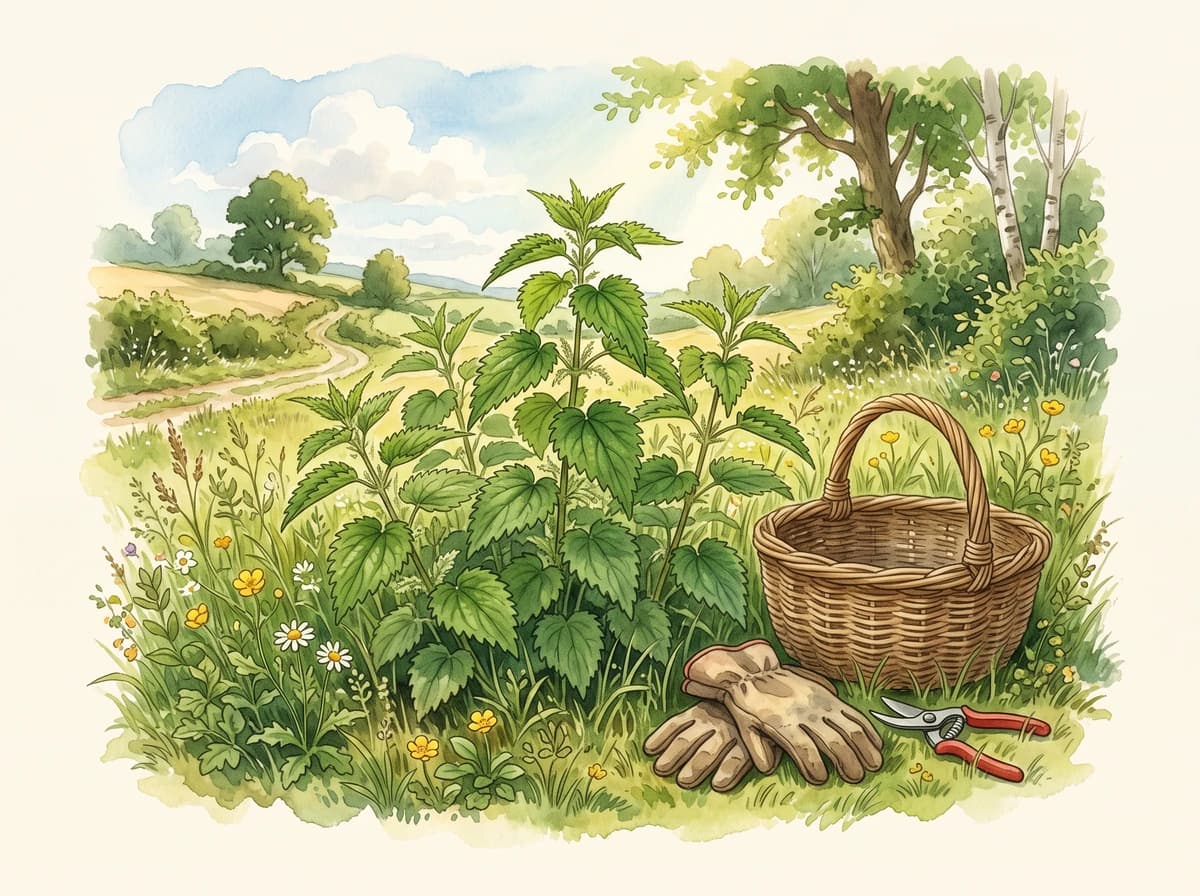
- Cut the nettles wearing gloves.
- Chop them: that way they ferment sooner.
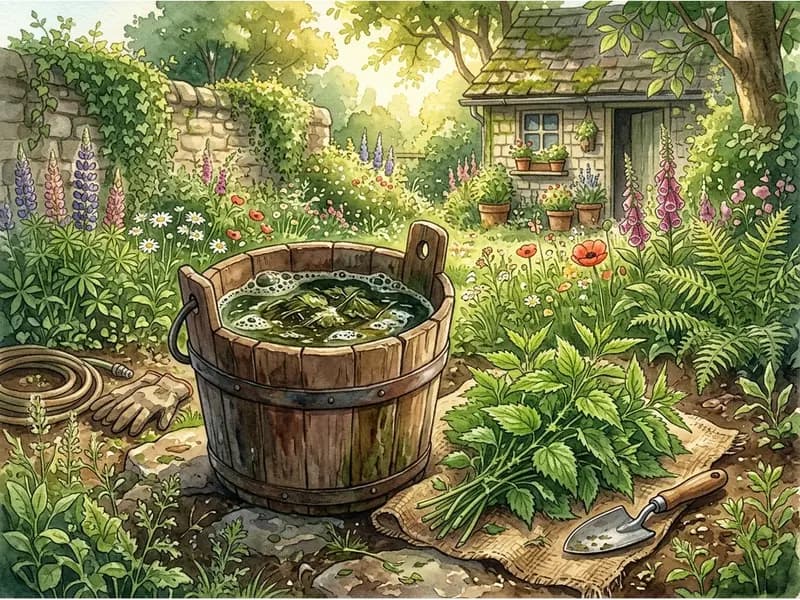
- Put them in the bucket and cover them with the water.
- Stir every day to aerate the mixture.
- Cover without closing fully, so that the gases escape.
- It is ready when it stops bubbling when stirred and the smell is very strong.
Time: 7-10 days in the heat and 12-15 days in spring or autumn.
Take care: it smells very bad. Put it away from the house and the neighbours.
How to use it
- Watering at the base: dilute the feed to 10 % (1 L, about 1.1 quarts of feed and 9 L, about 2.4 US gal of water) and water every 10-15 days while the plant grows.
- Seed trays: dilute it much more (1:50) and water gently.
Never use it undiluted, because it burns roots and leaves. If you spray it on the leaves, make it very dilute and never on open flowers.
When not to use it
- When the plant is already in full flower and fruit set: the excess nitrogen gives lots of leaf and little fruit.
- In winter or in hard cold: the plants do not make use of it.
- On legumes (bean, pea, broad bean), which make their own nitrogen, or on onions and garlic close to harvest.
- If the plant has recently received another supply of nitrogen.
Storage
In a closed demijohn and in the shade it lasts several months, although over time it loses nitrogen. Label it with the preparation date.
Horsetail decoction (Equisetum arvense)
What it supplies
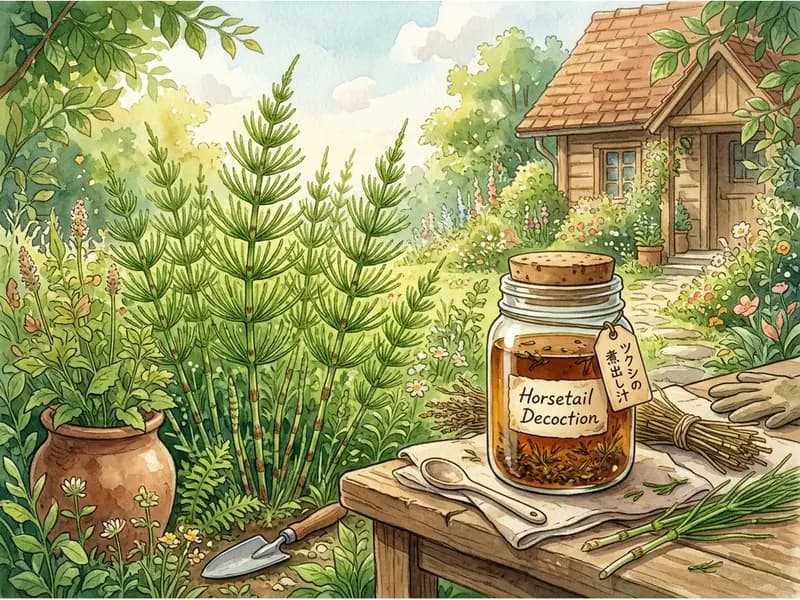
Horsetail accumulates silica and saponins. They are believed to reinforce the leaves and make it harder for spores of fungi such as downy mildew, powdery mildew or botrytis to germinate. The mechanism is not fully proven and its effect is weaker than that of an authorised fungicide: it is a preventive, not a cure. It is not a fertiliser.
Ingredients
- 100-150 g (3.5–5.3 oz) of dried horsetail, or 1 kg (2.2 lb) of fresh, for 10 L (about 2.6 US gal) of water.
- A large pot.
- A spray bottle.
Preparation
- Leave the stems 24 hours to soak in the water.
- Boil them over a low heat for 20-30 minutes.
- Let it cool and strain through a fine cloth.
- Dilute 1 part of decoction in 5 of water before using it.
It is prepared by decoction (boiling), not by fermentation: boiling is what extracts the silica. Use it within 3-5 days, because it spoils soon and smells bad if left at room temperature.
How to use it
- Preventive foliar spray: diluted 1:5 (200 ml, 6.8 fl oz of decoction per litre of water). Spray in the morning, in gentle sun or in the shade, and wet both sides of the leaf.
- Frequency: once a week in risk periods, and repeat it after heavy rain.
Do not expect it to cure plants that are already very diseased. It works best before the fungi appear, and always alongside basic measures: ventilating, watering at the base and not wetting the leaves.
When to use it
When there is a risk of fungi: rainy spring, high humidity or cool, damp nights. It is used mainly on tomato, potato, vine, strawberry, courgette, rose and fruit trees.
Precaution when gathering it
Gather only field horsetail (Equisetum arvense), recognisable by its branched green stems that look like a tail. Do not use other species from waterlogged areas: Equisetum palustre is toxic to livestock. If you are not sure, buy the dried plant at a herbalist's.
Other useful plant feeds
Comfrey feed (Symphytum officinale)
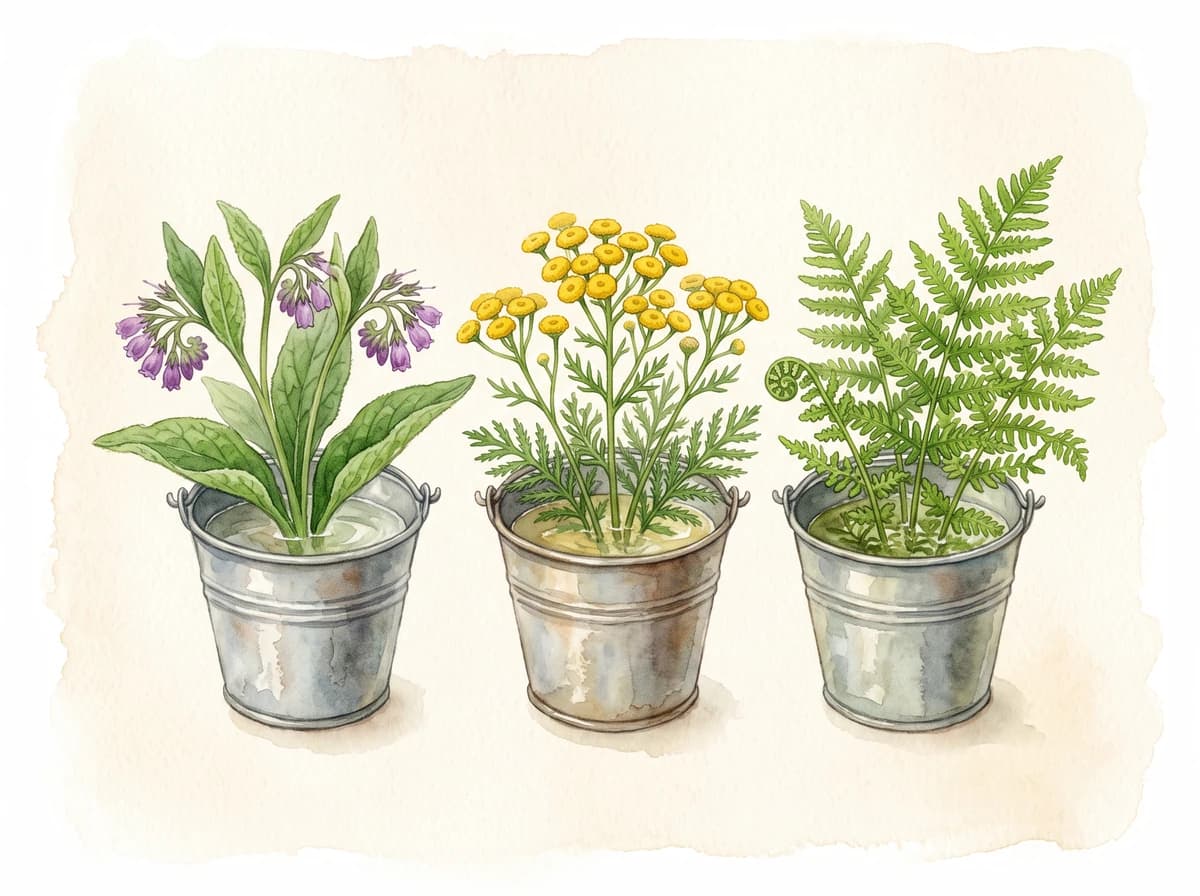
- It is richer in potassium, and favours flowering and fruiting.
- It is prepared like the nettle one, with 1 kg (2.2 lb) of leaves per 10 L (about 2.6 US gal) of water, but takes longer: two or three weeks.
- It is diluted between 1:10 and 1:20 and watered at the base every 10-15 days while the plant flowers and sets fruit.
- The plant spreads easily: better to plant it in a separate corner.
Yarrow and tansy feed
They are mentioned in the organic tradition as a compost activator (yarrow) and as an insect repellent (tansy), but there is little evidence that backs their results. Try them if you have the plants to hand, without expecting miracles.
How to combine them in the garden
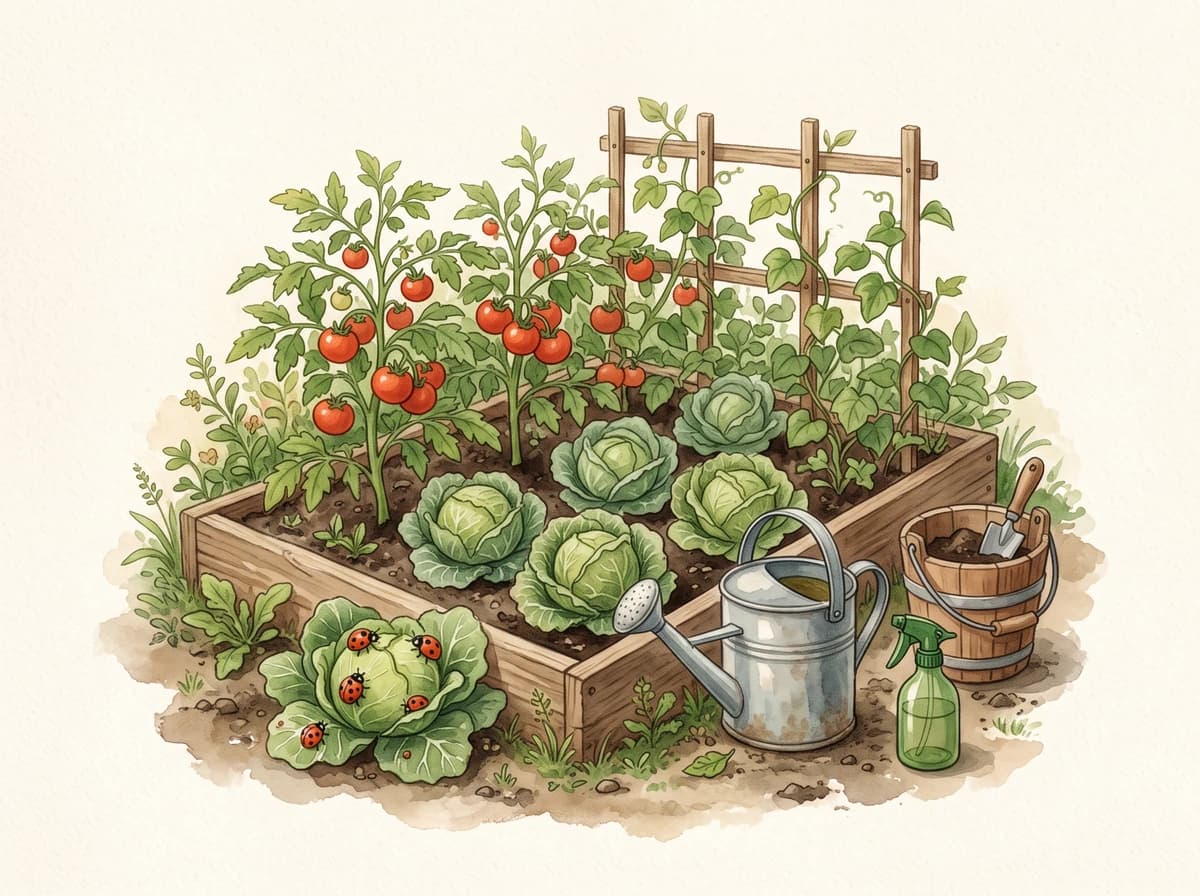
They are two products with different uses, so there is no need to alternate them like a rigid calendar. A reasonable guideline in spring and summer:
- Fertiliser: nettle feed 1:10 at the base every 10-15 days while the plant grows, and comfrey feed when it starts to flower.
- Protection: horsetail decoction 1:5 as a weekly spray in damp periods or after rain.
Gathering the plants
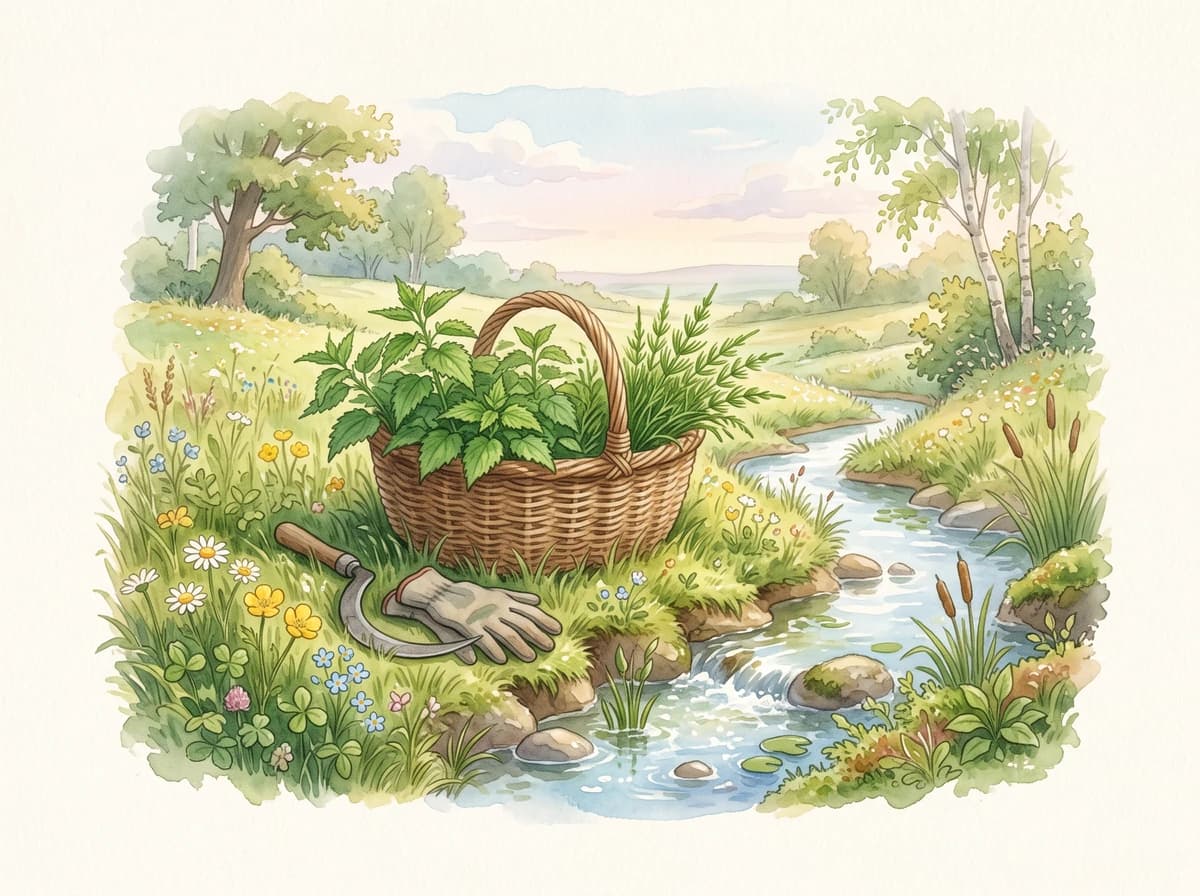
- Nettle: on path edges, abandoned gardens and damp areas, always away from roads and from fields treated with plant protection products.
- Horsetail: in damp roadside ditches, irrigation channels and riverbanks. Identify it well (see above).
Gather both in spring or early summer, before flowering or before they go to seed. They can be dried and kept in paper sacks for one or two years.
Precautions
They are natural preparations, but not harmless. Always dilute, do not spray on vegetables you will eat in the next 3-5 days, do not apply in the strong midday sun and avoid open flowers.

Profiles with symptoms, prevention and organic treatment.