In this article (13 sections)
- 1. Blossom end rot (black bottom)
- 2. Splits in the skin (cracking)
- 3. Curled leaf
- 4. Downy mildew (Phytophthora)
- 5. Tomato spotted wilt virus (TSWV)
- 6. Poor fruit set (flowers that drop without giving fruit)
- Other less common problems
- Hollow tomato
- Catfacing
- Hard white patches on the skin
- Roots on the stem
- Integrated tomato prevention
- In 2-3 years
The tomato is the king of the garden and, at the same time, one of the crops that gives the most problems. These are the six you will almost certainly see, with their cause and what is worth doing in each case.
1. Blossom end rot (black bottom)
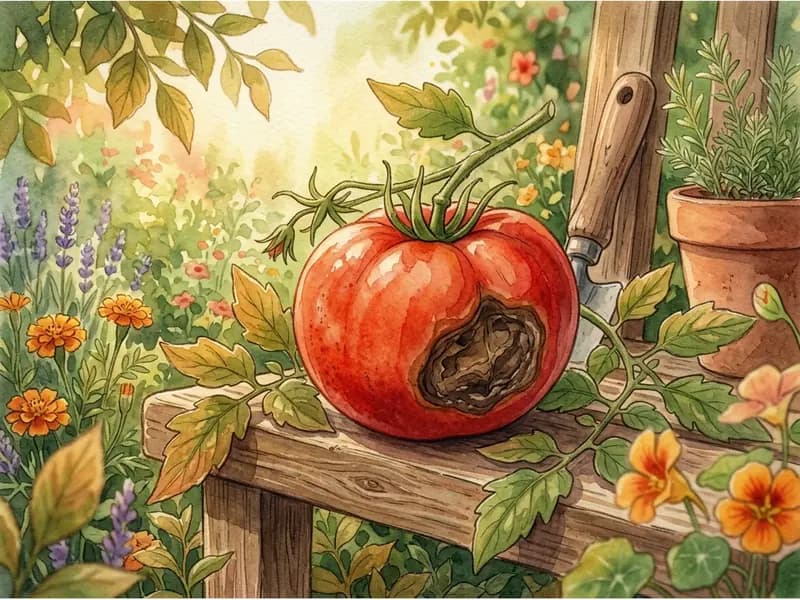
Appearance: a dark, brown-black patch at the base of the tomato (the “bottom”). Once you see it, that fruit no longer recovers.
Cause: lack of calcium in the fruit. It is almost never because there is no calcium in the soil, but because the plant cannot get it to the fruit, mainly because of:
- Irregular watering (alternating drought and waterlogging).
- Excess nitrogen in the feeding.
- Very acid or very alkaline soil pH.
- Heat stress.
Solution: what works best is keeping the moisture constant.
- Regular, deep watering, with mulch.
- Well-made compost when planting, and not overdoing nitrogen or using fresh manure.
- Remove the affected fruit: the following ones, if watering is regular, usually come out healthy.
- Calcium sprays on the leaves (for example, calcium chloride at 0.5 %) are of doubtful effectiveness and can scorch the leaf, so do not count on them. Crushed eggshell does not supply calcium quickly either, although it does no harm.
2. Splits in the skin (cracking)
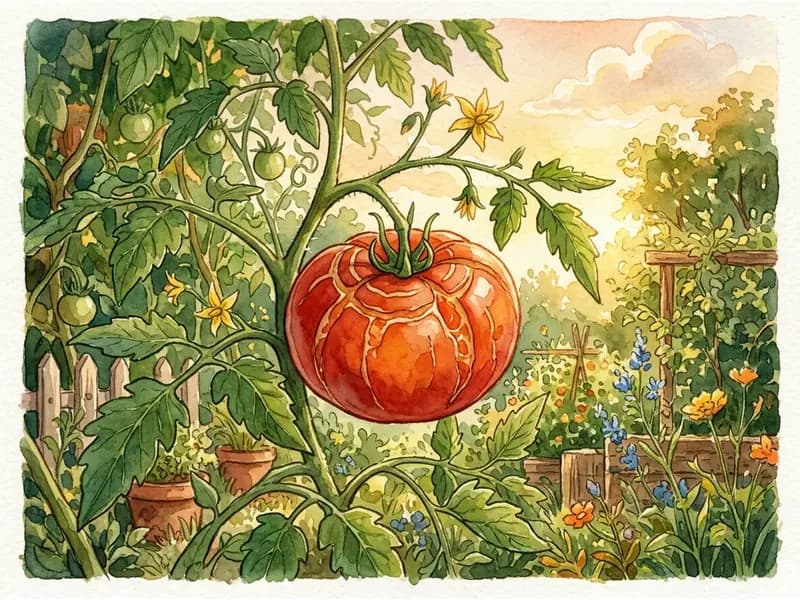
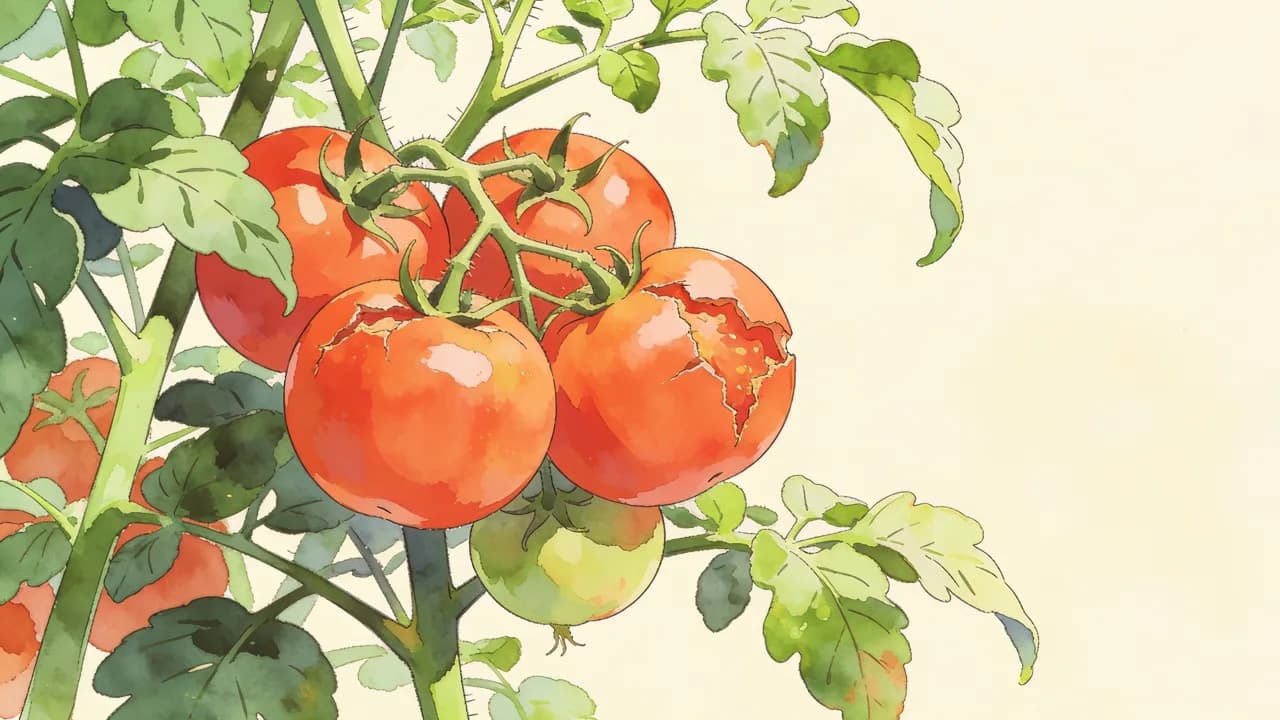
Appearance: circular or radial cracks in the ripe tomato.
Cause: a sudden change in moisture. After a few dry days, you water or it rains, the fruit absorbs water quickly, the skin cannot stretch at the same rate and it breaks. Direct sun on the fruit and the thin skin of some varieties also play a part.
Solution:
- Constant, regular watering (better with drip).
- Thick mulch to cushion the ups and downs.
- Harvest almost-ripe fruit before the rain if it is forecast after a few dry days.
- Do not strip too many leaves: the leaves shade the fruit.
- Choose varieties with thicker skin or a reputation for being resistant. Neither cherries nor big varieties are safe: almost all split if the moisture varies a lot.
3. Curled leaf
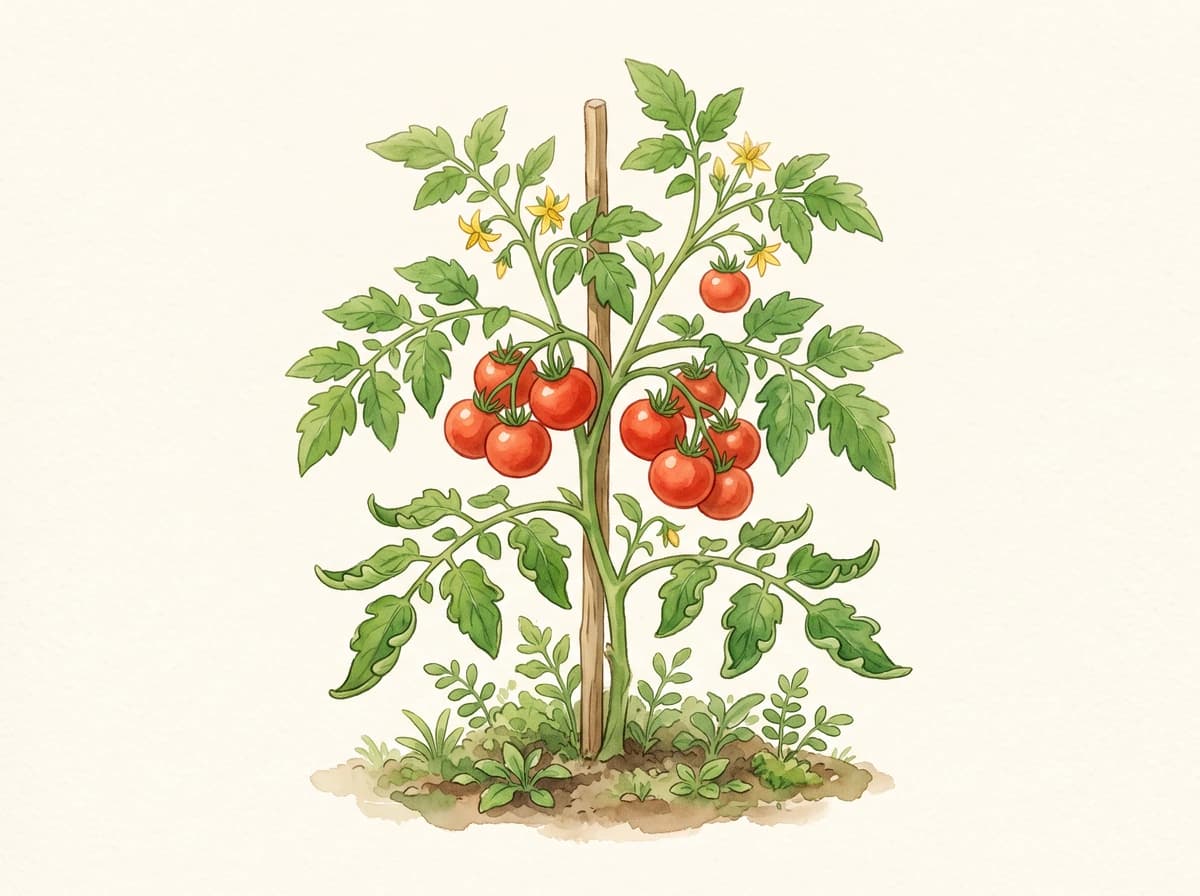
Appearance: the leaves curl upwards forming a little tube.
Cause: it is usually physiological, not a disease. The most frequent are:
- Water stress: from drought or from waterlogging.
- Excessive heat (more than 35 °C, 95 °F) for several days.
- Excessive pruning: too much leaf removed when topping or side-shooting.
- Viruses (this is the least likely cause).
Solution:
- Regularise the watering.
- Shade netting of 30 % in the critical hours of summer.
- Do not remove more than a third of the leaf at once: prune gradually.
If the plant grows well and gives fruit, there is nothing to worry about.
4. Downy mildew (Phytophthora)
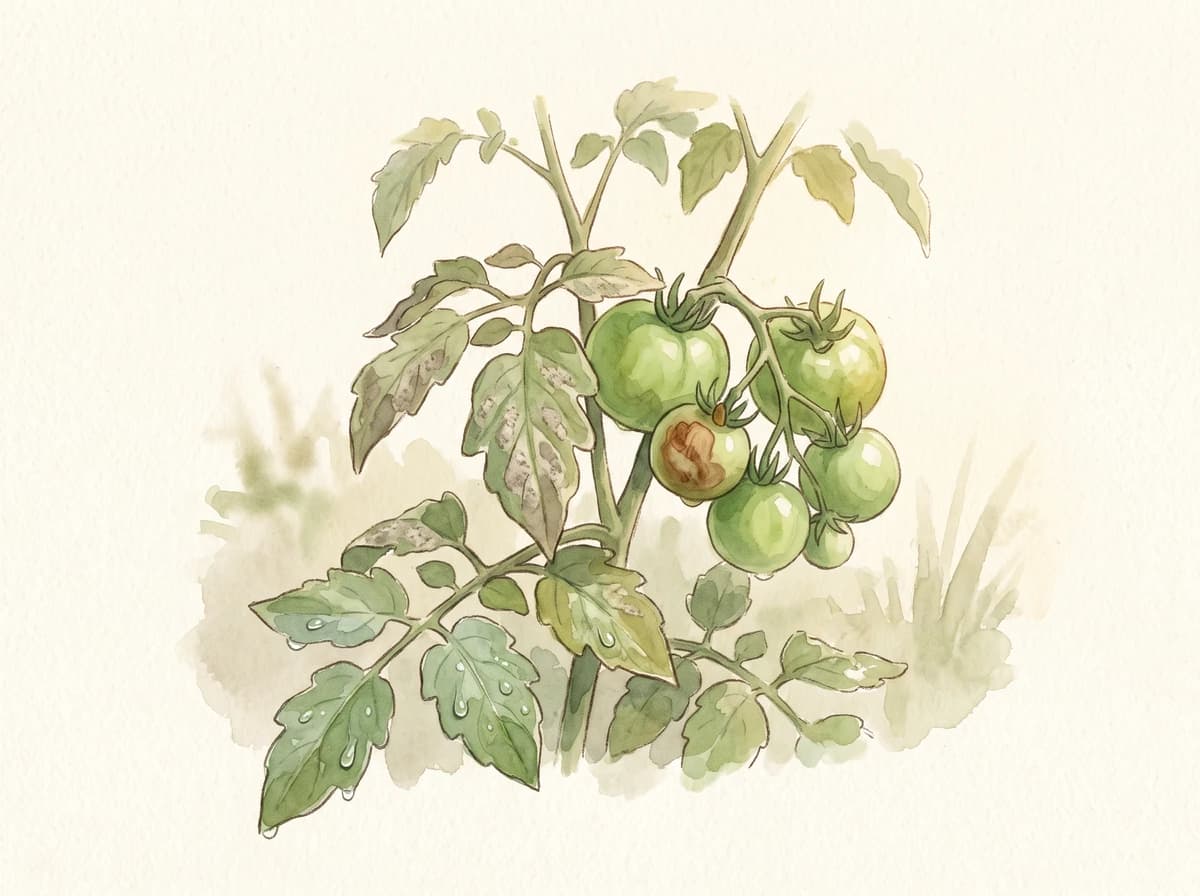
Appearance: yellow spots on the upper side that turn brown, with a whitish or greyish mould on the underside. The fruit shows dark spots.
Cause: a fungus (actually, an oomycete). It needs high humidity and mild temperatures (15-22 °C, 59–72 °F approximately). It gets worse with:
- Watering over the leaves.
- Plants very close together (little ventilation).
- Rainy autumns or springs.
Solution:
- Remove the affected leaves as soon as possible and take them out of the garden.
- Always water at the base, without wetting the leaves.
- As a preventive treatment, if the weather is humid, Bordeaux mixture (authorised in organic farming). Use it in moderation, because copper builds up in the soil, and respect the dose, the personal protection and the safety interval given on the label.
- Horsetail is a gentle booster, but it does not replace the rest.
- If you have suffered it, next time try tolerant varieties (Defiant, Mountain Magic, Iron Lady).
See the detailed profile of downy mildew, with an in-depth guide and homemade recipes.
5. Tomato spotted wilt virus (TSWV)
Appearance: circular bronzed or chlorotic spots, with concentric rings, and deformation of fruit and leaves.
Cause: a virus transmitted by thrips. It has no cure.
Solution:
- Pull up and remove the affected plants (do not compost them).
- Keep the thrips in check with blue traps and by removing nearby weeds.
- Choose varieties with resistance to TSWV (it is usually stated as such on the seed packet). They reduce the problem, but are not infallible.
- Rotate the crops.
6. Poor fruit set (flowers that drop without giving fruit)
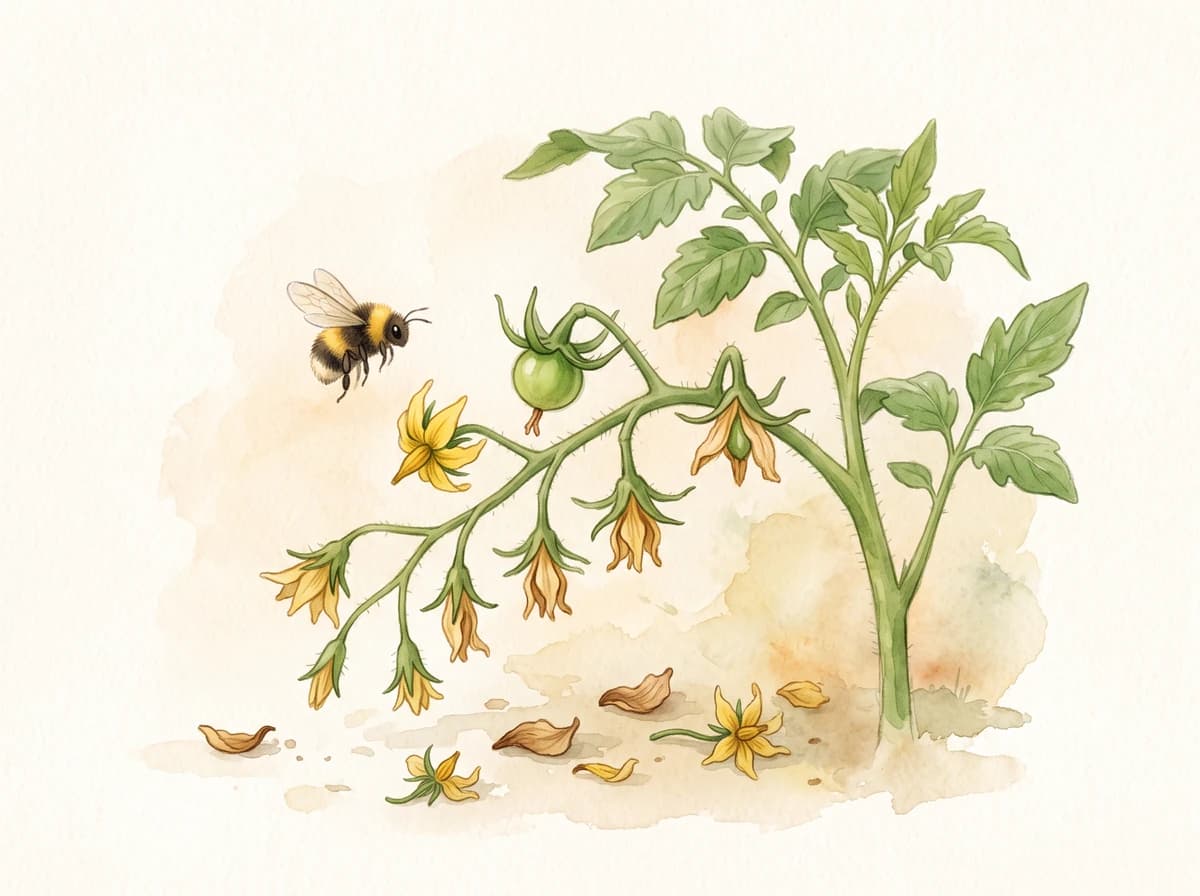
Appearance: yellowish flowers that dry up and fall without giving a tomato.
Cause:
- Extreme temperatures (below 10 °C, 50 °F or above about 32 °C, 90 °F): the pollen stops being viable.
- Very dry air or, on the contrary, very humid.
- Excess nitrogen: lots of leaf and little flower.
- Little pollination, for lack of wind or insects.
Solution:
- Partial shade in the middle hours of summer.
- Gently shake the stakes or the flower trusses every morning, to help pollination.
- Reduce the nitrogen in the feeding.
Almost always the problem fixes itself when the weather eases.
Other less common problems
Hollow tomato
The inside has empty spaces. It is usually due to poor pollination or to sudden changes of temperature while the fruit is forming.
Catfacing
Deformation of the end of the fruit. It is due to cold during flowering and is common in old large varieties. It does not affect the flavour.
Hard white patches on the skin
It is sunscald, frequent on tomatoes left exposed after stripping too many leaves. Leave leaves that give shade.
Roots on the stem
Small bumps or aerial roots on the stem are normal: they show that the plant can put out extra roots. On a grafted tomato, do not bury the graft point.
Integrated tomato prevention
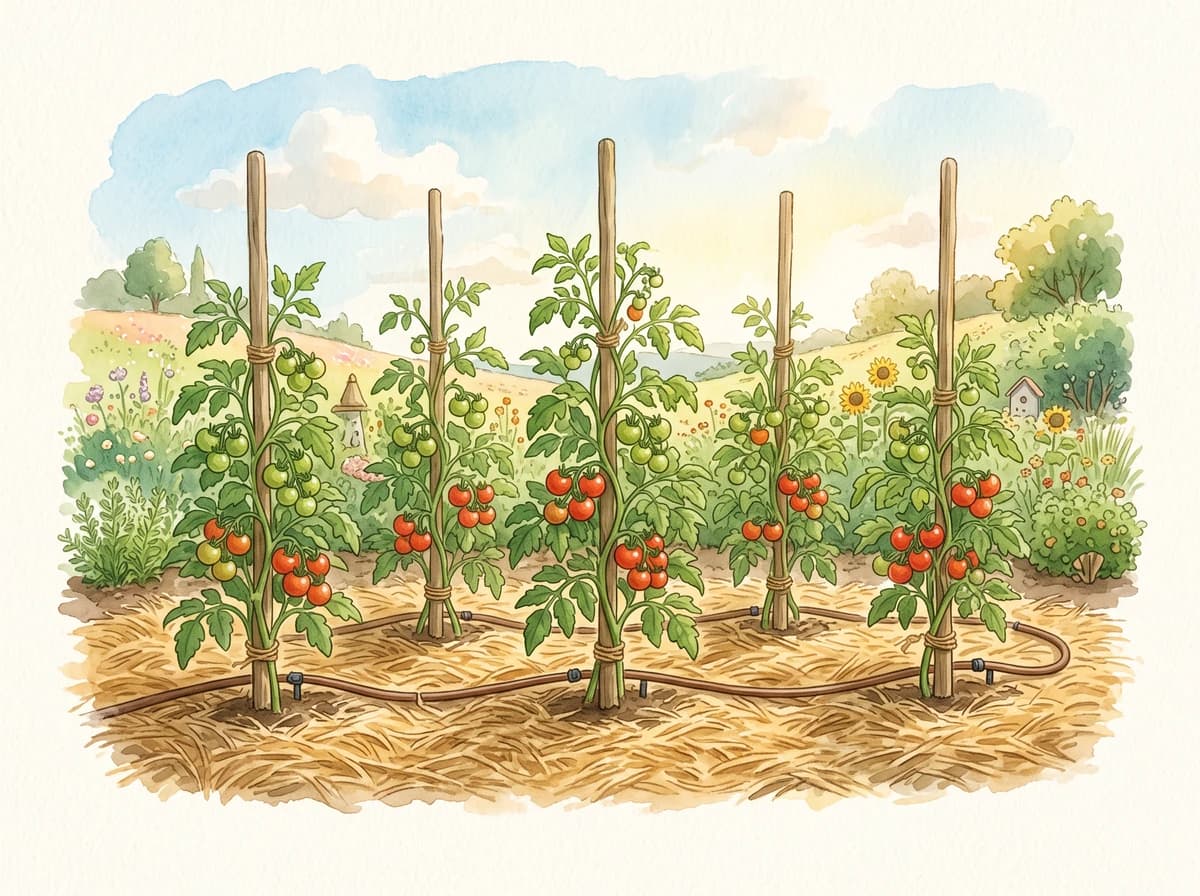
- Transplant deep, burying the stem up to the first leaves: it develops more roots (if it is a grafted tomato, leave the graft above the soil).
- Water steadily at the base, with drip or with a weeping hose.
- Mulch of 5-8 cm (2–3.1 in) from transplanting.
- Remove the suckers every week.
- Solid stake: cane of 1.5-2 m (4.9–6.6 ft), and tie with soft tape.
- Add compost when planting and avoid excess nitrogen.
- Keep an eye on the leaves and remove affected ones from the start.
- Harvest regularly, every 2-3 days: the plant produces more.
- Rotate crops: do not repeat tomato (or another nightshade) in the same spot until 3 years have passed.
- Save seeds from the healthiest plant each year, if they are non-hybrid varieties.
In 2-3 years
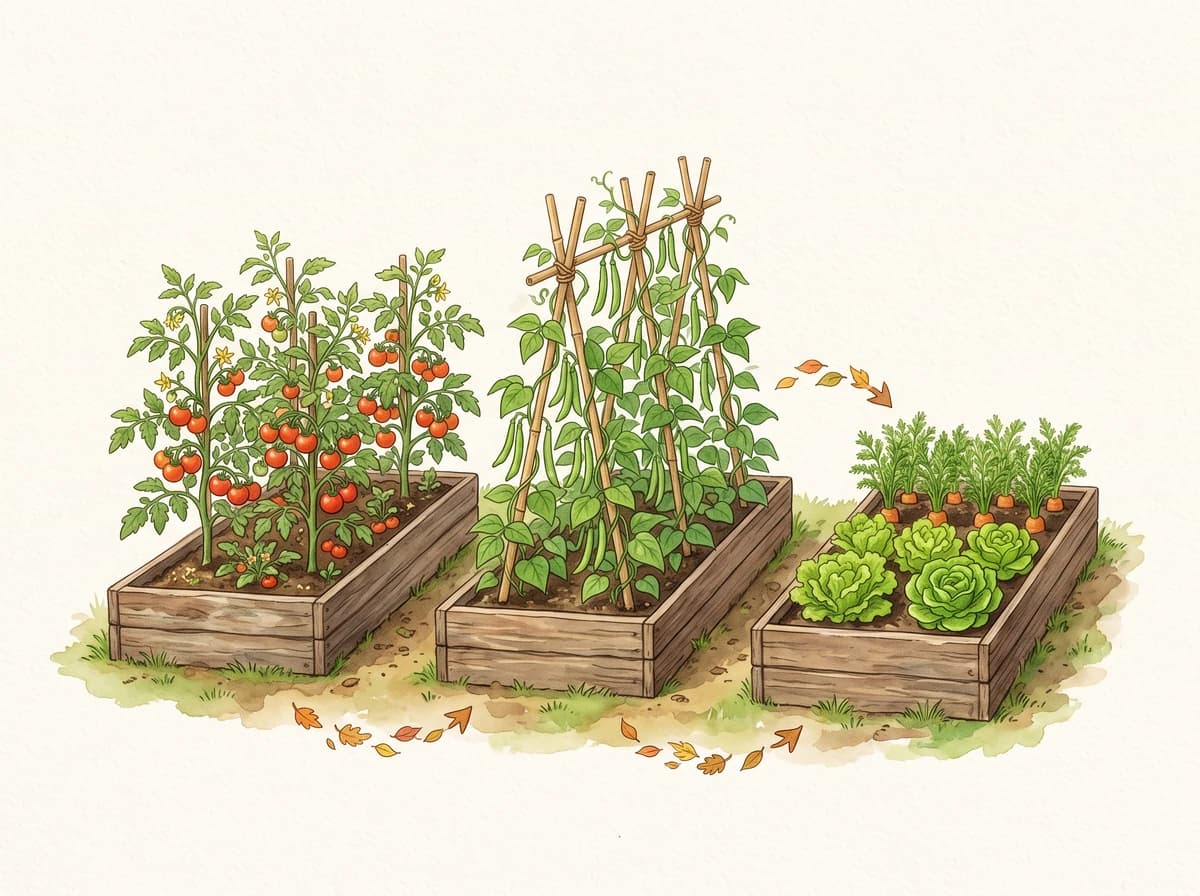
With these practices and varieties adapted to your area:
- Serious problems are greatly reduced.
- It is reasonable to expect a steady harvest per plant, of about 3-5 kg (6.6–11 lb) in good conditions.
- You would not swap your own tomato for any shop-bought one.

Profiles with symptoms, prevention and organic treatment.